

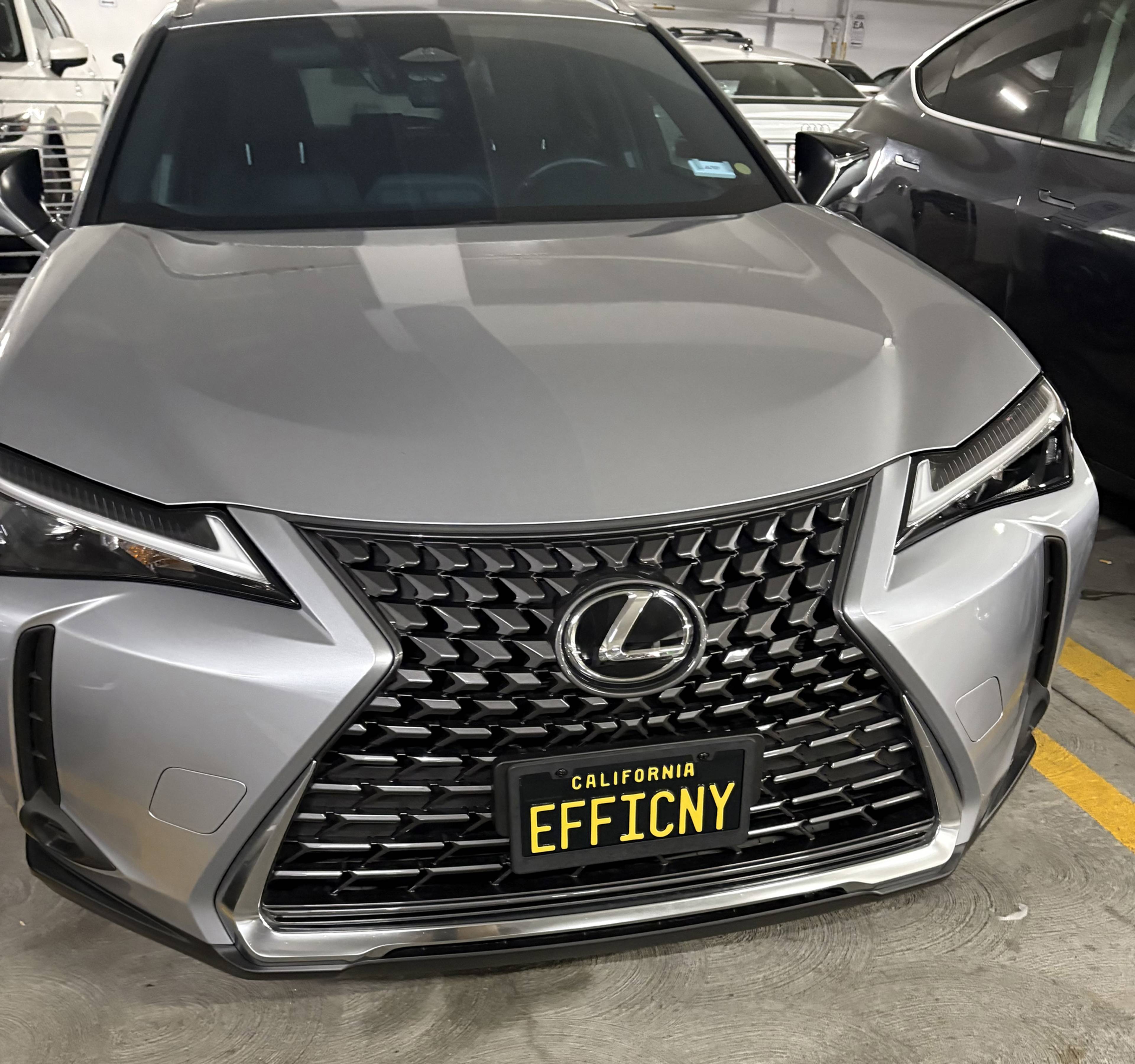
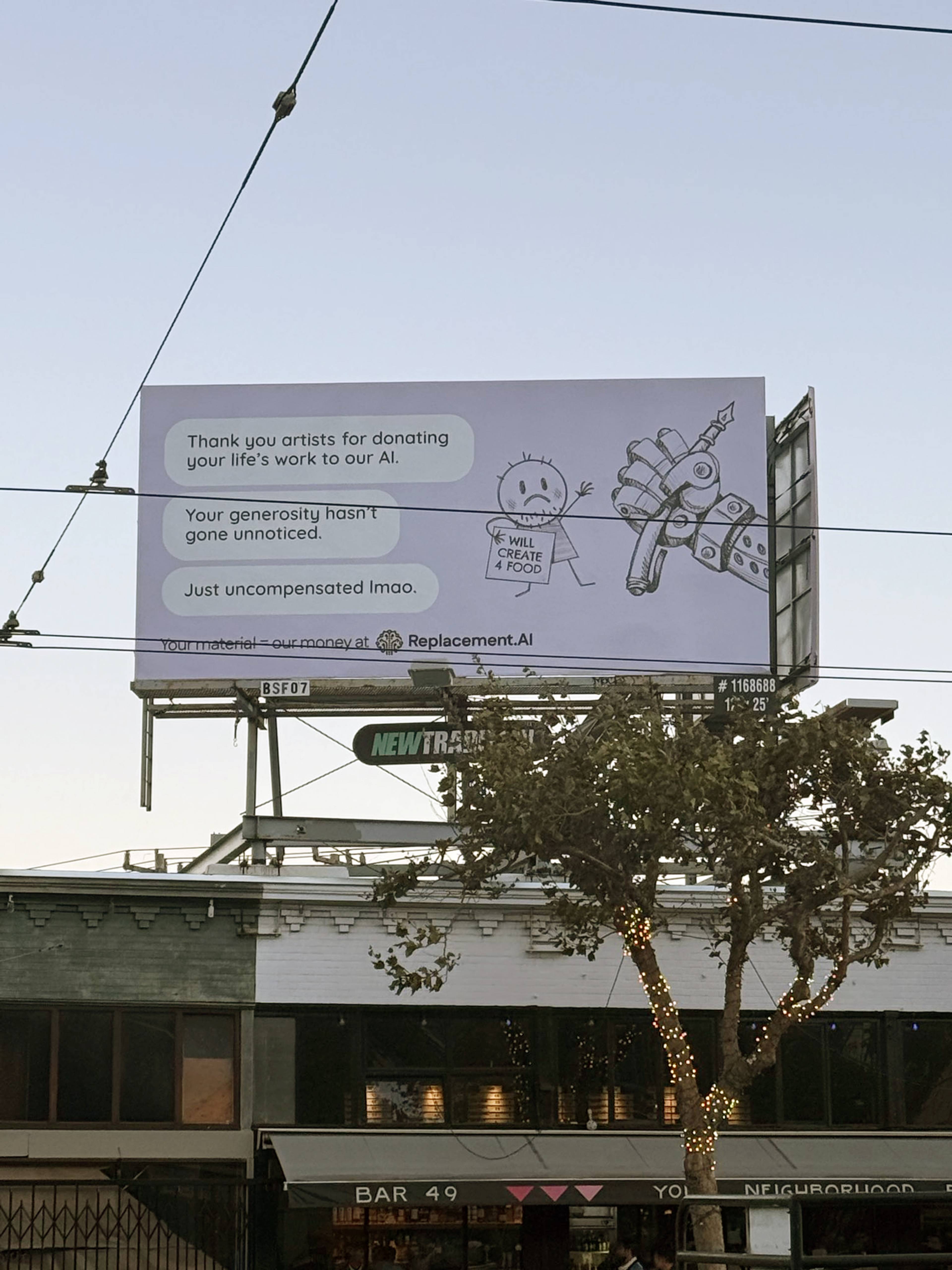
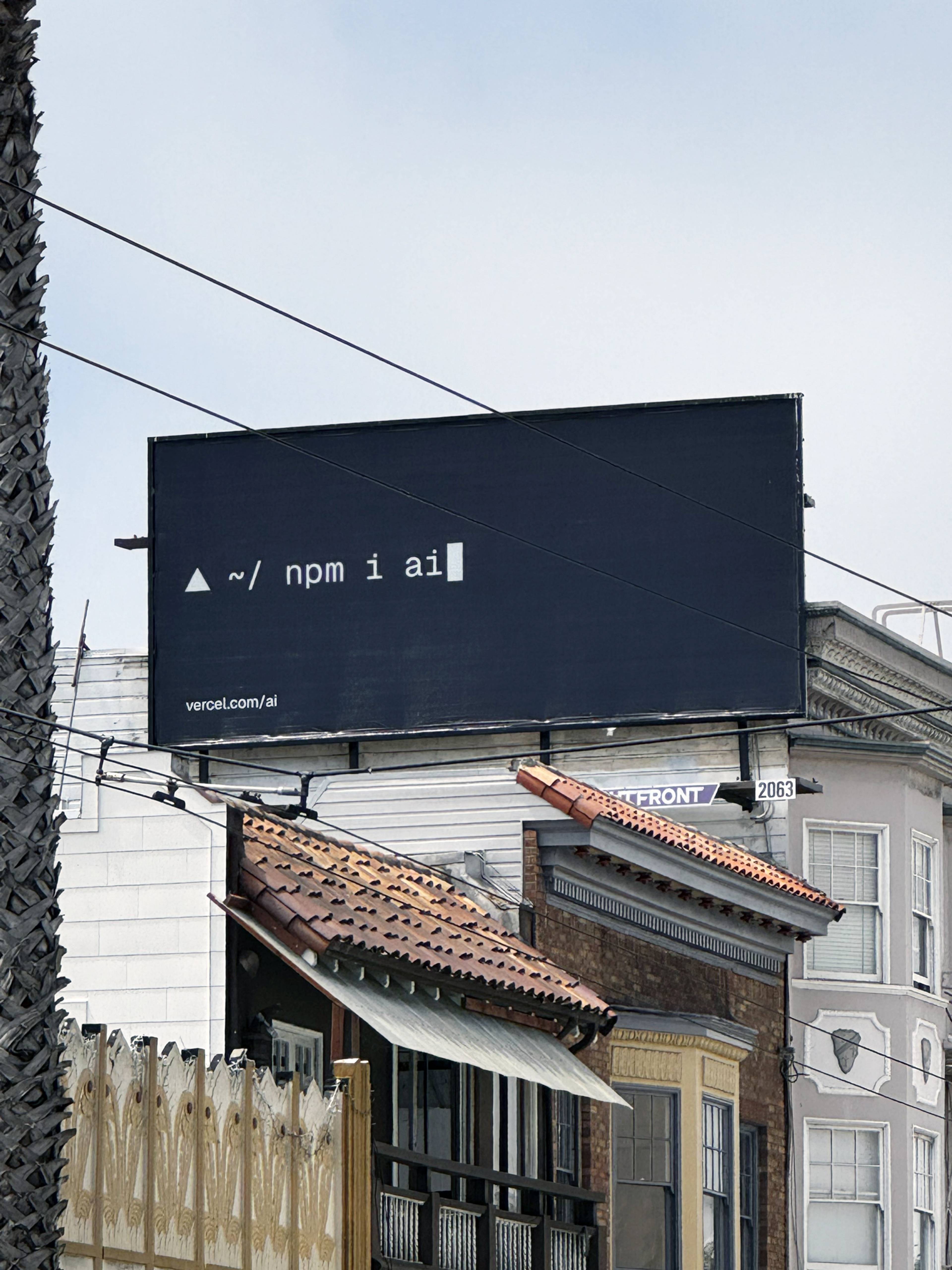
San Francisco’s Highway 101 is lined with billboards bearing words that do not appear in the Bible. Driving south from the city into Silicon Valley is a bizarre hermeneutic initiation, a plunge into tech-startup parlance. Meme-adjacent ad copy that’s out of date as soon as it’s printed and neologisms coined by overpaid marketing departments: “Ever since I was young I wanted to transform data into actionable business insights.” “Use workflow.” “You can just ship things.” One has been taken over by a counter-campaign reading “BEZOS FOR GUILLOTINE.”
Life update, hard launch: I moved to Silicon Valley in September. The day I moved here, Peter Thiel gave a lecture on the Antichrist, which feels like a bad omen. It was both sold out and energetically counter-protested. This is Eschatology City. The end of the world, precipitated by either natural or technical forces, looms large in Northern California. Everyone’s roommate works in “AI safety” or “existential risk” or, if they’re edgy, in “defense,” i.e., weapons. I ask a friend for recommendations about what to do in Palo Alto, and she tells me: “get a boyfriend who works at Palantir.” San Francisco is situated on the San Andreas Fault, a tectonic plate boundary that threatens constant earthquakes; the pressure accreting through the centuries will one day be released in the Big One. A wave of vertigo hits me looking out at night over illuminated houses built into steep hillsides – like it could all come dislodged at any moment. That is the price to be paid for the perspectival privilege of being on top of the world.
The climate here is threatening, but the weather is predictable and relatively unchanging, so the banal social choreography of making small talk about the weather has been replaced by the banal social choreography of making small talk about the AI bubble. Is it overhyped? Is it undervalued? Is it time to sell NVIDIA? I heard that Peter Thiel dumped all his NVIDIA. Biking in San Francisco, I realize that moving through the topography of this hilly city is the phenomenological equivalent of the tech economy’s boom-and-bust cycles, one steep incline sliding into the next sharp descent.
I don’t have an Oura ring, but if I did, I know what it would tell me: my heart rate has spiked since moving here. My computer knows I’m anxious. A sponsored Instagram ad leads me to schedule a demo with a health-tech startup selling a headband that will stimulate my brain with little electrical pulses to make the worries disappear. It’s marketed as a life hack for people who are too busy to meditate. I don the tester headband at a café in downtown Palo Alto. It feels like ants are crawling on my face. I get up to use the bathroom and overhear a man who is having either a late-onset quarter-life crisis or an early-onset midlife one (depending on how well this “life extension” stuff works out) explaining, in painstaking detail, the merits of the raw-meat diet. He is on what appears to be either a first date, a funding pitch, or a job interview – it’s hard to tell, because his counterpart is wearing a sundress, but there is simultaneously a laptop, open to a slide deck, sitting open on the table.
Palo Alto is a city-sized symptom of capital’s shift towards investing in technological silver bullets instead of value-productive labor.
A single session with the headband proves inconclusive, but the promise of efficient calmness seduces me. It is one among many in a recent wave of tech products geared towards cultivating Silicon Valley’s image of the “good life,” alongside AI therapy chat apps and luxury tantra retreats. There’s even a startup that teaches you to ascend the Jhanas, a sequence of stages of sustained concentration that are said to bring about enlightenment, in as little as five days.
Over lychee martinis at the Nobu Hotel, the poet Adrienne Chung tells me that Palo Alto is the new Dimes Square, a claim I find corroborated only by a single tweet (I refuse to call it a Xeet) authored by the head of communications for 1x Technologies, a startup that just shipped the first domestic humanoid robot in the US market. Her assessment of the scene is a stretch, but Adrienne and I are both here, somewhat reluctantly, slightly day-drunk in a city where people consciously abstain from alcohol because their biometric wearables tell them it’s unhealthy, so instead, they do ketamine.
Palo Alto is a city-sized symptom of capital’s shift towards investing in technological silver bullets instead of value-productive labor. Embodied experience feels secondary to memetic value; here, perhaps, is the global pinnacle of what the blogger Venkatesh Rao termed “premium mediocre” back in 2017. Now, it has reached its zenith: aesthetics can be grafted directly into reality; vibecoding touted as an enterprising way to conjure cash or “express yourself creatively.” The built environment, too, feels like vaporware – design-forward, but not built to last. Everything is expensive but feels kind of insubstantial, almost holographic.
My friend Lars visited on a field trip from business school and had the best French toast he’s ever eaten. But he was too distracted to properly enjoy it by a woman the next table over loudly raising a friends-and-family capital round for her data-engineering company. All the chain restaurants here are required to list the calories in their menu items, which is evil and terrifying, while all the parking garages are required to post a sign announcing that the air inside may contain chemicals “known by the State of California” to cause cancer. So are the gas stations and the IKEA. Contrary to the Quantified Self movement’s notion of data-driven enlightenment, knowledge isn’t always power. But as the state-as-external-superego subjects me to a constant torrent of ambient threats which are never addressed by, like, policy, I am made to buy my way out of these worries with novel products and protocols. Still, I decline to dabble in biometric wearable devices, settling instead for a vague, government-mandated sense of unease about dangers within and beyond my control.
The built environment, too, feels like vaporware – design-forward, but not built to last. Everything is expensive but feels kind of insubstantial, almost holographic.
In a 1995 essay called “The Californian Ideology,” the British media theorists Richard Barbrook and Andy Cameron described the cultural pathology they saw running rampant in the Bay around the early rollout of the internet. “The Californian Ideology promiscuously combines the free-wheeling spirit of the hippies and the entrepreneurial zeal of the yuppies,” they write – that is, marrying the New Left’s cultural rhetoric, borrowed from the 1960s counterculture, with the New Right’s reverence for the grind, a peculiar blend that played out as earnest faith in technology’s emancipatory power. This is the ideology of “dotcom neoliberalism,” where technological solutions came to be celebrated as vehicles of not only personal liberation, but social transformation. Thus the mantras of empowerment in a land where either the Age of Aquarius or the Antichrist is always just around the corner: Do not be encumbered by life’s many setbacks, like personal suffering or market regulation. Do not have fear, for the future is within your control. You can just ship things.