

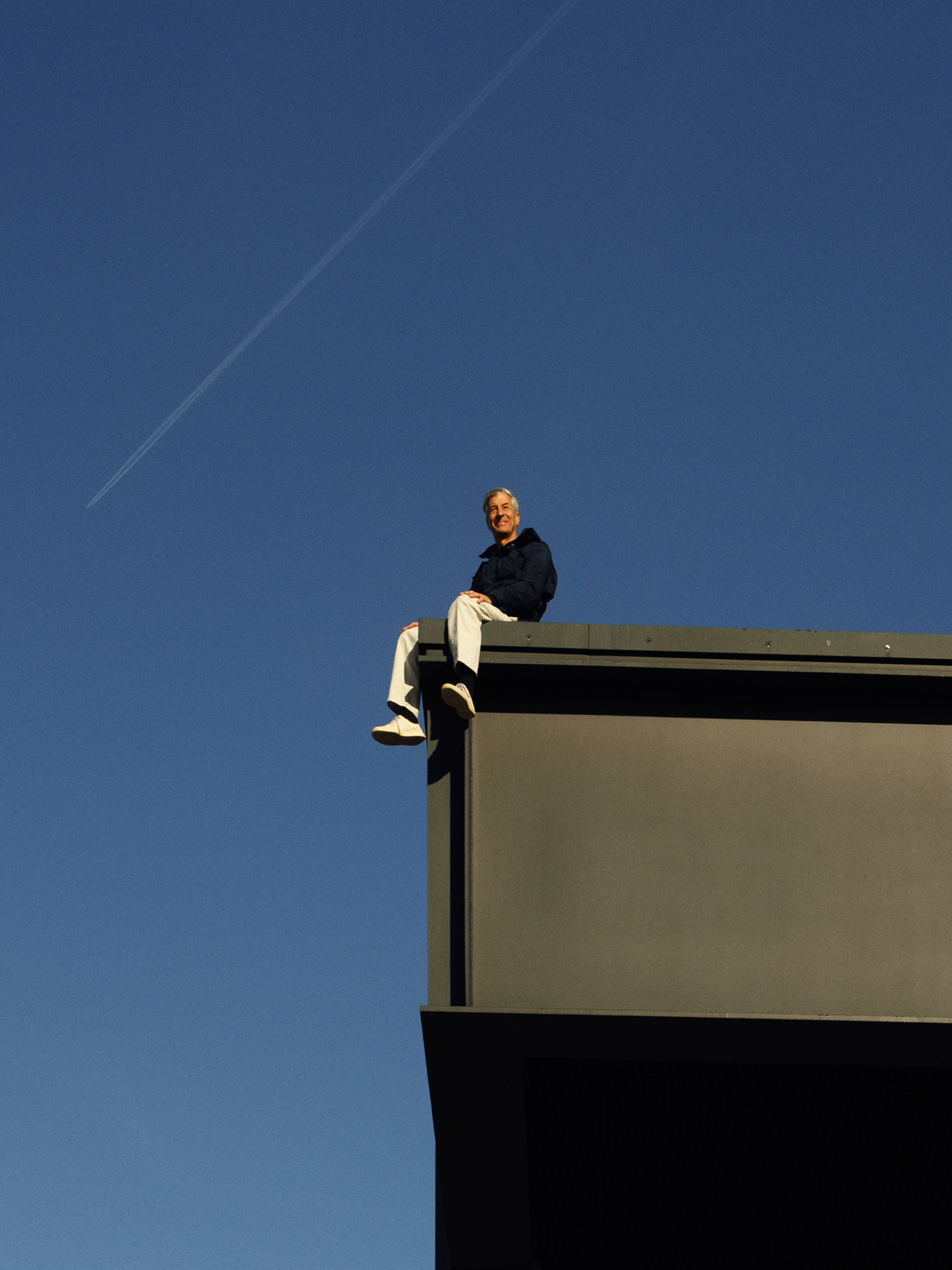
Whether or not it is appropriate to award the Preis der Nationalgalerie to Maurizio Cattelan, whether the award would “betray” its historical mandate or lack diversity – clearly, it would – or whether it should reflect progressive ethics in the Berlin art system, I would rather discuss its meaning symbolically and apocalyptically.
Maurizio Cattelan is undoubtedly an artist of his time. He first transformed institutional criticism into an intimate affair, and then developed it into a matter for advertising strategies applied to the arts and their contexts. From his “Torno subito” (Be Right Back, 1989) shop-door sign to La Nona Ora (The Ninth Hour, 1999), the life-sized sculpture of Pope John Paul II being hit by a meteorite, Cattelan has played with deconstructing conventional perceptions of spaces and, moreover, of symbols – death, childhood, evil, art, the display of our discontent – to the point that the idea became his technique.
He has left behind works and curatorial objects that will certainly endure. I’m sure I’m not the only one who found his curation of the 4th Berlin Biennale (2006), within the context of that decade, inspiring from a spatial perspective. The art world was hungry for new locations, driven by Pantagruelian reasons of diversification rather than resistance. Aware of his constraints, Cattelan opted for one last theatrical gesture, celebrating his farewell to the art world at the Guggenheim in New York in 2011. “Retirement is fine,” his gallerists and collectors must have told him, “but you’re still a safe bet on the market.” After that, he came right back – what a turn of events! – with mediocre solo exhibitions and artistic projects in high-end venues such as Pirelli HangarBicocca (“Breath Ghost Blind,” Milan, 2021–22), and Gagosian (“Sunday,” New York, 2024); or single works ranging from a banana held up with tape at an art fair (sold for $6.2 million in 2024) to a solid gold toilet (sold for $12.1 million in 2025). He is an artist who has climbed the social ladder, both symbolically and materially, from working-class newcomer to consummate insider and even real-estate investor. Nothing wrong with that!
Why give this award to an artist who ought rather to bask in his own cozy pocket of fame? Though it may seem like a conservative choice, it actually signals rapidly changing times.
Therefore, at the expense of repeating myself: Cattelan is undoubtedly an artist of his time (as opposed to an untimely artist, one of those figures who changes with the times while maintaining the same idea – the times mirroring their obsession). Indeed, twenty years from now, we’ll probably say he was a good representative of the 1990s and early 2000s – of that offshoot of postmodernism that, for convenience, we call “relational aesthetics” in the North Atlantic perimeter. It was a time when artists mainly developed two strategies for survival and visibility. On the one hand, they embraced the progressive idea that art is useful and pedagogical, aligning with the contemporary academic quest for quotability and political righteousness. On the other, they entered the star system at full throttle, embracing spectacle and its many necessary compromises.
So, why give this award to an artist who ought rather to bask in his own cozy pocket of fame? Though it may seem like a conservative choice, it actually signals rapidly changing times. This is not a museum turning to a star artist to produce a popular, tried-and-true, spectacular exhibition to attract the most attention and sell the most tickets – which would be fair and legitimate, by the way. This is more like “The Emperor’s New Clothes”: we believe we see something – a scary return to the safe and established – while discarding the possibility of the naked truth – a sign of a broader vision of what will become “visible” in the future – as silly. Consider the jury that selected Cattelan: Klaus Biesenbach, the prodigal son, who expressed MoMA’s most celebrity-crushed side in New York and still does in Berlin (see, since his 2022 appointment, the Neue Nationalgalerie’s exhibitions of Andy Warhol, Yoko Ono, and Nan Goldin); Samuel Keller, who transformed Art Basel into the powerhouse it is today, and now runs the Beyeler Foundation in Basel; and Emma Lavigne, director of the Pinault Collection, that epitome of grandeur and impersonal taste. These three individuals embody a corporate, starstruck, and monumental concept of museums and collecting to varying degrees, while remaining fairly uncontroversial. In this framework, Cattelan is the artist-entrepreneur par excellence in the attention economy, despite remaining detached from its most contemporary manifestation on social media. Recall that he has consistently maintained that he does not have a studio or, more accurately, that his studio is a telephone. Recall also the fake Caribbean Biennial.
The era in which the “public” was economically involved in art, and in which there was a broad debate among the art world’s many players, seems to be over.
The fact that these individuals awarded a prize at this historical moment to an artist like Cattelan confirms what has been in the air for some time: the social re-privatization of art. The era in which the “public” – here, not art’s audience, but public servants, politicians, administrators, curators, directors – was economically involved in art, and in which there was a broad debate among the art world’s many players, seems to be over. We should get used to it. For these decision-makers, whether their appointments are statal or philanthropic, the issue is economic, as well as a matter of opportunity and worldview: funding is no longer convenient. If the public system believed that funding the cultural sector would benefit them, they would do so. But they don’t, and they won’t. This is partly because cultivating an image of liberal open-mindedness is no longer a priority, which is leaving practices to be sorted by their usefulness. Galleries are closing, art criticism is declining as a profession, university art history departments are downsizing, curators no longer have time for research, journalists are limited to reworking press releases – to say nothing of artists themselves. Of course, there are pockets of resistance and resilience, but the direction of travel is clear: towards real capitalism, as private patronage disposes of any political filter in its new role as the “public.” After all, as more and more “businessmen” become heads of state – from Berlusconi to Trump to Friedrich Merz – a growing social awareness is emerging that capitalism can administer every aspect of life without checks and balances.
This award is ultimately part of a cultural vision that is gradually coming to fruition, despite twenty years of “politically engaged art and curatorship”: one of court cultures that are stimulating and intriguing, yet careful not to take mutually critical positions. In the most visionary cases, they are sophisticated; in the more decorative ones, they are self-referential; across the board, they are increasingly subsidized and branded by private interests and corporate logic, which tend towards monopoly. Grotesquely, it still offers the masses a glimmer of hope for social mobility in what is, de facto, a revenue-based economy. This, exactly, is the scam of the attention economy that any artist aspiring to success (read: visibility) can fall for: If Cattelan made it, then so can I.
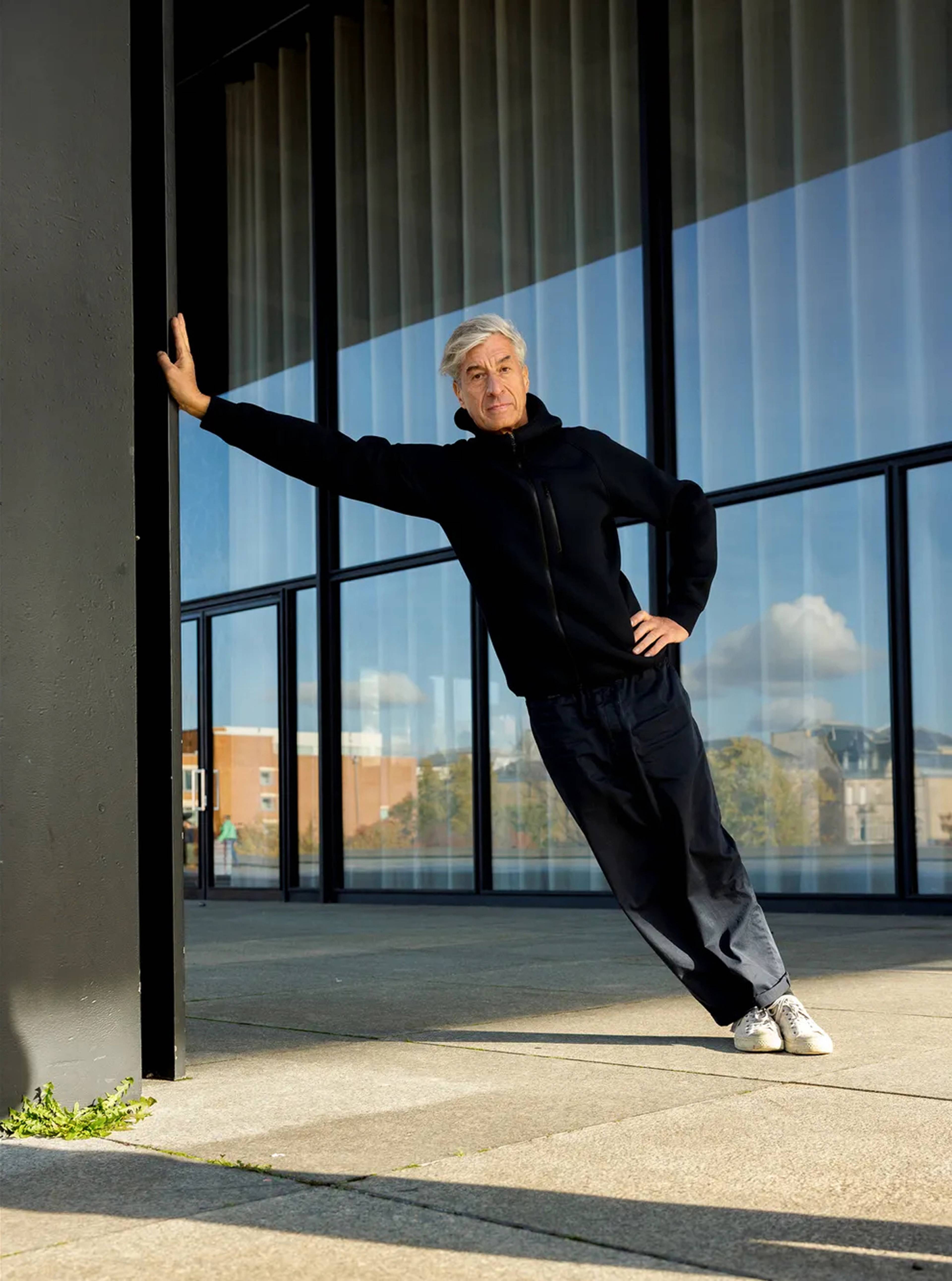
Maurizio Cattelan, Neue Nationalgalerie, Berlin. © Peter Rigaud, 2025
___
Maurizio Cattelan was the subject of an artist portrait by curator Francesco Bonami in Spike #61 – Escape. Get caught up and get your copy in our online shop.