
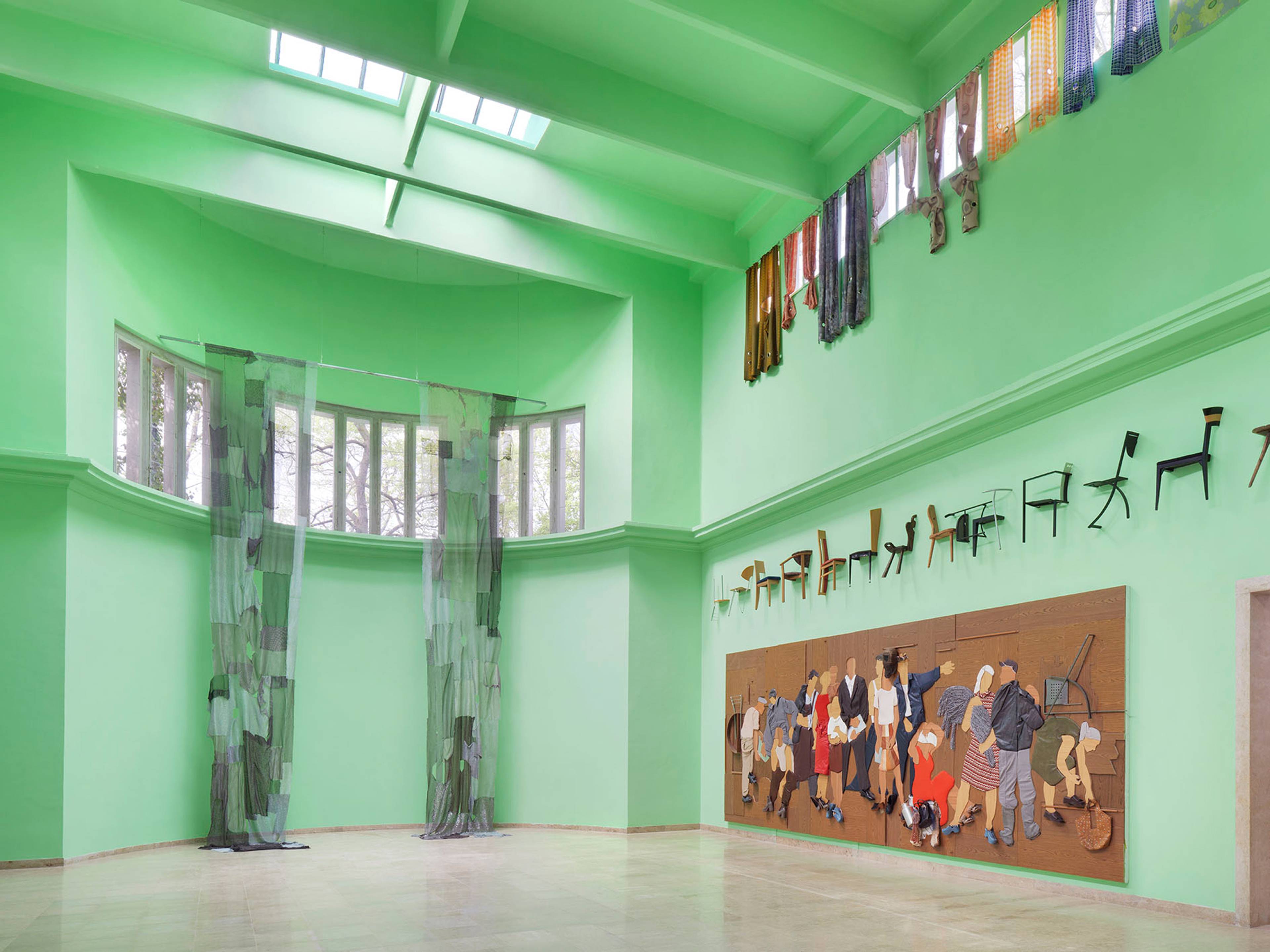
The 61st Venice Biennale is a festival of death, as this is how the living keep the dead alive. There was the last work of visionary polymath Alexander Kluge (1932–2026) memorialized in the Holy See Pavilion; a characteristically deadpan presentation by the late Ceal Floyer (1968–2025) at the Palazzo Diedo; and, of course, the deeply moving “furnishing” of the German Pavilion’s central gallery by Henrike Naumann (1984–2026) – more on this later.
There was also Gabrielle Goliath’s latest iteration of Elegy (2015–), an endless mourning ritual for Palestinian poet Hiba Abu Nada, who was killed in an Israeli airstrike in Gaza in October 2023. This tragedy was put into its political context by a protest of the Art Not Genocide Alliance (ANGA) in front of the Israeli Pavilion and the Arsenale, of Pussy Riot in front of the Russian Pavilion, and the organized strike across Biennale venues on day three of the preview. The Palestinian flag was a recurring apparition: in the installation we are here (2026) by arms ache avid aeon, inside a former ticketing booth in the Giardini, or within the sanctum of Tabita Rézaire’s work Omo Elu (2024) and Mother Trinity (2020–22) in the Arsenale.
Other, more symbolic “deaths” were also conjured: that of the irrational, unprofessional bohemian artist (again) during a talk by one of last decade’s art stars, Tino Sehgal, or, quite simply, the entire world order as we know it, shown to be in spasms, dangerously out of breath. And meanwhile, the spectral presence of the Biennale’s artistic director, Koyo Kouoh (1967–2025), watched over it all, tuning her mournful, minor keys.
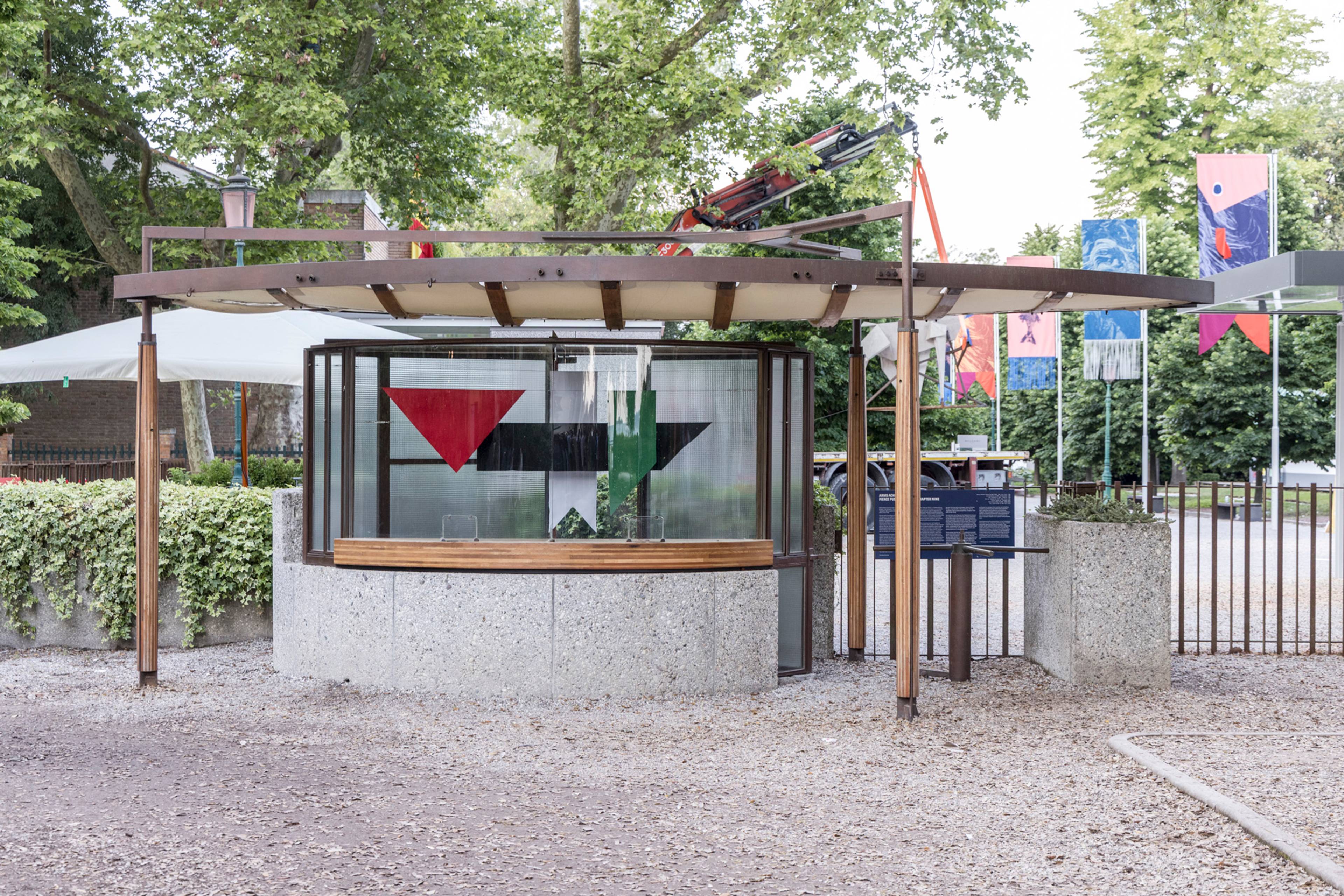
fierce pussy, we are here, 2026, fabric, wood, twine, dimensions variable. Installation view, “In Minor Keys,” 61st International Art Exhibition – La Biennale di Venezia, 2026. Photo: Andrea Avezzù
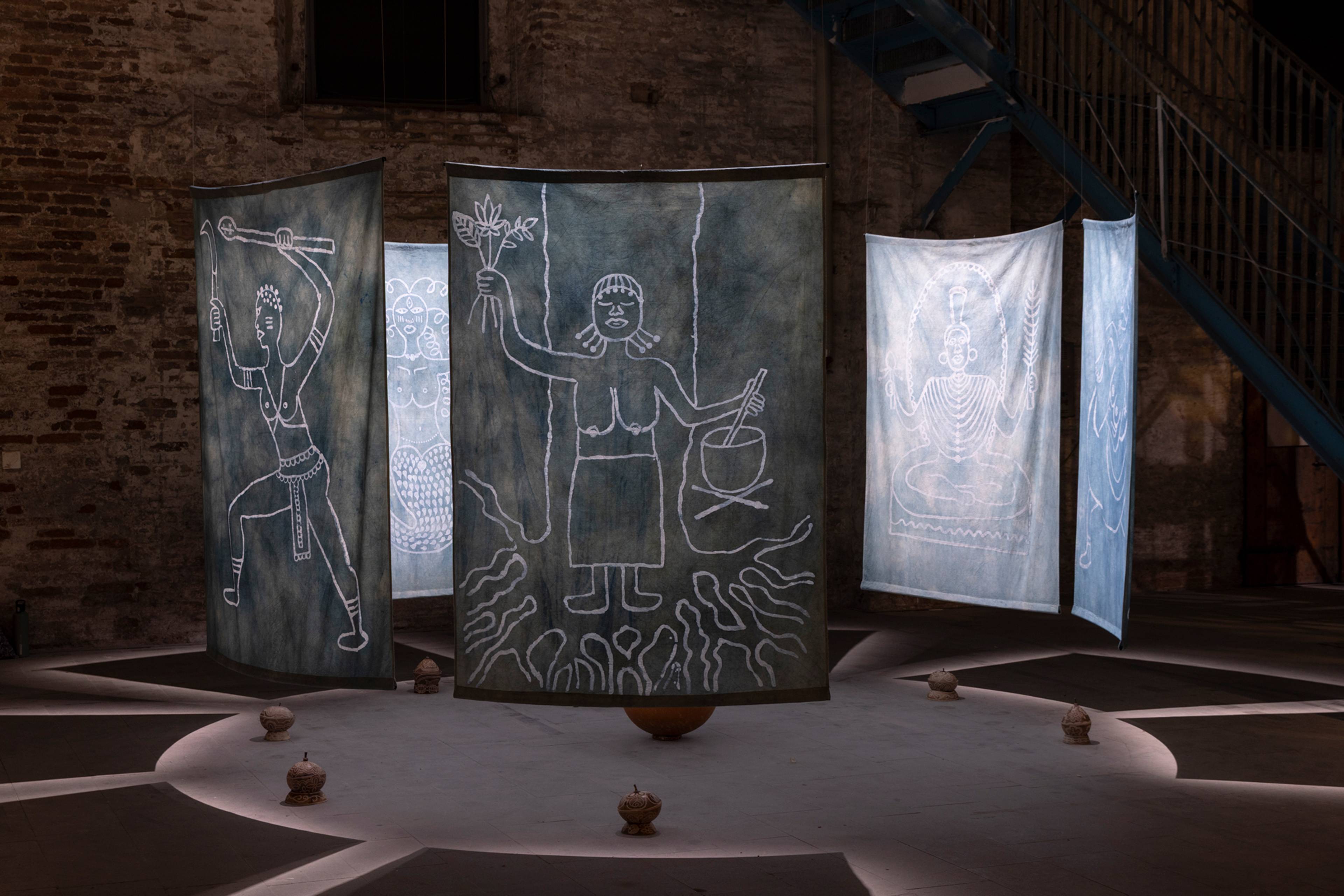
Works by Tabita Rezaire. Installation view, “In Minor Keys,” 61st International Art Exhibition – La Biennale di Venezia, 2026. Photo: Marco Zorzanello
The list is a brutal way to respond to death, a form that any Biennale is inextricably dealt: the lists of artists, of works, of national pavilions; the relentless linearity of the Arsenale’s architecture; and the many “best of” articles that you have surely already scrolled elsewhere. While there was much great work in the main exhibitions of “In Minor Keys” – my personal highlights being the profound folk humor of Beverly Buchanan and the brut lyricism of Werewere Liking’s figurations – the overall effect was more one of accumulation than of purposeful relation. Rooms were often overhung, the majority of works theatrically spot-lit on overbearing, dark-blue walls. As the exhibition unfolded, it became harder to understand, at least for me, why certain works had been brought together, or why there were so many of them, like in the case of Kaloki Nyamai’s monumental canvases, where the material impact was diminished by a lack of space.
There were, however, precious moments of nuanced harmony, like the upstairs room in the Giardini’s Central Pavilion. Walid Raad’s speculative photographs of Yasser Arafat’s many beds were hung alongside the painted pandemic chronicles of Sohrab Hura. The improvised woolen abstractions of Amina Saoudi Aït Khay lay before them, neighbored by a wall display of collages by Mohammed Joha. Working with different media and under different conditions, each artist had found formal “solutions” to unlivable confinement, art keeping alive the possibility of (im)possible escape. I clung to these works, and others like them, where more ambiguous and unresolved gestures were made, like rana elnemr’s idiosyncratic, cosmological imagery in The Sugarcane Choir (2026), or the ecstatic information of Sawangwongse Yawnghwe’s undecipherable flow charts.
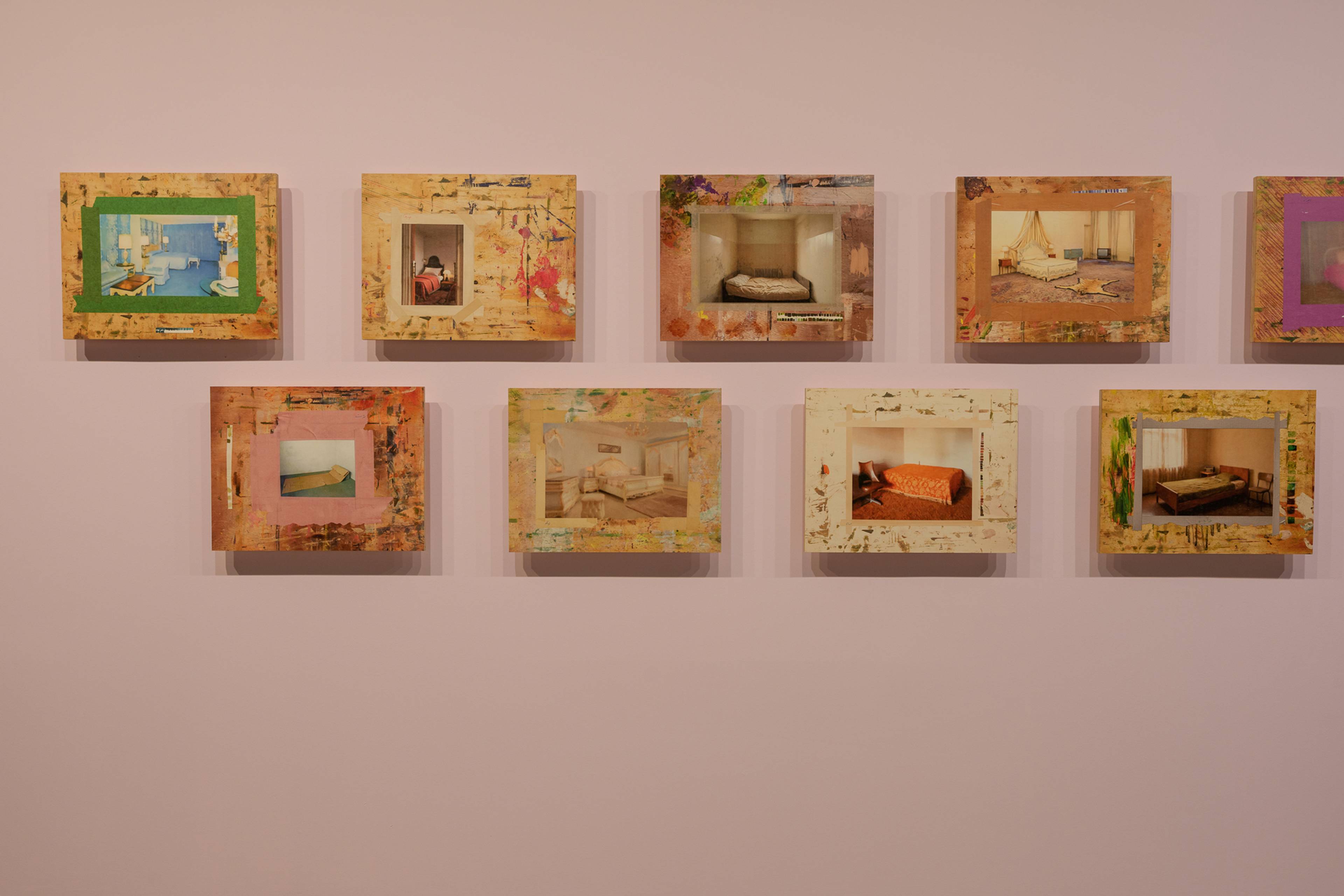
Works by Walid Raad. Installation view, “In Minor Keys,” 61st International Art Exhibition – La Biennale di Venezia, 2026. Photo: Andrea Avezzù
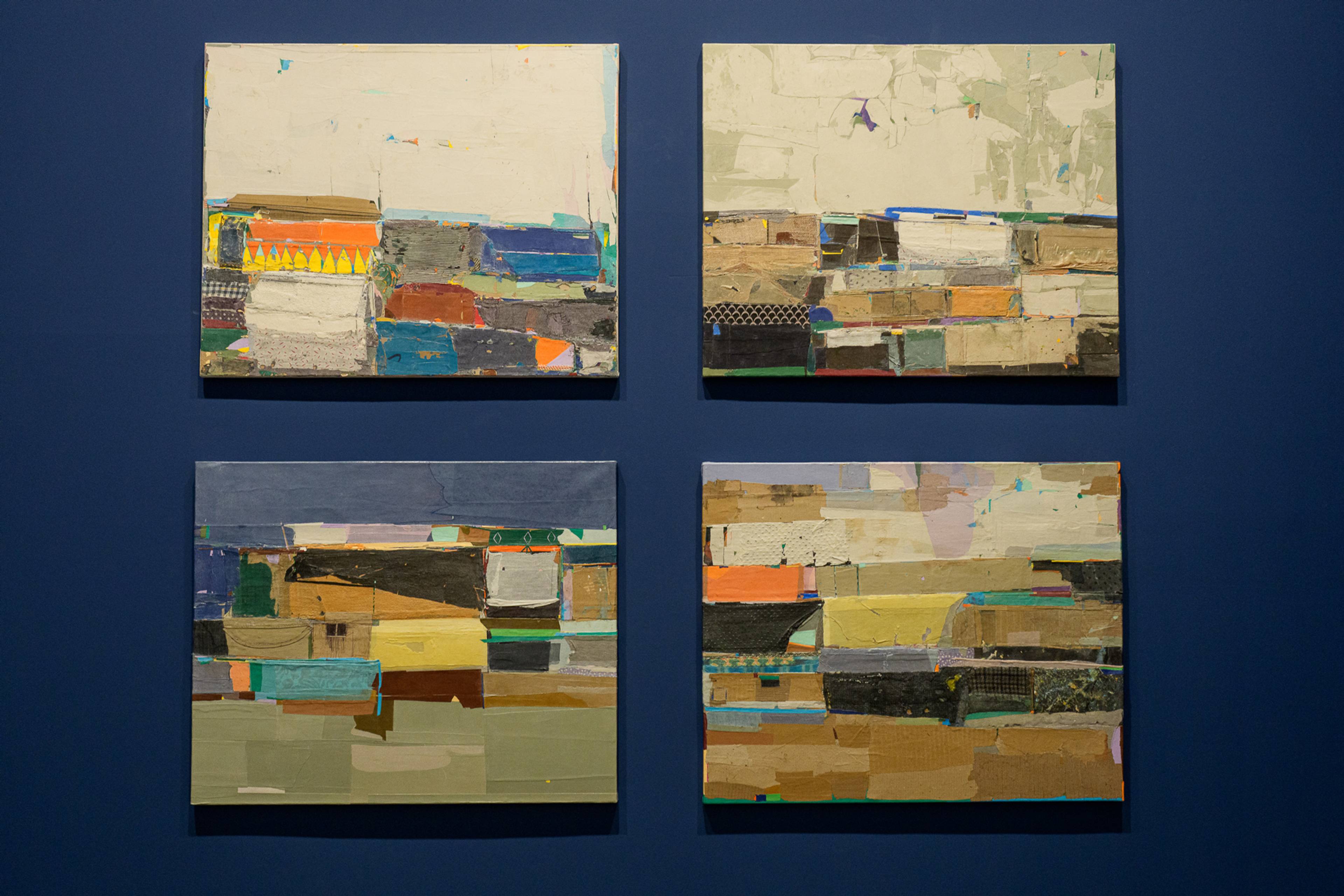
Works by Mohammed Joha. Installation view, “In Minor Keys,” 61st International Art Exhibition – La Biennale di Venezia, 2026. Photo: Andrea Avezzù
Of everything I saw across the Biennale, I don’t think anything struck me like Sung Tieu and Henrike Naumann’s presentation “Ruin” at the German Pavilion. I wish I had had more time in this major work, to try and understand the intricate telescoping of space – from the façade’s mind-shattering trompe-l’œil mosaic of a former East German residential complex for immigrant workers, where Tieu once lived with her mother, to the uncomfortable coziness of Naumann’s “War,” “Post War – 1990s,” and “Pre-war” displays. Each artist invoked the analytical and physical “space” of the body and its many “interiors” – emptied out by systems of measurement and control (Tieu’s Thou Shalt Not Bear False Witness (Neck & Wrist Circumference, Version 4), 2026, resembling a pillory stock) or enveloped within a military décor (the mint green of Naumann’s Barracks in pastel, 2026, is taken from former Soviet army quarters in the GDR). Beyond the particularities of each artist’s contested relationship to German history, it felt like the exhibition made apparent a more generalized siege consuming our puppet-like bodies from within, cogs in the aesthetic machinery of the state. And to make transparent casts of your mother’s arms and legs, as Tieu has, and put them in a national pavilion – the sculptures gave me shivers.
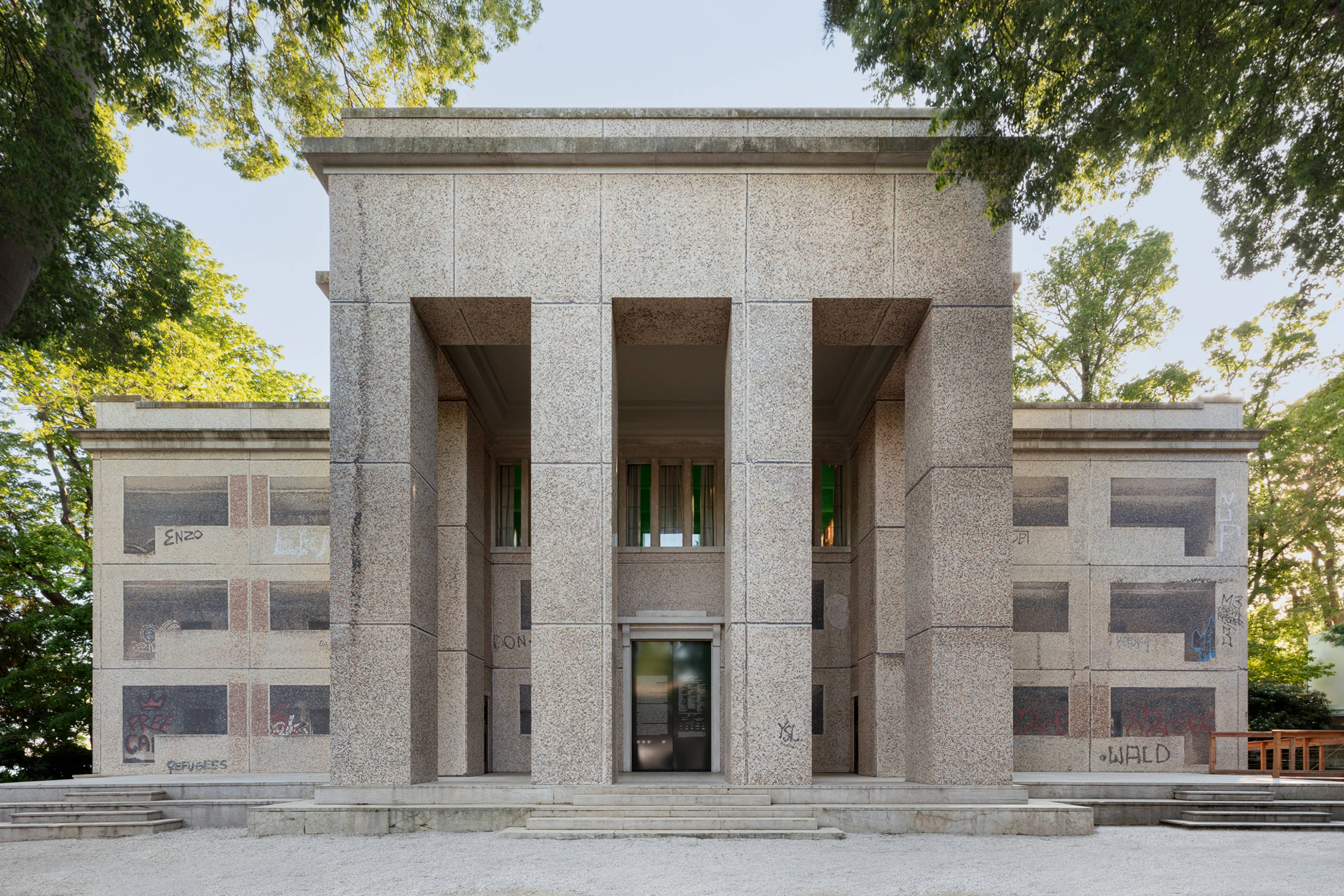
Sung Tieu, Human Dignity Shall Be Inviolable, 2026. Installation view, “Ruin,” Pavilion of Germany, 61st International Art Exhibition – La Biennale di Venezia, 2026. Photo: Jens Ziehe
This came to be what I looked for elsewhere, a certain auto-reflexivity regarding the pavilion as propaganda. I like to think of Abbas Akhavan’s lily-pad pond in the Canadian Pavilion (Entre chien et loup) as a disco-clinical metaphor for the sterility of the control society (which, reading the exhibition text, was not at all the artist’s intentions). Ei Arakawa-Nash’s sincere gimmick, Grass Babies Moon Babies, however, was intentional and playful critique, inviting visitors to take a heavy infant doll with them around the Japanese pavilion, changing their diaper for poetry. It was a stupid kind of thoughtful chaos, implicitly disrupting the social norms of reproduction from a queer and diasporic position (I particularly liked a text work dealing with the problematic teaching of national history to children). And if you also replace Alma Allen at the US Pavilion with Arthur Jafa and Richard Prince at the Fondazione Prada – an exhibition whose strengths and shortcomings would seem to reinvigorate contemporary debates around the politics of appropriation – it was actually quite interesting.
Wishful thinking, however, only gets you so far; and I felt a particular kind of sadness seeing Khaled Sabsabi’s Australian Pavilion, whose participation had been initially cancelled by the country’s leading arts body last year, the artist egregiously accused of being “sympathetic to terrorism” by right-wing politicians. After many resignations and open letters, Sabsabi was reinstated. He presents twin works, a conference of one’s self (2026) in the pavilion, and khalil (2026) at the Arsenale. They are both immersive, hybrid paintings: swirling burshtrokes of purple and blue overlaid with projected motifs, each about “sharing a love of humanity.” I personally wasn’t feeling this love. The works’ formal emptiness rather brought me back to the impossible context of the work’s presentation: the increasing instrumentalization of contemporary art within the far-right’s “culture wars.” What strategies, other than reflection and appeals to “humanity,” might be more effective forms of defense?
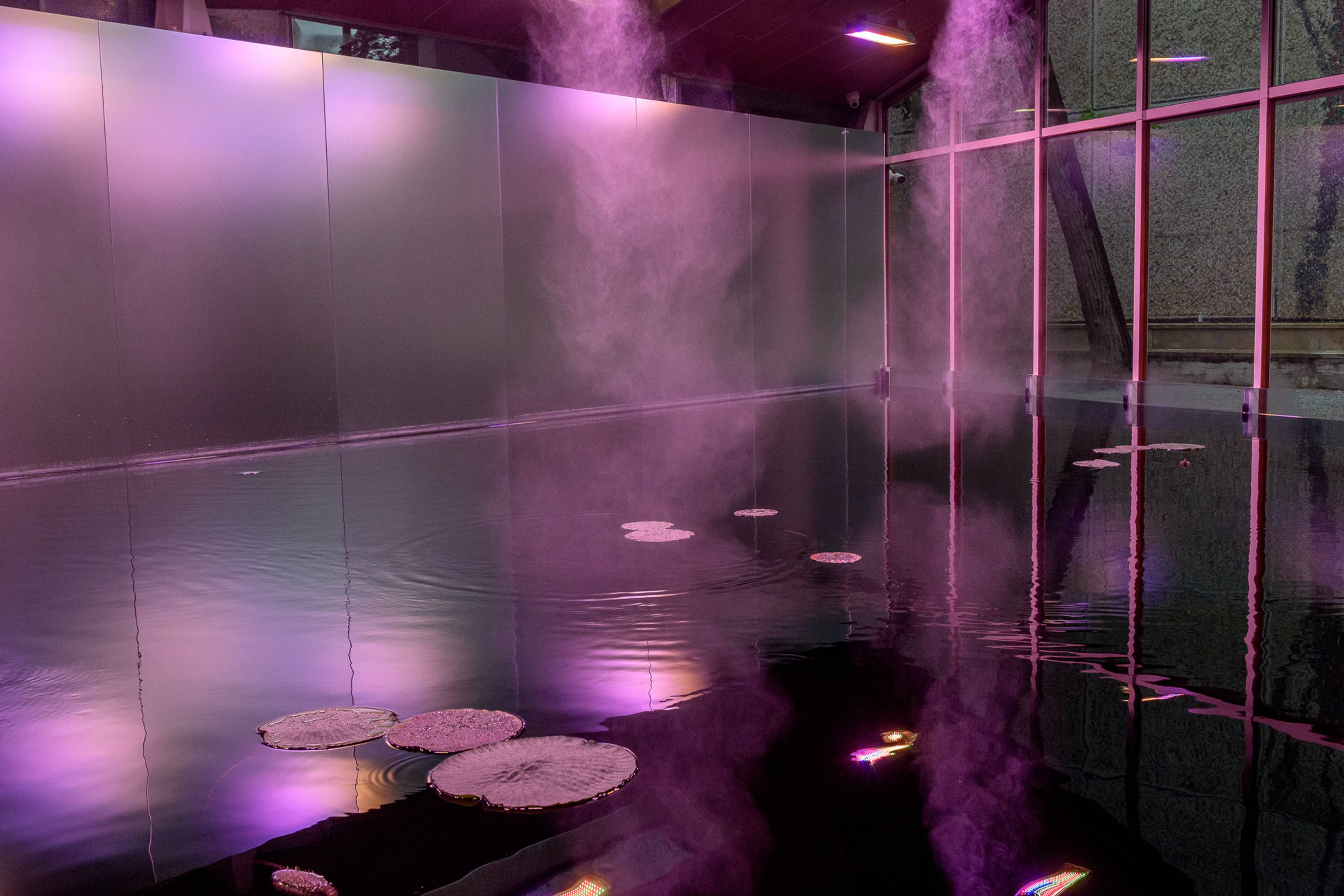
Abbas Akhavan, Entre chien et loup, Pavilion of Canada, 61st International Art Exhibition – La Biennale di Venezia, 2026. Photo: Andrea Avezzù
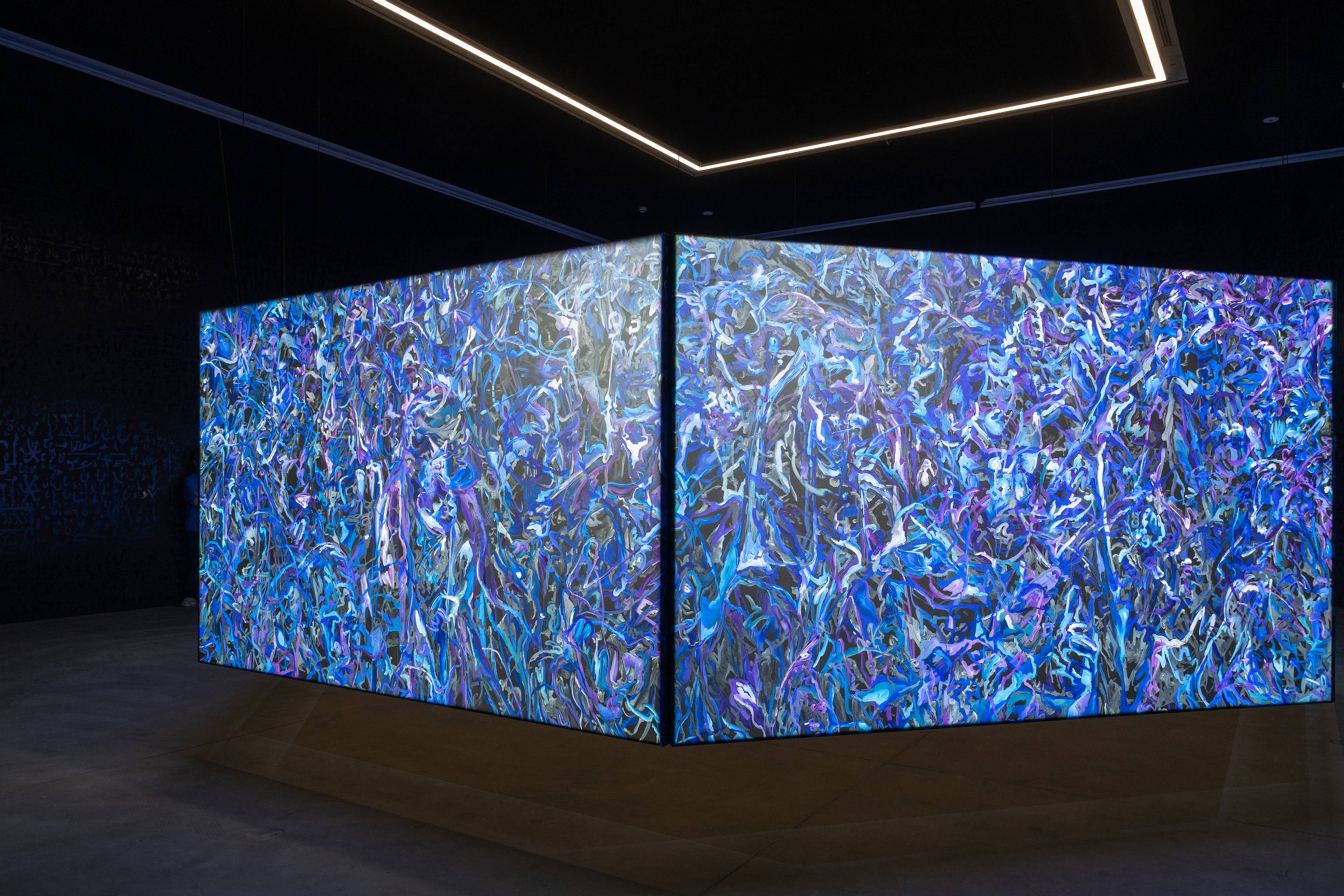
Khaled Sabsabi, conference of one’s self, Pavilion of Australia, 61st International Art Exhibition – La Biennale di Venezia, 2026. Photo: Luca Zambelli Bais
Outside of the official Biennale, I perhaps found some responses, though on two different ends of the spectrum. The first was Wishful Thinking (2026) by Ukrainian artists Roman Khimei and Yarema Malaschuk, a suite of four videos presented as part of the “Canicula” exhibition organized by Fondazione In Between Art and Film. Set in a fictional future where the war in Ukraine is over, old and infirm Russian soldiers are interviewed on camera, played by current Ukrainian period-drama actors. When a voice off-camera asks them leading questions like “Do you regret taking part in the war?” they stumble, look away, and sometimes repent. I squirmed witnessing such manipulations – regardless of my political sympathies with the artists – until I realized that the work is perhaps not attempting to be a nuanced approach to the complexity of an individual’s participation – or not – in state-sanctioned violence, but rather is a means to artificially represent a more basic need for justice and recognition in times of utter destruction. The videos functioned like magic: creating livable fantasies for an unlivable world.
The other was Lydia Ourahmane’s show “5 works,” which, rather than clearly affirming a politics, pointed to its contextual limits. It comprised a collection of deceptively simple gestures, each related to the city: decommissioned hotel bedsheets in industrial trolleys; strings of Venetian glass beads; a pot of boiling stock; a functional wooden pier, among others. This former work will later be installed in Poveglia, a largely inaccessible island in the Venetian lagoon, currently being transformed into a public park by the association Poveglia per Tutti. And while “5 works” is a show of discrete sculptures, this information indicates Ourahmane’s general movement: towards the city, “the underbelly of Venice,” beyond its tourist clichés. While there is a potential arrogance to this posture – Ourahmane has been a resident at the Nicoletta Fiorucci Foundation for a mere five months – the works exist to emphasize their humility, particularly mindful of art-historical strategies that have come before. I couldn’t help but think of Félix González-Torres with the strings of beads, or of Rirkrit Tiravanija’s pad thai in relation to Rock Soup (2026), a pot of vegetables boiling away on a gas burner, whose aroma fills an otherwise empty room. (Tiravanija, himself, was serving food elsewhere, in the Qatar Pavilion). Yet Ourahmane keeps her strategies unspectacular and unassuming: the soup is not for eating, the pier is not for now but for later, “politics” is not here, but instead happens elsewhere. In this way, the show transformed its context – a private foundation within the context of mega-biennale – into a promise, rather than a stage, beyond the realm of the symbolic.
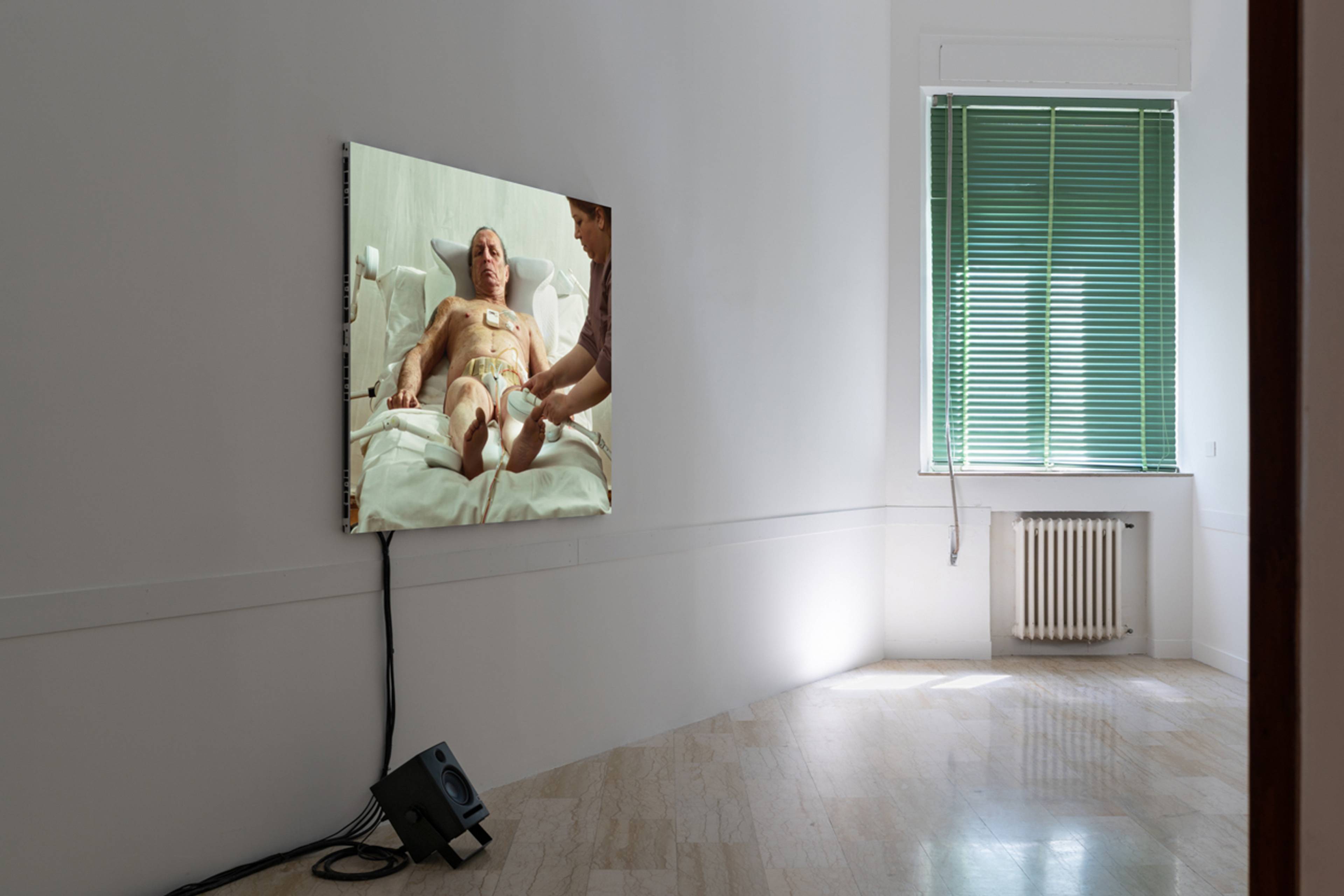
Roman Khimei and Yarema Malashchuk, Wishful Thinking, 2026. Installation view, “Canicula,” Fondazione In Between Art Film at Complesso dell’Ospedaletto, Venice, 2026. Courtesy: the artists and Fondazione In Between Art Film. Photo © Marco Cappelletti and Giuseppe Miotto / Marco Cappelletti Studio
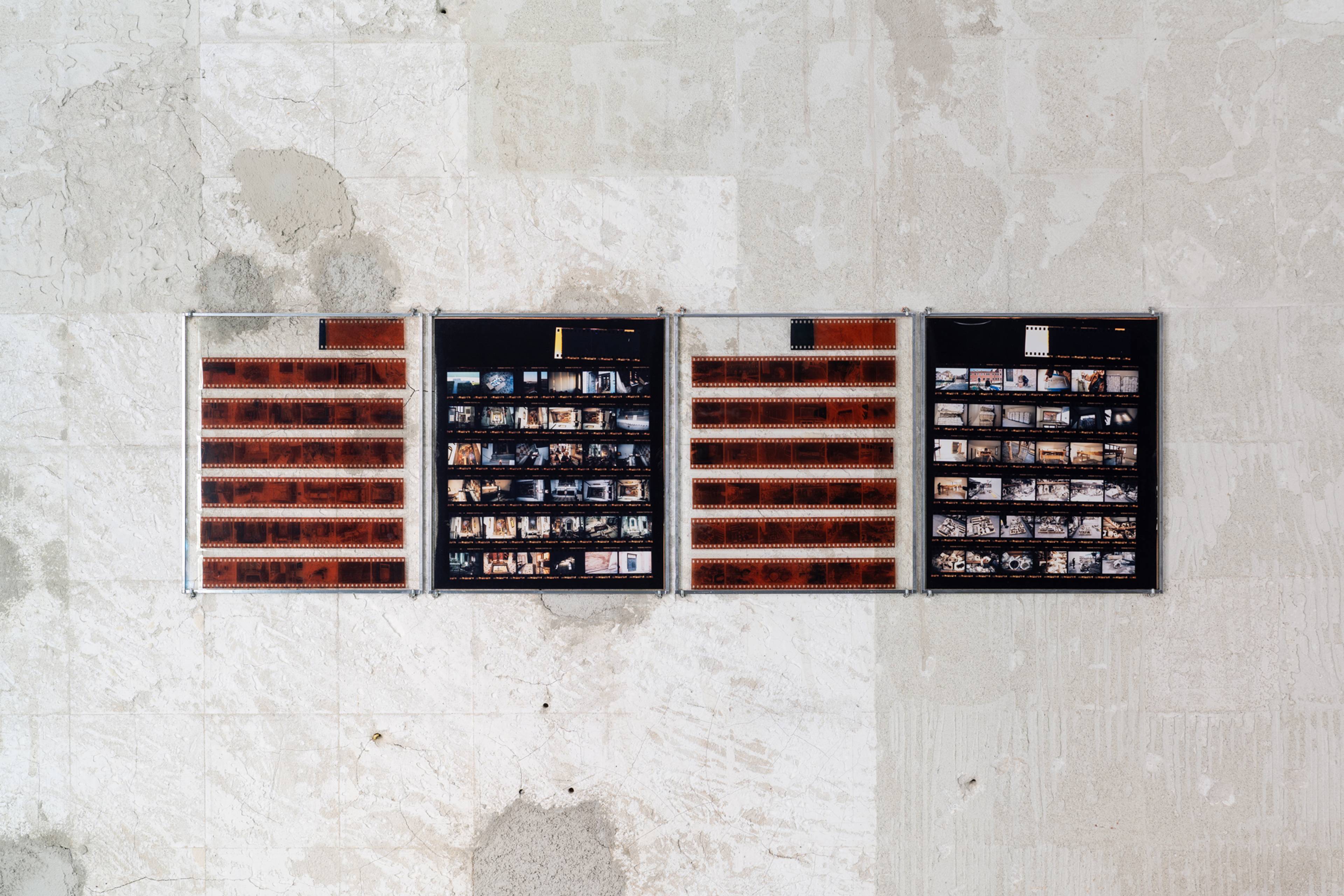
Lydia Ourahmane, 324 Photos (Giudecca, Dorsoduro, Poveglia, Cannaregio, Napoli, Mirano, Murano), 2026. Installation view. Courtesy: the artist and the Nicoletta Fiorucci Foundation. Photo: Marco Cappelletti / Marco Cappelletti Studio
The elegance of this show irked me at first, until I realized that perhaps this was the kind of “quietness” that I had been looking for, the kind that Kouoh seemed to be calling for with her minor keys – beyond the contemplative soundscapes and rituals that otherwise seemed to inundate the Biennale venues. For, if there is a consensus that “our” world, the one ailingly represented by the Biennale, is becoming more and more violently chaotic, why should we think that falling into the old Enlightenment traps of “reflection” and “rationality” is what the world “needs” right now?
Instead, what has stayed with me were moments when dissonance and a certain form of dark celebration were affirmed, like the restaging of Tino Sehgal’s both terrifyingly intimate and mundane Kiss (2002) at AMA Venezia; Yuyan Wang’s Boring Billion (2026), a chopped-up video of cyborg oil, also in “Canicula”; Matthew Wong’s paintings of slightly ajar doors and abstract tunnels in “Interiors” at Palazzo Tiepolo Passi; or the polyphonic rhythms of the Nakibembe Xylophone Troupe at the Palazzo Grassi. For if we must mourn – as the epoch does oblige – may we mourn in ways that are disjunctive and unorthodox, neither major nor minor, but tuned to the chaos of our atonal present. And for that, thankfully, the world needs: artists.
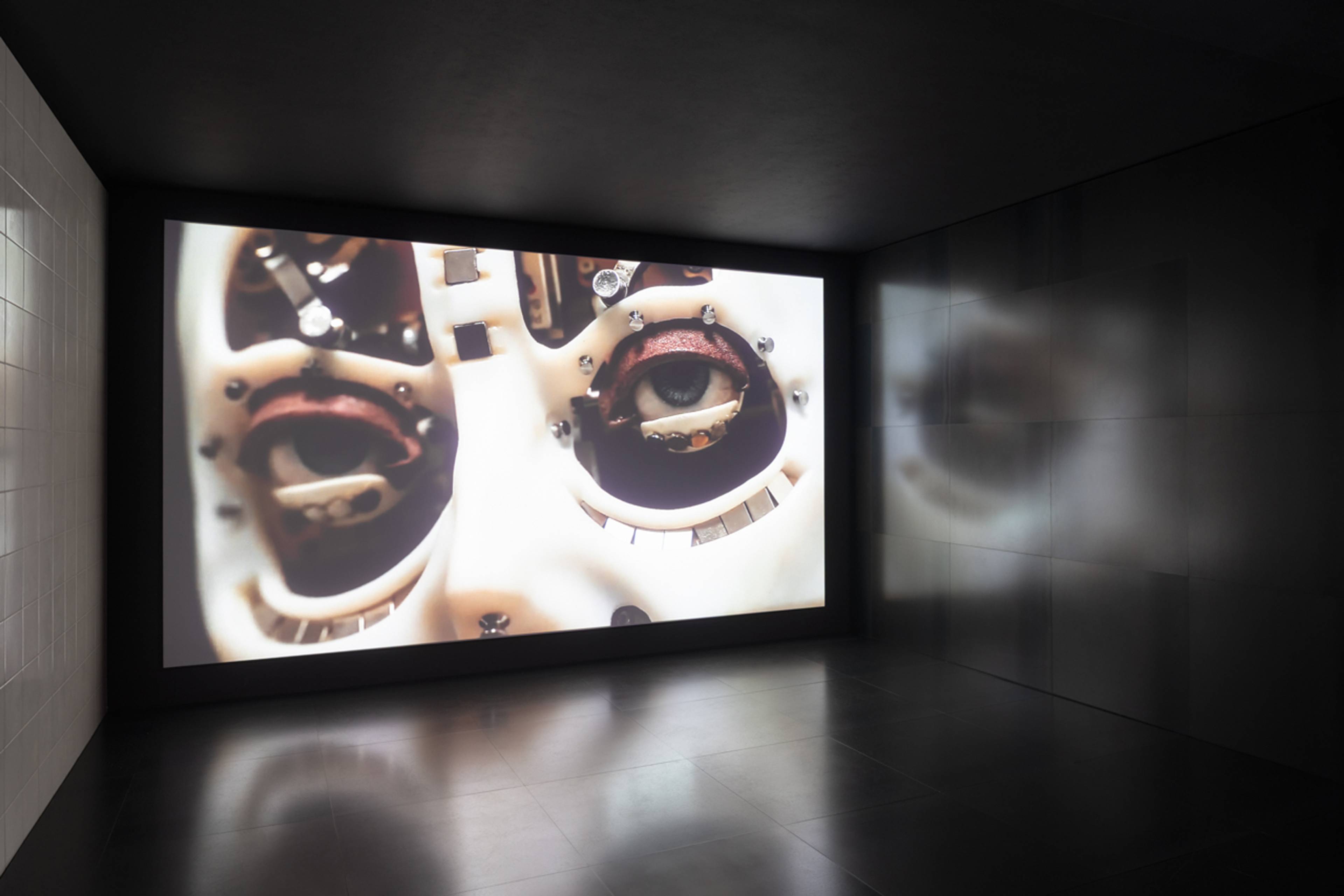
Yuyan Wang, Boring Billion, 2026. Installation view, “Canicula,” Fondazione In Between Art Film at Complesso dell’Ospedaletto, Venice, 2026. Courtesy: the artists and Fondazione In Between Art Film. Photo © Marco Cappelletti and Giuseppe Miotto / Marco Cappelletti Studio
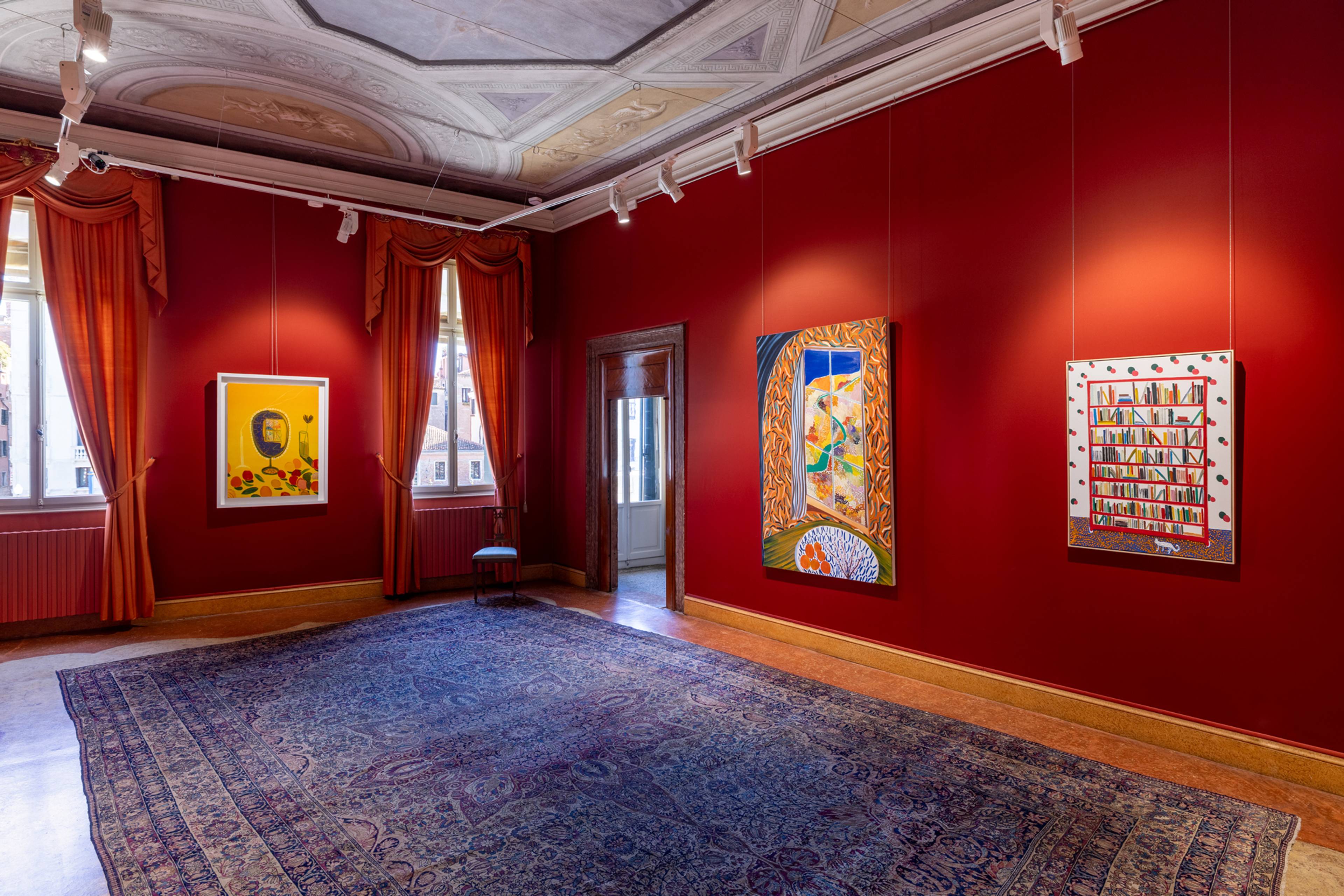
View of Matthew Wong, “Interiors,” Palazzo Tiepolo Passi, Venice, 2026. Courtesy: Matthew Wong Foundation. Photo: Roberto Marossi
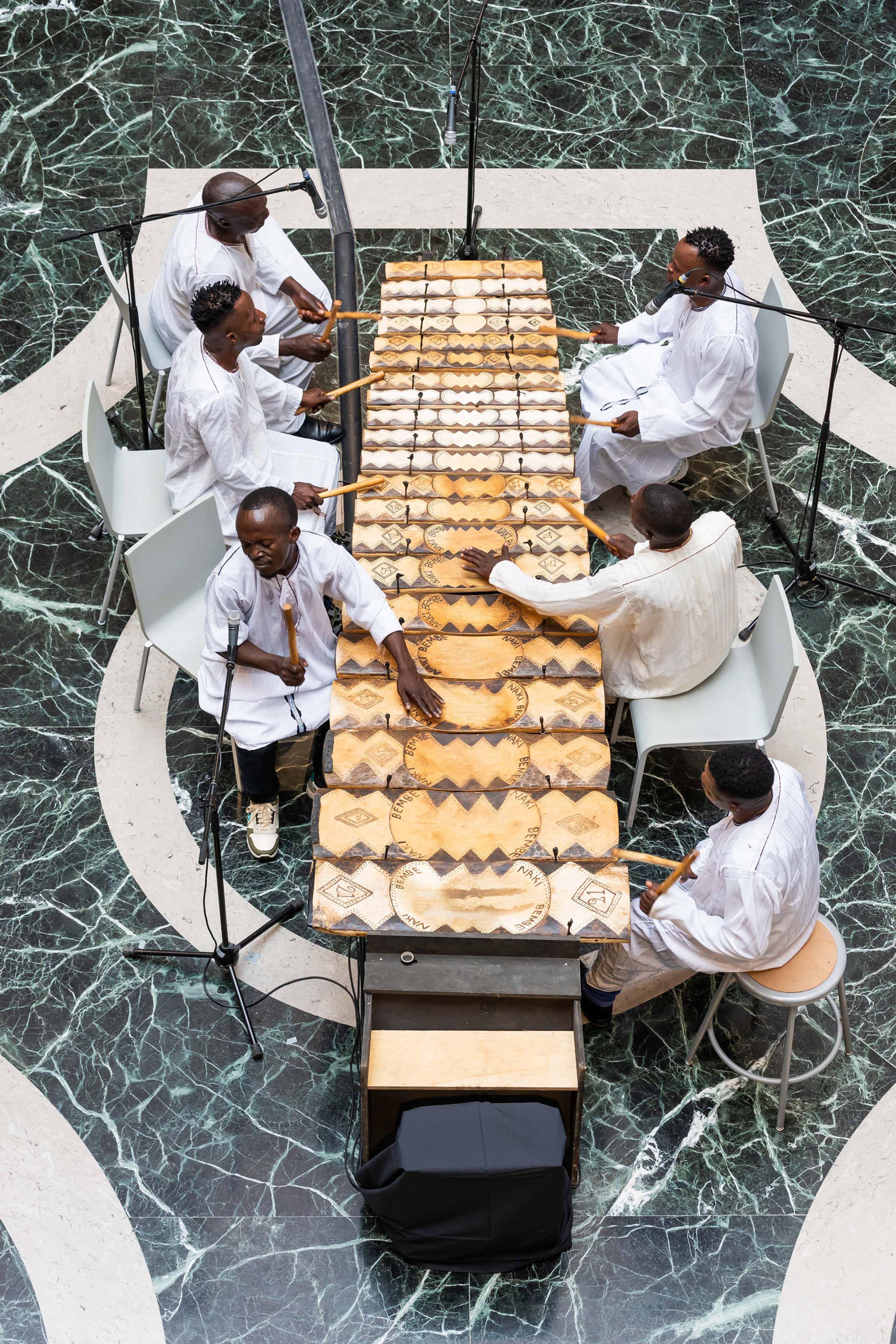
Performance by Nakibembe Xylophone Troupe, as part of Michael Armitage, “The Promise of Change,” Palazzo Grassi, Venice, 2026. © Palazzo Grassi – Pinault Collection. Photo: Marta Buso
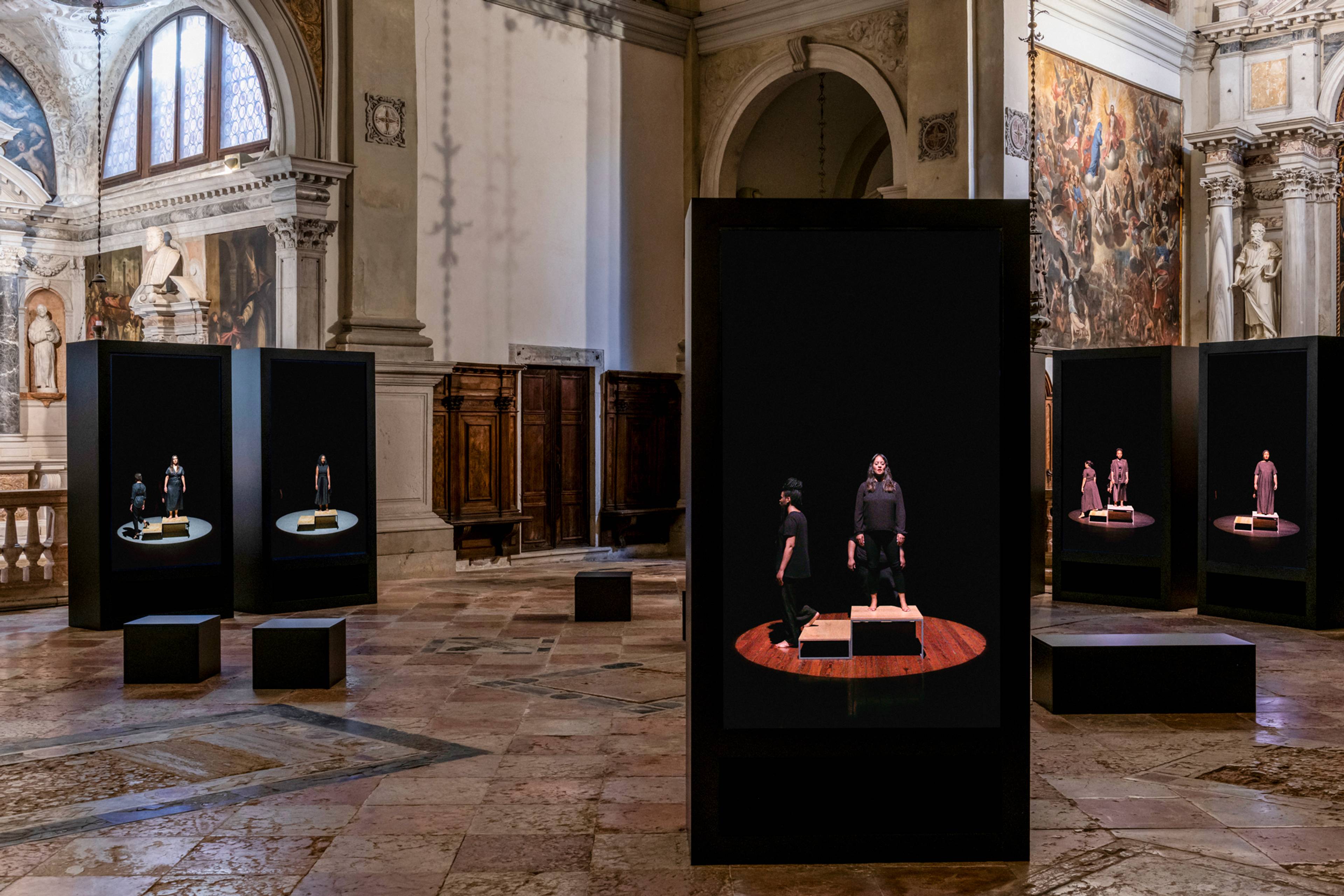
Gabrielle Goliath, Elegy, 2015–. Installation view, Chiesa di Sant’Antonin, Venice, 2026. Courtesy: the artist. Photo: Luca Meneghel
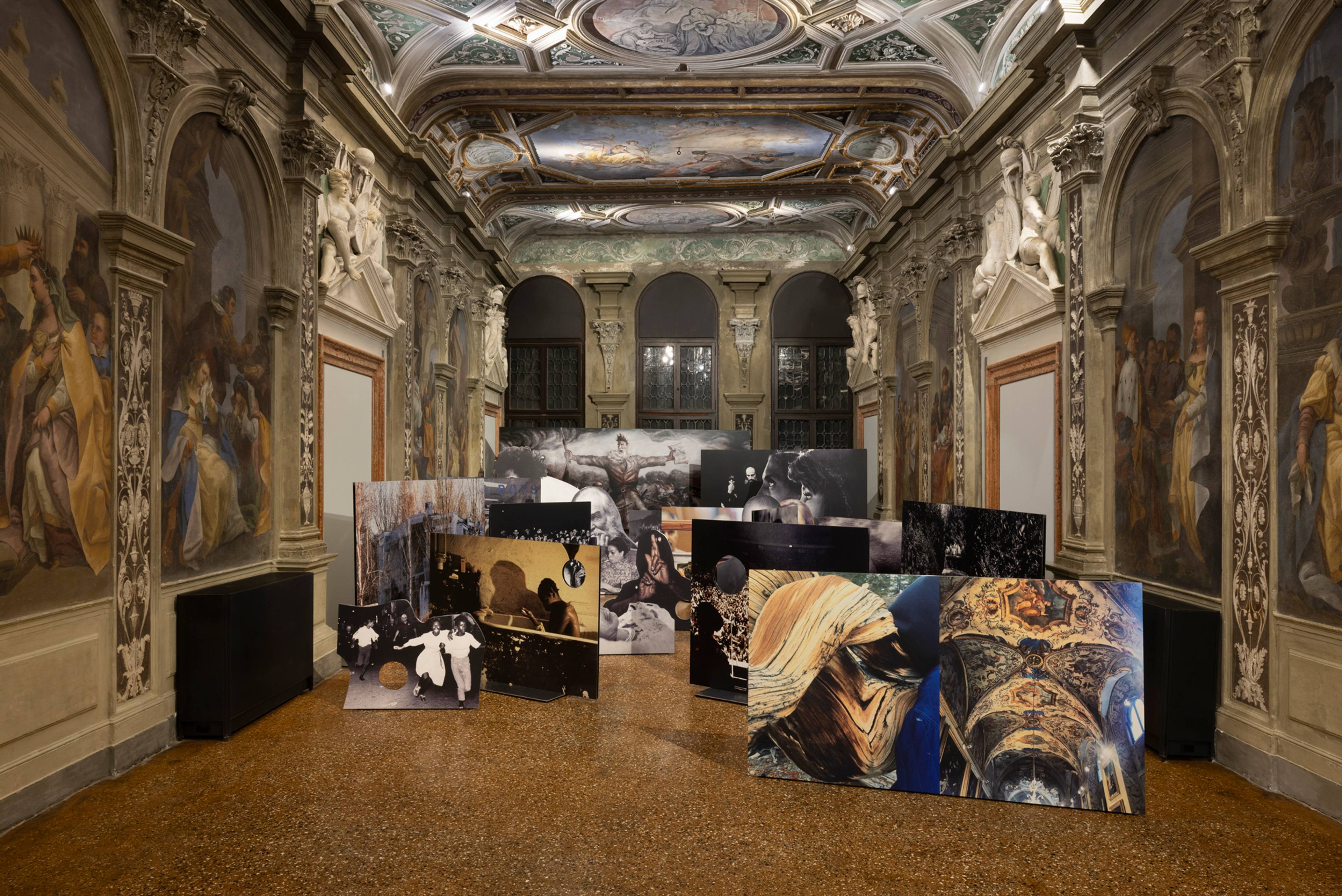
Arthur Jafa, Viriconium, 2026. Installation view, “Helter Skelter: Arthur Jafa and Richard Prince,” Fondazione Prada, Venice, 2026. Courtesy: Fondazione Prada. Photo: Andrea Rossetti
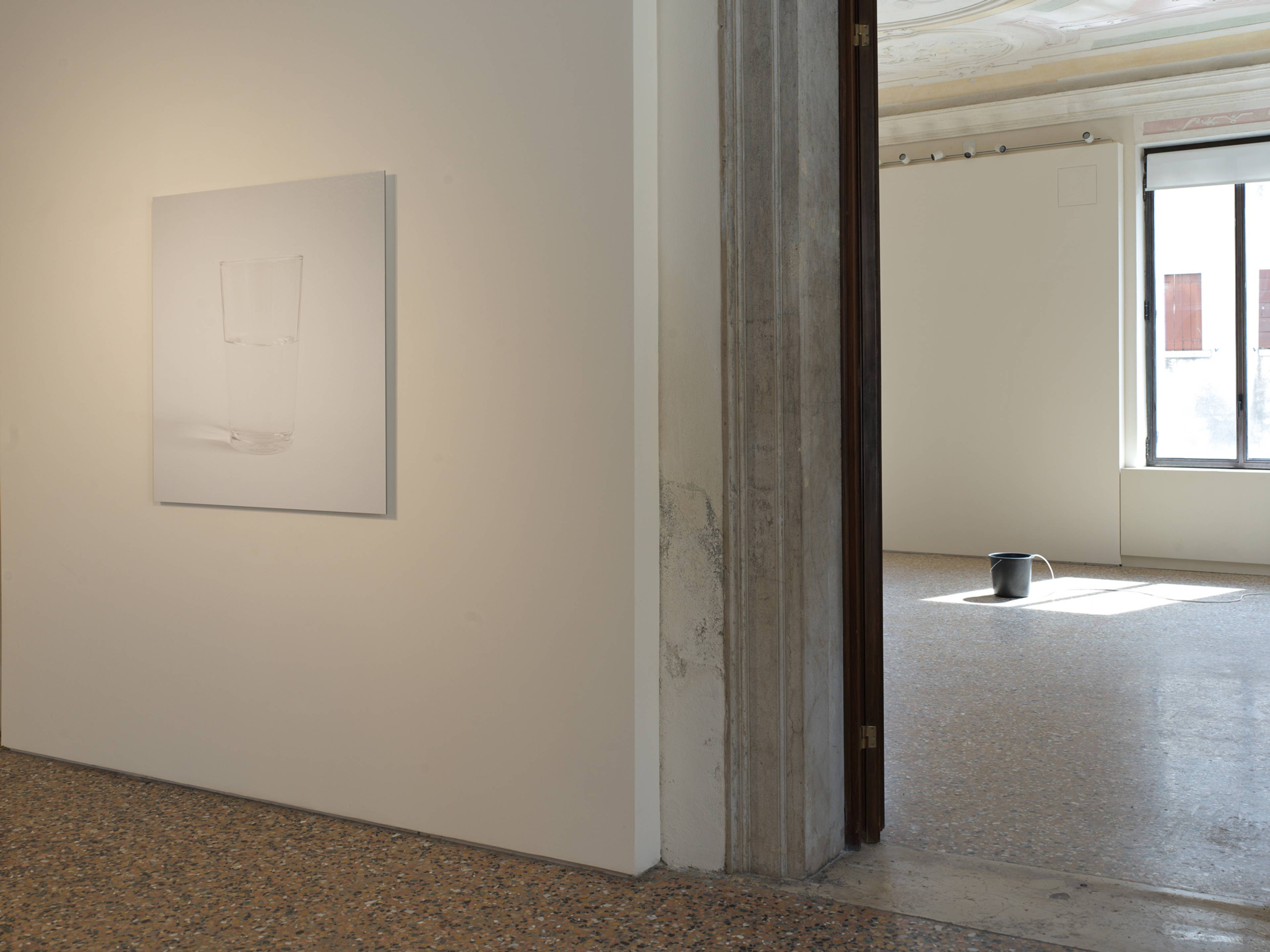
View of Ceal Floyer, “Unfinished,” Palazzo Diedo Berggruen Arts & Culture, Venice, 2026. Photo: Joan Porcal
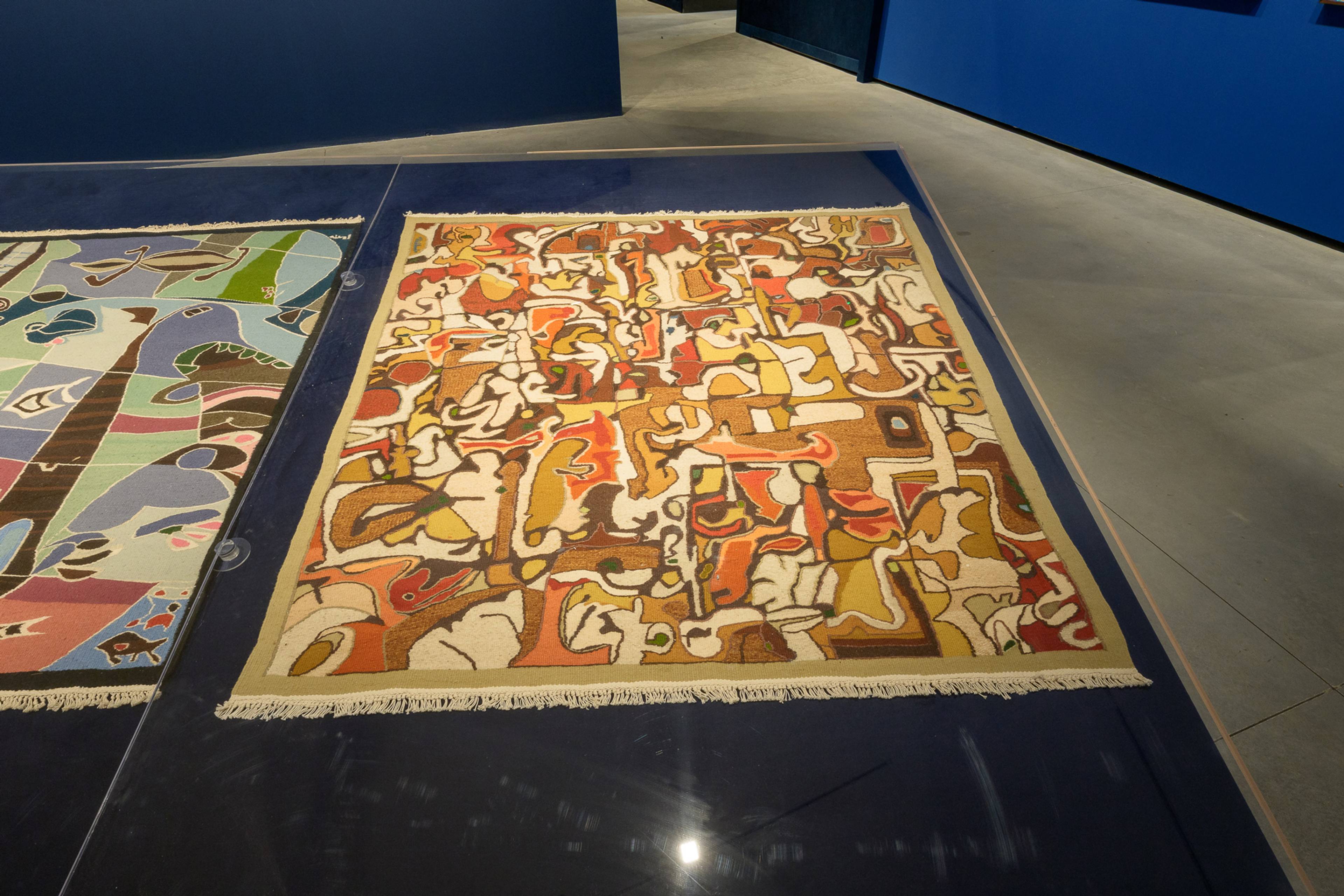
Works by Amina Saoudi Aït Khay. Installation view, “In Minor Keys,” 61st International Art Exhibition – La Biennale di Venezia, 2026. Photo: Andrea Avezzù
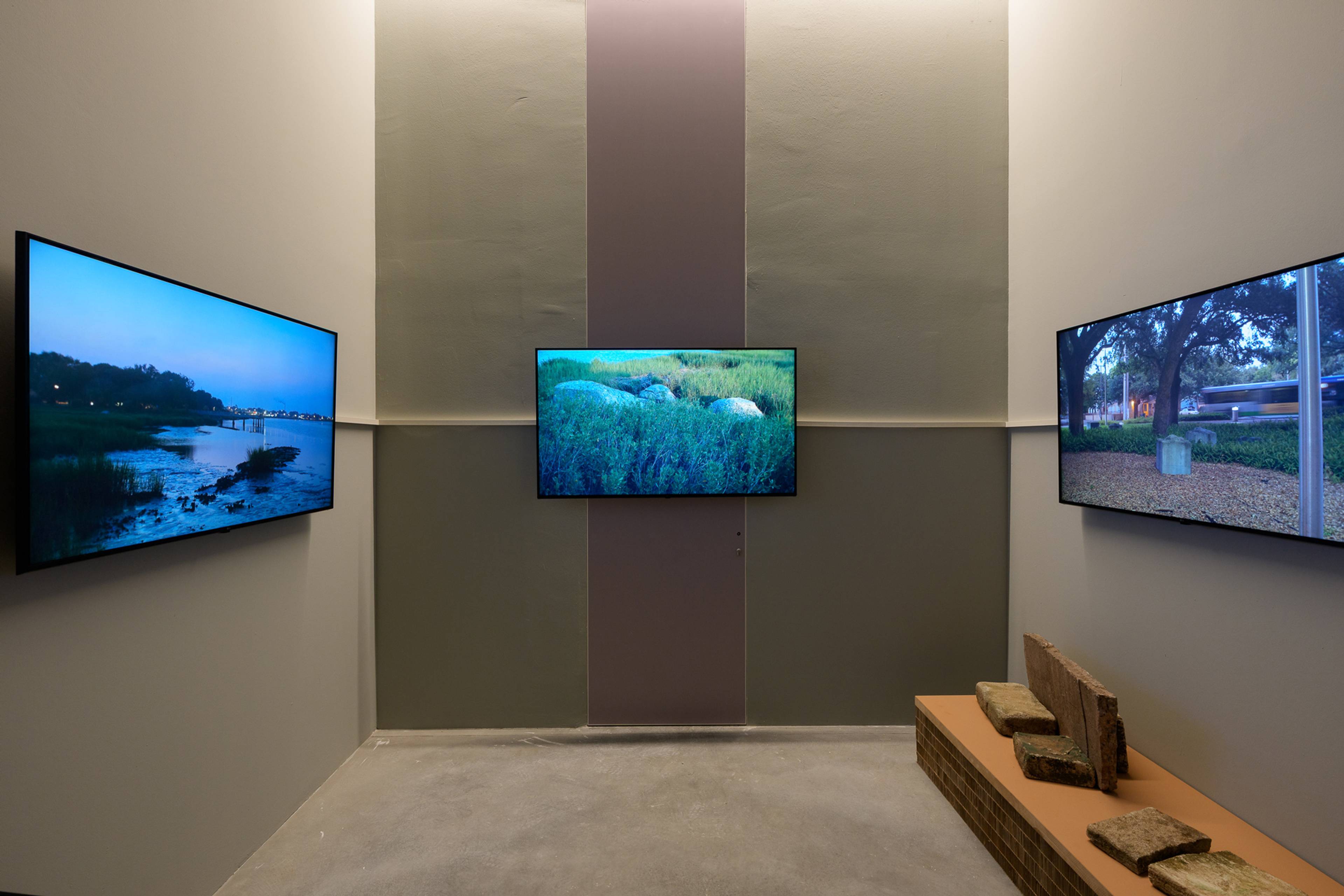
Works by Beverly Buchanan. Installation view, “In Minor Keys,” 61st International Art Exhibition – La Biennale di Venezia, 2026. Photo: Andrea Avezzù
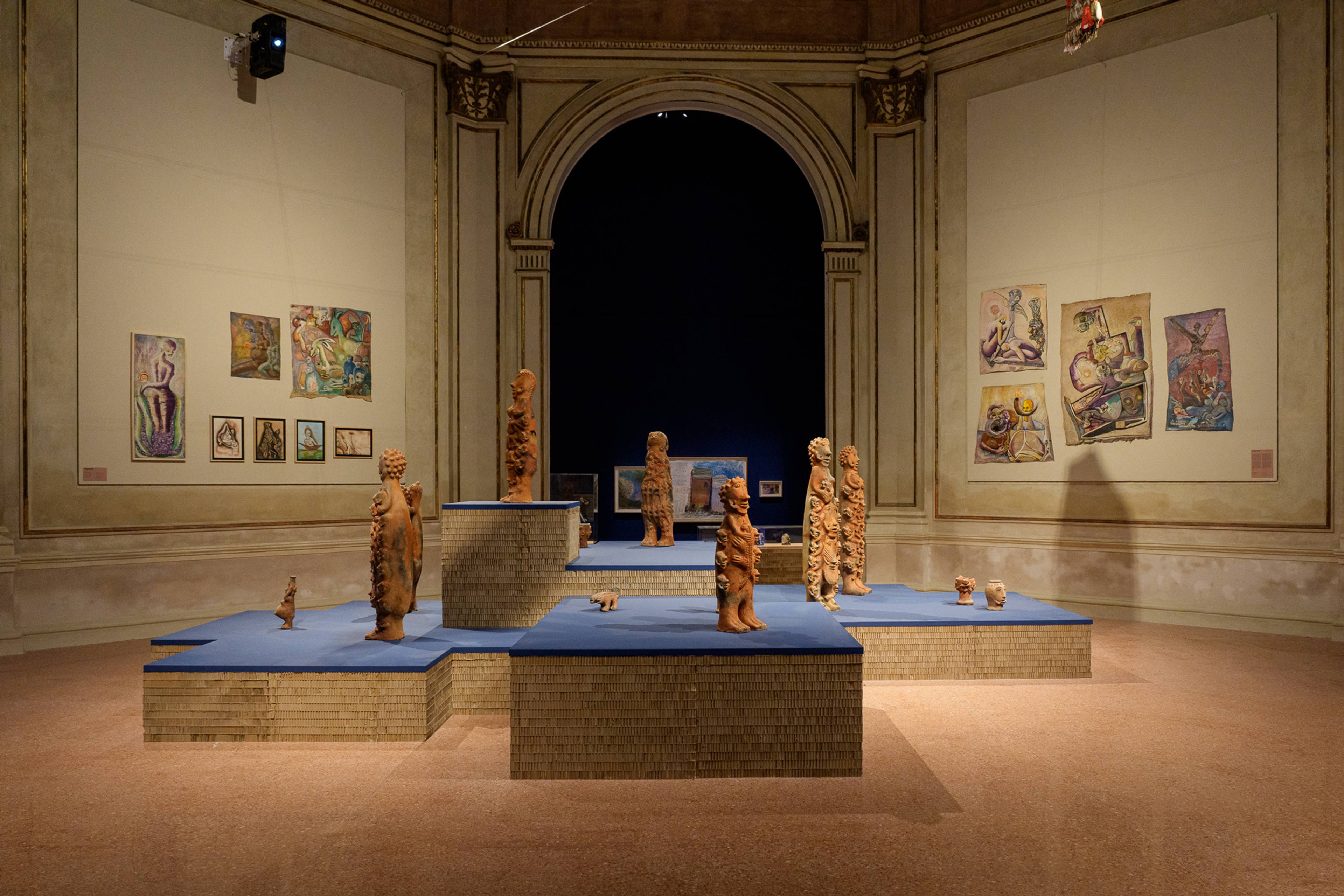
Works by Werewere Liking. Installation view, “In Minor Keys,” 61st International Art Exhibition – La Biennale di Venezia, 2026. Photo: Andrea Avezzù
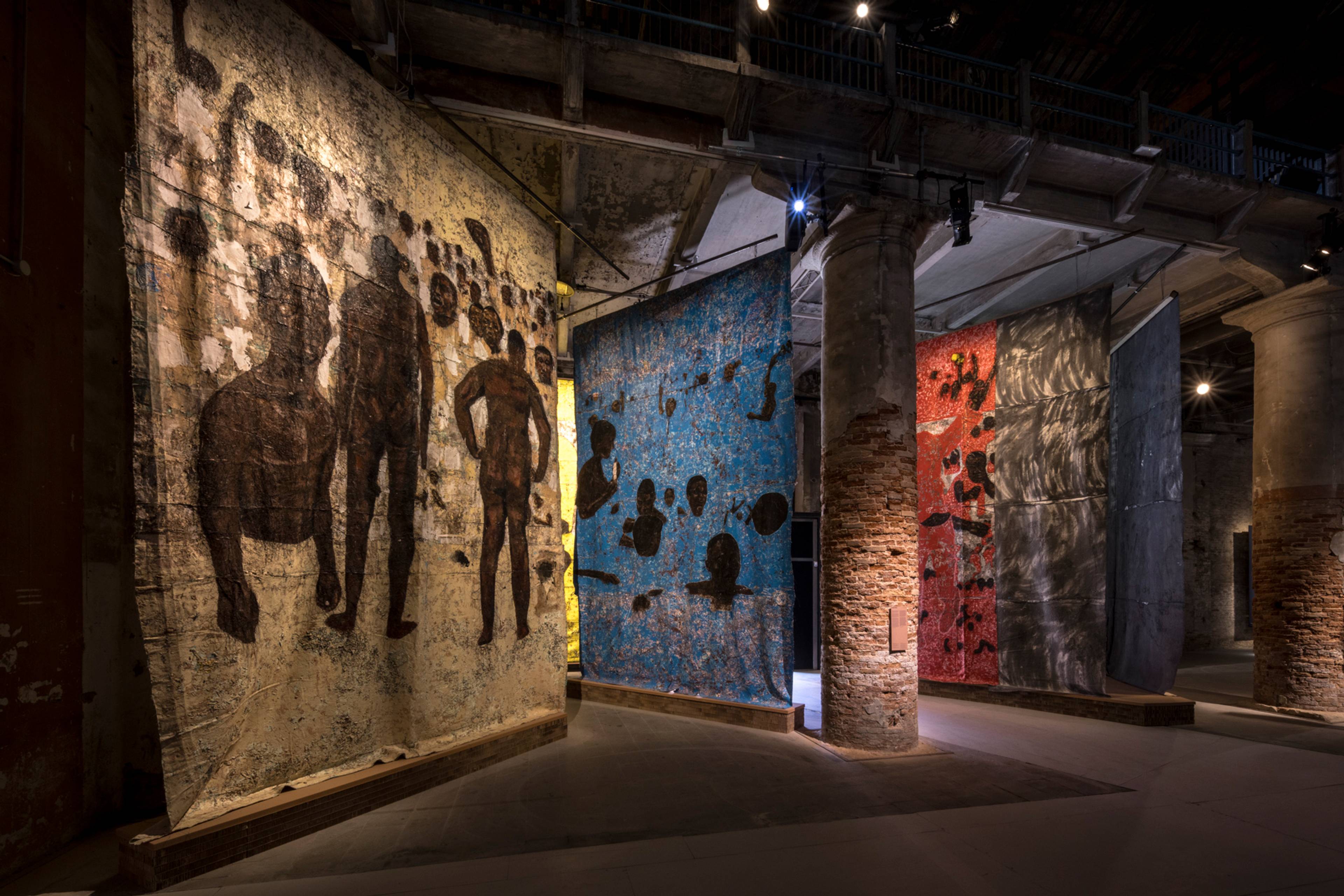
Works by Kaloki Nyamai. Installation view, “In Minor Keys,” 61st International Art Exhibition – La Biennale di Venezia, 2026. Photo: Marco Zorzanello
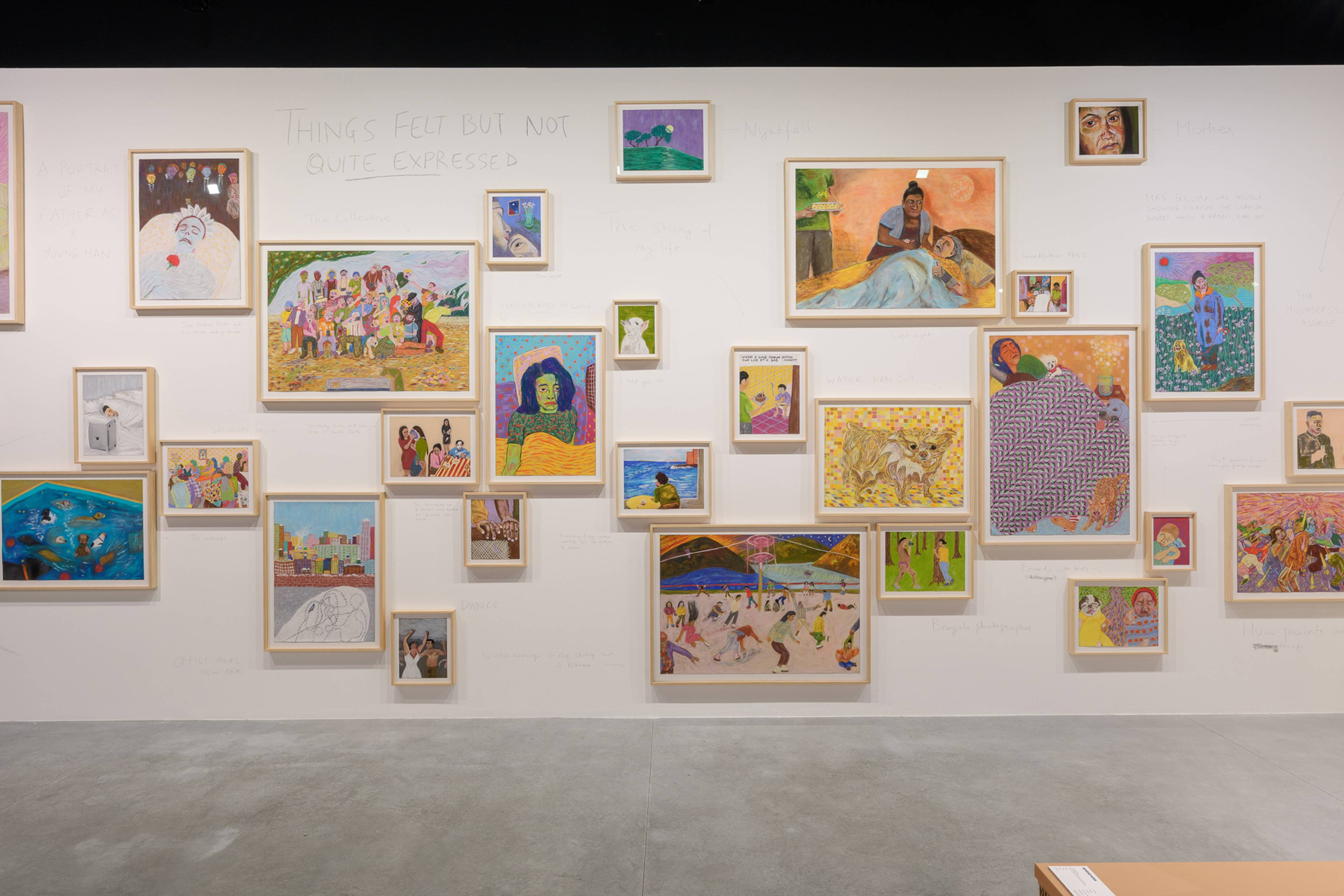
Works by Sohrab Hura. Installation view, “In Minor Keys,” 61st International Art Exhibition – La Biennale di Venezia, 2026. Photo: Andrea Avezzù
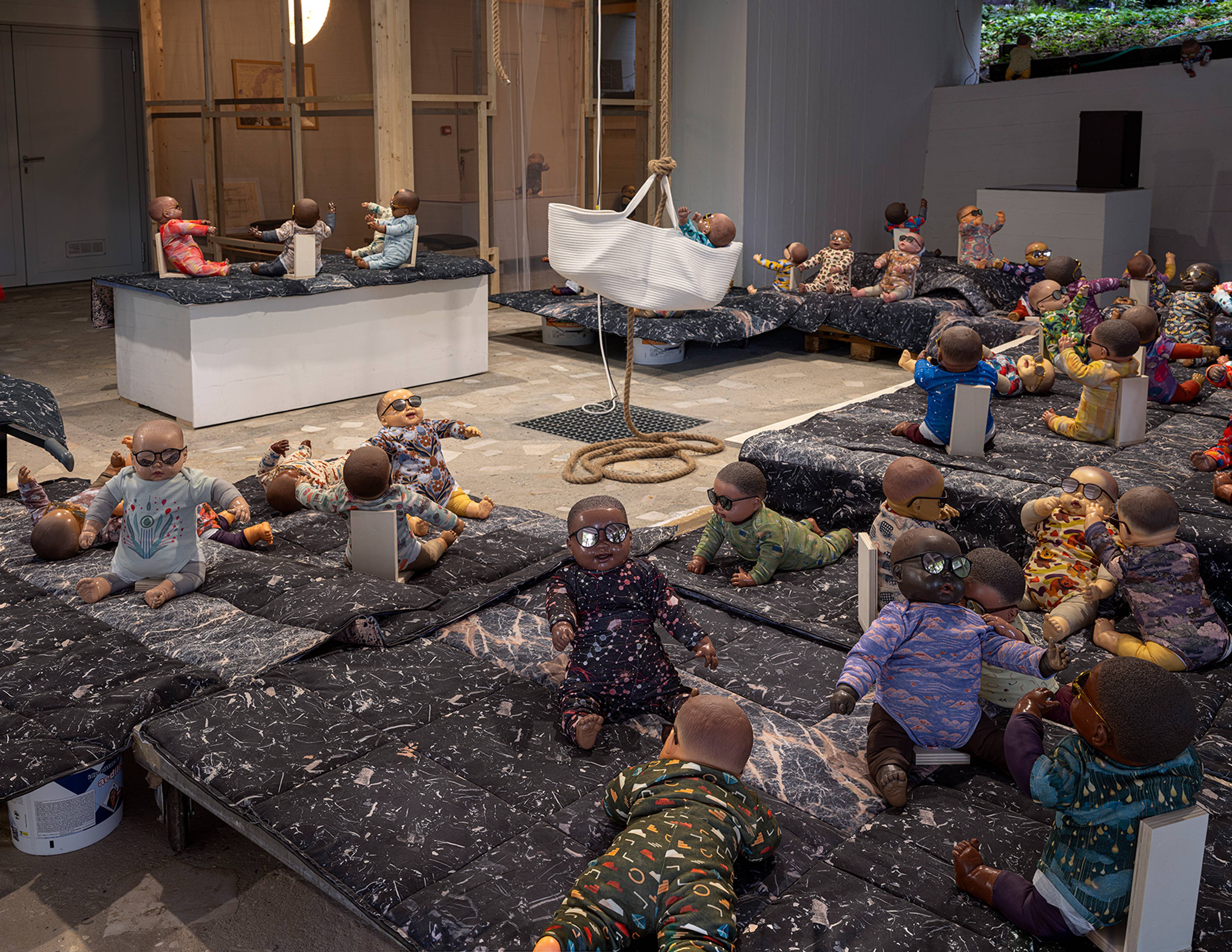
Ei Arakawa-Nash, Grass Babies, Moon Babies, Pavilion of Japan, 61st International Art Exhibition – La Biennale di Venezia, 2026. Photo: Uli Holz
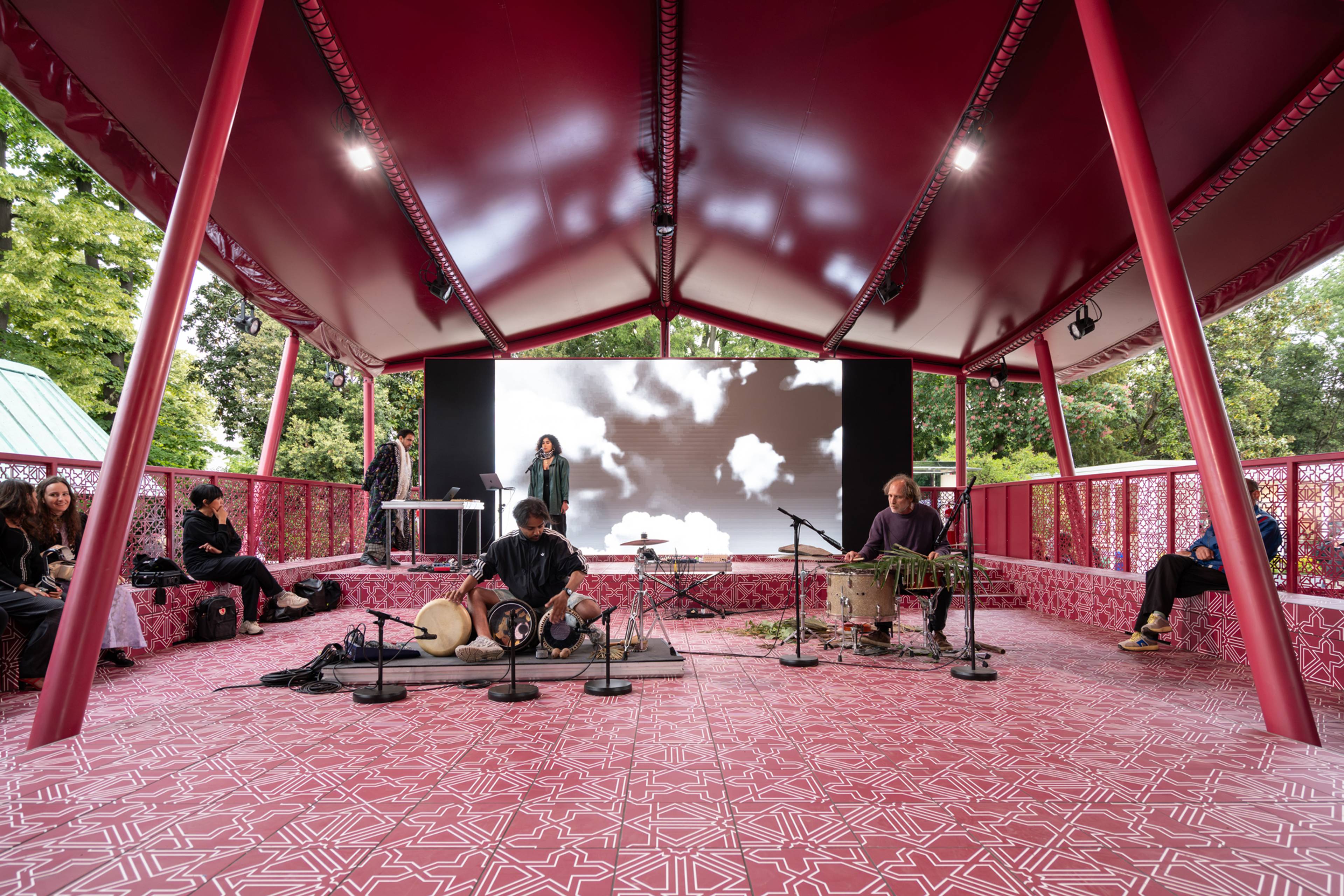
untitled 2026 (a gathering of remarkable people), highlighting improvisational collaborations arranged by Tarek Atoui. Musicians (from left to right) Tarek Atoui, Naghib Shanbehzadeh, Aya Metwaly, Thomas Gouband. Performance view, Pavilion of Qatar, 61st International Art Exhibition – La Biennale di Venezia, 2026. Photo: Giuseppe Miotto / Marco Cappelletti Studio
___
“In Minor Keys”
Central Pavilion & Arsenale di Venezia
61st International Art Exhibition – La Biennale di Venezia
9 May – 22 Nov 2026