
Mark Fisher, paraphrasing Fredric Jameson, once said that “it’s easier to imagine the end of the world than the end of capitalism.” But what if someone told you that the end of the world has already come, that such an apocalypse is just another sign of capitalism – and yet, that it remains possible to imagine a new beginning? These are some of the questions explored by Alessandro Sbordoni, the Italian philosopher, researcher of information technologies, and author of Semiotics of the End: Essays on Capitalism and Apocalypse (2022). The book brings together thirteen essays on the signs of the end of the world in contemporary times, which are not limited to destruction by explosion; they plot the ways our lives are shaped by the relentless rhythm of capitalism, which neither stops nor sleeps.
A scholar of renowned theorists like Jean Baudrillard, Byung-Chul Han, and Mark Fisher, Sbordoni analyzes the cultural scenario of the “end,” one in which we are no longer haunted by the specters of the past, but by a ghostly future. The hegemonic cultural industry, in his view, is a factory of pop aesthetics, one radically fixated on the past and on the perpetuation of the present; instead, we must look to underground music and cinema, and especially to the internet’s Backrooms, for the aesthetic alternatives we require to recreate the world.
Camila Cardozo: The title of your book, Semiotics of the End, suggests an idea of the “end” in an apocalyptic sense, but not as a definitive or punctual moment. It seems to me, from reading it, that the end never comes; on the contrary, it feels like an infinity where we reuse the remnants that capitalism has left us, because even as it intensifies the collapse, we keep being productive. In other words, is what we’re experiencing in late capitalism an endless end?
Alessandro Sbordoni: In Simulacra and Simulation (1981), Jean Baudrillard argued that the apocalypse was finished once and for all. Digital media, he stated, had replaced the production of difference with the never-ending reproduction of the same. The end no longer had any end. And yet, Baudrillard was computer illiterate.
There is no message without noise, there is no signal without randomness, as first-generation information theorists were very soon to discover. But in order to reproduce an unheard-of message, it may be necessary to turn on the volume. The electronic music of SOPHIE and Arca, the artificial neural networks of Holly Herndon, and the glitch art of Rosa Menkman are the technological proof that digital media are also able to reproduce something radically new.
Half a century after the end of the world, we are starting to see the image and hear the sound of the future. It is the aesthetics of the apocalypse, the reproduction of a whole new world by means of waveform editing and computer graphics techniques. After the endless end of capitalism, another end is always beginning. Today, the reproduction of capital is reproduced ad infinitum by means of digital technology. At the same time, digital technology is already beyond the end of capitalism. This argument is at the core of Semiotics of the End, as well as my latest book, Beyond the Image (2026).
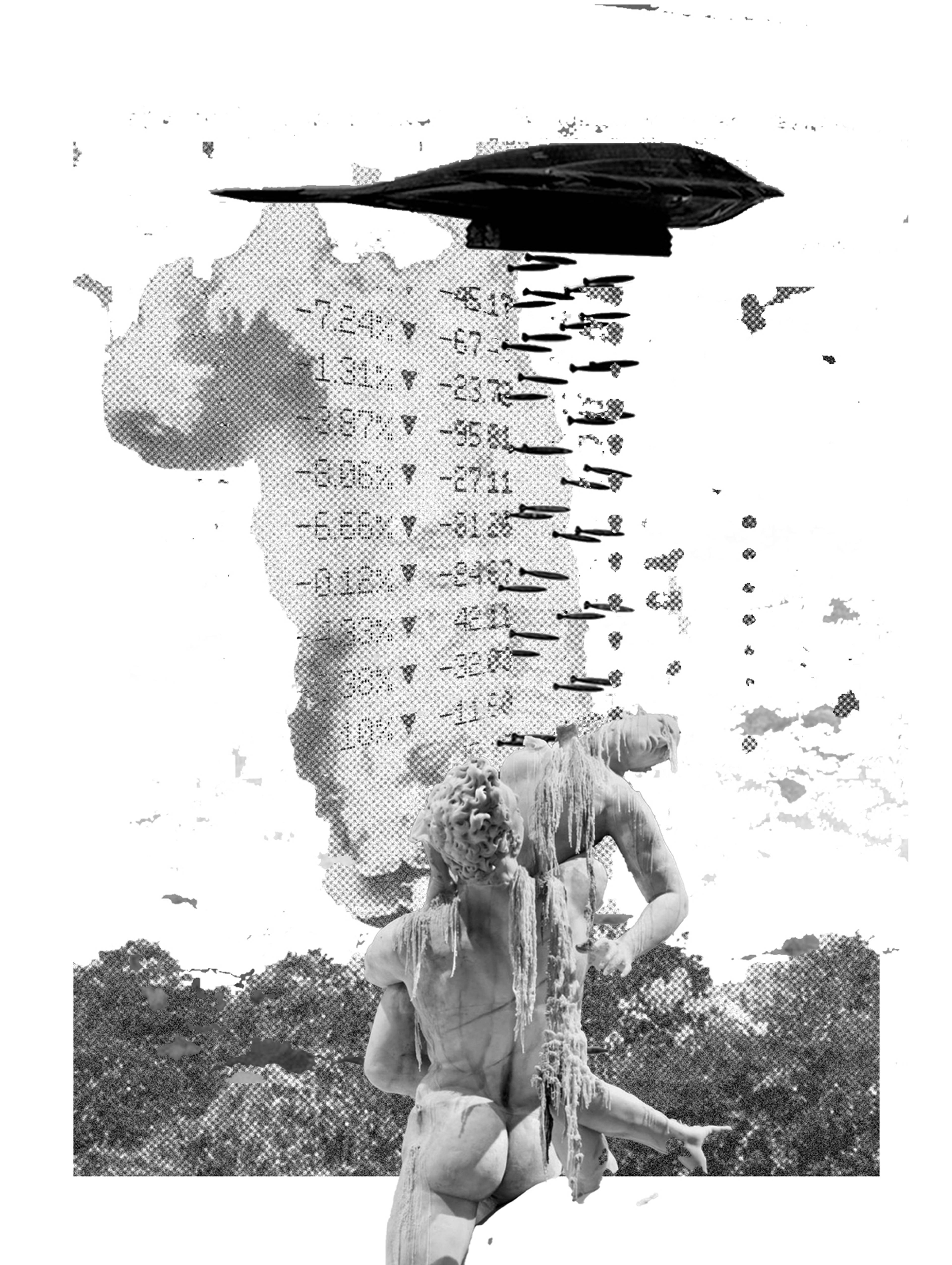
“MELTDOWN NOW”
CC: You present some signs produced in this apocalypse using terms from cyberculture. Could you revisit the explanation of the zeros-and-ones system in your thesis?
AS: The essays included in Semiotics of the End were significantly influenced by the writings of the Cybernetic Culture Research Unit (CCRU), which also informed my political views of cybernetics and information theory. Mark Fisher was a prominent member of the CCRU, which was founded in the 1990s by Nick Land and Sadie Plant at the University of Warwick. The notions of zeros and ones are recurring themes in the texts of these cybertheorists.
In her book of that name (Zeros and Ones: Digital Women and the New Technoculture, 1998), for example, Plant discusses the opposition between zeros and ones in binary code on a par with the duality between male and female, presence and absence, being and nothingness, or, in more Freudian terms, phallus and castration. Land, too, takes his cue from Freud and his theory of the death drive, equating zero with a state of dissipation that is equivalent to death, nothingness, even virtuality. But in his later philosophy, Land goes even further and argues for the existence of a relationship between zero and money itself, while he takes note of the introduction of zero in Europe by means of double-entry bookkeeping.
Half a century after the end of the world, we are starting to see the image and hear the sound of the future. It is the aesthetics of the apocalypse.
In Semiotics of the End, zero is often used to denote a relationship between technology and imagination. In the history of technology, zero is the null quantity that, nevertheless, is always at the center of the definition of one. In mathematics, zero is the identity of a solved equation (an equation like 1+1=2, which is equivalent to 2=2, is identical to 0=0). In computing, zero is defined as the off state of the machine. In these cases, zero is simultaneously nothingness and its logical counterpart; it is both the end of all mathematical operations and their starting point.
Now, just as the definition of one in a binary system is dependent upon zero, the definition of technology always relies on its supplement: imagination. In fact, radical imagination is the condicio sine qua non for the emergence of any new technological paradigm. As an example, think only of how the Copernican revolution was driven as much by the invention of the telescope as by a shift in the imaginary; thereafter, the cosmological definition of ones and zeros – the Earth and the Sun – was changed beyond recognition.
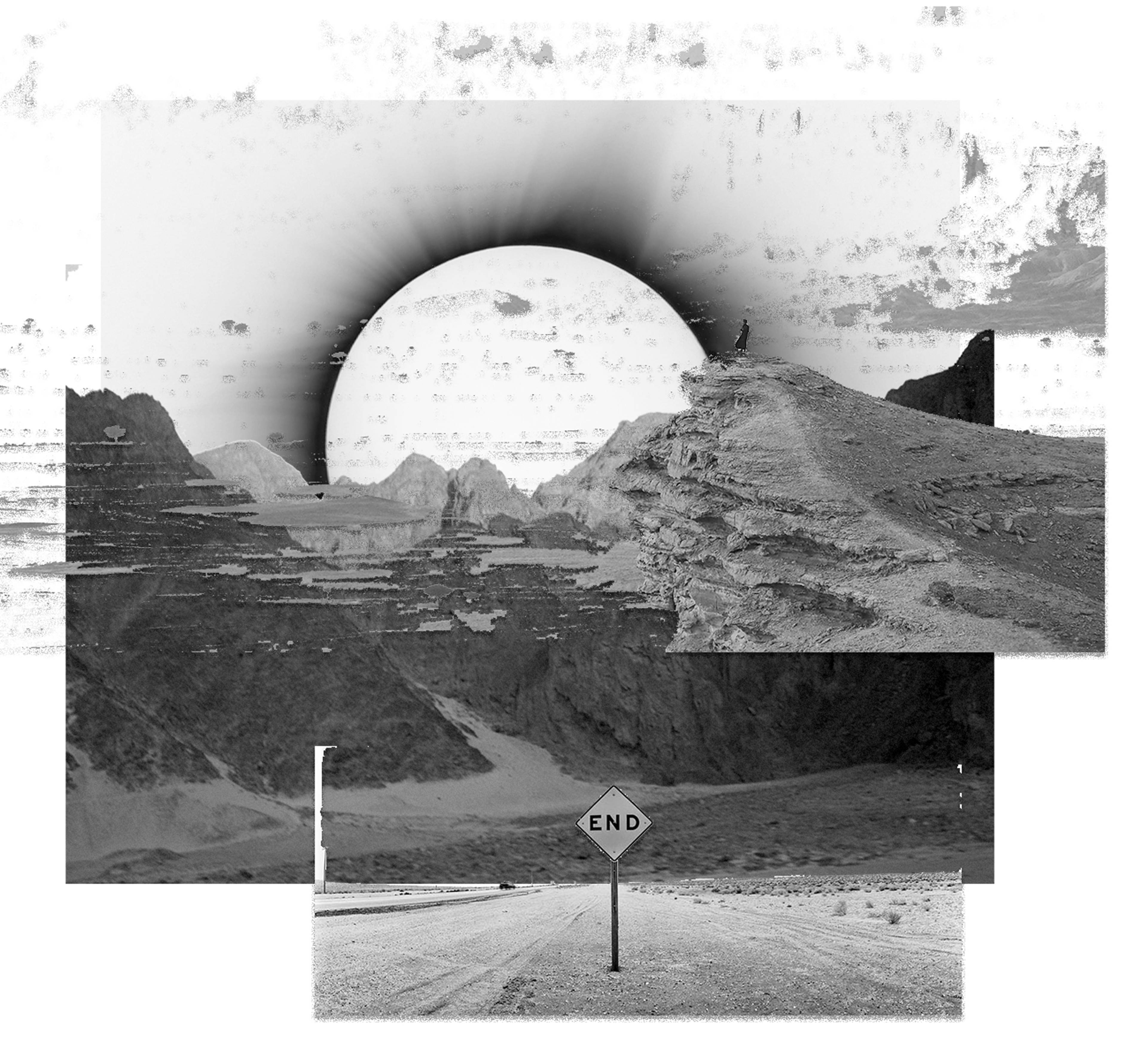
“NOT WITH A BANG, BUT WITH A YAWN”
CC: The notion of apocalypse as the end of an era has been a mystery to many civilizations. It has also always been somewhat worrying or even frightening. Would you say that our feeling for the apocalypse isn’t fear anymore, because it’s not conceived in the distant future? And, if this end doesn’t raise our adrenaline to escape, is it because what we’re feeling right now is boredom and exhaustion?
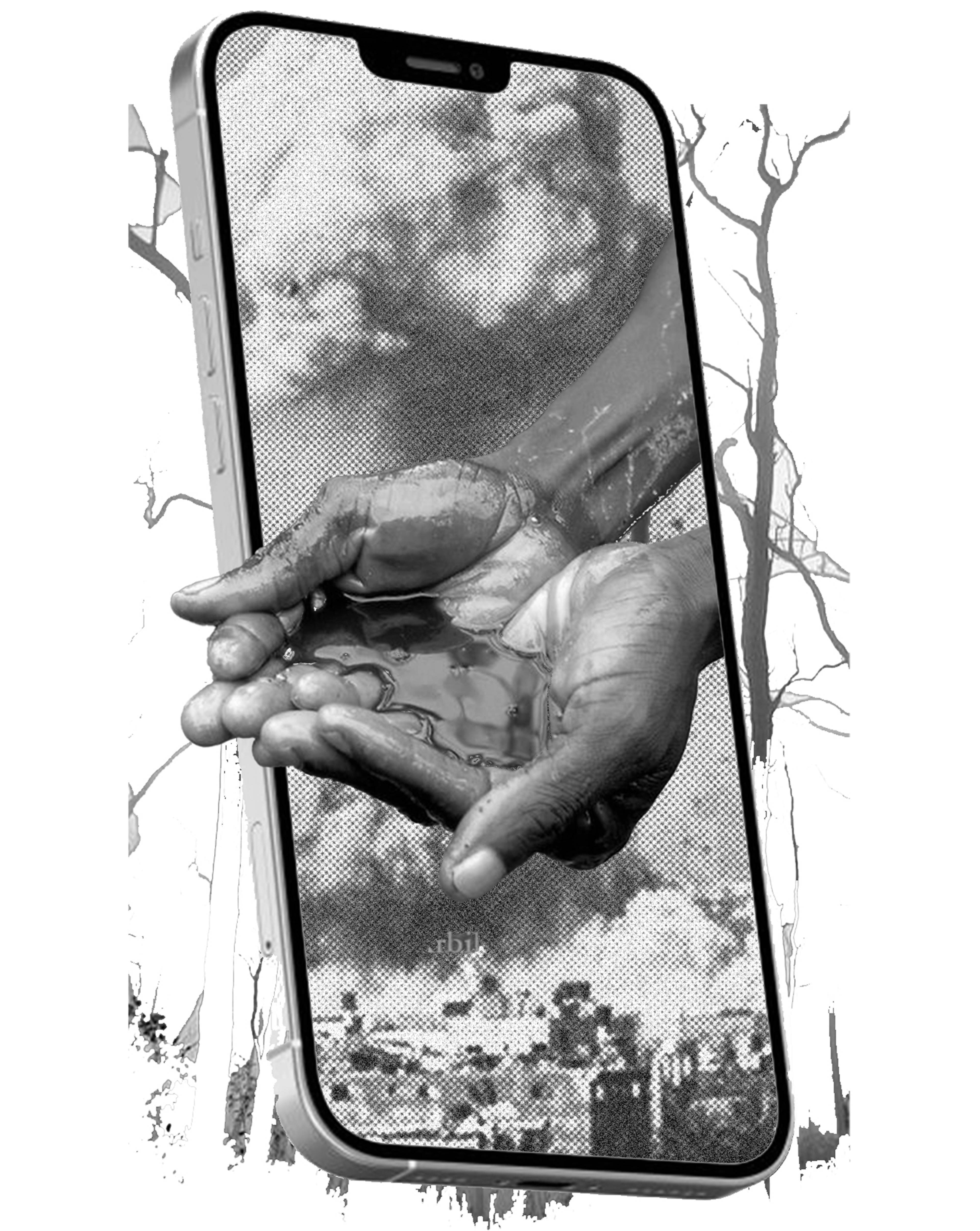
AS: “This is the way the world ends. Not with a bang but a whimper,” TS Eliot wrote in a poem published more than a century ago (“The Hollow Men,” 1925). Today, the end of the world no longer frightens us. The world is already over, and capitalism is putting it all up for sale. The first chapter of my book (“Not With a Bang but a Yawn”) argues that boredom, too, has been dispelled from our relationship with the end of all things and been replaced by hyperstimulation. Unlike boredom, hyperstimulation supplements clock time with the ever-faster acceleration of stimuli. In boredom, clock time does not pass. But in sensory saturation, clock time does not exist; only screen time does. The question, in this regard, is no longer when the apocalypse will take place, but whether the future as such still exists.
Emotions, as Heideggerian philosophy teaches us, do not take place inside time; rather, they are the vectors of time. But unlike boredom or anxiety, hyperstimulation does not have any relationship with clock time. Instead, it reproduces its own timeframe through technology. Indeed, since the advent of electricity in the 19th century, the Sun is no longer the measure of human temporality; the light of the digital screen always rises over the Empire …
“CAPITALISM & DARK MEDIA”
CC: One of the main symptoms of late capitalism is burnout. Deep down, faced with this problem, don’t we wish the suffering would end quickly, and there would be a conclusion to it all? Is this what fuels our longing for the end?
AS: In a lecture from the 2010s, “Cybertime Crisis,” Mark Fisher commented on Limitless, the 2011 science-fiction film starring Bradley Cooper, to discuss our own relationship with time scarcity under late capitalism. In the film, the protagonist uses a cognitive-enhancing drug to work faster, sleep less, and squeeze more hours into the day. For late capitalism, time is money and money is time. Therefore, even in a fully automated capitalist society, we do not work less, but even more.
Once again, it is only through the reimagination of the relationship with the technological system as a whole that another future can be wished for. In this regard, a spirit of hope must dispel the specter of despair that hovers above the 21st century; as Matt Bluemink argues in a new book, The Future Is Not Lost (which I edited for Becoming Press; 2026), this is the political task of popular culture today. The world is always something that we make and that we can remake differently.
In the 21st century, popular culture has only entertained us, in its own way. The point, however, is to reimagine everything from the beginning.
CC: Reading your book reminded me of a trend from the turn of the 2010s, when there was this nostalgic emergence of remakes and spin-offs of successful works in audiovisual media. It looks like we’re trying to salvage something in vain, in a desperate attempt to produce when creativity itself has run out. Furthermore, your book introduces “the Backrooms” as a kind of non-place in virtual games. Do you believe we’ve reached a “backroom” in culture just because there are no more unlocked spaces for artistic creation?
AS: In A24’s film adaptation, the Backrooms (2026) are the liminal space of nostalgia. Like in Andrei Tarkovsky’s Solaris (1972), the memory of the past returns to haunt the main characters of this summer’s box-office hit. With the exception of the human-looking monsters that infest the Backrooms, on-screen memories are restricted to consumer goods like furniture and decor; empty spaces like offices and apartments; doors that do not open outward. The film, which is set in the 1990s, is unable to remember a past that is radically different from the present.
In Britain, cultural critics like Fisher and Simon Reynolds [interviewed by Adina Glickstein in Spike’s Fall 2025 issue, “Nostalgia”] criticized an incapacity to imagine the future. It is an open question how much their reading has not become a sort of self-fulfilling prophecy, in which nostalgia is cross-listed by production companies as a selling point for their marketing campaigns. Now, if there is a book in the Backrooms, it has to be a paperback copy of Fisher’s Ghosts of My Life (2014) …
In response to all this, we have to reply: the future is not lost! There are still artists, musicians, and directors who make and re-make the present. Just have a look at Dana Dawud’s Internet cinema [interviewed by Persis Bekkering in Spike’s Spring 2026 issue, “Everything’s Computer”]! Just listen to SOPHIE, Arca, Iglooghost, and the artists of SVBKVLT! The memory of yesterday is replaced by the aesthetics of a new tomorrow. In the 21st century, popular culture has only entertained us, in its own way. The point, however, is to reimagine everything from the beginning.
“AFTER THE END OF ALL THINGS”
This interview was originally published in Portuguese by the Brazilian online magazine Carbono.
Alessandro Sbordoni’s Semiotics of the End is free to download as a PDF from the webstore of Becoming Press.