
Christian Egger: I wanted to ask you upfront whether you addressed the specific features of the architecture of the KunstHausWien. Museum Hundertwasser in your current exhibition, or how these site-specific works (like an LED-covered tree simulating flames in a backyard) came about? And perhaps also whether a mid-career consideration played a role in this exhibition, in collaboration with the curator?
Julius von Bismarck: Why did I do the exhibition? Firstly, because of the work of curator Sophie Haslinger, especially the environmentally conscious themes present in her previous exhibitions. It was definitely a challenge for me, because the museum spaces here are very crooked and uneven, creating many unique situations where you first have to see if something can even work. On the other hand, Hundertwasser has these strong thematic ties to my work, so, as difficult as it was visually, it was conceptually easy. These two forces balanced each other out a bit, and I thought, okay, let’s just give it a try.
CE: You were already familiar with its namesake, [the Austrian artist] Friedensreich Hundertwasser?
JvB: I’d been to Vienna before, and I think you can’t walk through Vienna with your eyes open without seeing Hundertwasser in some way, so I was familiar with him.
CE: Regarding your title, “Normale Katastrophe (Normality Bias)”: do you think we’ve become accustomed to disaster, or would you agree with art historian T.J. Demos’s contention that normalization is the enemy in an ecological state of emergency?
JvB: Basically, I don’t think we ever know where we stand, and therefore how normal is the situation we’re in at any given time. That said, I think we all agree that the situation is very abnormal right now. There are many increasingly unpredictable forecasts, whether of tipping points in climate change or vis-a-vis the development of AI. When nuclear weapons were developed, everyone feared a nuclear war that would destroy the world. Or perhaps that destruction is still to come, and the interim period has merely been a respite, so to speak.
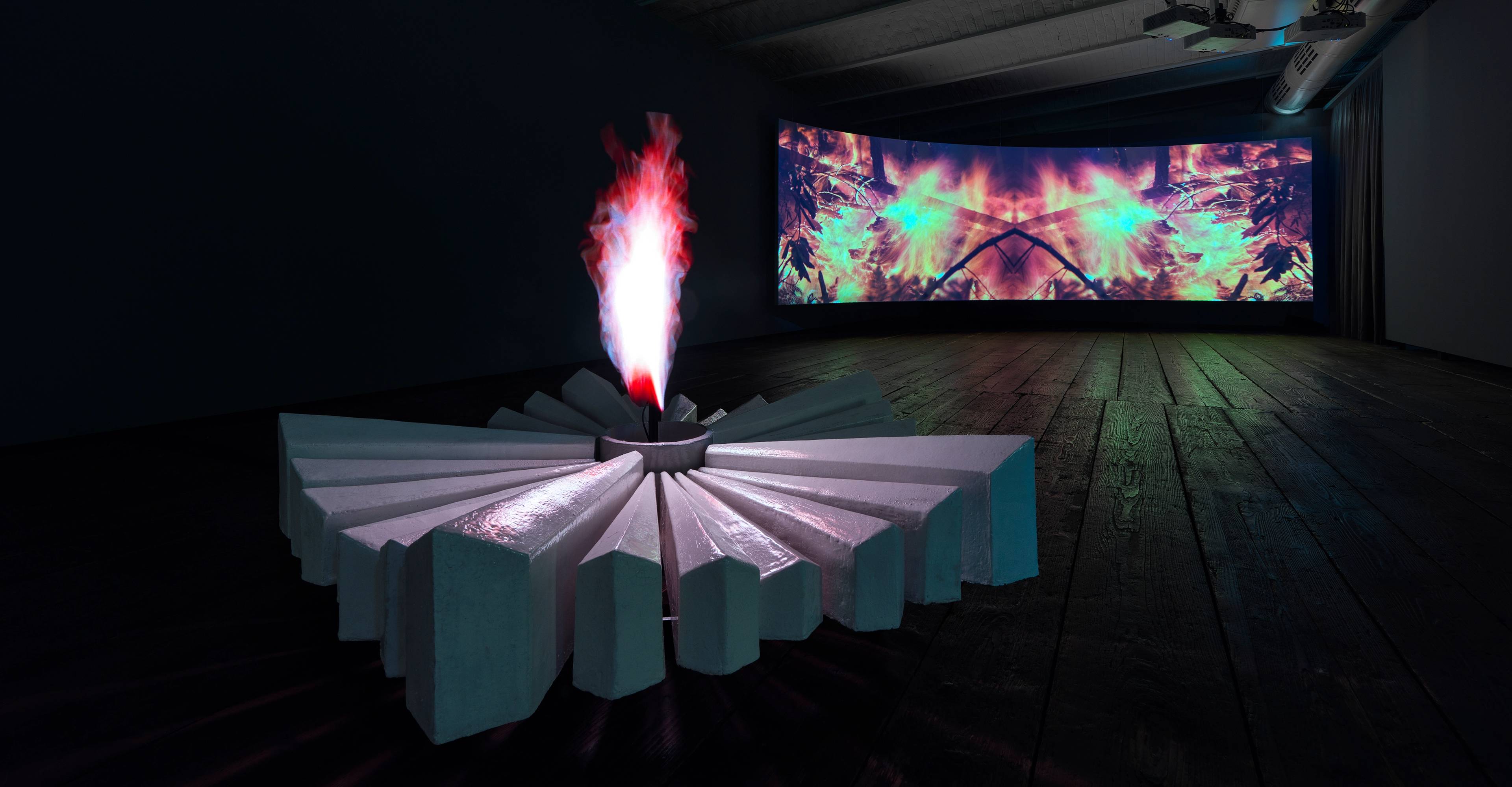
View of Julius von Bismarck, “Normale Katastrophe (Normality Bias),” KunstHausWien. Museum Hundertwasser, Vienna, 2025. Photo: © KunstHausWien
CE: You were born in 1983. When did you first get the feeling that the way you perceived or experienced nature was, or could be, threatened?
JvB: I grew up in Saudi Arabia, so the desert was, so to speak, my first image of nature. At the same time, my European home was in the Swiss Alps, so that I grew up in these two very strongly contrasting environments.
CE: At the same time, they’re both relatively stable regions.
JvB: Whether you’re on an alpine pasture in the Alps, or by the sand dunes in Saudi Arabia, you don’t think about environmental destruction. Because both places are initially very beautiful and function, in some way, as what they are. But that doesn’t necessarily mean that they are stable.
I grew up in the aftermath of Chernobyl, and when I started school in Germany, in 1990, there was a great deal of skepticism towards nuclear power. The first things I remember were things like “Fuck Chirac!” because France was conducting nuclear weapons tests [in the South Pacific Ocean, 1995–96], and children quickly identify with environmental protection. I also went to a Waldorf school, where green ideas were very prevalent. I had a botanical collection as a child, and spending a lot of time studying plants, I became convinced quite early on that the biggest problem facing humanity was the threat to biodiversity.
Many viewers might think I’ve had some personal experience that I want to take out on nature – that perhaps I lost my mother in a swimming accident, and now I’m retaliating against the sea.
CE: How did you realize that art might be a way to address or work with questions of ecology?
JvB: Through political activism, actually. Because going to demonstrations as a teenager, I was thinking a lot about what would have to be done to shake people awake.
CE: Was that also connected to a specific event? Like a forest that was slated for clearing?
JvB: No, there wasn’t any specific catalyst. Unfortunately, in terms of the green movement, things were still very scattered back then; there were mainly these nuclear power blockades. But I was never really into that.
CE: Blockades of sites like the Gorleben nuclear waste facility, for example?
JvB: Gorleben existed, and those CASTOR [Cask for Storage and Transport of Radioactive Material] trains. I was interested in energy issues, but didn’t feel completely aligned with everything the Green Party proclaimed. In hindsight, putting so much focus on fighting nuclear energy seems to have been misguided.
CE: Attitudes towards nuclear energy have completely changed over the decades. Who would have believed back then, that someone would ever call it green energy!
JvB: All the energy of the protests and the Green Party were directed at that time towards taking nuclear power plants offline, under the pretense that they were these villains destroying the environment, despite having a positive impact on our CO2 emissions. But the dangers associated with nuclear power, namely cancer from radiation, are way more of a problem for us humans that for the rest of the living beings on Earth – there’s actually a higher level of biodiversity within the Chernobyl exclusion zone than elsewhere in the area. Which leaves us with an interesting philosophical question: what do we value, and how?
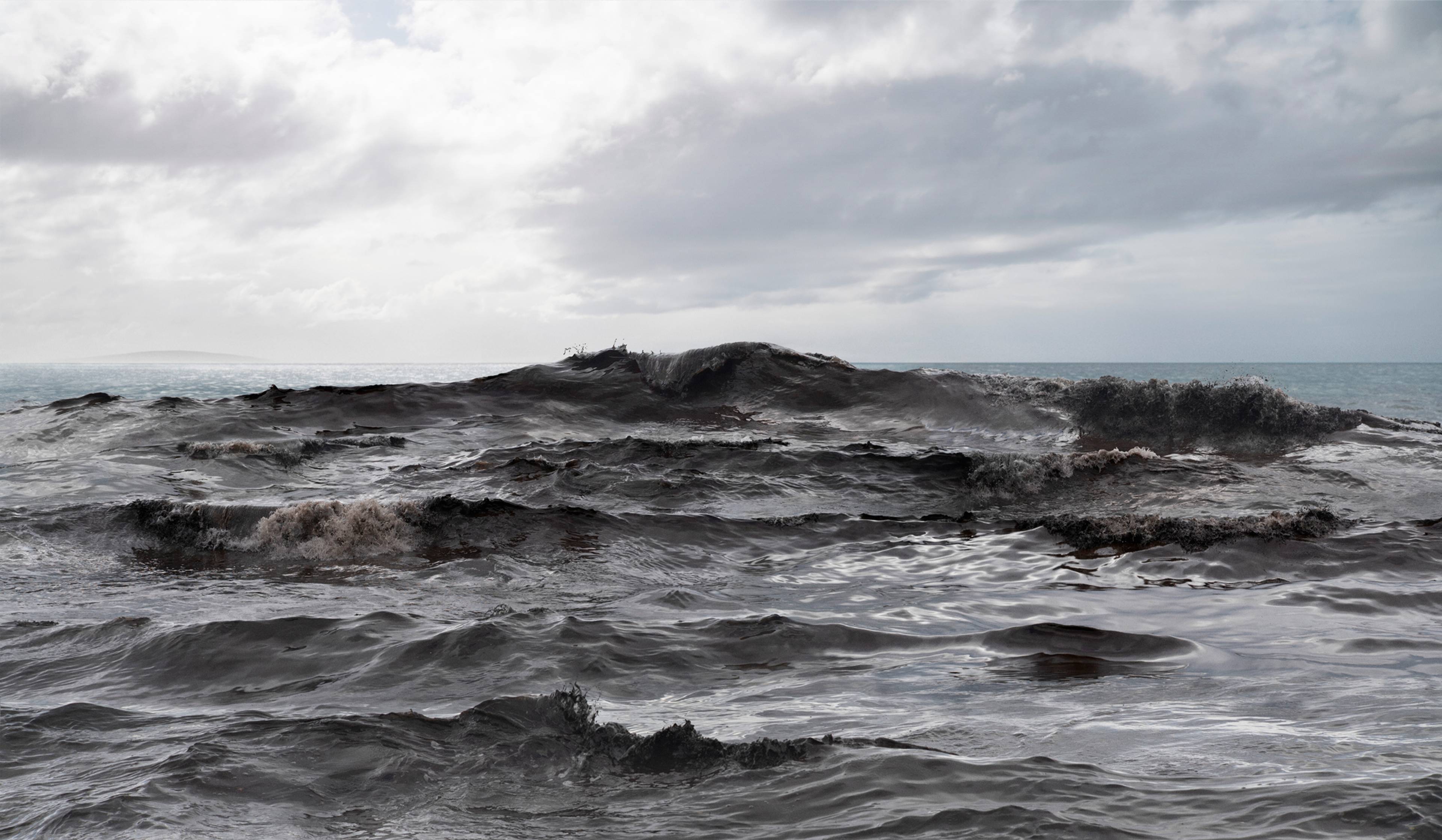
Julius von Bismarck, The Day the Ocean turned Black, 2025
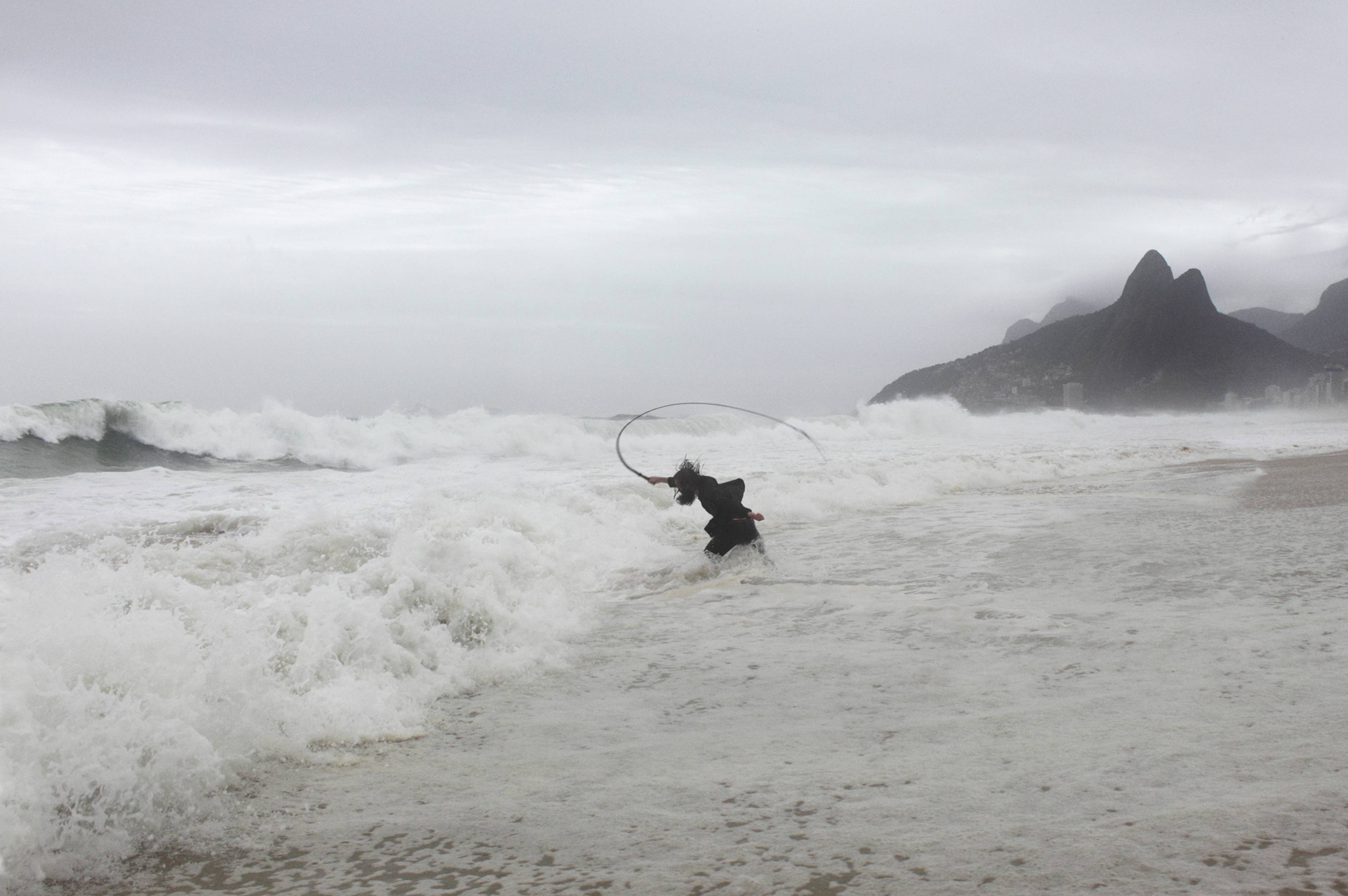
CE: In the exhibition, this is beautifully symbolized for me in a video from your “Punishment” series (2011–12), where you’re shown whipping the sea. How did you decide to become an actor in your work, and how should one imagine such punishment?
JvB: The original idea was to have soldiers do it, but due to a lack of possibility and contacts within the military, I decided to do it myself. As an artist, when you become a performer yourself, you become a kind of projection screen for all kinds of things. Many viewers might think I’ve had some personal experience that I want to take out on nature – that perhaps I lost my mother in a swimming accident, and now I’m retaliating against the sea.
CE: I just found the constellation interesting, how you stand there in the sea, fighting a losing battle, where punishment is completely impossible.
JvB: It’s also a coincidence that it worked so well. In the past, the ocean was considered this unknown, unpredictable entity. Nowadays, battling waves is more about surfing and celebrating yourself as a hero. That’s a completely different dynamic, which didn’t interest me here, and I didn’t want it to drift in that direction. It was only when I stood in front of this beach, with exactly this swell, which is really the sea in its soul, that everything fit.
CE: Is a personal connection to the theme of a given work important to you? In the case of your project Talking to Thunder (2016–17), it’s mentioned that your getting struck by lightning was a trigger for the work.
JvB: That can be disregarded. If you take an American reality TV show, for example, every character has some kind of disadvantage, whether illness or poverty or something else, that supplies a personal drama, a sense of background, for viewers to identify with. In art, too, personal stories can help you to understand what you’re seeing, as with getting struck by lightning. But they’re not important to me; rather, it’s up to the curator or someone interviewing me if my biography helps them tell the story they want to tell.
We have a very Christian perspective: that the world has been given to us humans, and that we are allowed to reap its fruits. And now, we’re basically treating the situation as if we’ve cultivated our garden somewhat incorrectly and just need to make a few adjustments.
CE: How did you meet the representatives of the Wiwa tribe in Colombia while preparing for Talking to Thunder? You also gave workshops there; did you do that to share your interest in lightning as a phenomenon, or was it mainly to learn more about their experiences?
JvB: It was a very long process, which was itself also very important to me. I didn’t want to make the mistake of going to some region I didn’t understand, trying to summon a lightning bolt from the sky, and unleashing a force whose local meaning I had no clue about; such mistakes have been made often enough. That’s why I first tried to find out, without any time pressure, the different meanings of lightning in different cultures, especially in this region [the Sierra Nevada mountains of northern Colombia, indigenous land of the Wiwa, Arhuaco, Kankuamo, and Kogi peoples]. And that took a very long time, because you can’t just travel to any of the tribes there; they have to invite you first, and without that, you simply can’t go. Sometimes, there’s even an army to prevent you from entering indigenous territories. That’s why I asked around, and waited a long time until I was finally invited, which only happened after a great deal of bartering. The Wiwa people also don’t work with money; that meant I had to bring a lot of gifts to get an audience. I was mostly a listener, but in return, I offered my knowledge about how to protect oneself from lightning; not anything philosophical, just purely limited to tips on how to avoid being struck.
CE: They didn’t know about that yet?
JvB: They just have a completely different way of viewing things. I always spoke with the head shaman, who is probably most comparable to a clergyman in our culture, and who possesses a great deal of medical wisdom. But what all that requires is a lot of local knowledge, which, depending on the tribe, doesn’t necessarily have much to do with the knowledge of the rest of the world.
CE: Did you communicate in English?
JvB: Sometimes they spoke Spanish, sometimes I had to go through a chain of interpreters until it reached me in English. There was a certain knowledge of physics there, but it was very strongly mixed with their own beliefs, and the two sometimes contradicted each other. It’s not that different from here in that respect: we have a very strong Christian worldview in Europe, even if we don’t realize it. The Wiwa have a nature religion and see the world accordingly – it’s just also the case that they aren’t familiar with Western physics’s explanation of how lightning rods work. Not that we fully understand, either.
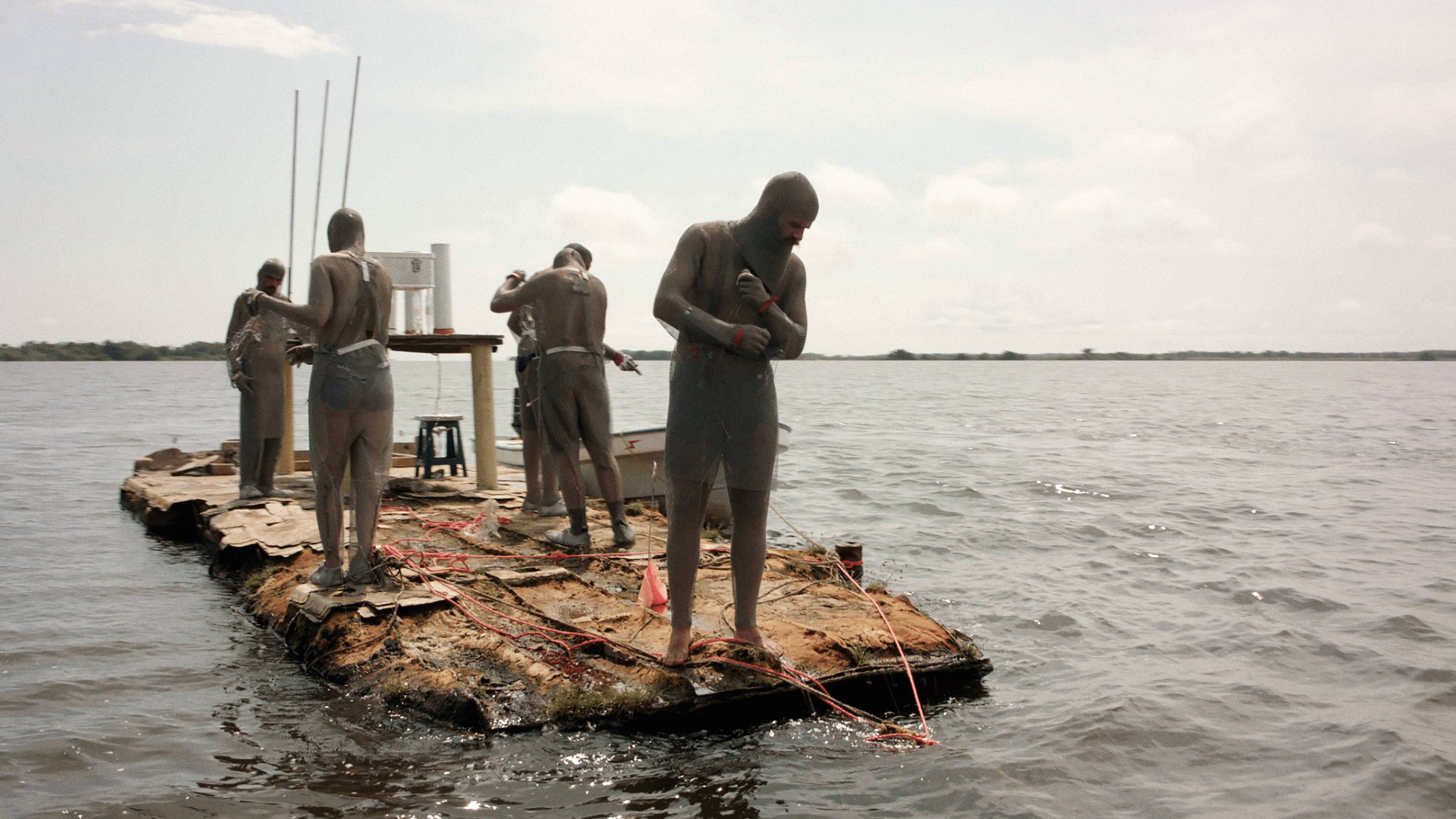
Talking to Thunder, documentary footage, Venezuela, 2016
CE: We have our own challenges in the West with the separation of reality and narratives, like recognizing the effects of the climate crisis, but not following through logically to the immediate need for action.
JvB: We have a very Christian perspective: that the world has been given to us humans, and that we are allowed to reap its fruits. And now, we’re basically treating the situation as if we’ve cultivated our garden somewhat incorrectly and just need to make a few adjustments.
CE: Yes, and at the same time, those adjustments we’re making now are too little, too late.
JvB: Indeed, ours is the power over this garden. But we also ate from the forbidden tree, so that everything we touch is defiled with sin.
CE: Man is so greedy, and the earth’s resources are so few. A lot of which, we’ve become aware, are consumed by photography, by its materials and chemical processes. How do you deal with that awareness?
JvB: I think about everything I do, of course. I also believe that many people worry about the wrong things, and would rather point the finger at others.
The question that fundamentally guides me is: why have we, as humans, allowed things to get so far out of hand?
CE: It makes a difference whether we’re talking about multinational companies or the day-to-day behavior of individual consumers.
JvB: I think there are different philosophies on this. There are people who say, okay, pollution and sustainability start with everything I do, and that’s why I don’t fly now, why I don’t drive a car anymore, why I only take the train or ride a bike. Including many of my acquaintances, actually – that’s just not necessarily my approach.
CE: What is your approach, then?
JvB: The question that fundamentally guides me is: why have we, as humans, allowed things to get so far out of hand? Our relationship to reality guides our actions, and these actions have been catastrophic. Not just for the Earth’s other beings, all of which are worthy of our compassion; but also for ourselves, and at a foundational level. If you were to send our species to a psychologist, they would have to figure out why we were able to suppress this dynamic for so long. Is it something Christian? Is it something capitalist? Is it something to do with democracy? All of the above?
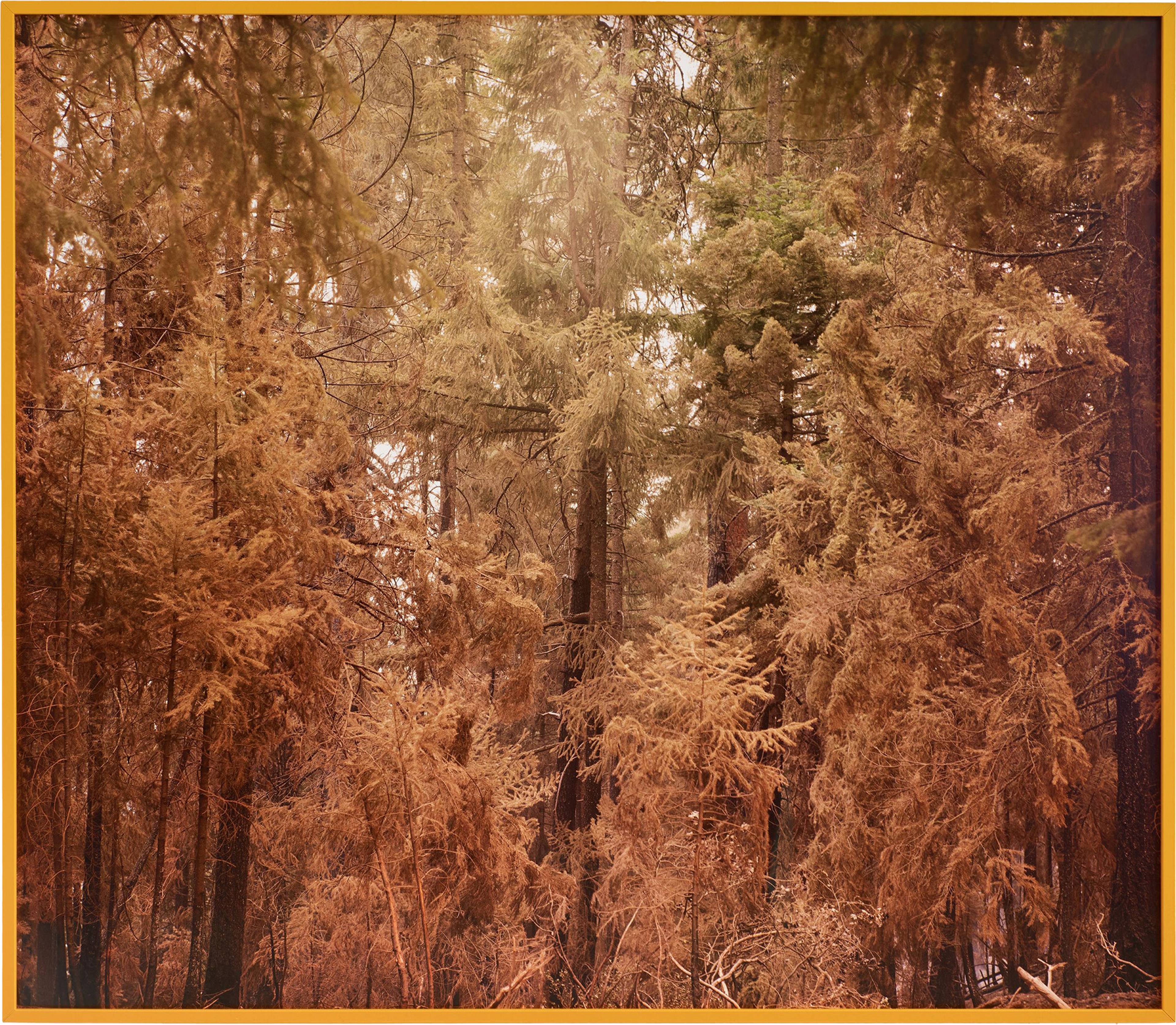
Fire with Fire (Yellow Carr), 2019
CE: Democracies are in just as much danger as nature these days; in fact, the crises are clearly interconnected.
Perhaps a good place to conclude is with your work Bäume ohne Grenzen (Trees Without Borders, 2022), where you planted trees at altitudes above where they normally grow. You’re actually anticipating nature there, because this boundary is also shifting due to climate change.
JvB: Exactly. And is that, so to speak, nature? or is that humankind? We assume that they’re separate, that humankind has messed up a bit and damaged nature, and that nature is now reacting to this damage, sometimes by retaliating with natural disasters. That’s a cliché I hear in many stories. But think of nature reserves, where we defend nature from humankind, even encase everything in concrete, so that everything can stay the way it is, even if that means partially killing it – that way of thinking clearly doesn’t work. Trees Without Borders is meant to show something inside of that breakdown: that for every habitat lost somewhere due to human activity, a new habitat might be created elsewhere. The boundaries are always subject to change.
CE: Meaning, that the tree line is not fixed?
JvB: What we know as the tree line is a historical marker from the pre-human climate; the actual tree line is much higher up. It’s just that forests are slow, and we humans are very fast.
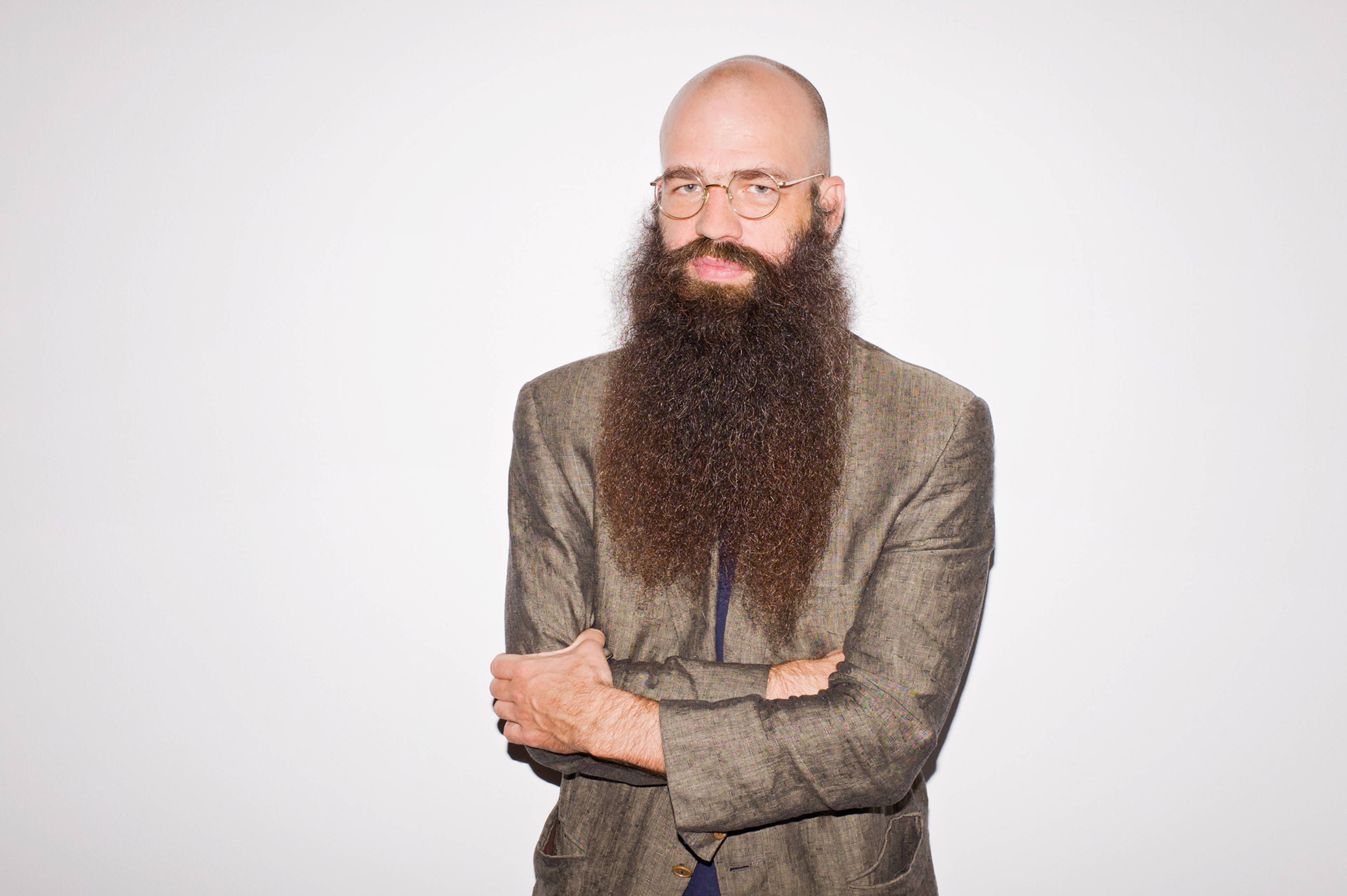
Julius von Bismarck, 2023. © Katja Strempel
Julius von Bismarck
“Normale Katastrophe (Normality Bias)”
KunstHausWien. Museum Hundertwasser, Vienna
10 Sep 2025 – 8 Mar 2026