

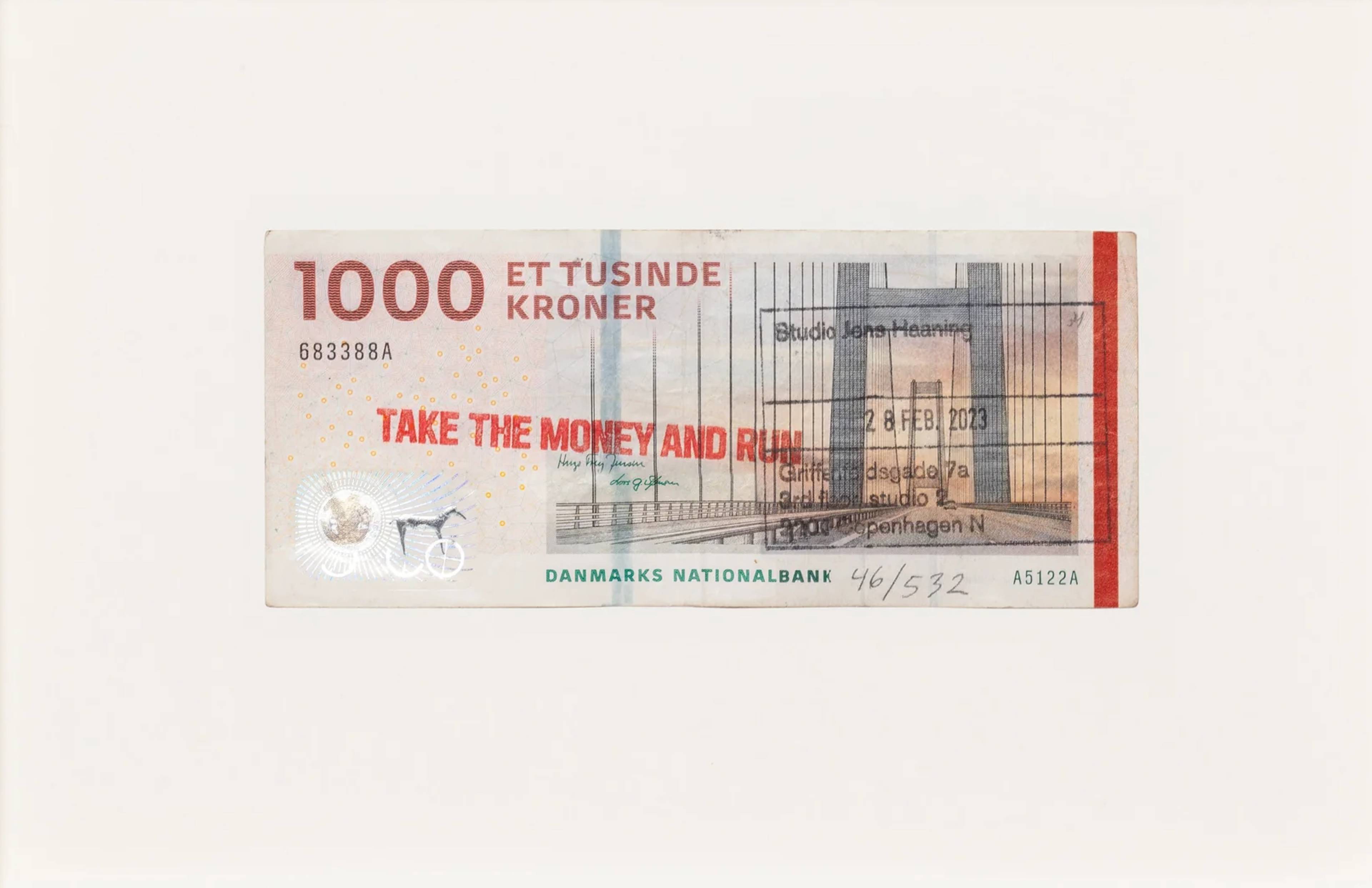
They say art has lost its way; that there’s a raw need for new stories to impel us from an aesthetic and political rut. But Contemporary Art does have a direction. The story Contemporary Art tells itself is this: art is all about capital. Financial, cultural, sexual, but capital – ruled by capitalism.
In the past few years, artists around the Western world have taken this mindset to extremes. They’re not trying to sell intangible ideas or even NFTs. They’re simply asking to be paid. One headline-bait example landed in 2021, when Danish artist Jens Haaning (*1965) secured a commission from the Kunsten Museum of Modern Art in Aalborg, Denmark, for an exhibition about artists in the workforce. He was given $83,000 [half a million Danish kroner, representing the average annual salary in Denmark and Austria back then] with the understanding that the piece would include that much in framed banknotes. Instead, when they popped open the crates, the frames were empty. As the artist explained, “The work is that I have taken their money.” He titled it Take the Money and Run.
Artists may or may not be out of ideas, but this sort of redistributive dole art has more to do with social panic and joyless dependence on the market. The feeling that art is an industry, slotted neatly into global finance, is demoralizing. The conclusion seems to be that it’s not worth spending time developing a novel, exciting practice. Instead, artists make minor gestures toward institutional critique, or name the supposedly unnamed exploitation behind the art industry. You could say dole art is about radical honesty. A patron can have a few ideas about why they want to buy or commission a work. Maybe for reputation-laundering. Or to support the arts. Or for the dangled intimation of a promise of proximity to libertine sex. In this view, the object itself doesn’t matter. You want the artist, they want your money, so let’s skip the art.
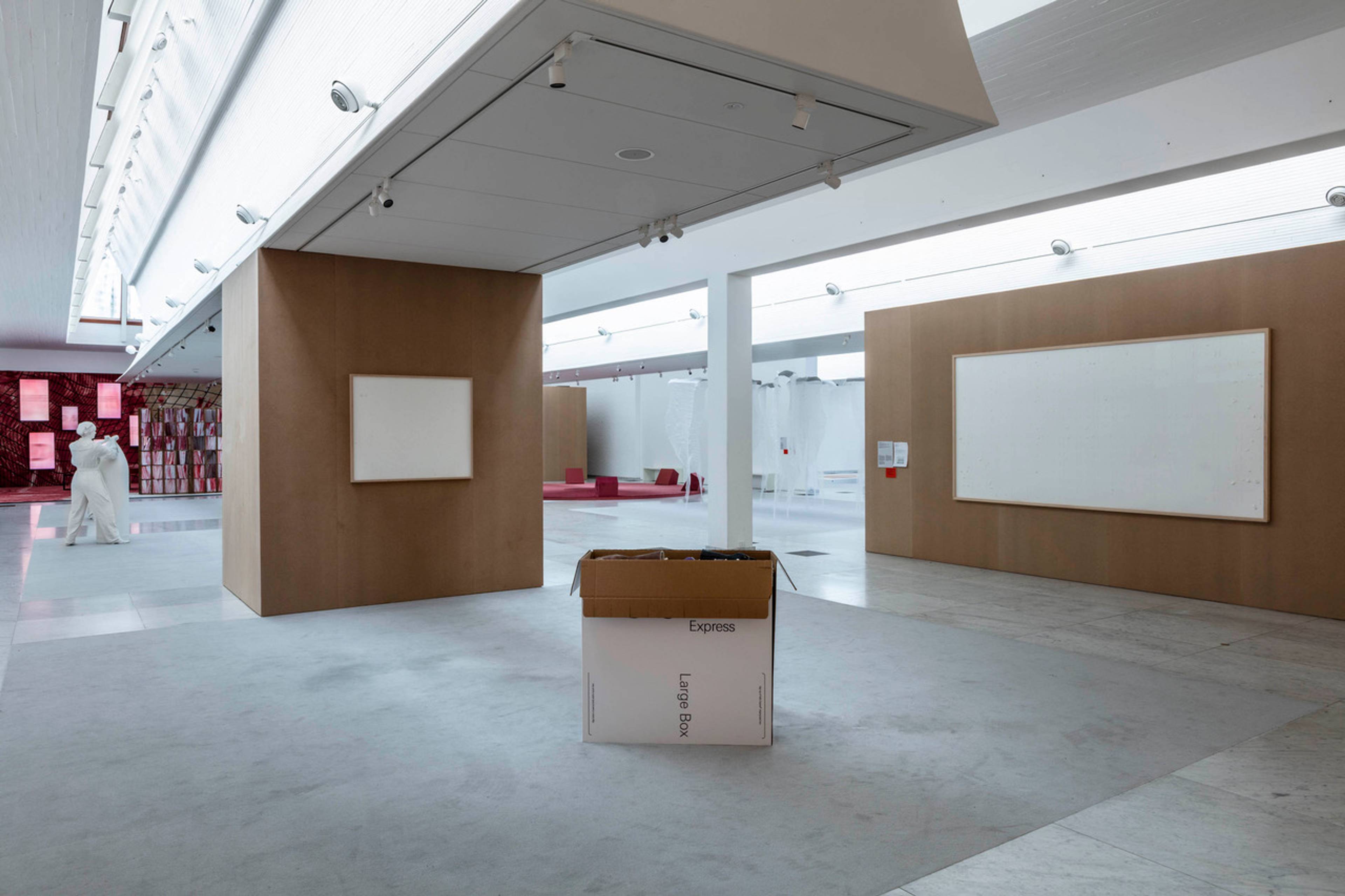
Jens Haaning, Take the Money and Run, 2021. Courtesy: Jens Haaning. Photo: Niels Fabæk/Kunsten Museum of Modern Art
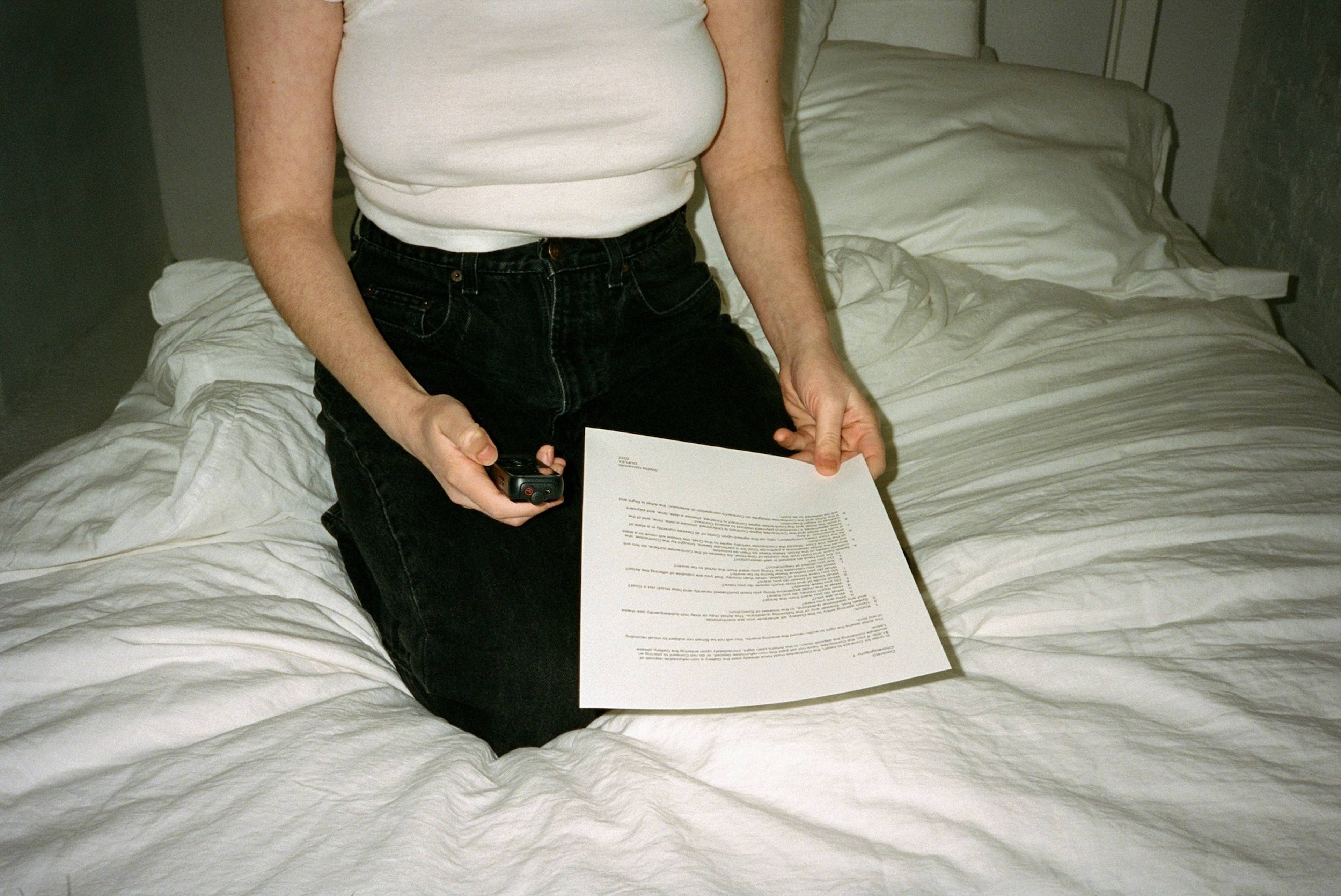
Sophia Giovannitti, Contract: Choreography 1, 2022. Performance view, Duplex, New York. Courtesy: the artist. Photo: Daniel Arnold
Some examples of dole art have a collective, altruistic angle: a current project at Protocinema, New York, by New York artist duo Canal Street Research Association includes an aluminum can buy-back event that pays twice the going NYC rate; a 2013 work by Swedish artists Goldin + Senneby (*1971, 1981), involves hiring an actor to recite a script until their funding runs out – the last one is included in an ongoing show at the MIT List, in Cambridge, Massachusetts, titled “Performing Conditions: Artistic Labor and Dependency as Form.” The gesture is the same: these artworks are explicitly designed to funnel cash away from art patrons to needier groups, with as little overhead as possible.
In 2022, artist and sex worker Sophia Giovannitti (*1992) staged a project called Contract at the now-defunct gallery Duplex in New York. Public details are scarce, because to get in the room with her cost $1,000, but the idea seems to be that the two parties, artist and patron, would follow a script in order to arrive at a mutually beneficial agreement of some kind. The high ticket price was meant to guarantee a level of seriousness. The gallery was furnished with a white canopy bed. It puts you in an awkward position, as a viewer, to admit you want more from an artist than a passive encounter with their art. You think that means sex? Well, then, the joke’s on you. Unless you both agree otherwise. The obvious comparison is Andrea Fraser’s Untitled (2003), where a collector paid tens of thousands to make a sex tape with the champ of institutional critique. The piece was an intellectual way of taking the inherent prostitution of art-making to its logical conclusion, kind of draining the eroticism in the process.
Earlier this month, Giovannitti reprised Contract at the List for “Performing Conditions.” This time, the buy-in was adjusted for inflation to a little over $1.1k, but a 20% discount was considered for people that the artist might find useful, like certain arts professionals and lawyers. According to the artist’s website, “Here is what happens: the artist will pursue a legal transfer of risk and an affective experience of ‘something else.’” Tempting. But I have “something else” at home.
Dole art is an attempt to take back the power, often by putting art’s squishy agreements in a rigid legal framework, sometimes by flouting institutional legalese. But it’s also, in large part, an art of resignation.
I did pay for the Giovannitti experience once, in 2024: $30 a head (I brought a date) for a lecture-performance at Blade Study in New York. It was called Does it have a sincere relationship to God?, and I remember very little about it, other than the part where the artist declared that everyone in the room had given her $30 and their personal information. The gist of the talk, I think, was that we were mildly silly for expecting revelations from the (or any?) artist, and that there were academic reasons the artist deserved our money. $1,000 raises the stakes, I guess, although $30 felt pretty expensive for what I got. I could’ve bought her book instead: Working Girl: On Selling Art and Selling Sex (2023).
Dole art is an attempt to take back the power, often by putting art’s squishy agreements in a rigid legal framework, sometimes by flouting institutional legalese. But it’s also, in large part, an art of resignation. Here’s a back-of-napkin sketch: millions of people came of age during the global financial panics, circa 2008 (subprime mortgage collapse in the US; defaults and bankruptcy in Greece, Portugal, and elsewhere), Trump/Brexit in 2016, and the Covid lockdowns of 2020–21. Life got more expensive, more isolated, more online. Institutions that we were told we could depend on, from higher education to art museums to democratic politics, pulled up the ladders. Artists hardly bother to critique those institutions in their art – firstly, because you’d need to be inside them to have an impact. But then, institutional critique as a genre has long been domesticated, and doing something truly antagonistic feels impossible. The real risk and reward, at least financially, is in the casino of the private sector, which cares less and less about an artwork’s merit. What do collectors want? The digital tulip-mania of NFTs. What grabs the public imagination? Auction records by Pollock and Beeple.
A lot of artists have looked at this state of affairs and said, “Fuck it. Patronage and the market are so fickle, so tasteless, that it hardly matters what I make. Actually, this condition is my art.” With dole art, the pretense of any aesthetic or intellectual impact is pretty thin. But it doesn’t really expose how the system works, either, because we know how the system works. Instead, dole art condenses the courtship rituals of capital into quick, bloodless transactions. Bloodless, but also pleasure-less. In fact, many of these works take an almost Catholic approach to pleasure. To atone for your sins, pay an artist.