


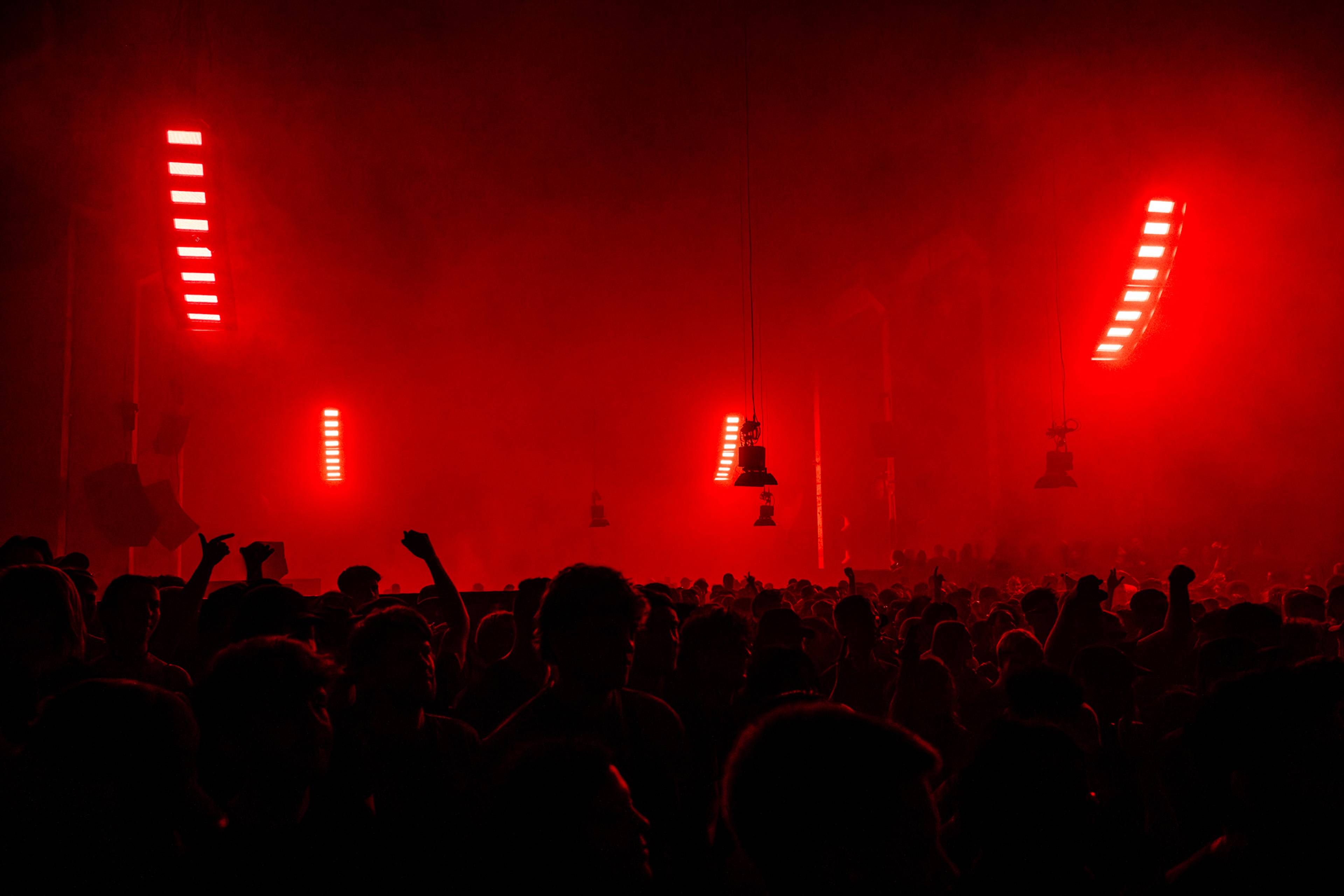
Sometimes, when waking up after a big club night, no evidence can be good evidence. Perhaps the music was so mind-melting, the lights so transportive, that smartphones (and the outside world) were forgotten for a few blissful hours. Camera rolls: empty.
We live in an era of image hyperdrive in which creative process is dommed by their omnipresence. Events demand images to a point that how an event is photographed becomes the main event: before the fashion show is even finished, the reel is posted; the DJ set is livestreamed. This image-first ethos creeps into design thinking, too: prioritized are what performs best with the algorithm, rather than what feels best IRL. Are we building spaces to be photographed, or spaces to inhabit?
Few design studios are as committed to pushing back against this image creep as Matière Noire. Emerging from Paris’s electronic music subculture, the spatial design and lighting crew, founded in 2019 by Pierre Dagba and Felix Ward, pursues what they call “atmospheric design,” concerned less with flashy visible interventions than with fine-tuning elements – that hard-to-locate “dark matter” – that impact how humans feel in space.
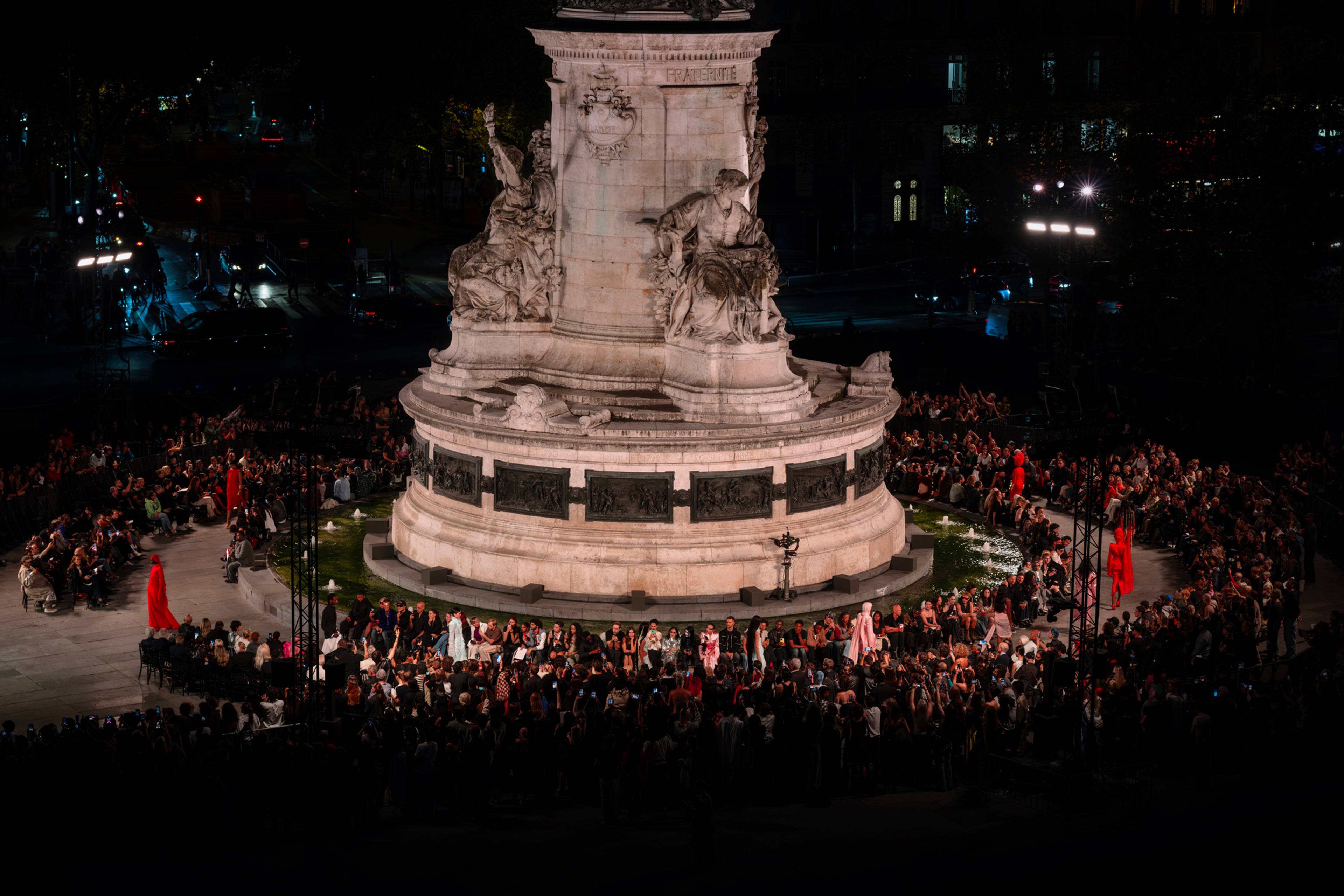
Matière Noire for Matière Fécales SS 27, “The ninety-nine percents,” Paris Fashion Week, Place de République, Paris, 2026. Photo: Ophélie Maurus
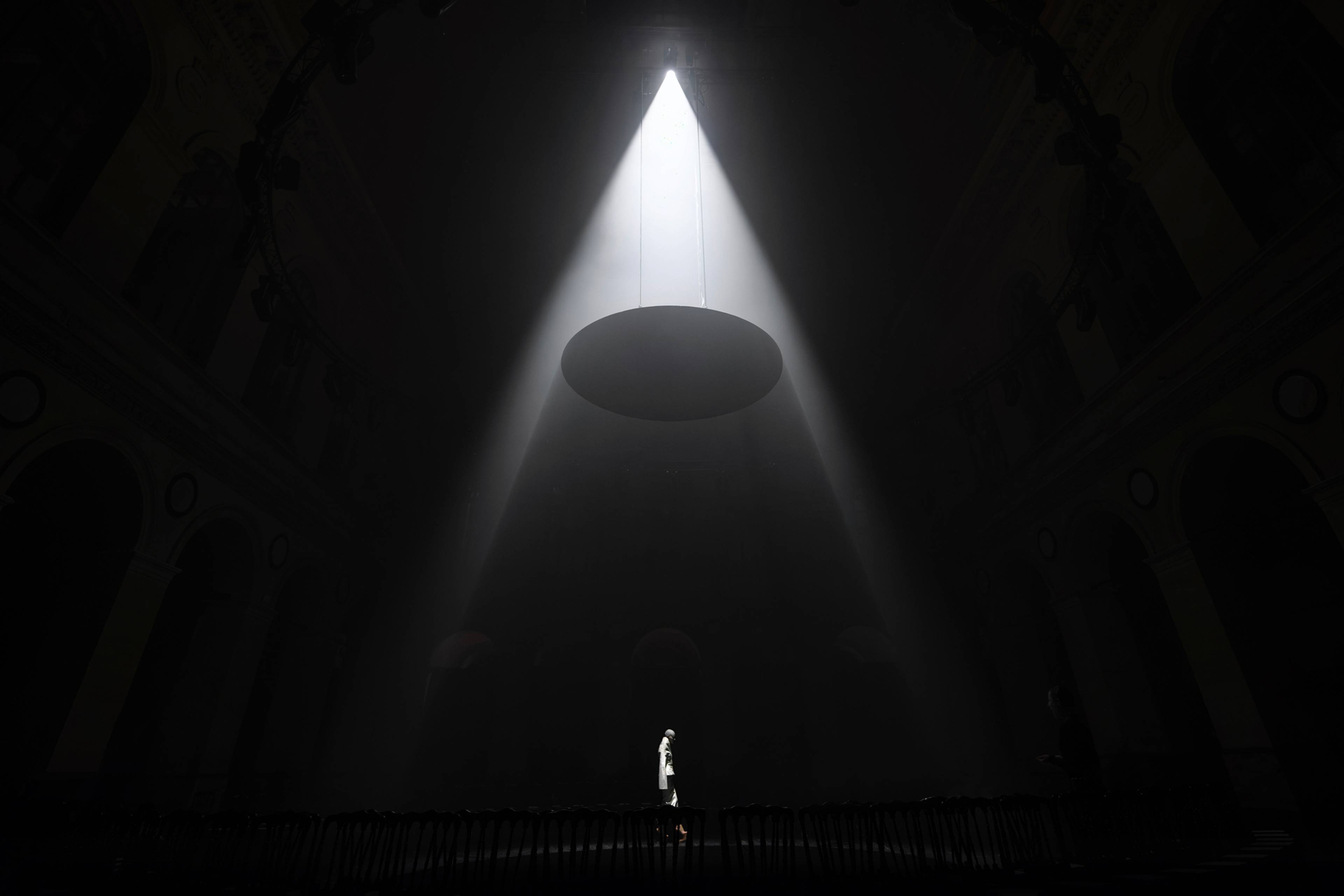
Matière Noire for Matière Fécales AW 26, “The one percent,” Paris Fashion Week, Palais Brongniart, Paris, 2026. Photo: Ophélie Maurus
From their dance-floor lighting design for Madonna’s Confessions II short film (2026), to runways for labels Courrèges, Y-3, and Matières Fécales, the studio’s diverse portfolio points to their growing influence on contemporary fashion aesthetics. Yet, when we meet up in Paris, Pierre and Felix are mostly keen to discuss club culture, where their “atmospheric” ethos finds its purest expression amid bass, fog, strobes, and a packed dance floor. “We love this idea of being alone, together,” Pierre says to me with a grin. Felix, sitting across the table at their studio, nods. We’re looking at the renders of the main hall of Kraftwerk Berlin during CONTRA, a new music festival that, led by the producer and DJ Skrillex, debuted in late May. Over two days, it spread out across the former East German power plant, from the vast nave to the trio of smaller club venues – Tresor, Globus, and OHM – that round out the complex. The wildly eclectic lineup (featuring artists like Head High, Malibu, Bladee, and KAVARI) aimed for “productive collisions between artists, scenes, and audiences,” and the atypical spatial flow (programming in the main hall ran until 2am, with the party continuing in the side spaces until 8am) imbued the festival with a radical sensibility far from what many music heads would have expected from the stadium-touring father of “brostep.”
Skrillex, however, has taken careful steps of late back into the underground scene he once emerged from. Rather than tack on lighting and spatial design toward the end of the production process, as is typical in the music industry, he brought in Matière Noire as creative collaborators before the city, the venue, and even the concept for CONTRA were settled. “It felt very intuitive to us,” offers Felix. “When you’re working with a brand, there’s a marketing director and you’re always answering to these external goals. Working with CONTRA, however, was very personal.” By chance, Felix had met Sonny Moore in Tokyo six months earlier, back when “CONTRA” was merely the working title for Skrillex’s new album (since released as SOMA). Within weeks, Pierre and Felix found themselves in a house in Cannes, designed by Pierre Paulin, for an all-ideas-on-the-table workshop with Sonny and an international crew of producers, bookers, and artists. “We all arrived without knowing what was going to happen. It was a bit awkward at first,” admits Felix. Rather than pump out another commercial release, Sonny wanted to birth a project that could bring experimental genres together, adapt over time, and “give back” to the scene rather than sell it out. “We didn’t even talk about design or anything vaguely spatial,” says Felix. “We spent four days talking about the meaning of the festival culturally, the program. It just so happens that we’re also a design studio.”
Eschewing complicated scenography, the studio debuted two minimal yet novel spatial interventions at CONTRA: the “extended pit” and “light arrays.” Both emerged from their desire to decenter or “desacralize” the DJ as the object of conventional, all-faces-forward worship. “We asked ourselves, ’How do you sculpt a crowd?’” explains Felix. “How can you design the space to create pockets of energy, as if you had smaller clubs within this big space?” In the past, Atonal, the Berlin festival for experimental electronic music that has run at Kraftwerk since 2013, occupied the main turbine hall, a vast masterpiece of industrial architecture divided, by thick concrete pillars, into three parallel aisles. Typically, its performances occupy only the central corridor, since views of the DJ are obstructed from the sides. For CONTRA, Matière Noire threw out this logic, building raised platforms that wove layered dance “pits” between the columns and into the side reaches of the hall. “The low walls of the pits created intimacy, while the really high ceilings made it so you didn’t feel claustrophobic,” Felix explains. The contrast between a tight envelope of ravers and the vast, towering space typifies the type of “holy shit” sensation that is Matière Noire’s bread and butter – only to be experienced in situ. No image comes close to capturing it.
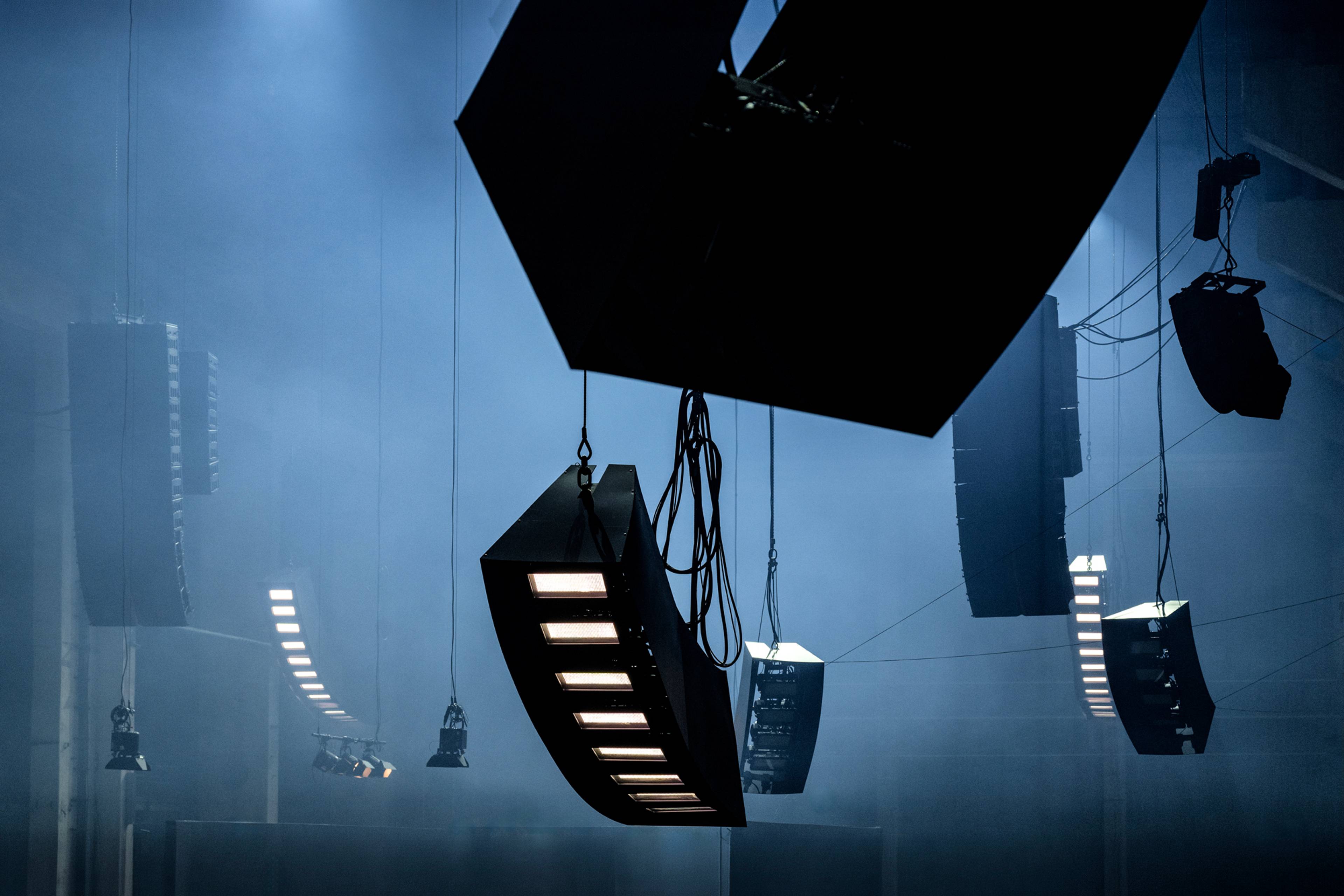
Matière Noire for CONTRA, Kraftwerk Berlin, 2026
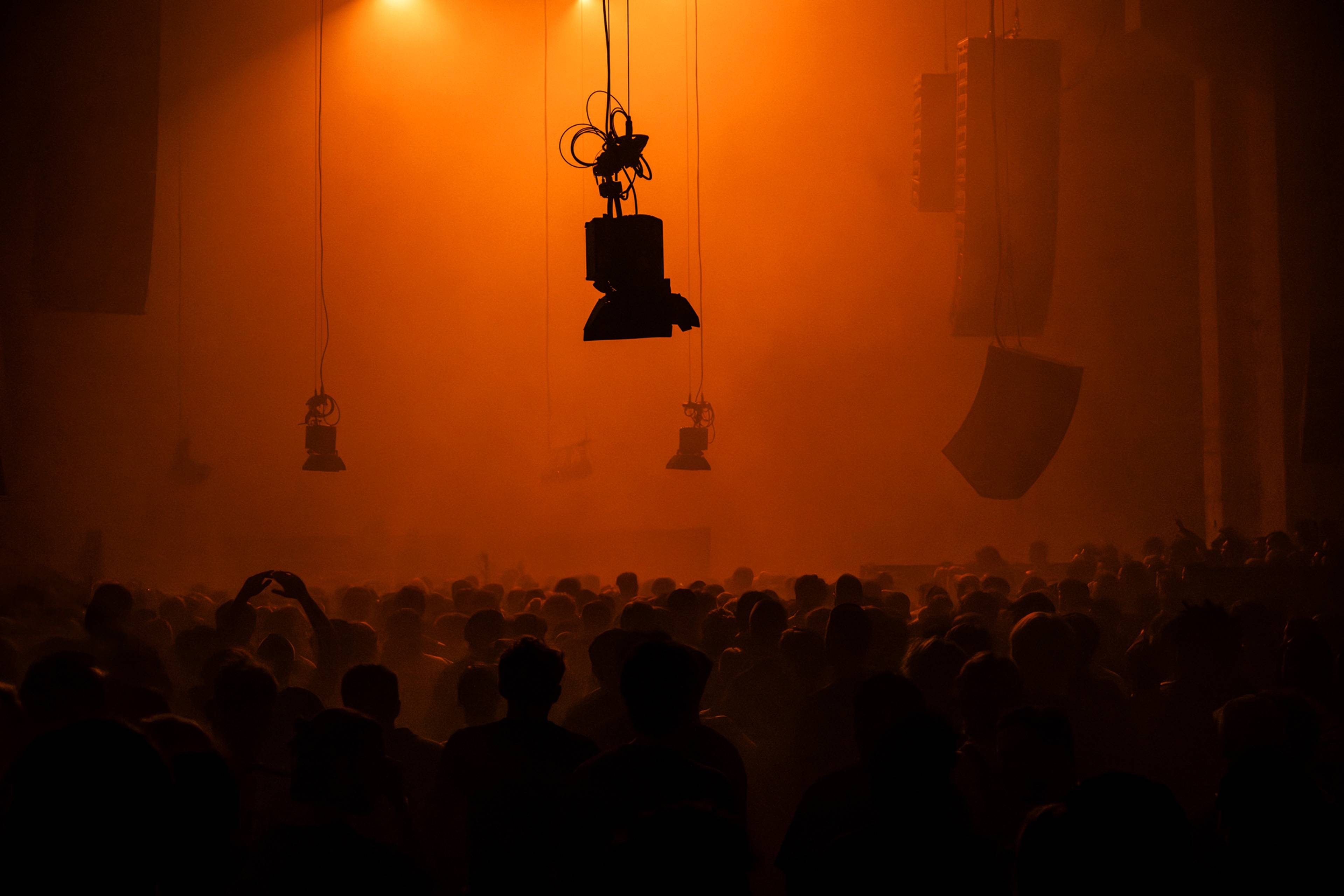
Photos: Ophélie Maurus
The second big idea for CONTRA, the “light arrays,” subverted audience expectations as the weekend progressed. From the distant ceilings, the studio suspended stacks of lights designed to mimic line arrays, the curved stacks of amps that typically hang from the rafters of club venues. “When you see these kinds of silhouettes, it’s quite natural to think that sound will emerge,” says Pierre. “During the night, we would suddenly activate them, and only then did people finally realize their purpose.” The surprise was accentuated by their motorized movement during the sets, as the arrays dropped from twenty meters above the dance floor through openings to the level below, beneath the dancers’ feet. “What we did at CONTRA is a superposition between two elemental spectrums, sound and light, creating a composite sculpture,” explains Pierre.
Pierre and Felix both cite Peter Zumthor, the Swiss minimalist architect known for his sensory-first design of spas and churches, as a key influence on their similarly elemental practice. Another intellectual totem is Finnish architectural theorist Juhani Pallasmaa, whose book The Eyes of the Skin (1996) emphasizes how embodiment in space is directly connected to humans’ existential perception of the world and our ability to find inspiration within it. “Pallasmaa argued that, while the cinematic world is managed or made for the eyes, architecture is meant to be made for living,” says Pierre. “And living involves things like touching, smelling, and hearing.” In his eyes, plenty of contemporary architecture loses touch with what designing spaces is all about: the way we feel in them.
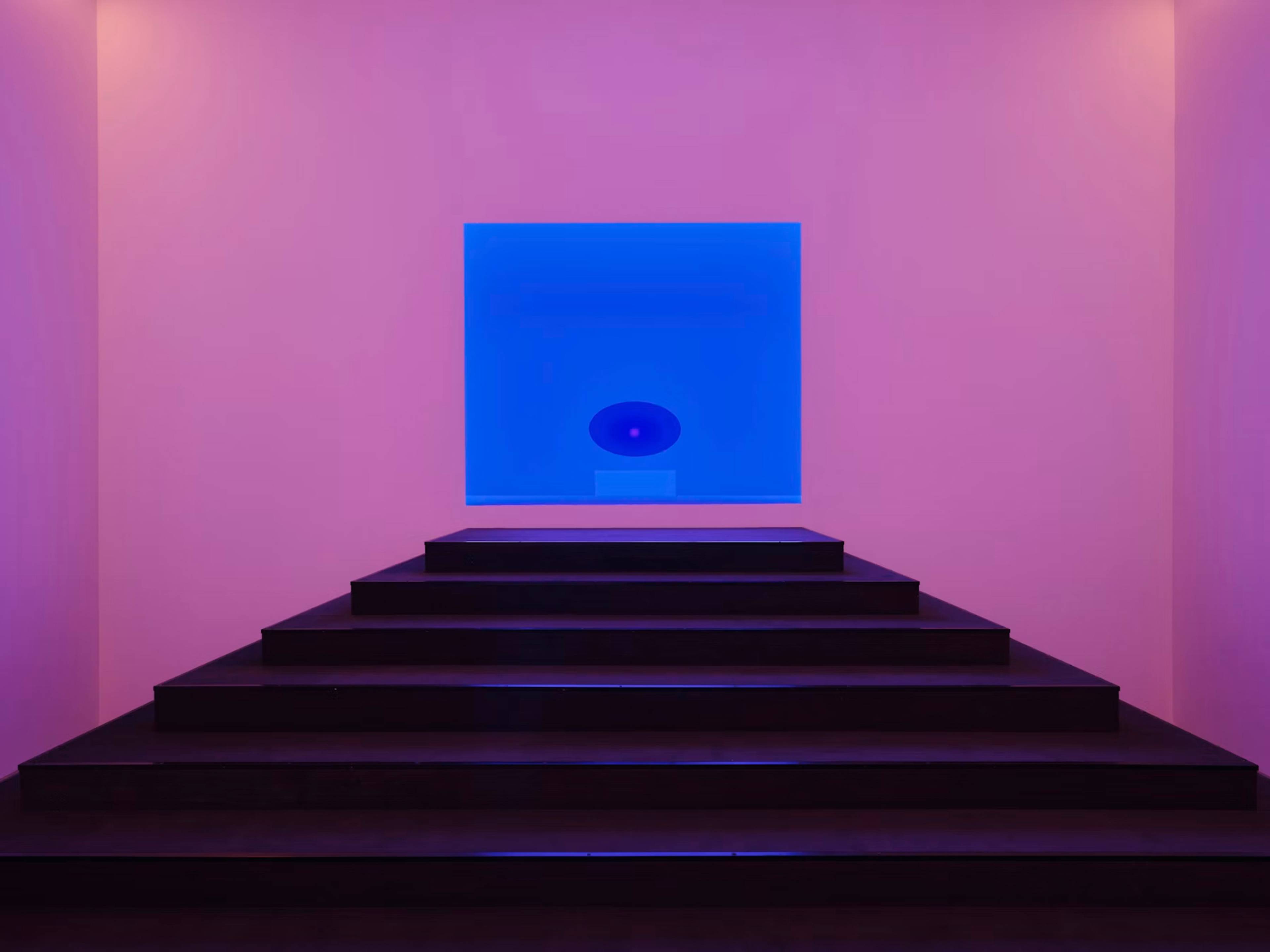
Matière Noire for Gagosian, Le Bourget, with James Turrell, All Clear, 2024. Photo: Thomas Lannes
Matière Noire’s body-sensitive approach to design has increasingly landed them gigs in the world of visual art, too. When the gallery Gagosian needed collaborators to bring James Turrell’s Zen-inducing oeuvre to its hangar-like exhibition space at Le Bourget, northeast of Paris, they called on Pierre and Felix’s tact for harmonizing light, bodies, and space. Yet, motivated less by budgets than creative interest, the studio most enjoys collaborating with contemporary artists in their tight-knit Paris scene like Pol Taburet. Recently, the studio translated his haunting paintings into 3-D installations for the Bienal de São Paulo.
This past June, the duo also showed their first standalone visual work under the MN moniker at Basel Social Club. “We’ve learned everything from actually plugging things in ourselves,” jokes Felix. “In the past, I’m not sure we’d say we’re artists.” The work, ONKRYPT (2026), is a kinetic sculpture featuring three moving-head lights attached to wall-mounted metal bars. “It’s the first time we do something with no brief, no clients,” emphasizes Pierre. Microphones record the vibrations of the light-heads’ whooshing movements and retransmit them as sound, rendering nightlife’s unsung workhorse as an ad hoc synthesizer – one that plays a mechanical approximation of Nocturne in C Minor, op. 48, no. 1 (1842). Undoubtedly, a ten-year-old at the piano could play a more convincing Chopin than these R2-D2-esque robots whirling around on the gallery wall. Yet, “in the era of AI, I think it’s quite nice to see where machines fail,” says Pierre.
Machine-human interaction is, in fact, the core element of Matière Noire’s recurring creative collaboration with Arca. Back in 2023, the boundary-pushing Venezuelan superstar presented “The Light Comes in the Name of the Voice” at the Pinault Collection’s Bourse de Commerce in Paris (my first introduction to the studio’s work). Ecstatically playing a magnetic-resonated piano, Arca transformed the Tadao Ando-designed rotunda into an AI-coded echo chamber with her haunting synths and vocals. Floating above her, a glowing orb dangled off a construction crane like an extraterrestrial firefly. Occasionally, Arca reached up, grabbed the floating structure and sung to it. “Matière Noire has created spaces where I have been able to enter trancelike states. Their taste is riveting, and spellbindingly dynamic,” Arca raves to me. "It means so much to have them as close collaborators.” Just this summer, the studio teamed back up with Arca on lighting design for the debut livestream of her new album, XXXXX (2026), directed by Daniel Sannwald. Arca moved around a vast Barcelona factory building, bloodied by paint, improvising a choreography with the industrial set, lighting, and drones. The footage has since been recut into a series of standalone music videos.
Despite the flood of commissions since the pandemic – from two fashion shows per season to seven – Matière Noire remains committed to, as Pierre puts it, “the simple expression of a complex thought.” When I ask if they could identify their one “signature move,” they emphasize a predilection for “working with things that already exist” within music and fashion industries that are extremely wasteful, often constructing complicated sets that are trashed the following week. For a recent small-budget show with label Matières Fécales, the studio’s simple intervention consisted of austere spotlighting and a large suspended disc. Or, last year, for the pre-opening of the Fondation Cartier’s new space across from the Louvre, they arranged to borrow six tons of steel beams from a local construction company and later return them, at no cost. “The exercise of designing for a fashion show is super interesting,” explains Felix. “But I think it’s about finding the right balance with yourself so that you don’t become gentrified, or some matcha-coffee-shop of a studio.” While image-hungry clients ask for viral pizzazz and complicated effects, as Felix sees it, “a space can be so pure just by doing nothing to it.”
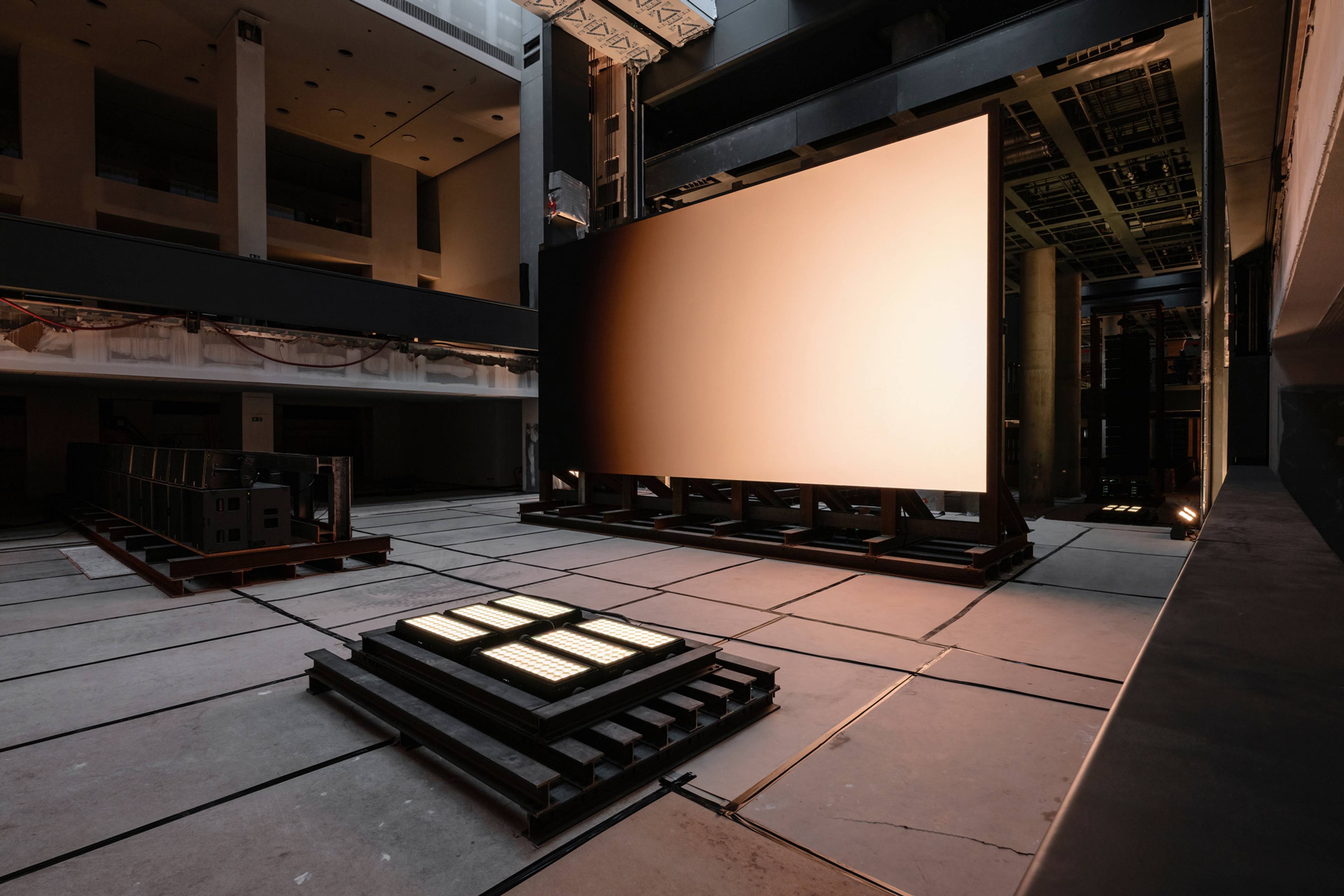
Matière Noire for 40 Years of Fondation Cartier pour l’art contemporain, Place du Palais Royal, Paris, 2024. Photo: Ophélie Maurus & Valentin Fougeray
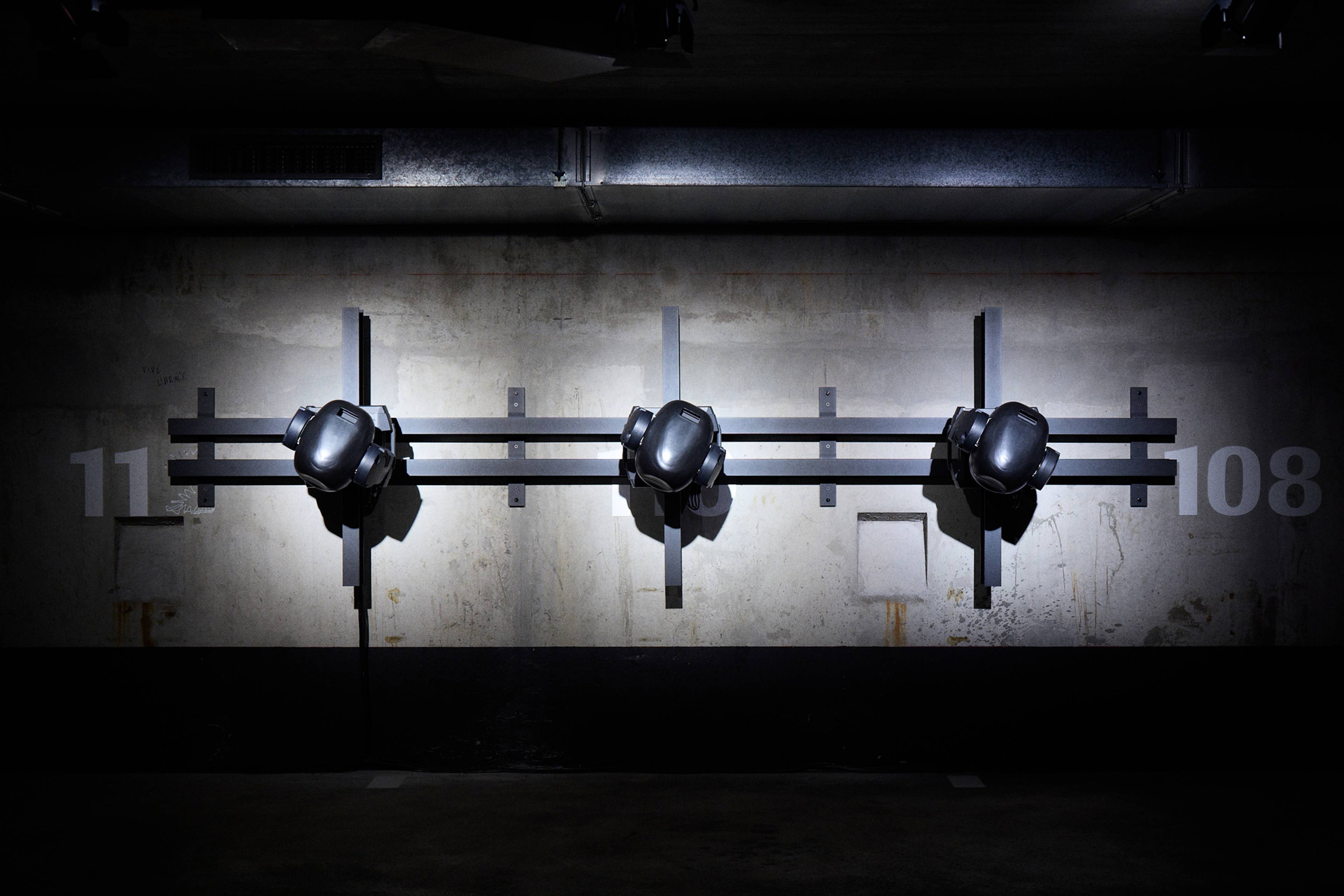
Matière Noire, ONKRYPT, 2026. Installation view, Basel Social Club, vacant multi-story office building designed by Diener & Diener, 2026
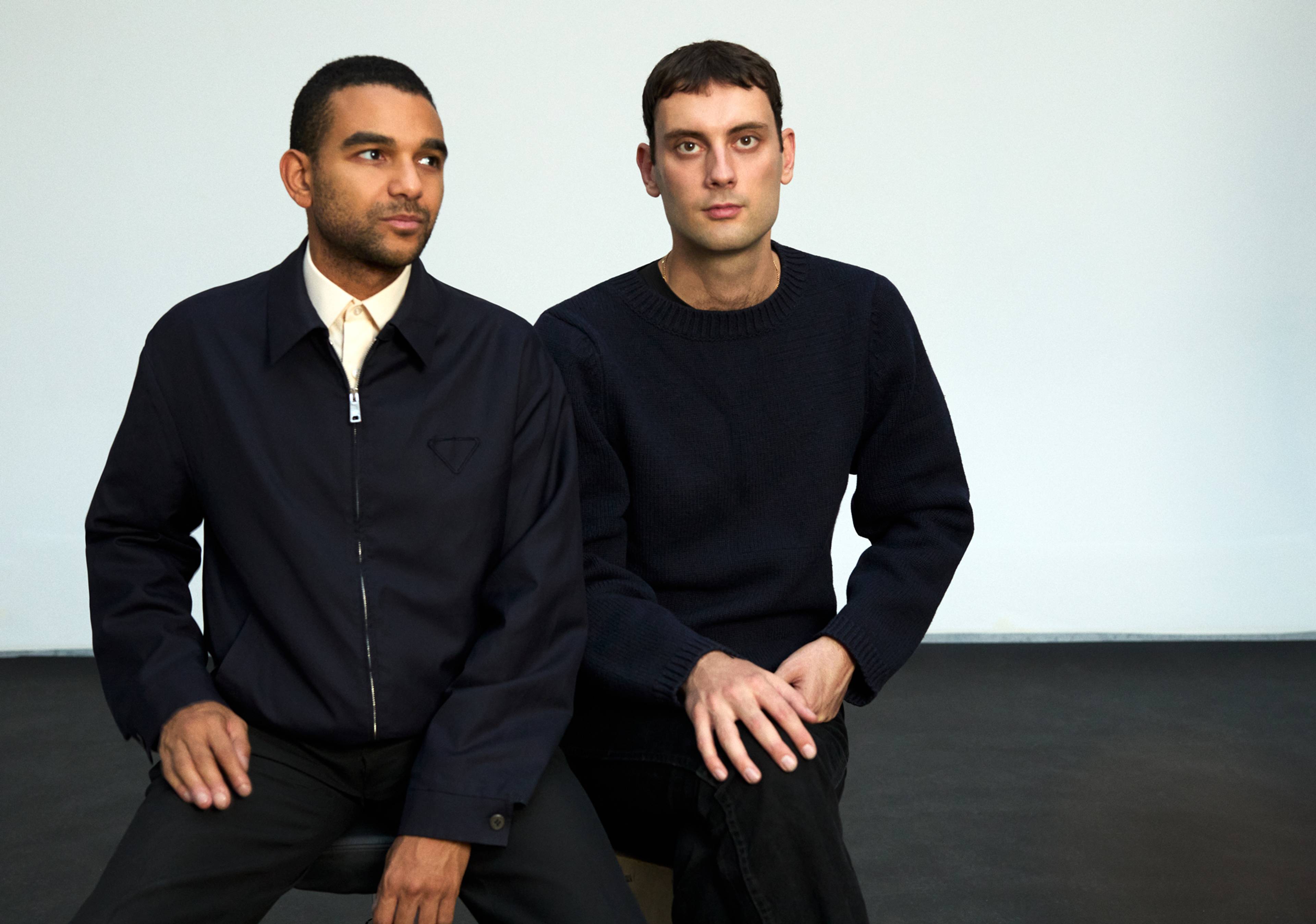
Pierre Dagba (left) and Felix Ward (right) of Matière Noire. Photo: Zelinda Zanichelli
Matière Noire will execute the scenography for the SS27 presentations of Matière Fécales and Tom Ford at Paris Fashion Week, 30 Sep – 6 Oct 2026.