
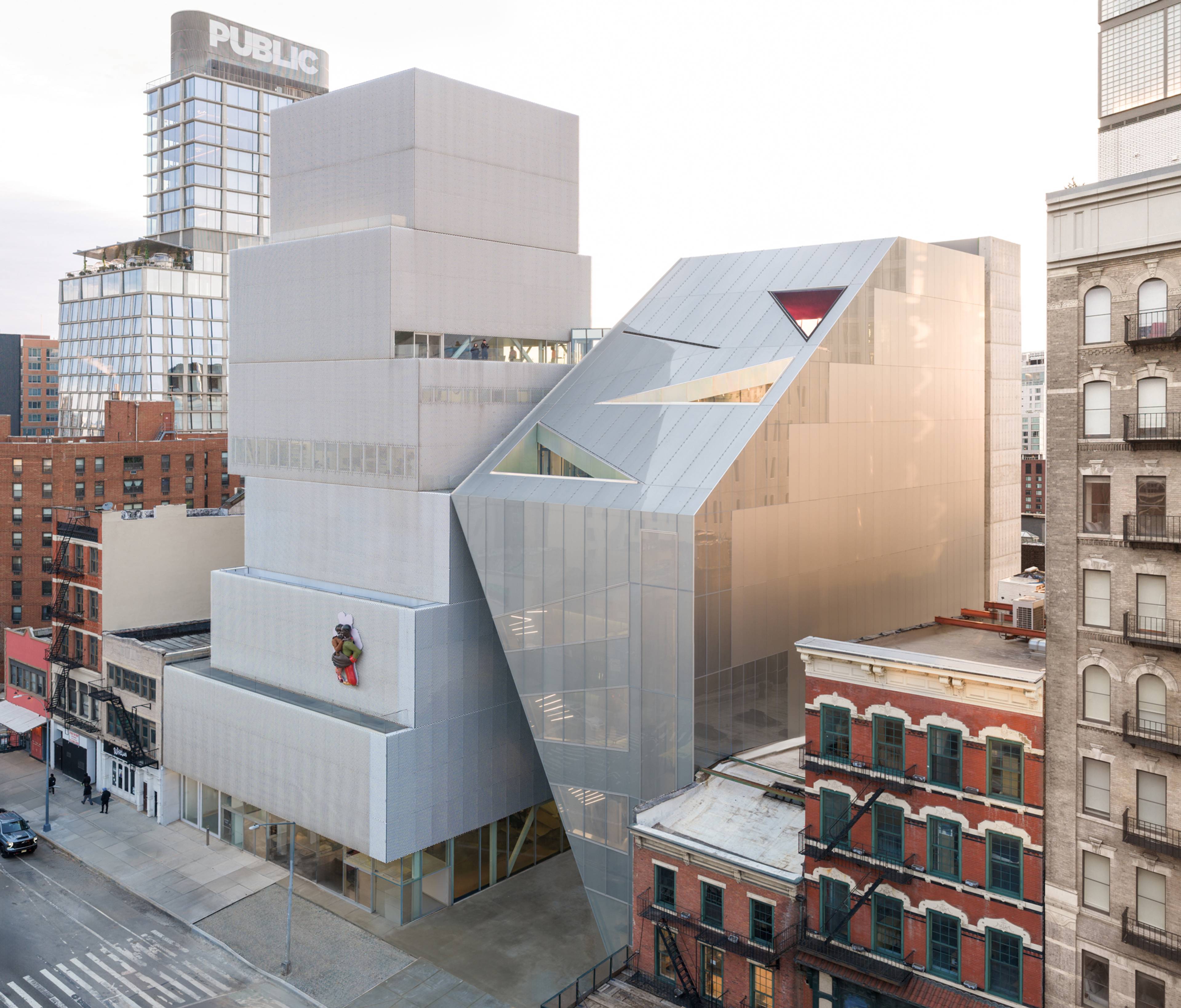
You may have heard: the New Museum has opened a new addition, designed by Office for Metropolitan Architecture (OMA) founder Rem Koolhaas and partner Shohei Shigematsu. In case you haven’t: the €70 million expansion to the museum building on New York’s Bowery is 5,500 square meters of new space, nearly doubling the size of its galleries. Early reviews have mostly focused on its craftsmanship – or a lack thereof, as critics have pointed out that some construction details, such as railings in the new grand stair, were covered in packing tape on opening night. Good for lots of clap emojis online, to be sure.
Project architect Jake Forster told me that OMA petitioned the museum to hold the opening until July, but that larger forces, such as a need for revenue after a two-year-long closure, as well as a home for a new annual cohort of NEW INC residents in the museum’s cultural incubator, were deemed more urgent than tending to final touches, many of which have been cleaned up since March. Design details, anyway, are a niche aspect of any project; what this expansion is about is improving the visiting experience and its connectedness to lower Manhattan. Also, of course, about effectively continuing the New Museum’s legacy.
The institution was founded in 1977 in a SoHo storefront, during a peak of creative output in a then-bankrupt city. It exhibited boundary-pushing art there for thirty years, before moving to a bigger, purpose-built space on the Bowery in 2007, where it could offer larger exhibitions and programming spaces. New Museum 2.0 was designed by Japanese architects SANAA as a minimal, lightly detailed, ephemeral stack of boxes, staggered and wrapped in a steel mesh. If New Museum 1 was a place where early film, video, television, photography, and performance works by living artists could flourish, its successor, dedicated the same year as Apple’s release of the first iPhone, became the center for works that took the leap into a new era of media art.
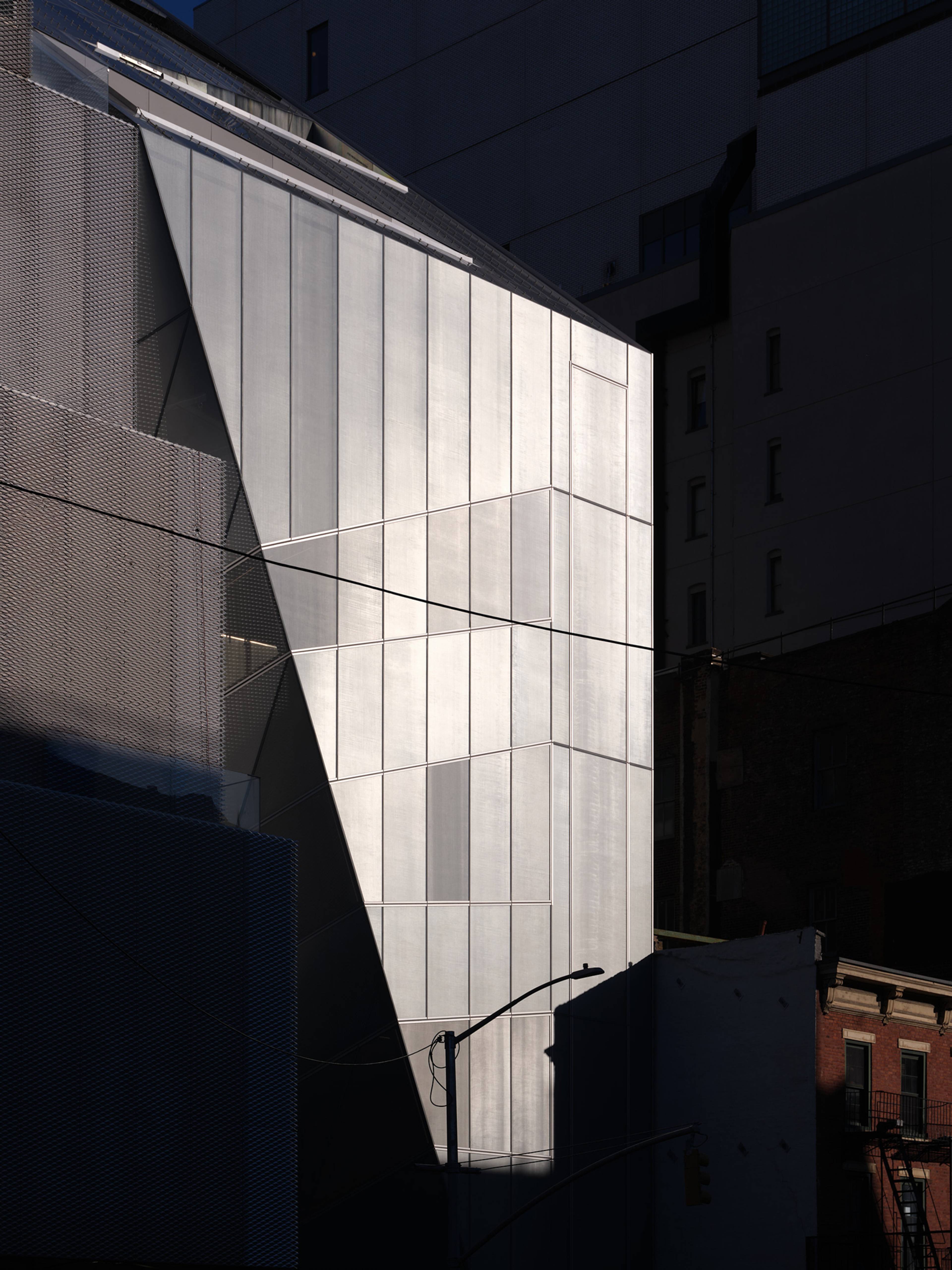
Photo: Jason Keen
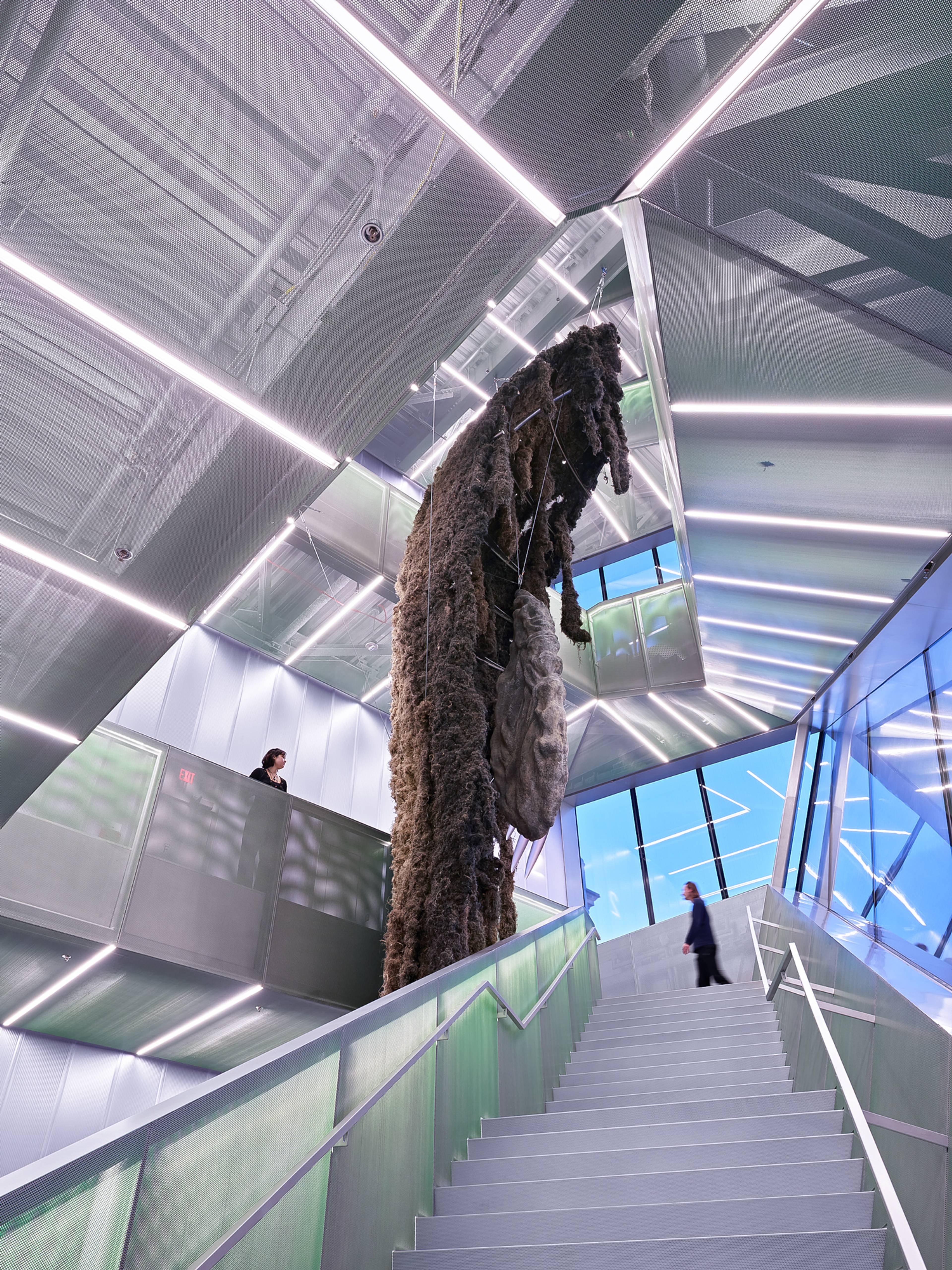
Photo: Jason Keen
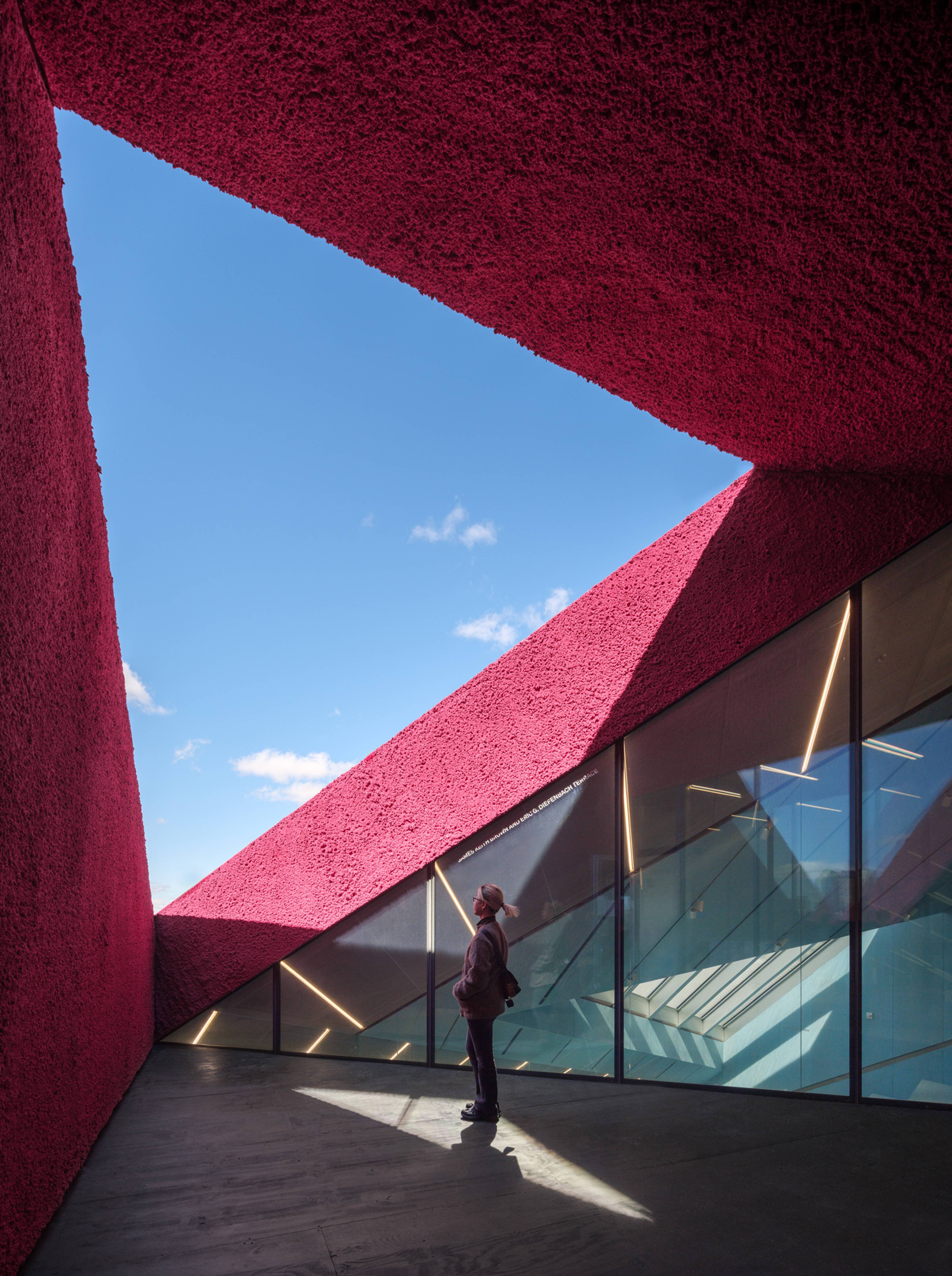
Photo: Jason O’Rear
As a vessel for a global milieu of networked artists, the museum building itself became its own kind of platform. Its stark lack of ornament, its neutrally box-like architecture, and its ephemeral materials were all noncommittal to the medium of the museum. It seemed uniquely agnostic to the idea of art, or how art should be displayed, and due to its oddly shaped galleries, was never a great place to see in-person exhibitions. Its circulation, which at first seemed novel, for reproducing within a finished museum the experience of ascending and descending to a project space in a fourth-floor Chinatown walkup, grew tiresome. But any spatial awkwardness ultimately fit in with broader changes in how art was being displayed: the 2010s saw a radical deconstruction of art’s physical presence, as anyone, anywhere, could stage a breakout show in a virtual, photoshopped “gallery” that could appear and disappear overnight.
At SANAA’s New Museum 2.0, this ephemerality included Rhizome, a leading organization for born-digital art and culture founded in 1996 and housed at the museum since 2003. Its annual 7x7 program has paired artists and technologists working on “an app, a prototype, a performance, an artwork” that is launched at a public event. Street festivals like IdeasCity and experimental publications like The New City Reader, as well as a host of other public programming, were the bread and butter of the museum, topped by a Sky Room that hosted many memorable parties and odd gatherings.
If the polite nature of NM2.0 mirrored the stability and techno-optimism of the Obama years, NM3 embodies its own, much zanier era.
So what of New Museum3? The new OMA building stands as a “pair” alongside its predecessor, with a shiny glass exterior that bends to create a small plaza on the street level. The angular frontage, sharing some qualities with a Cybertruck, bends back at the top of the 7th floor, creating a datum where the two buildings meet. Just behind the façade is a corking, grand stairway and elevators that both look out over the Bowery. The interior is replete with OMA-style materials, such as polycarbonate and silver-painted cork. This cyber aesthetic is reiterated in stairs by perforated mesh back-lit in green. The overall concept, very OMA, is a vertical circulation attached to, but clearly separated from, stacked gallery spaces. Thin lights trace up the stairs, creating a dizzying array of diagonal lines.
New Museum3 was designed beginning in 2017, after the first election of Donald Trump, during what is known as “The Great Weirding.” If the polite nature of NM2.0 mirrored the stability and techno-optimism of the Obama years, NM3 embodies its own, much zanier era, of crypto and the manosphere, Neuralink and AI, Kalshi prediction markets and Zyn vending machines where once offices had Kombucha taps. Macho technological positivism has fallen out of fashion, but it is still a driving force of our world. Fittingly, the first show in these new gallery spaces, “New Humans: Memories of the Future,” traces the lineage of transhumanism and the definitions of our species by our technologies. It is the first show at the New Museum to feel big enough to rival a day at the MoMA or the Metropolitan Museum of Art, where galleries sprawl beyond what any visitor can hope to take in.
Museums should be artworks in their own right. And that means taking risks. If you want whitewall, plasterboard, politically correct architecture that reflects the donor class, please visit MoMA, where architect Yoshio Taniguchi reportedly said of the 2004 renovation, “If you raise really a lot of money, I will make the architecture disappear.” Or the Whitney, where Renzo Piano’s polite, “industrial” chic box has the soul of a bank branch, with unremarkable architecture as well as gallery spaces. I, however, will be down on the Bowery, wandering those stairs, bouncing between the galleries and taking views of Manhattan, trying, with the building, to make sense of an increasingly delirious world.
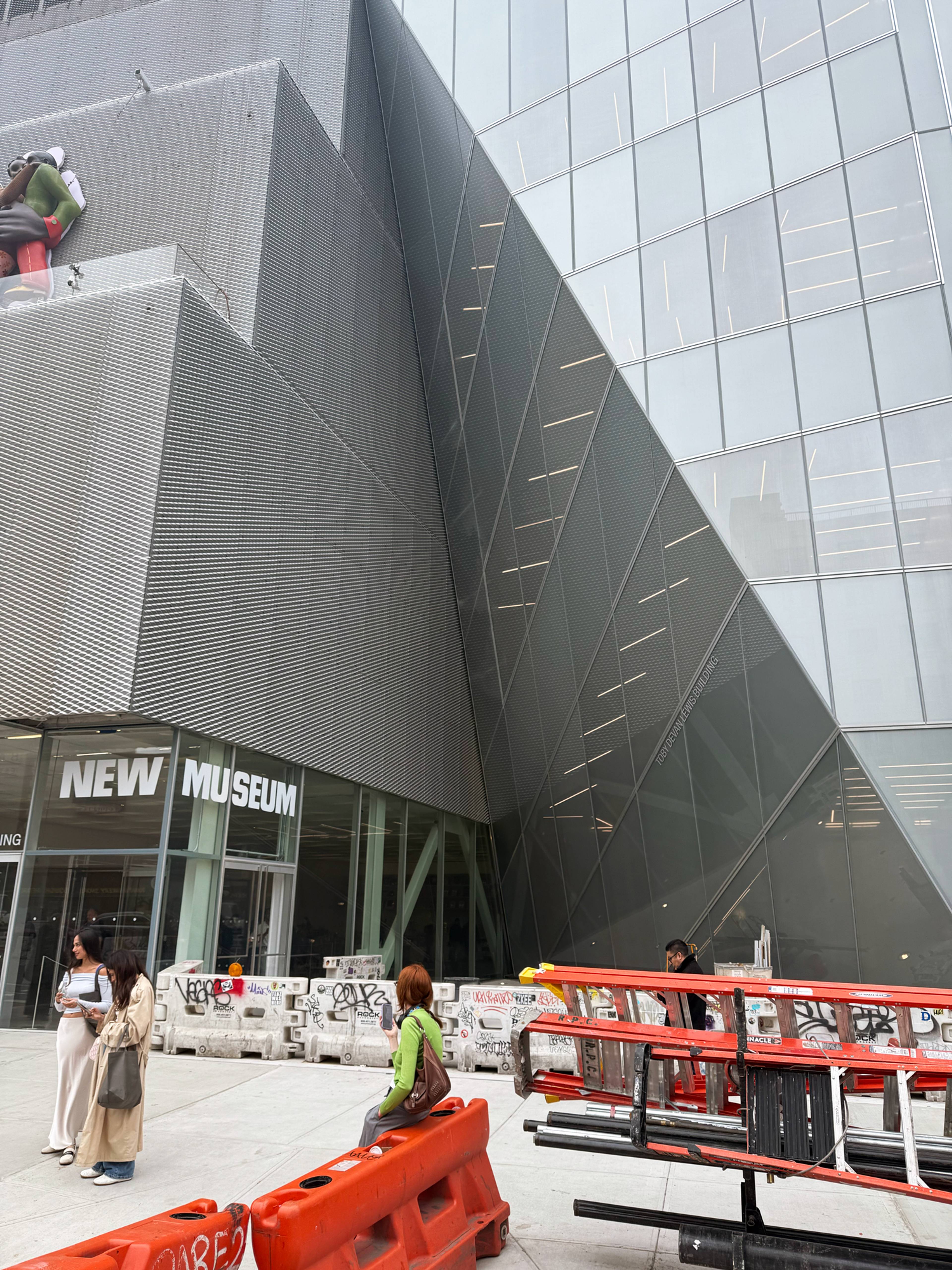
Photo: Matt Shaw
“New Humans: Memories of the Future”
New Museum, New York
21 Mar – 23 Aug 2026