


In 2009, when I was twelve years old, I fell in love on the internet, behind a screen. Every morning, I thought of the single picture I had of Thomas: the one on his Twitter profile. After months of epistolary exchange through DMs, I learned the hard way that Thomas did not exist. He was a fabricated identity, created by a girl named Angelina, who used photos of a real boy named Maël to deceive young girls online. If Thomas, the version I had imagined, was not real, the mistrust, the pain, and the disillusion certainly were. As the tales say, the word “lure” refers to a falconer’s decoy: a bundle of feathers, sometimes stuffed with meat, attached to a cord and swung through the air to call back a hawk. Not prey, but an imitation of it. A training device.
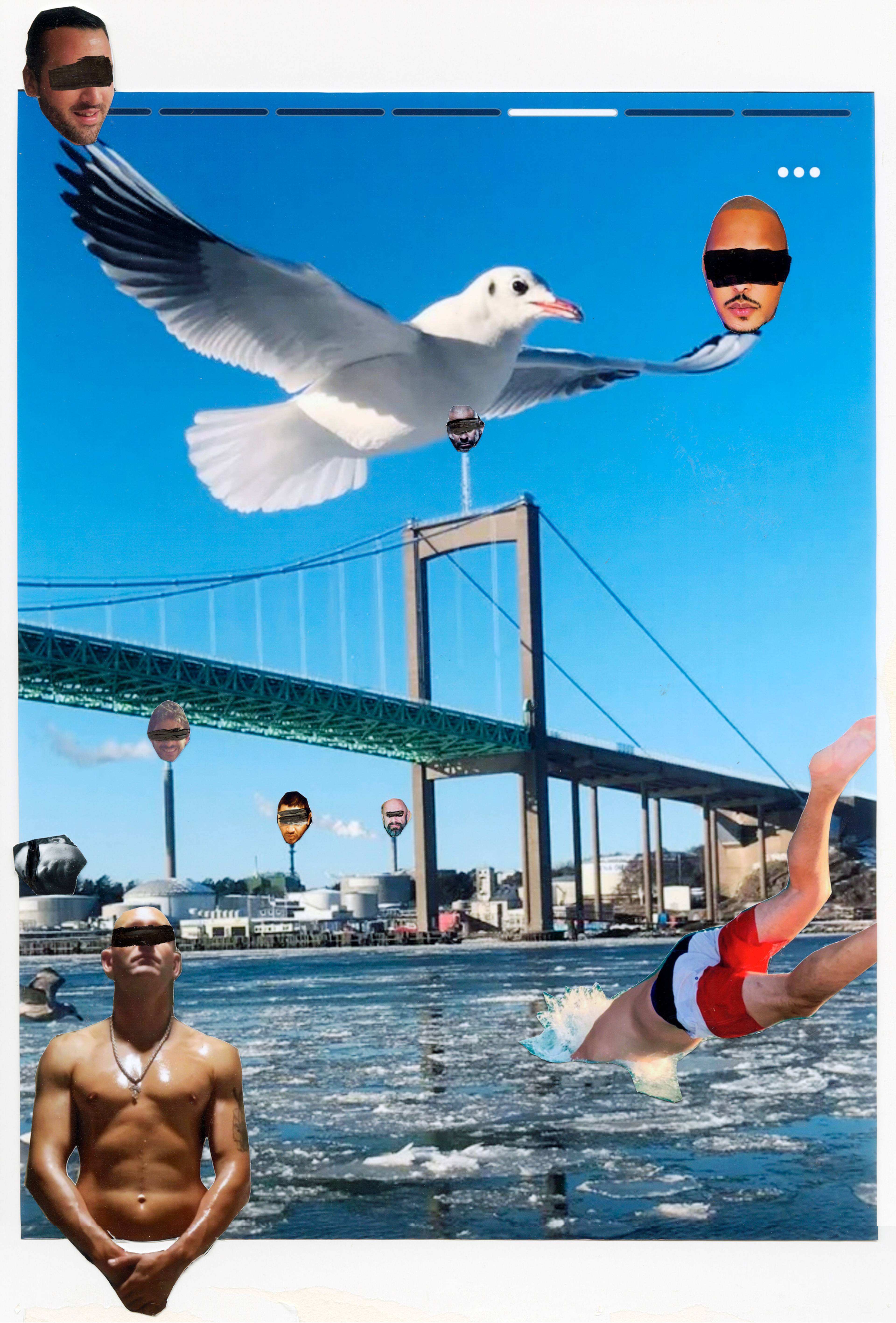
Such entanglements are at the heart of “The Lure of the Image,” an exhibition at C|O Berlin that, in its many angles and approaches, seems to guide the viewer through the terms and conditions of their own deception. In Jenny Rova’s (*1972) digital collages (2024), it’s the artists’s male Tinder matches, whose cut, gleaming torsos have been spliced into unlikely landscapes, while in Viktoria Binschtok’s (*1972) photographs (2024–25), deciphering the meanings of digital emojis becomes an exercise in trickery. Cut pieces of the Latina body imagined in #dominicanwomengooglesearch (2016) by Joiri Minaya (*1990) hang from the ceiling like bait for fish. Held by delicate yet visible threads, they stage another fabulation of the female body and its online fabrication, exposing the infrastructures of fantasy. Pictures, we have been told, were always constructed, have never been neutral, are always seducing us.
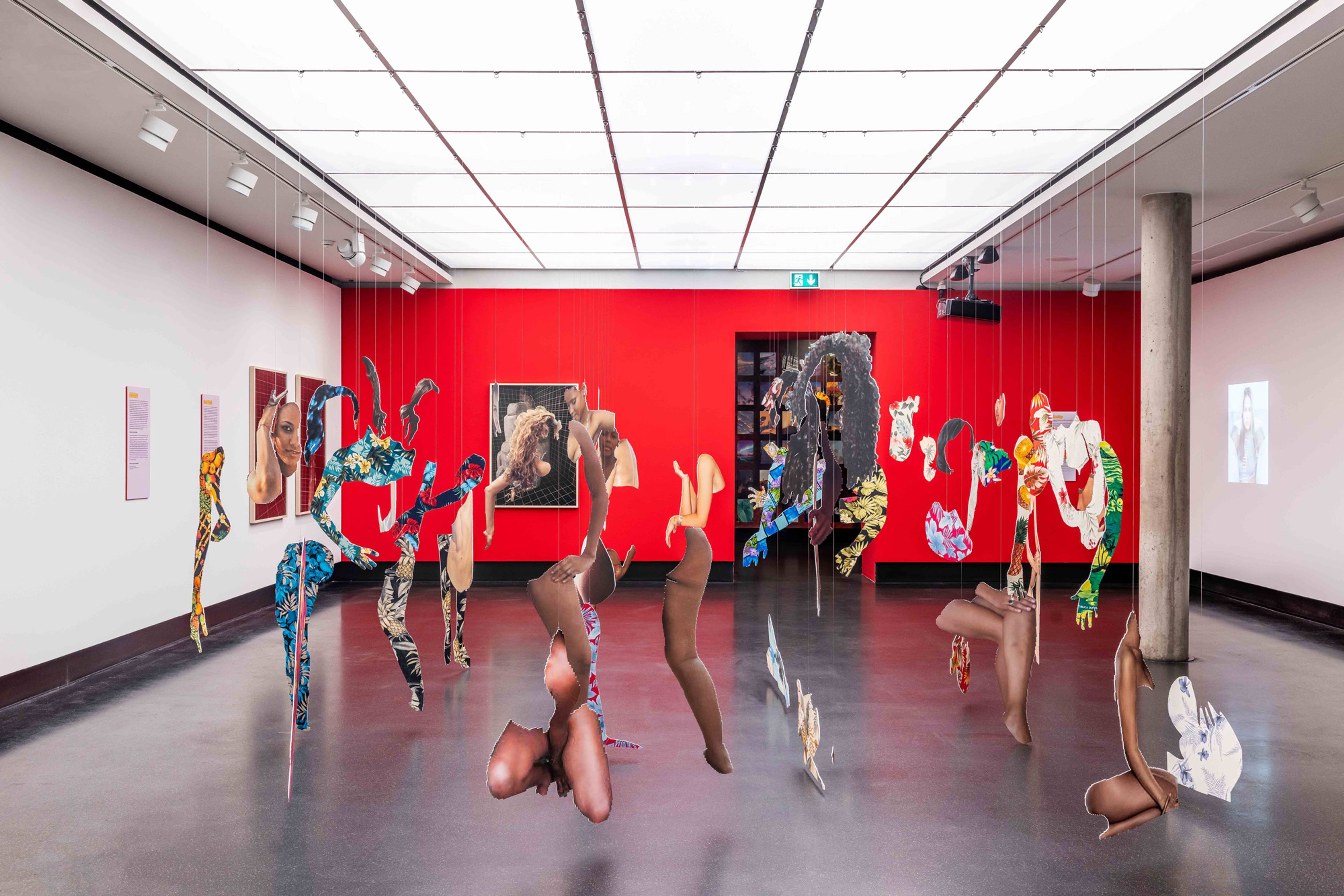
Foreground: Joiri Minaya, #dominicanwomengooglesearch, 2016. Installation view, “The Lure of the Image,” C|O Berlin, 2026. Photo: David von Becker
Midway through the exhibition, an early work by Hito Steyerl (Strike, 2010) appears as a rupture. As I watch the artist tap once, with a chisel, at the edge of an LCD television, leaving behind a luminous, glitched wound, I wonder what tools remain at our disposal to initiate similarly radical gestures. Swimming in an ocean of lures, is denunciation still a strategy? When aesthetics become politics, the question of whether an image was ever “real” loses some of its urgency. What matters instead is the virality of its discourse and the forms of belief or ideology it produces. Looking at Egregore (2021), a triptych of found photos Jon Rafman (*1981) has animated as the internet’s “mental field,” one might ask what kinds of collective entities are produced by the lure paradigm we presently find ourselves in. If digital collages and mimicries once functioned as an aesthetic, what happens when they become the new normal, sustained by endless pipelines of visual fallacies? “The Lure of the Image” insists that, even when mediated by degraded or unstable images, low-resolution belief systems allow new figures to emerge. Fed by screenshots, memes, and other “poor images” (a term coined by Steyerl in 2009), once-distributed forms of thought circulating without clear authorship now exert affective and ideological force, taking on, as Sara Bezovšek (*1993) suggests in a collage of Patrick Bateman memes, a life of their own (2024).
Nowadays, pixelated, innocent, and naive-looking images are the operative carriers of value and orientation. Annihilation Core Inherited Lore (2023–), a girly room of soft pillows and pink curtains, invites us into Noura Tafeche’s (*1987) analysis of how kawaii aesthetics and pop-cultural visual languages are instrumentalized to circulate propaganda and imagistic violence – a most dangerous lure. What appears as softness and cuteness conceals the hook of war and militarization beneath its surface. Dina Kelberman’s (*1979) video (The Wave, 2025), meanwhile, condenses thousands of ASMR video clips into a mural-like experience of sound and visual texture experience. Lying on pillows positioned in front of the screens, viewers are mesmerized by the pressure of sponges that can never be fully cleaned, endlessly merged with clay and soap, transformed into objects of imagined relief rather than resolution.
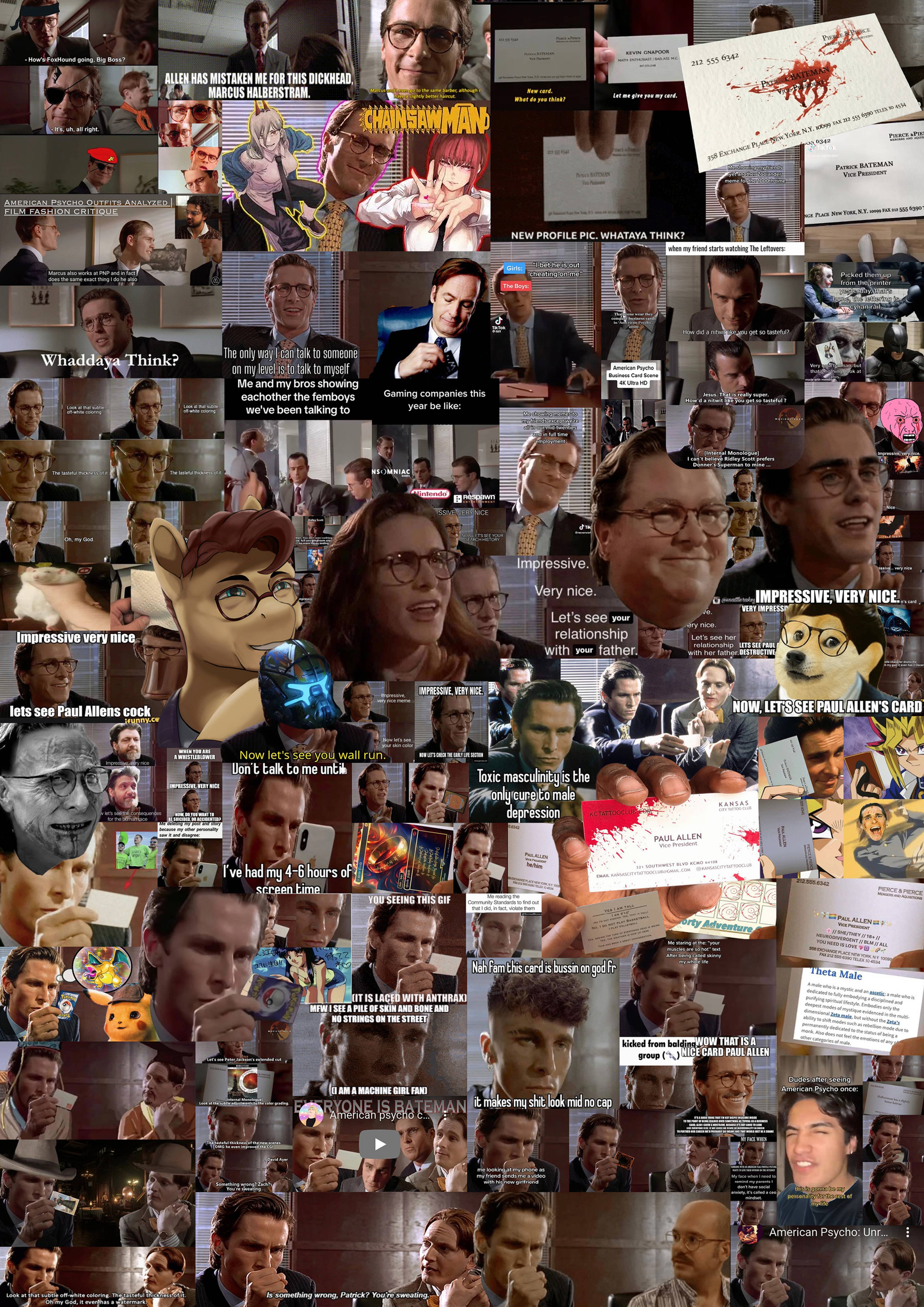
Sara Bezovšek, A Life of Its Own: American Psycho, 2024, installation, inkjet print. Courtesy: the artist
While the lure is a relatable-enough motif, there is something a little vintage, a little passé about the show, and perhaps for good reason: namely, that making an exhibition about the state of contemporary photography is always, in itself, a false promise, an illusion; analyses of the state of the image are rendered obsolete the minute they see the light. With the rapid expansion of generative AI tools, images grow more seductive, and more deceptive, by the day. If Susan Sontag once wrote, in her essay “On Photography” (1977), that “the painter constructs, the photographer discloses,” today, digital photography has perhaps become one of the most constructed media of all, engineering worldviews where it once was understood to disclose truths. Even the Pope gets seduced by deepfakes, as exhibition co-curator Marco De Mutiis reminds us in his essay “Lead Us Not into Temptation,” published on the purpose-built platform [permanent beta]. Walking away from C|O, one is left with many images and a mental map, one that offers ways of navigating the mechanisms of allure – or, of understanding how one got caught.
Later that same sweltering day, I walked into Sybil, a creative R&D center for gaming in Berlin, for artist Trevor Paglen’s presentation of his new book, How to See Like a Machine (2026). There, I found myself immersed in a new paradigm: a constant state of image hallucination, what Paglen has long described as “the psyop.” Listening to his talk, I think back to the pictures of my lover Thomas, who existed so vividly, and yet never really did. “The image is the name we give to an experience,” Paglen says. By now, we know this too well: images exist as technological objects, ones of vision and transmission, of persuasion and propaganda. When everyone gets a chance at such alchemy, no one is safe. “Hell is truth seen too late,” Thomas Hobbes wrote in Leviathan, his 1651 treatise on Nature’s war of all against all. And I wonder whether hell is something yet to come – or whether it is already beneath our feet.
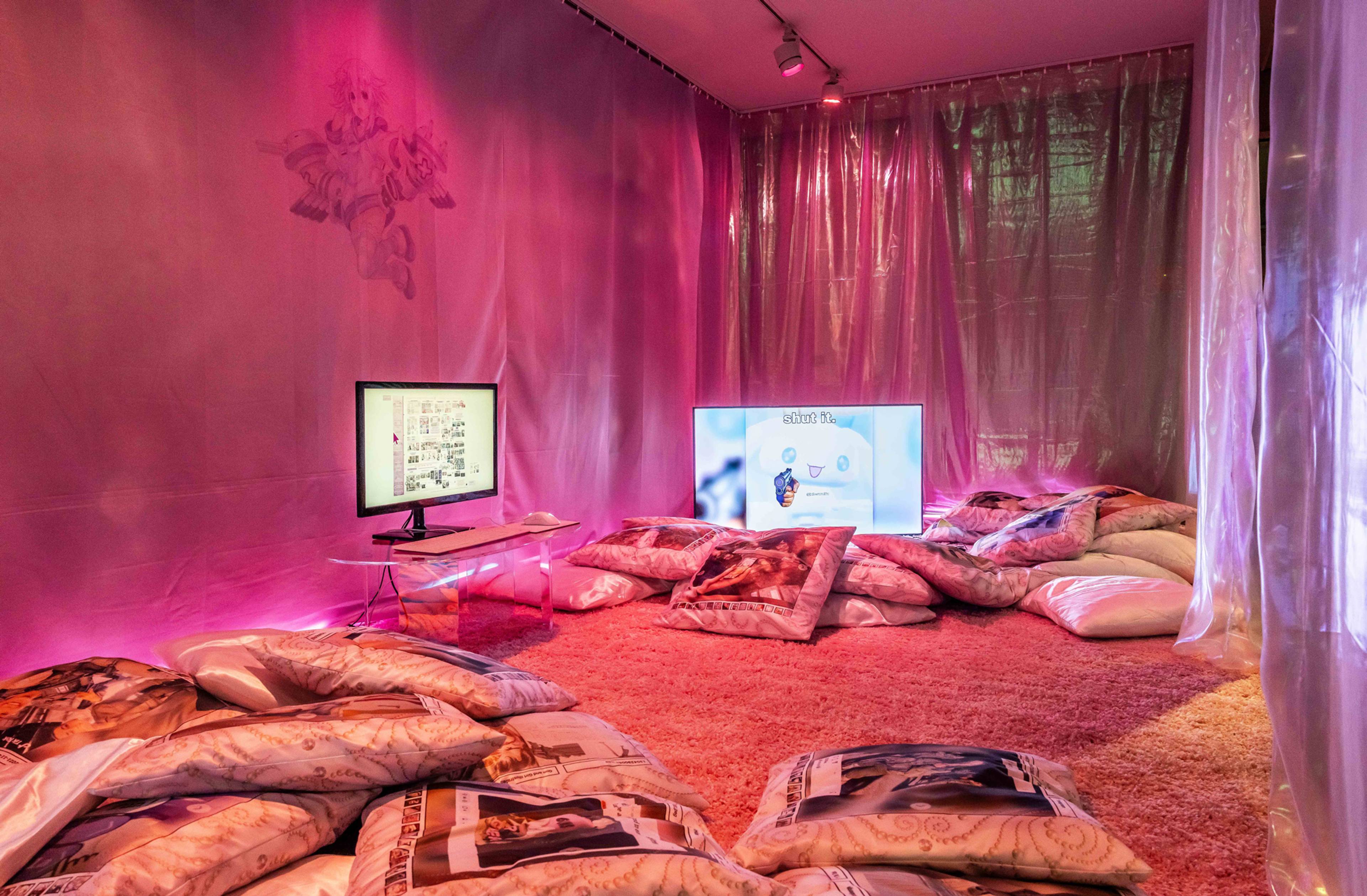
Noura Tafeche, Annihilation Core Inherited Lore ٩( ๏̯ ๏ )͡۶, 2023–, mixed media installation. © 2021 Parco Studio and Leonardo
Landoni
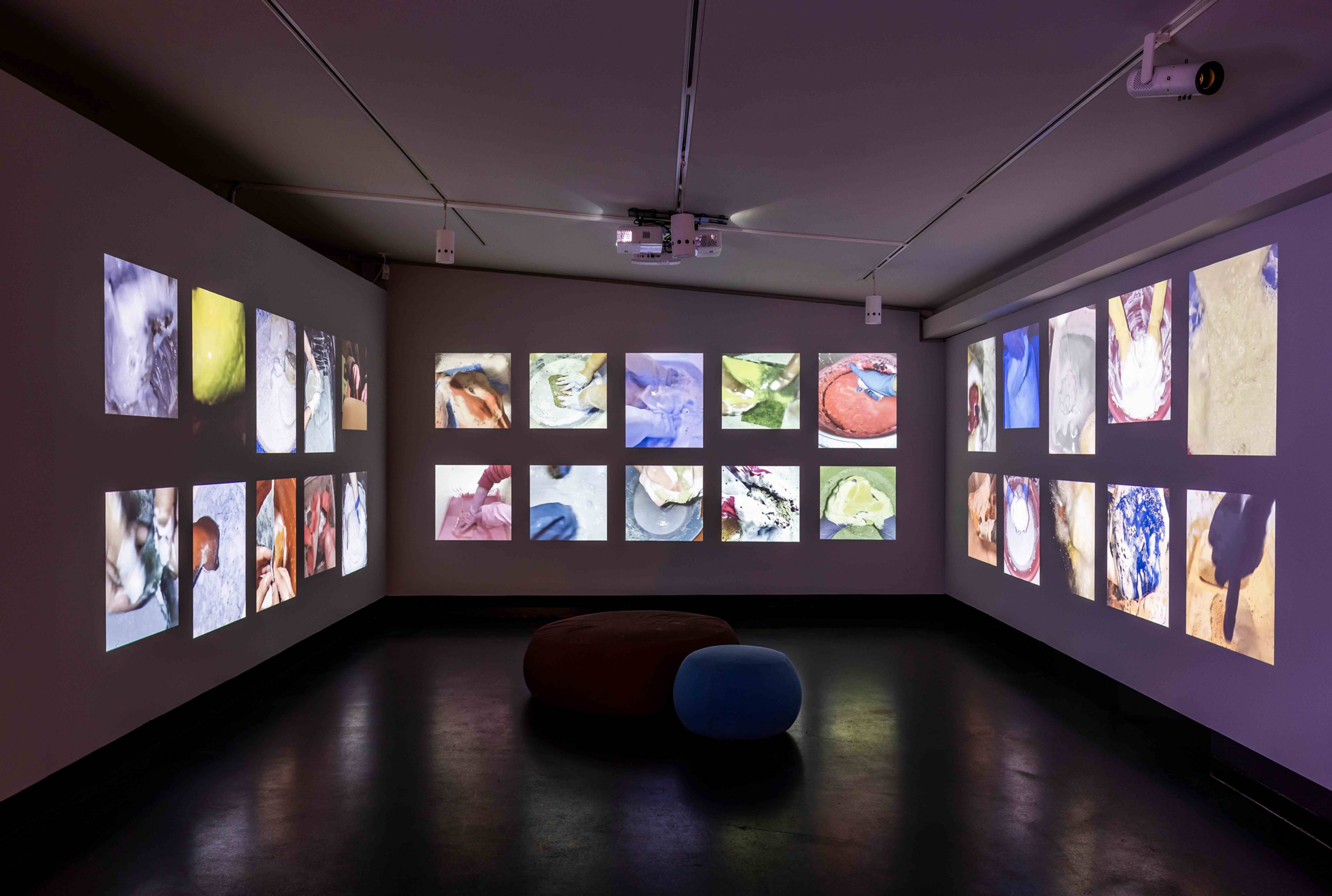
Dina Kelberman, The Wave, 2025, two-channel video installation, sound, 23:23 min. Courtesy: the artist
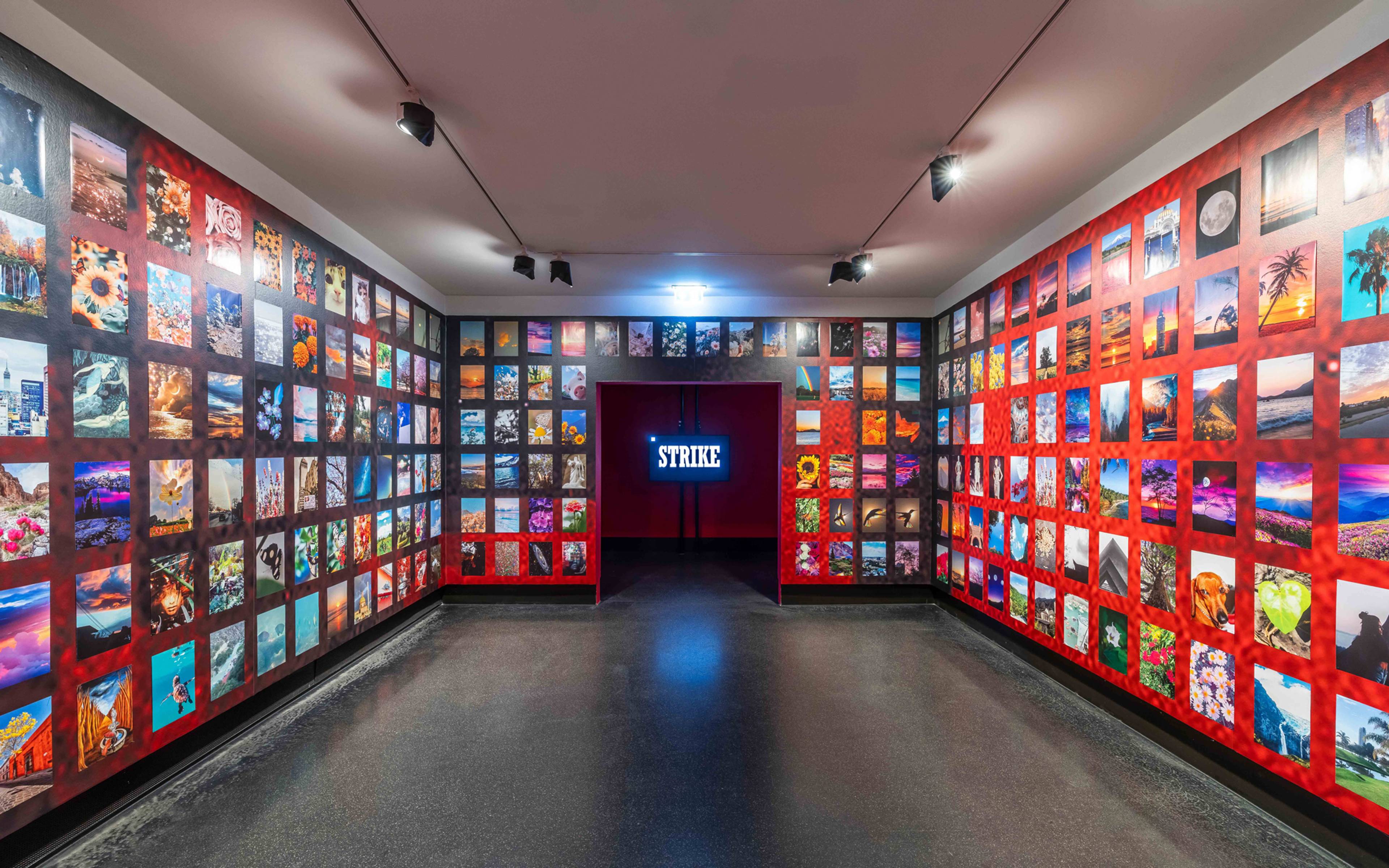
View of “The Lure of the Image,” C|O Berlin, 2026. Photo: David von Becker
“The Lure of the Image”
C|O Berlin
20 Jun – 2 Sep 2026