

With a practice that consists primarily of collecting artifacts (of empire, of ancient history, of war and peace), every Danh Võ (*1975) exhibition takes the form of a retrospective. It also imbricates his own lineage and early experiences of displacement – born in South Vietnam only months after the Fall of Saigon, he fled by boat with his family in 1979, bound for the US, only to be picked up and rerouted to Denmark – and his splicing, rearranging, and recontextualizing of objects present images and narratives familiar to a museum context, yet also fragmentary and unnerving.
Võ’s new exhibition at the Stedelijk Museum in Amsterdam, “πνεῦμα (Ἔλισσα)” brings together sculptural compositions and arrangements dating back two decades, including many of his best-known works, with the artist himself given curatorial carte blanche. The commanding elements of this retrospective-in-a-room, though, and what really materialize Võ’s soft form of (institutional) critique, are various mechanisms of display: presentational strategies of twisting, framing, capturing, and especially cutting that fill the Stedelijk’s largest gallery (a subterranean, often ungainly space colloquially known as “the bathtub”) and often outshine the individual works.
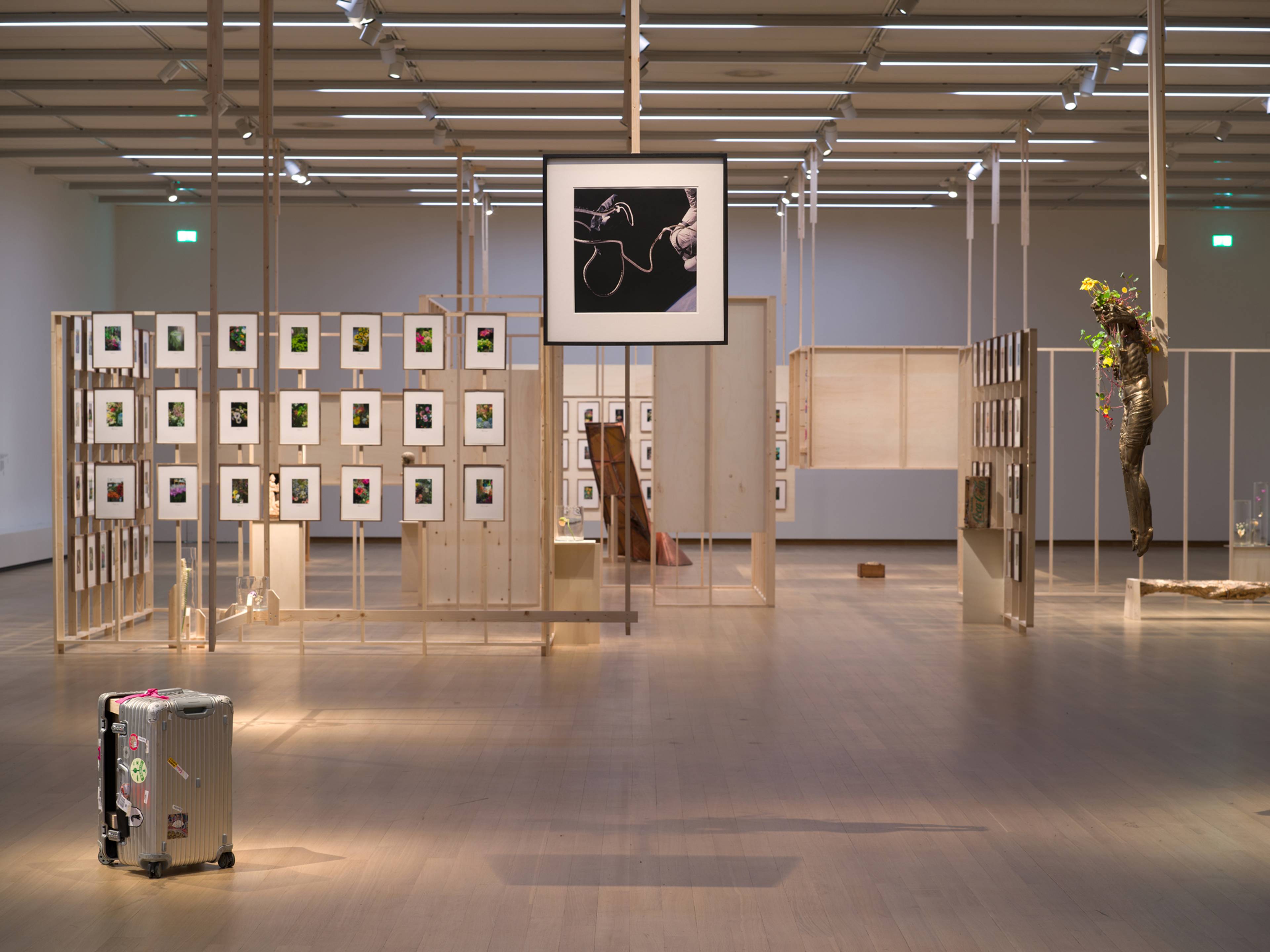
View of Danh Võ, “πνεῦμα (Ἔλισσα),” Stedelijk Museum, Amsterdam, 2026. Photo: Nick Ash
Entering the gallery, one is faced, quite remarkably, with a presentation of infrastructure across different scales: large, boxy enclosures made of unvarnished wood, or smaller frames and pedestals that alternatively expose or conceal an array of stunning objects. From certain positions, a visitor might glimpse only these devices and their mechanisms, their struts and screws, as they hang from the ceiling or stand on the ground like shipping crates, or like grand paintings turned toward one another, so that only the stretcher bars are visible. Several constructions have been left open or are seemingly unfinished, lending rather dramatic silhouettes to the objects placed amidst or against them. Infrastructure, here, seems to celebrate the physical, scene-setting capacity of the art institution, even as Võ’s compositions, we are told, expose those structures of power that entangle religion, colonialism, identity, and contemporary art.
Many of those compositions are placed within or in proximity to these large frames, but are also set off from and surrounded by their own individual armatures, as with the 15th-century woodcut of Salome brandishing the head of John the Baptist, squeezed into a Campbell’s Soup crate (Untitled, 2021). A similar artistic logic is at play in ancient bronze casts, one of the Bodhisattva nestled face-first into its wooden support (Untitled, 2024), another of Hariti, goddess of fertility and protector of children, balanced prone atop two short wooden blocks (Untitled, 2024). There are so many backs on display: from figures turned down or toward their supports, to the architecture that demands we crouch to access their adorned interiors, to a collection of photographs of Vietnamese boys and young men, turned away from the camera of an American anthropologist, often holding hands (photographs of Dr. Joseph M. Carrier, 1962 – 1973, 2026). This continual backside, like the cutting necessary to fit a Renaissance relief into a box, also seems to intentionally deform Võ’s object, and thereby to impede more conventional spectatorial engagement with beauty – and thus to interrupt its power.
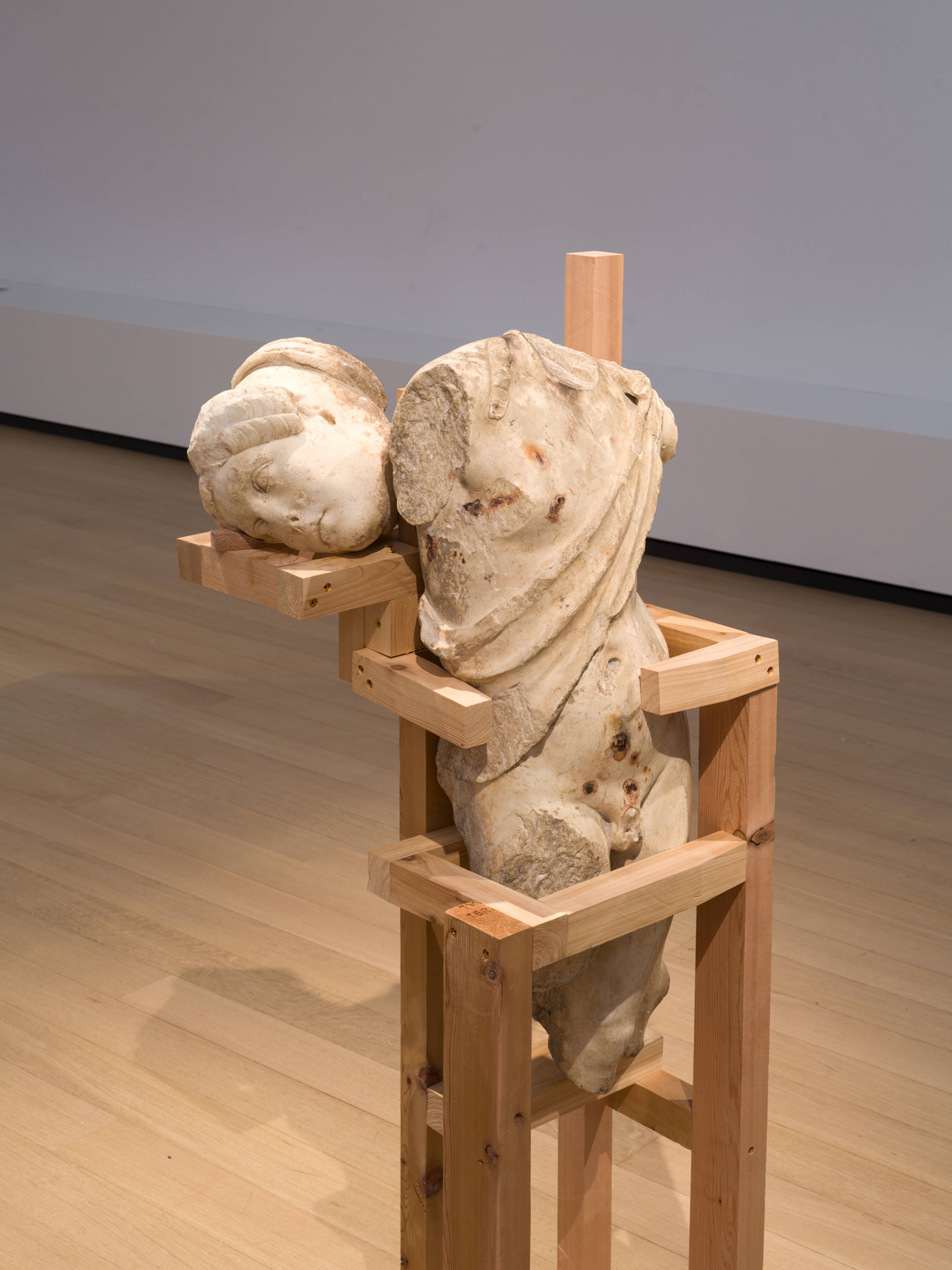
Untitled, 2024, Roman marble torso of Dionysus, 1st–2nd century CE, Roman marble head of a woman, 200 CE, and pinewood
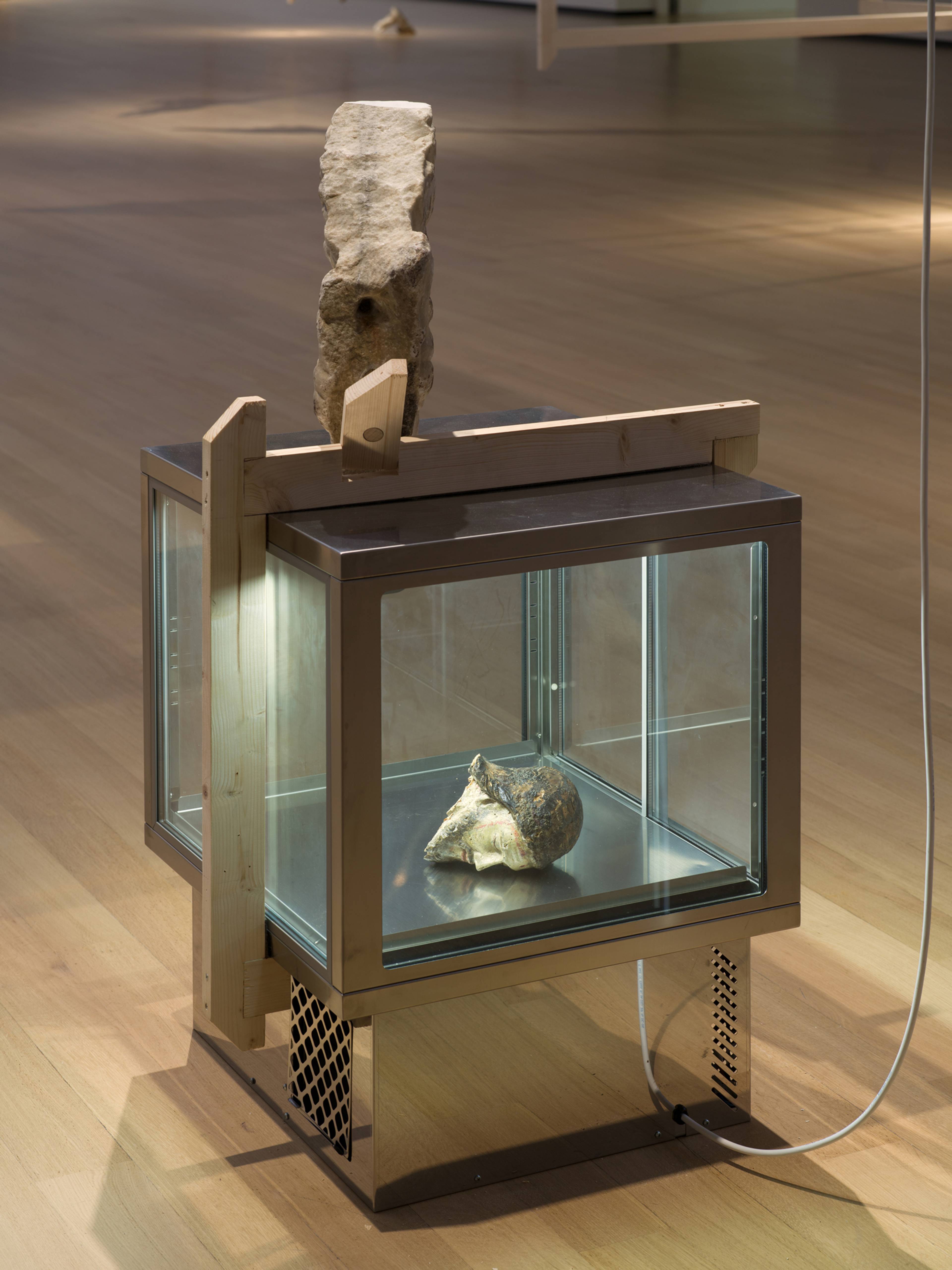
Lick Me, Lick Me, 2016, refrigerator, polychrome wooden head of Jesus sculpture from the 16th century and marble Roman sculpture from the 1st–2nd century CE
Yet beauty persists, nevertheless, especially in pervasive botanical imagery. Cutting is present in these works, too, though not as dismemberment, but as forms of care and cultivation. In a new series (“flower arrangements,” 2026), the artist has delicately paired dried flowers and bleached animal bones in glass cylinders distributed throughout the gallery. Inspired by ikebana, and like the other configurations on display, these pairings unite contrasting materials, although the dozen or so iterations here are so tastefully composed as to deny any of the tension characteristic of such arrangements. Compact grids of framed photographs taken in a Berlin flower shop more explicitly center the slowed-down and exacting work of horticulture, a frequent subject for an artist with a sprawling studio garden eighty kilometers north of the German capital. These are strange images, tightly cropped to separate single flower species out from mixed bouquets, then labelled by Võ’s father in calligraphic Latin. What look like glimpses of everyday life, labor, and friendship can’t escape Linnean taxonomy, imposed by the artist, and its lineage of control.
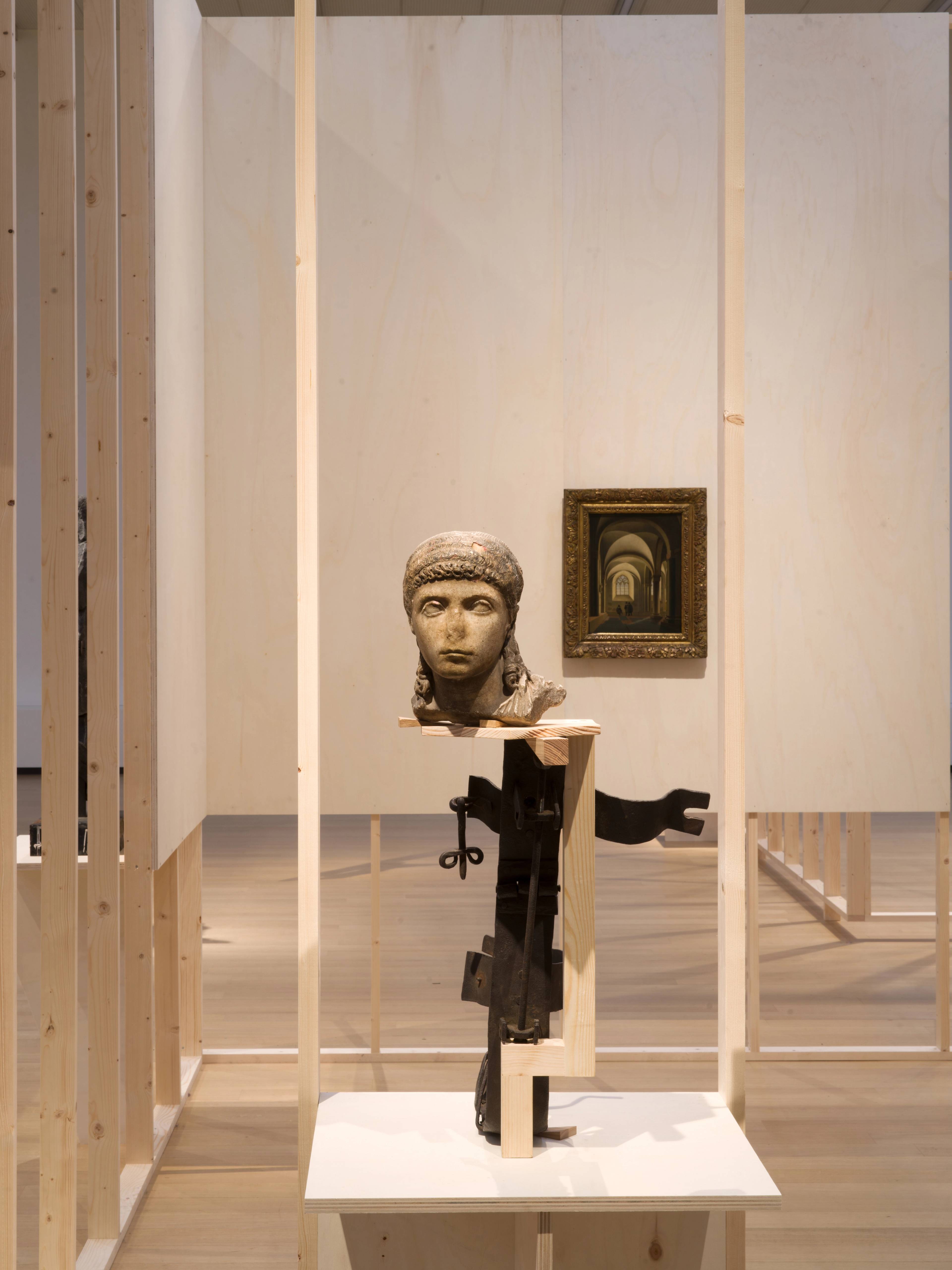
And so, violence persists. The exhibition’s title – the “spirit” or “breath” and Elissa, the Greek name for Dido, doomed Queen of Carthage – encapsulates Võ’s greater conceit: that beauty is itself an act of violence, mixing brutality and poetry; or perhaps, said another way, that violence is constitutive of art in those networks of power and desire, the museum foremost among them, that guide its very construction and circulation. It’s hard to escape this aesthetic formulation, even as it often appears that Võ has forced it upon his own collection. This is clearest in the 2025 work that share’s the exhibition’s title: entering the gallery, visitors are greeted by the 1st-century marble head of a delicatus, a Roman boy enslaved for sexual gratification, sat atop a plinth that fuses unfinished wood and a pair of 19th-century torture boots. In this and several other portraits of beauty and exploitation, or of beauty as exploitation, Võ has not so much exorcised violence as eroticized it, treating the institution less as his object of critique than as his necessary accomplice.
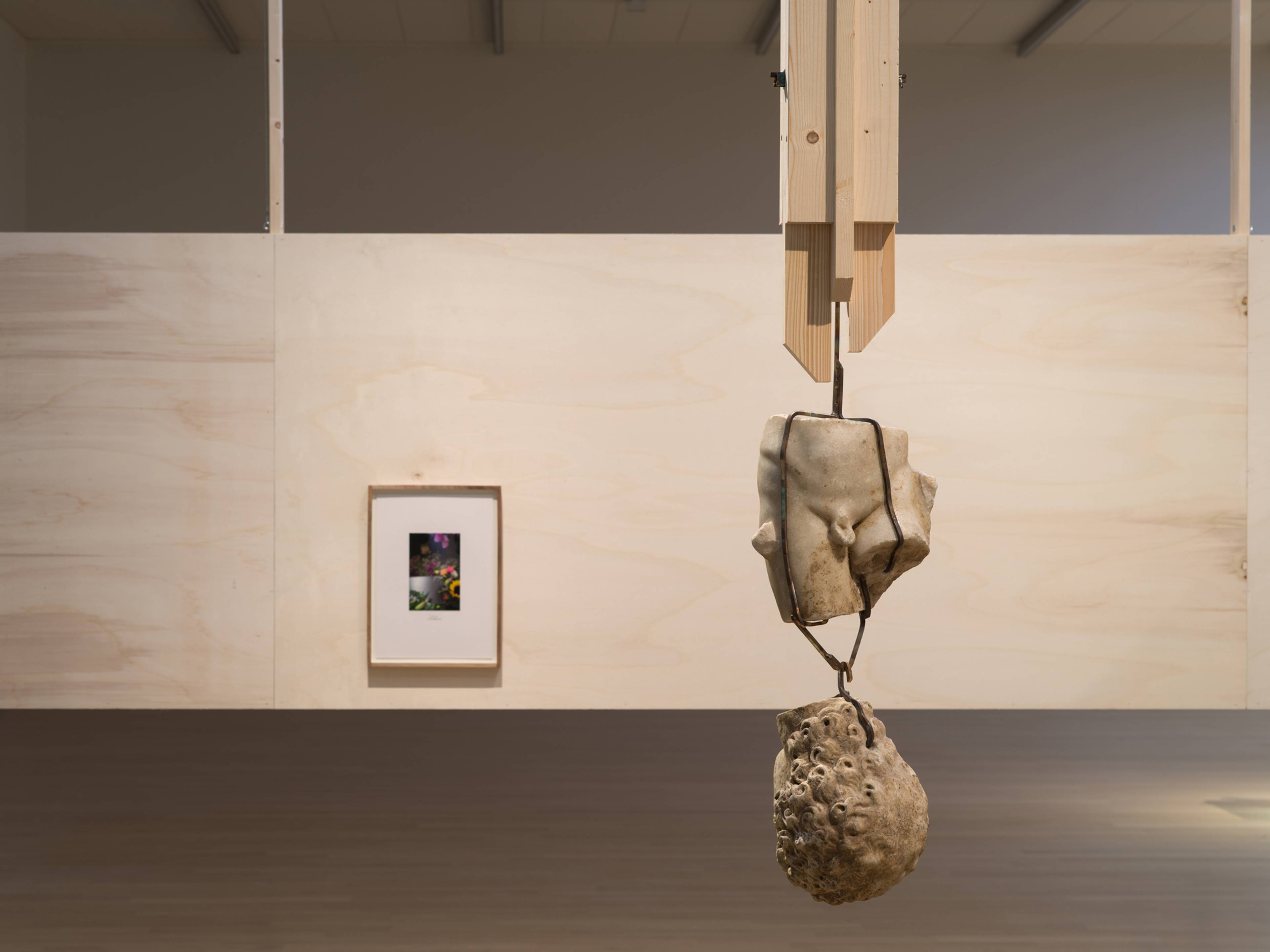
Foreground: Shove it up your ass, you faggot!, 2026, 1st–2nd century CE Roman marble head of a youth, 1st century CE Roman marble lower torso of a youth,
and bronze title taken from line spoken by the demon in the movie The Exorcist. Screenplay by William Peter Blatty. Dir. William Friedkin. Perf. Mercedes McCambridge, Linda Blair. Warner Bros., 1973. Courtesy: the artist
___
Danh Võ
“πνεῦμα (Ἔλισσα)”
Stedelijk Museum, Amsterdam
14 Feb – 2 Aug 2026