
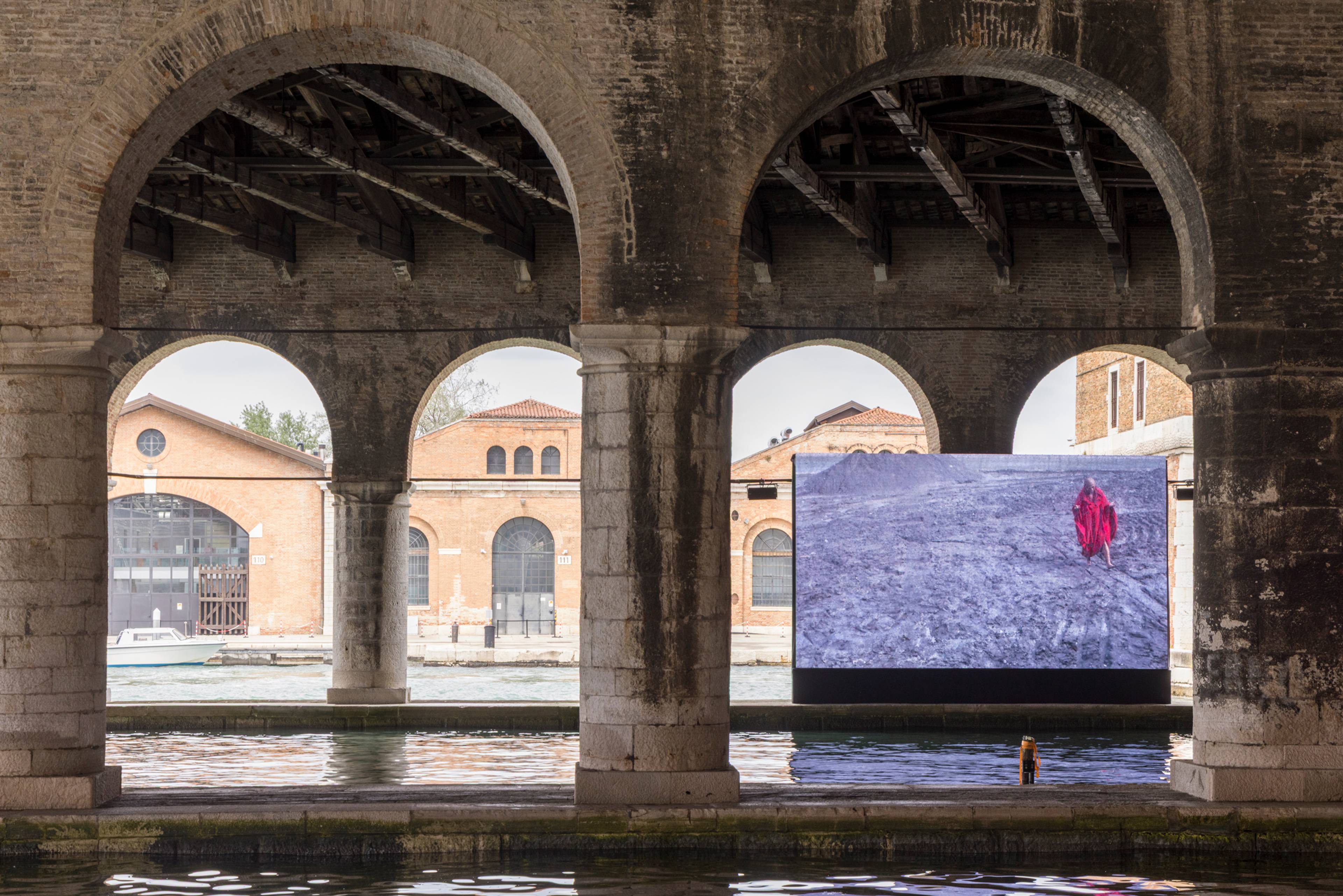
On the one hand, countries from the “Global South” represent half of the pavilions at the 61st Venice Biennale, “In Minor Keys” – which features a record one hundred national participations. On the other, we are now witnessing the return of unbridled imperialism, against a backdrop of populism and nationalism. Lenin once defended the theory of “bending the stick”: when it has been bent completely to the left, it must be bent just as far to the right in the hope of returning the stick to a median position, “straightest and fittest for action.” The 2026 Biennale will be remembered as the one where the stick went wild, swinging violently between a masculinist colonialism (Israel, the United States, Russia, China) and an art world that courageously persists in celebrating minorities and deviant minds. Let’s recall that in 1986 – that is, a quite recent past – the Biennale included non-Western artists in its main exhibition for the first time: there were eight. In 2026, that is the same number of European artists included on the artist list of the late curator Koyo Kouoh, which also does not include a single Italian – a sign that Venice has become an offshore place, a duty-free zone. Much was expected of her project after Adriano Pedrosa’s 2024 edition, “Foreigners Everywhere,” which was folkloristic and intellectually weak. But Kouoh abruptly left us in May 2025, just a week before the Biennale’s official press conference. Her discourse was promising: the exhibition was to be composed of “songs of those producing beauty in spite of tragedy, the tunes of the fugitives recovering from the ruins, the harmonies of those repairing wounds and worlds.” Beauty, ruins, care. The ideas were there. She argued for “a radical reconnection with art’s natural habitat and role in society: that is the emotional, the visual, the sensory, the affective, the subjective.” Alas, this against-the-grain statement is only perceptible in places in this exhibition, realized by a team based on Kouoh’s incomplete sketches. The major event of this Venice Biennale will, therefore, remain the premature disappearance of its conceiver, which raises the question of the definition of curating – something that is not limited to a selection of artists and a written statement.
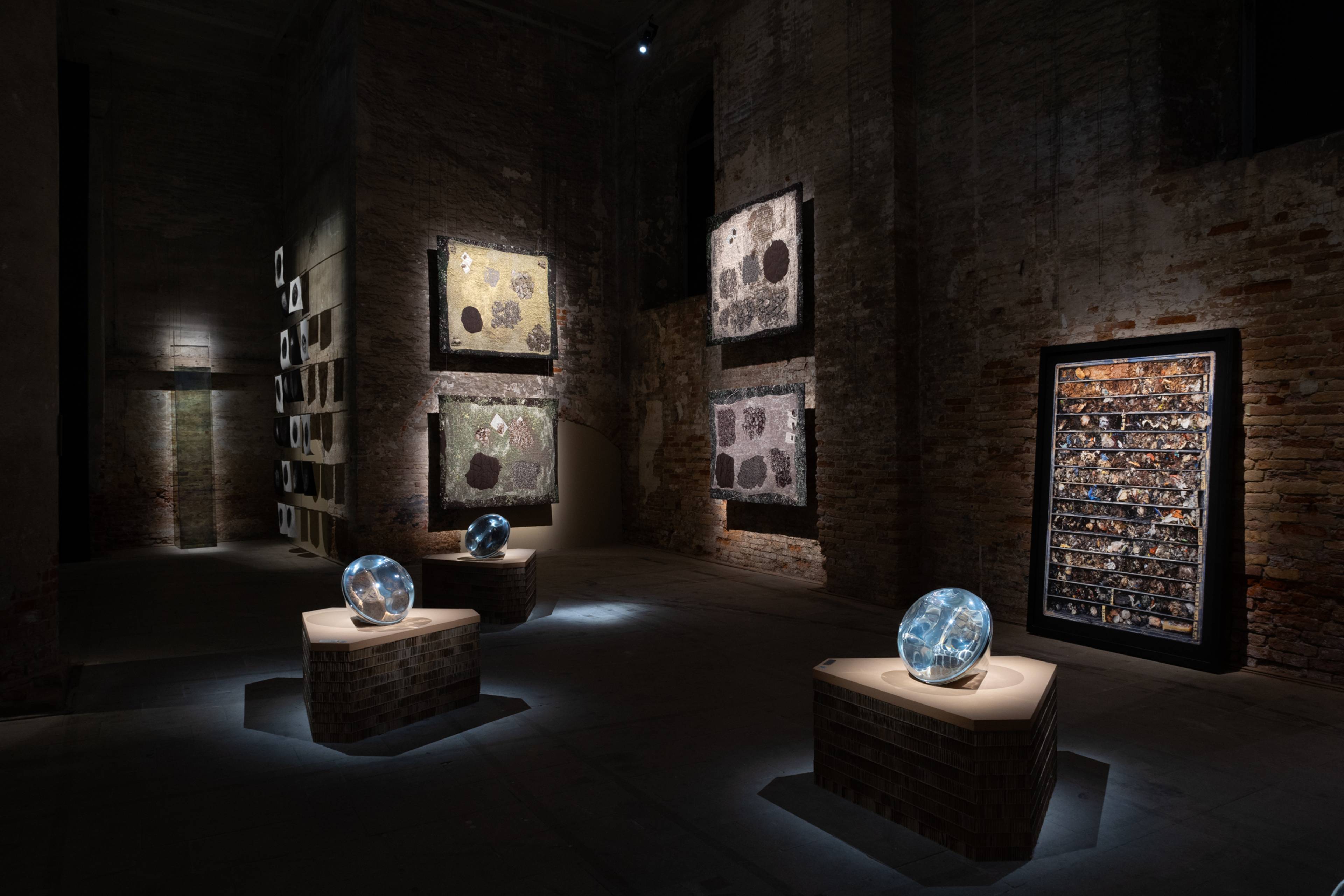
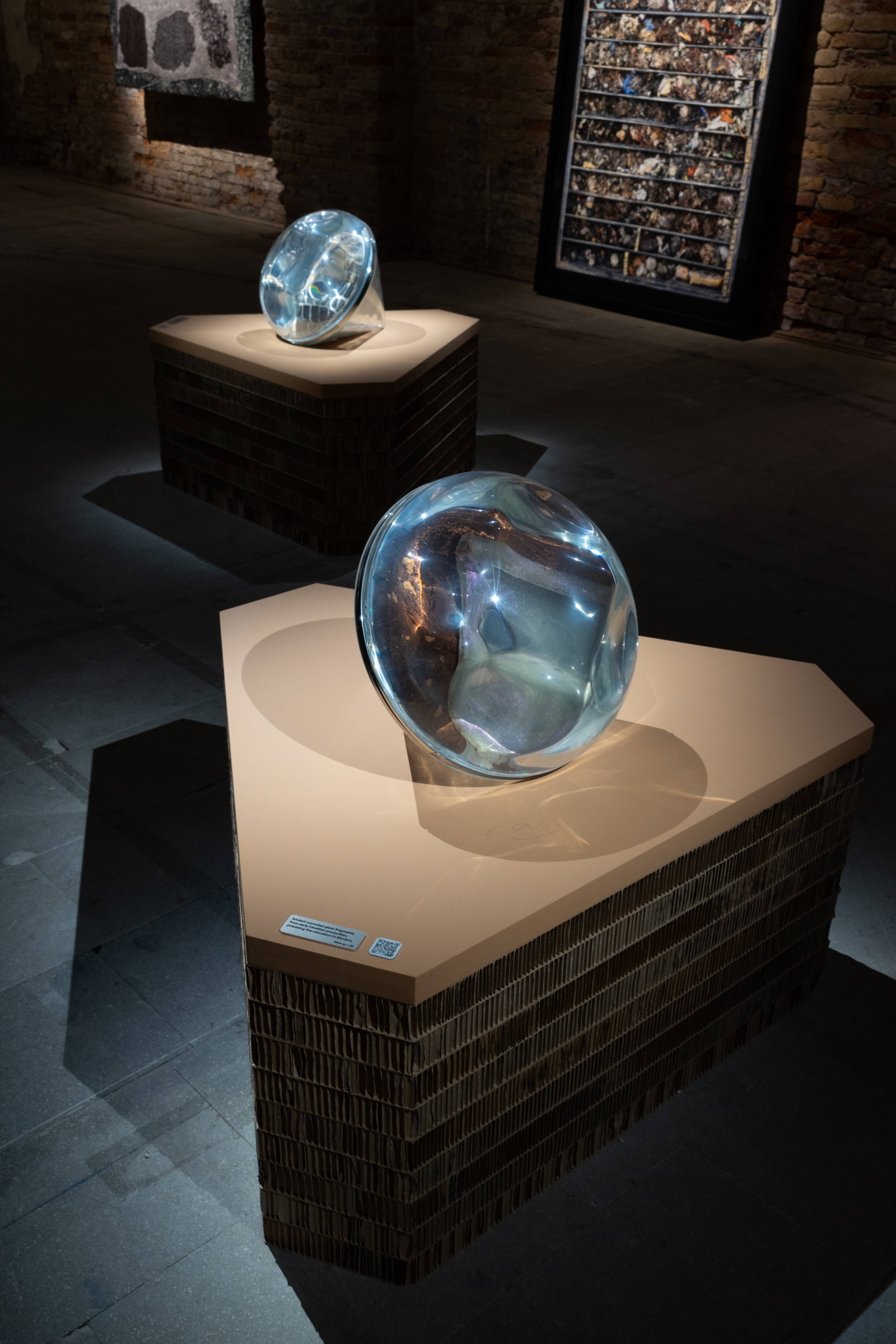
Front: Joana Hadjithomas & Khalil Joreige, Time Capsules: Beirut and Time Capsules: Eleonas, both 2017. Behind: Message With(out) a Code, 2024. Photo: Luca Zambelli Bais
The exhibition leaves an impression of fragmentariness, compounded by its very approximate spatial arrangement. Thus, two strong concepts left by Kouoh, those of “procession” and of “Shrines,” are simply not formally developed. Furthermore, the selection of works, finalized by her team, is often problematic. There is no doubt that Kouoh would have chosen more relevant ones, would have worked to make them dialogue, and would have avoided certain curatorial aberrations. A striking example is the work of Carsten Höller (*1961), which is cut off from the general context and almost nullified by its placement in a passageway. Worse still, framed works by another artist (Sofía Gallisá Muriente) are hung above Höller’s two benches, which diffuse the chemically reconstituted scents of the Belgian artist’s parents, preventing anyone from activating it. To top it off, the orifices that allow the scent to escape appear to have been forgotten. It seems the executing curators either misunderstood the work’s protocol or simply did not like the work. Other artists suffer similar fates, such as Kaloki Nyamai (*1985), who is one of the most interesting painters in the selection, but whose immense panels are crammed into a minuscule space. Other artists are inexplicably stretched out, as in the interminable ensemble of seventeen paintings by Mmakgabo Mmapula Helen Sebidi (*1943). Moreover, brilliant artists are included in the exhibition with unfinished works, such as Kader Attia (*1970), whose initial idea (a Vietnamese shaman considering computer viruses as spiritual entities) was fascinating, but whose lazy formal execution suggests the artist had no real interlocutor. This curatorial weakness can be felt in the layout of the exhibition, each work seemingly leading to the next at random, without any real reflection on their meaning or status. For example, nothing (formally or intellectually) connects the work of Billie Zangewa (*1973) to that of Mohammed Z. Rahman (*1997), yet they are exhibited side by side in the same room at the Central Pavilion in the Giardini.
The show overwhelms us with zombie textiles, zombie tapestries, zombie ceramics. If one traverses kilometers of cosmogony, metaphysics, too, ends up becoming decorative.
This sense of randomness leads the visitor to an impression of uniformity. Let’s recall the wave of “zombie abstraction” in the 2010s: through accumulation, “In Minor Keys” overwhelms us with zombie textiles, zombie tapestries, zombie ceramics. If one traverses kilometers of cosmogony, metaphysics, too, ends up becoming decorative. Some works are thus reduced more or less to the tradition or folklore that defines them, such as the Mardi Gras costumes of Big Chief Demond Melancon (*1978), the dense assemblages of Ebony G. Patterson (*1981), or the embroideries of Annalee Davis (*1963), to name but a few, which seem to announce the emergence of a globalized mainstream in which it is better to follow the rules than to stand out.
This visual uniformity takes the form of a constant blast of seductive colors that saturate the visitor – who is relieved to find, at the end of the journey, an entire room dedicated to the New York-based collective fierce pussy: finally, minor tones. Yet, there are strong works in this Biennale. And with the same list of artists, other curators could have created an exhibition that avoids these criticisms – certainly, Kouoh herself would have. While some artists are reduced to illustrating the exhibition’s themes, others elevate them to a higher level, such as Tabita Rezaire (*1989), who resonates vernacular tradition with the issues of eco-feminism, or Joana Hadjithomas & Khalil Joreige (*both 1969), who evoke the Palestinian tragedy beyond the militant tract, through a dazzling exercise of political archaeology, or the wildly analytical paintings of Sawangwongse Yawnghwe (*1971), which strongly address the question of genocide.
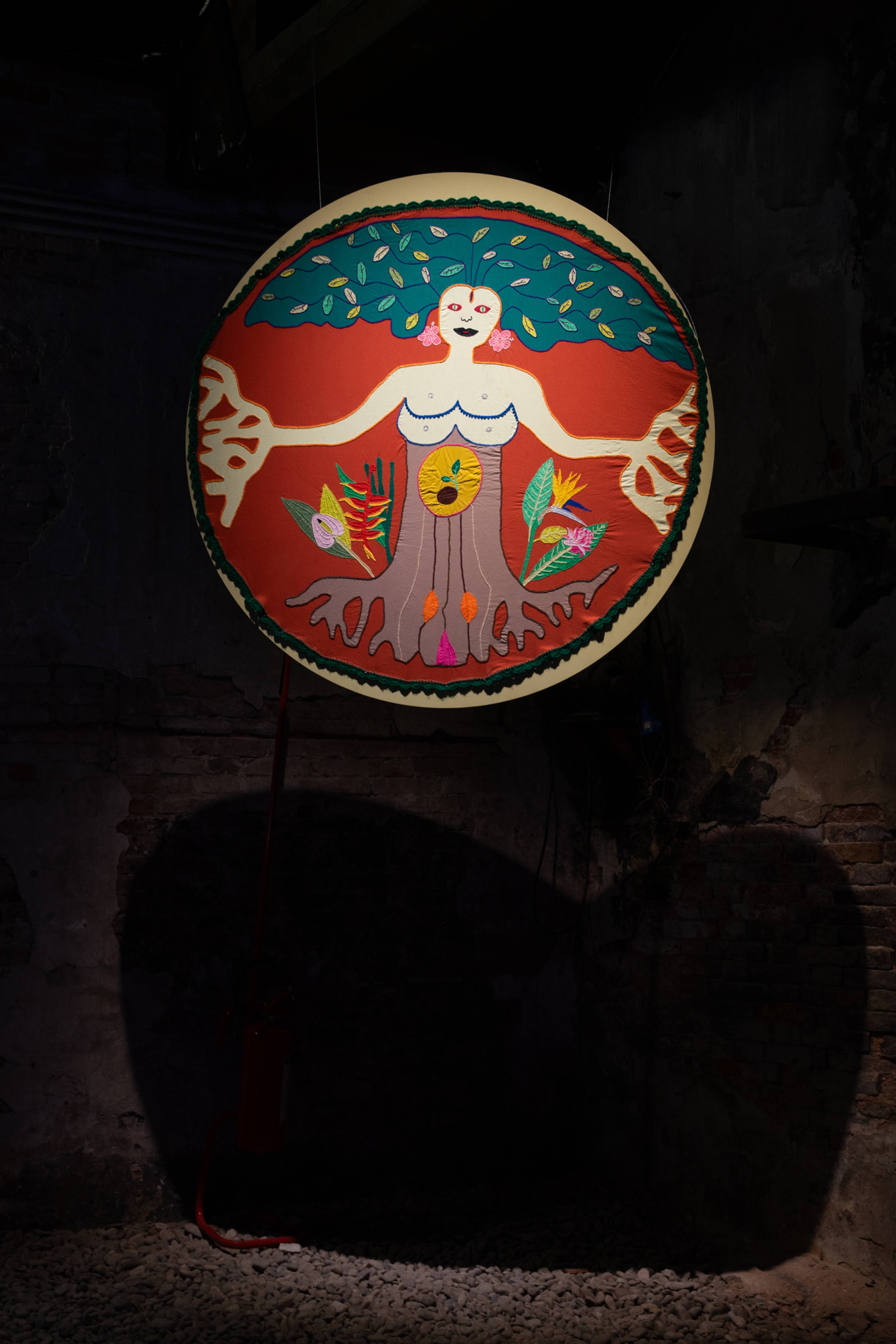
Tabita Rezaire, Mother Trinity, 2020-22, embroidered cotton textile, 140 cm (diameter). Embroidered by Trefena Boekoe. Photo: Luca Zambelli Bais
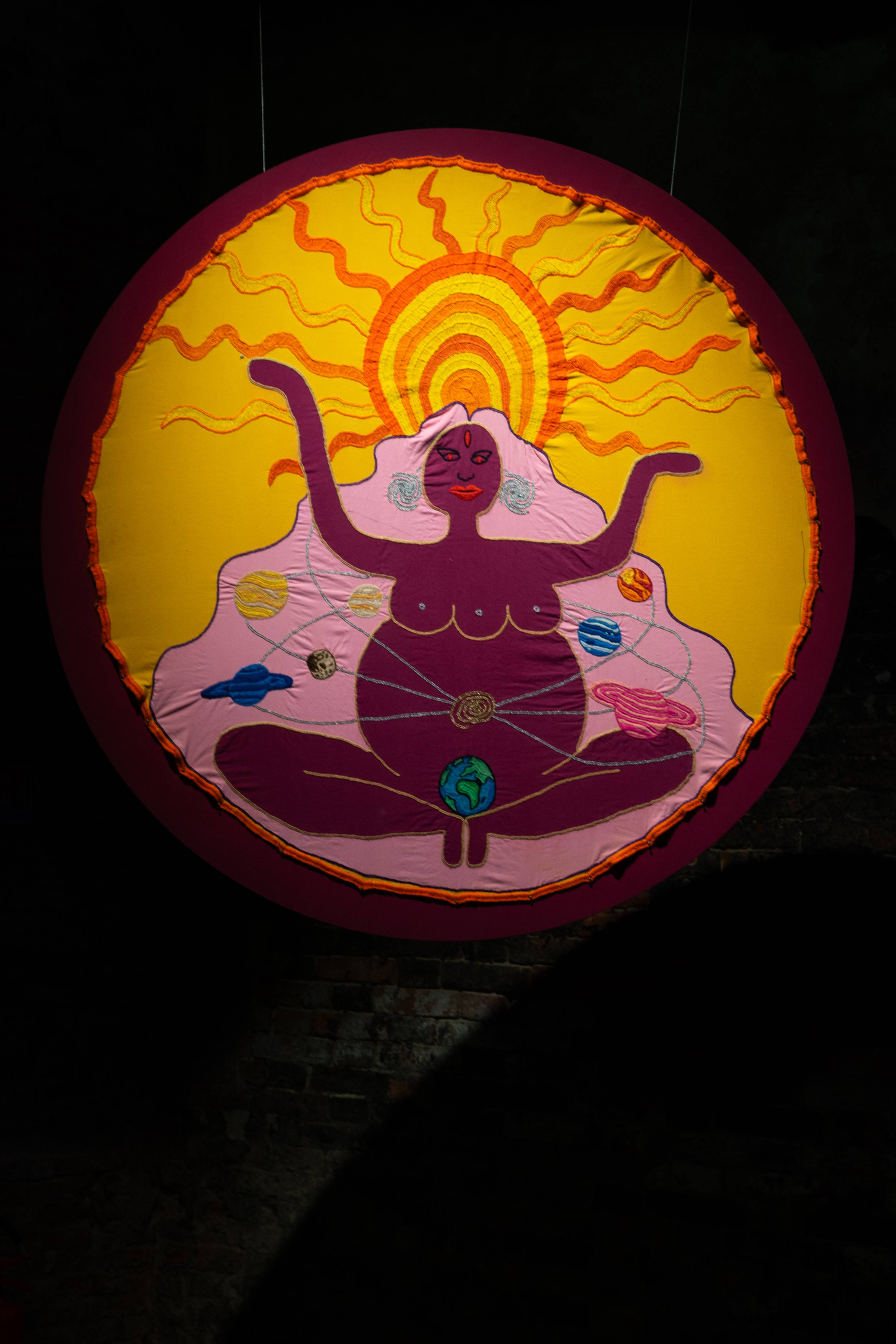
Tabita Rezaire, Mother Sun, 2022, embroidered cotton textile, 140 cm (diameter). Embroidered by Trefena Boekoe. Photo: Luca Zambelli Bais
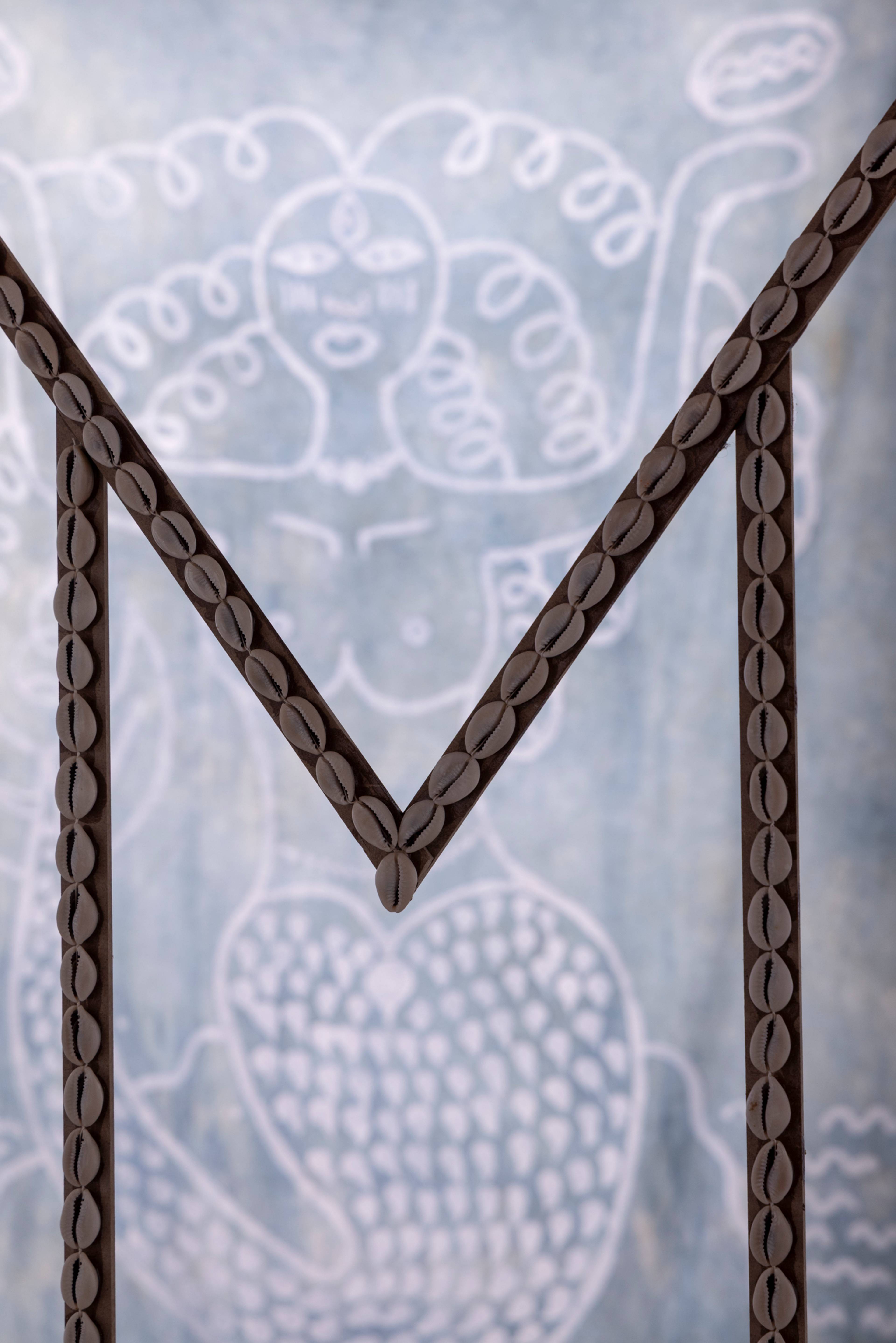
Tabita Rezaire, Omo Elu, 2024 (detail). 7 Indigo-dyed cotton panels, calabashes, water, 140 × 200 cm (each). Photo: Marco Zorzanello
We can also mention Uriel Orlow’s (*1973) photogravures on cotton, a few painters like Mohammed Joha (*1978) or Hala Schoukair (*1957), and Tsai Ming-Liang’s (*1957) video. But the artists who develop a singular, formal thought seem isolated here within the affirmation of tradition – finally, the major force of this show. By evacuating the conceptual, the reflexive, the technological, and the achievements of modernism (reduced to the totemic presence of Marcel Duchamp, 1887–1968), one must acknowledge that what emerges intellectually here is the triumph of “identity politics,” which was not, I think, Kouoh’s guiding idea. (On the other hand, it was explicitly that of the United States pavilion in the Giardini, meant to express “American values.” A Trojan horse of the global alt-right, identity politics has, in my view, no more intrinsic value in Senegal or Brazil than in Donald Trump’s USA.) And the defense of vernacular aesthetics, if it is not associated with a will to historicity in the present – that is, with a critical mode of thinking through which an artist positions themselves in their cultural context without being subjugated by it – ends up constituting just another norm.
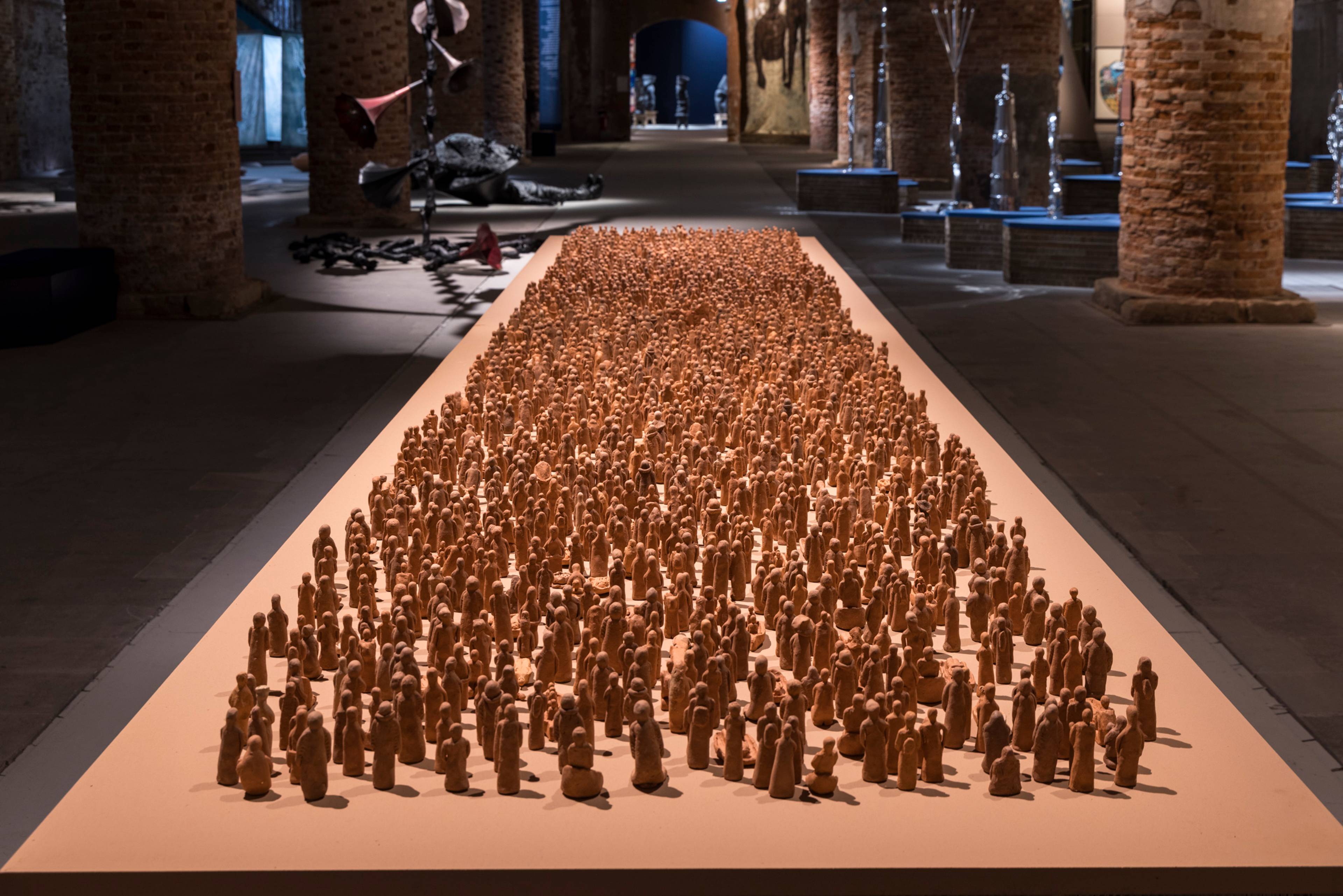
Sawangwongse Yawnghwe, People’s Desire, 2018, 2400 clay pieces, brass plate. Installation dimensions variable; brass plate label: 21 × 30 cm. Photo: Marco Zorzanello
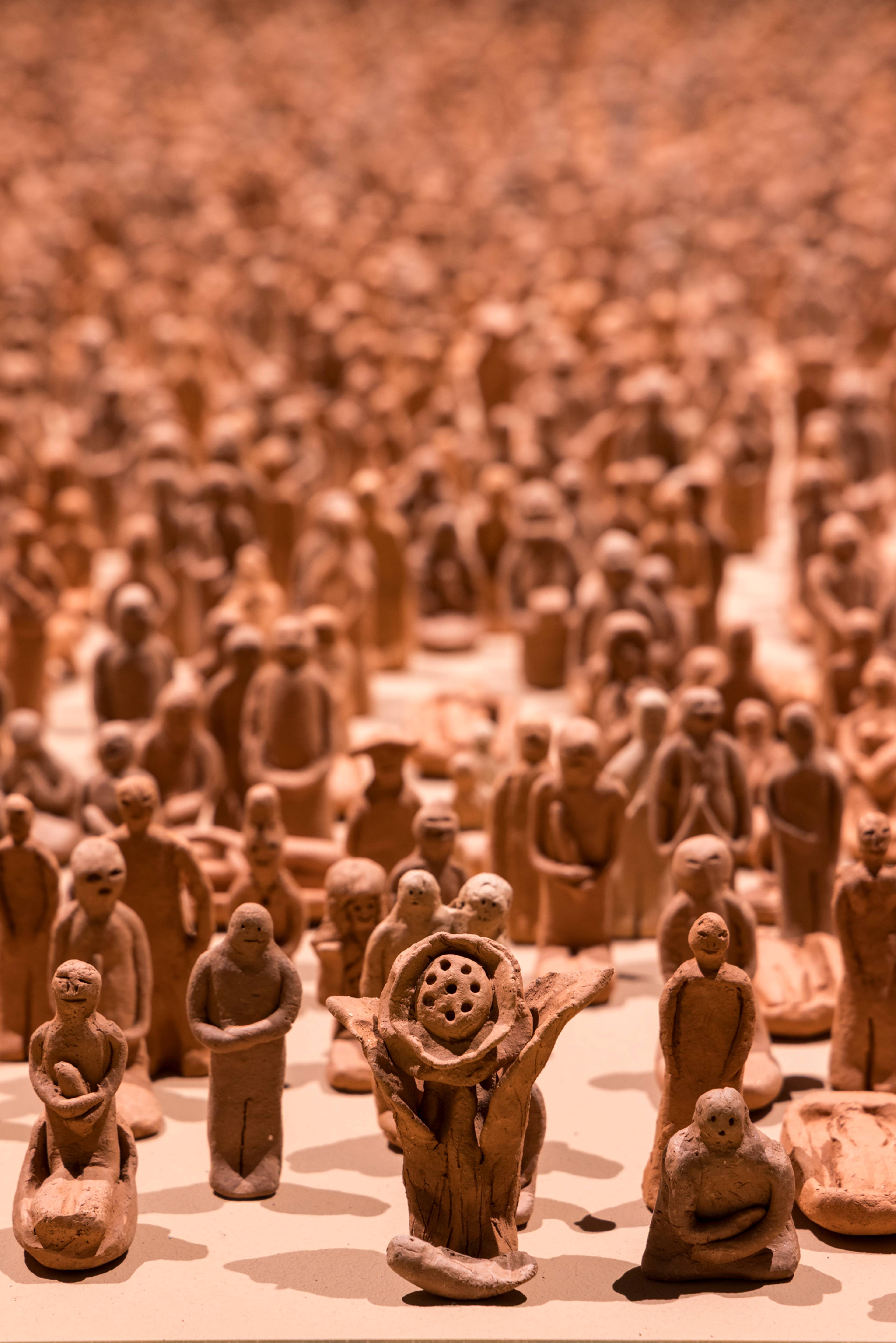
Sawangwongse Yawnghwe, People’s Desire, 2018 (detail), 2400 clay pieces, brass plate. Installation dimensions variable; brass plate label: 21 × 30 cm. Photo: Marco Zorzanello
“In Minor Keys” opens no new paths. Instead, it actually completes a historical sequence that began in 1989, that of globalization, by radicalizing curatorial positions that were then against the grain. Two past exhibitions come to mind, both from 1989: first, the Third Havana Biennial, which made the radical choice to focus on what was then called the “Third World”; secondly, “Magiciens de la terre” (Magicians of the Earth, 1989) at the Centre Pompidou and the Grande Halle de la Villette, Paris, in which curator Jean-Hubert Martin selected artists from all continents, not according to their conformity to the Western narrative of contemporary art, but according to the “beliefs and values” of their own cultural contexts. But who among the 2026 Biennale audience remembers these two exhibitions? At the time, “Magiciens de la terre” was vilified because it placed Western artists on an equal footing with amateur artists, craftspeople, shamans, and Tibetan monks. But thirty-seven years later, what was once disruptive has become “normal,” thanks to the art world’s gradual openness to multiple narratives, and to the rapprochement that has occurred between the figure of the “Western professional modernist artist” and those from non-Western traditions.
As Rory Tsapayi, a member of the curatorial team, remarked, it is possible that this edition of the Biennale may be remembered as “an exhibition where people sit.” Koyo Kouoh’s memory deserved better than that. “If we want everything to remain as it is, it will be necessary for everything to change,” Giuseppe Tomasi di Lampedusa wrote in The Leopard, his landmark 1958 novel on the tides of political orders. The loop has closed; let’s see where the pendulum will take us next.
“In Minor Keys”
Central Pavilion & Arsenale di Venezia
61st International Art Exhibition – La Biennale di Venezia
9 May – 22 Nov 2026
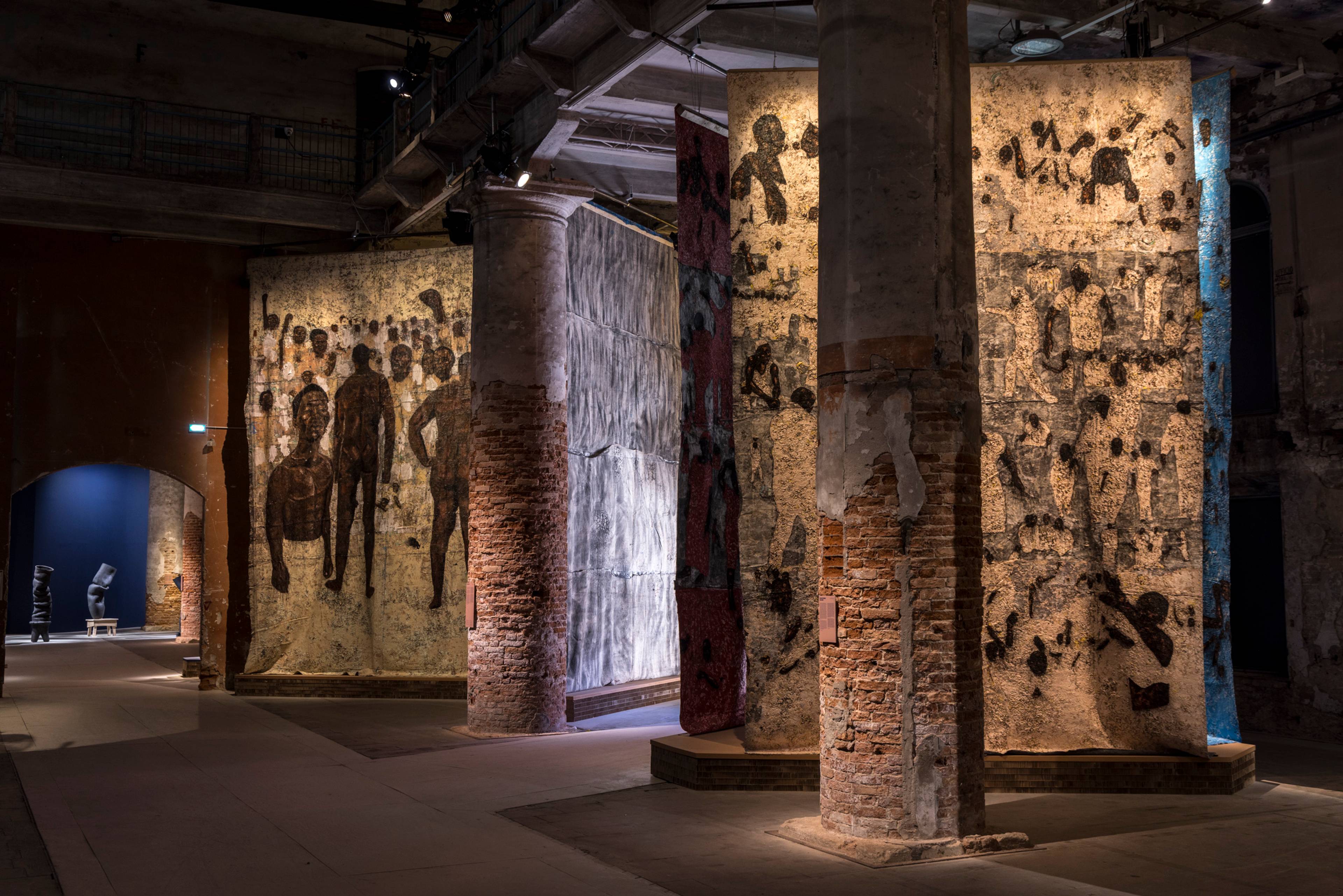
Works by Kaloki Nyamai, 2024–25, mixed media, acrylic, collage, stitching on canvas. Photo: Marco Zorzanello
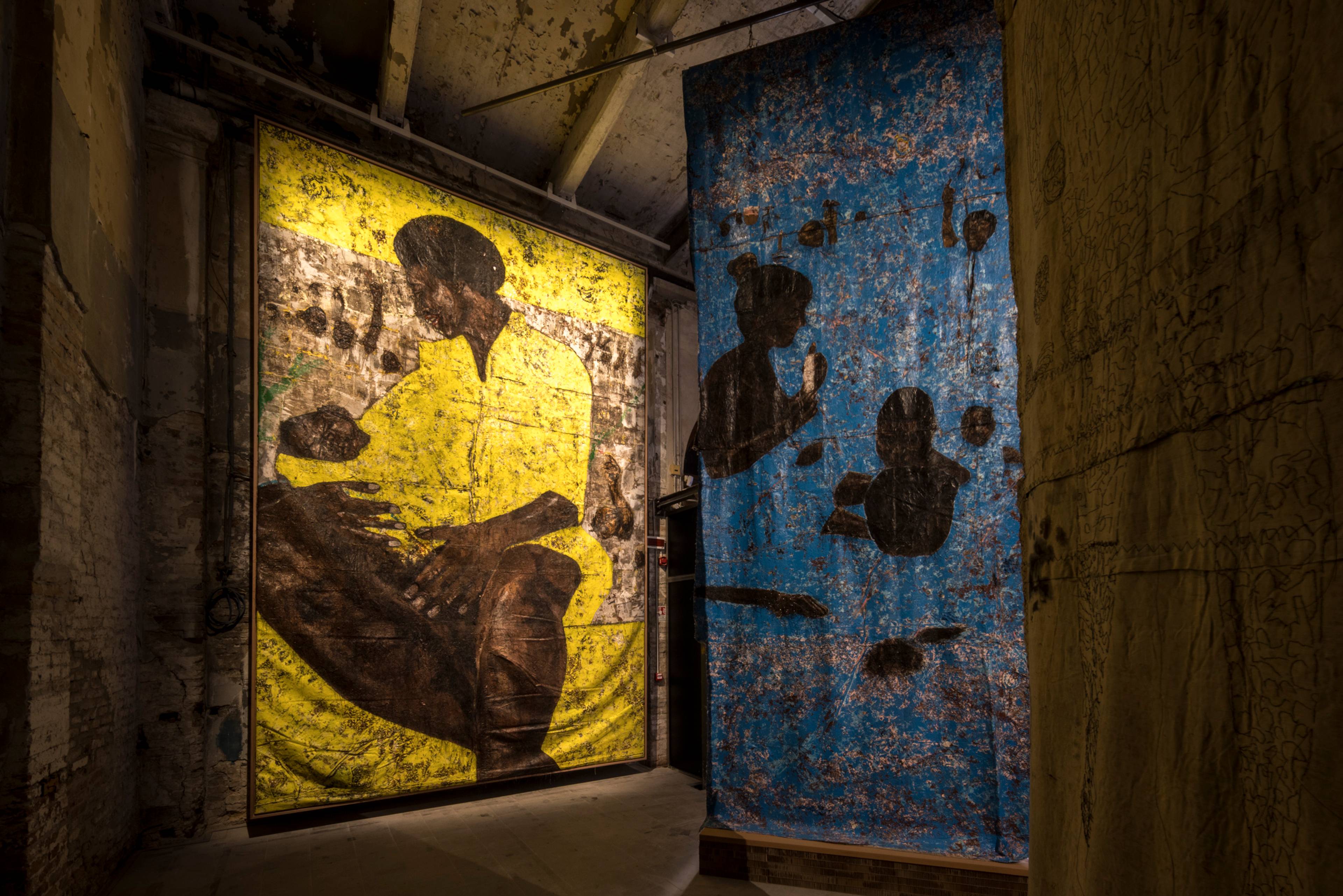
Works by Kaloki Nyamai, 2024–25, mixed media, acrylic, collage, stitching on canvas. Photo: Marco Zorzanello
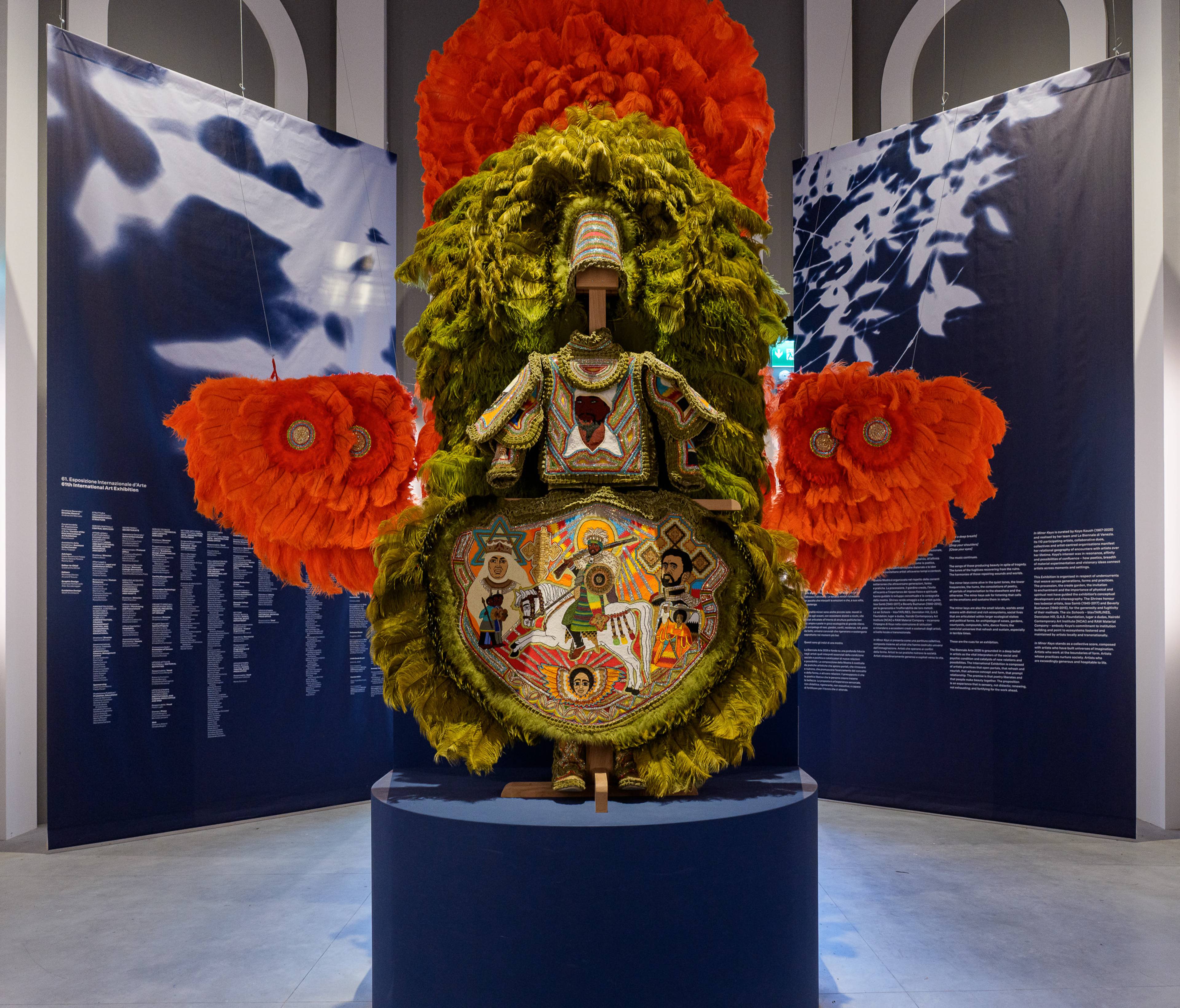
Big Chief Demond Melancon, Jah Defender, 2020, glass beads and rhinestones on, canvas with velvet and feathers. 294.5 × 183 × 76 cm. Photo: Andrea Avezzù
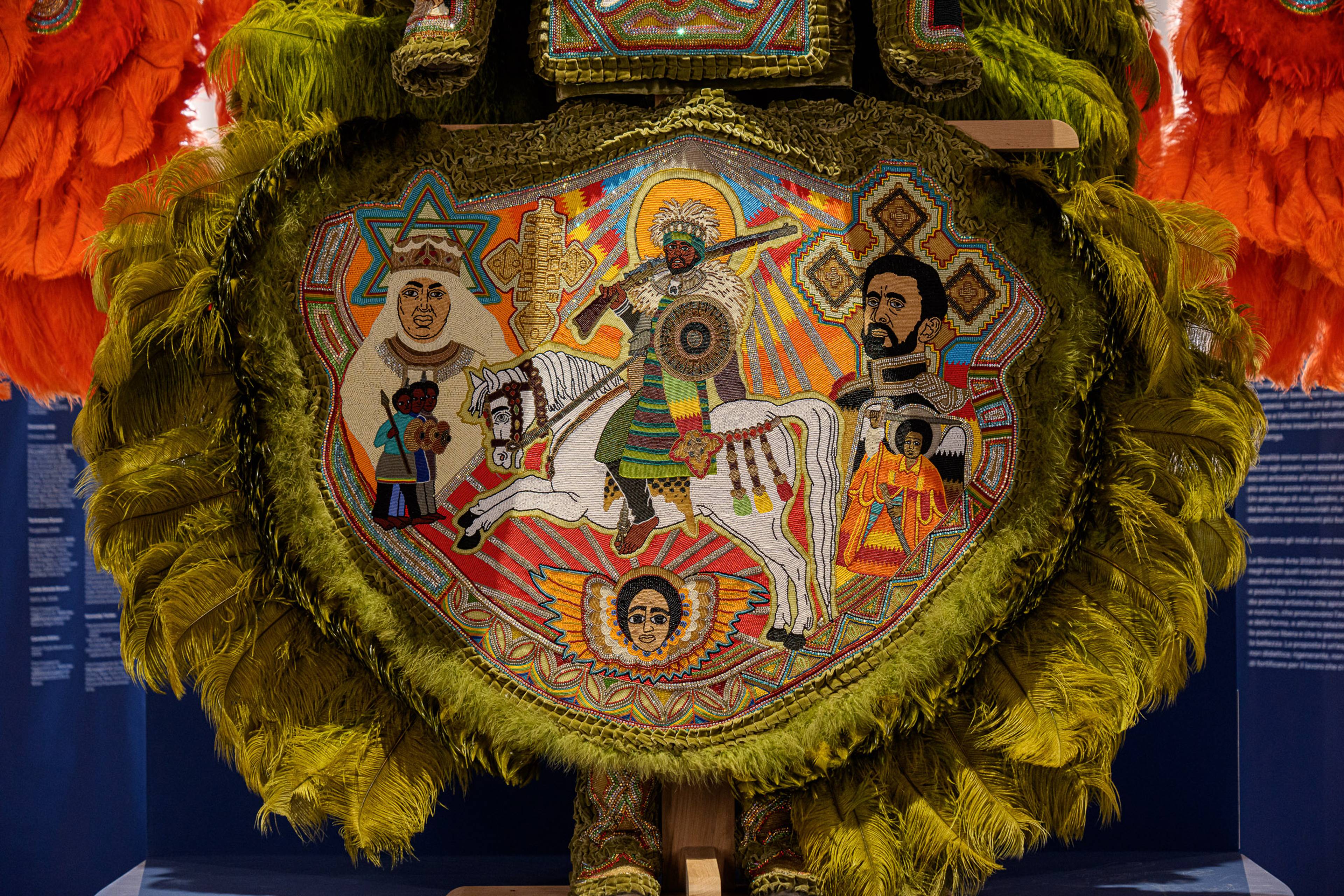
Big Chief Demond Melancon, Jah Defender, 2020 (detail), glass beads and rhinestones on, canvas with velvet and feathers. 294.5 × 183 × 76 cm. Photo: Andrea Avezzù
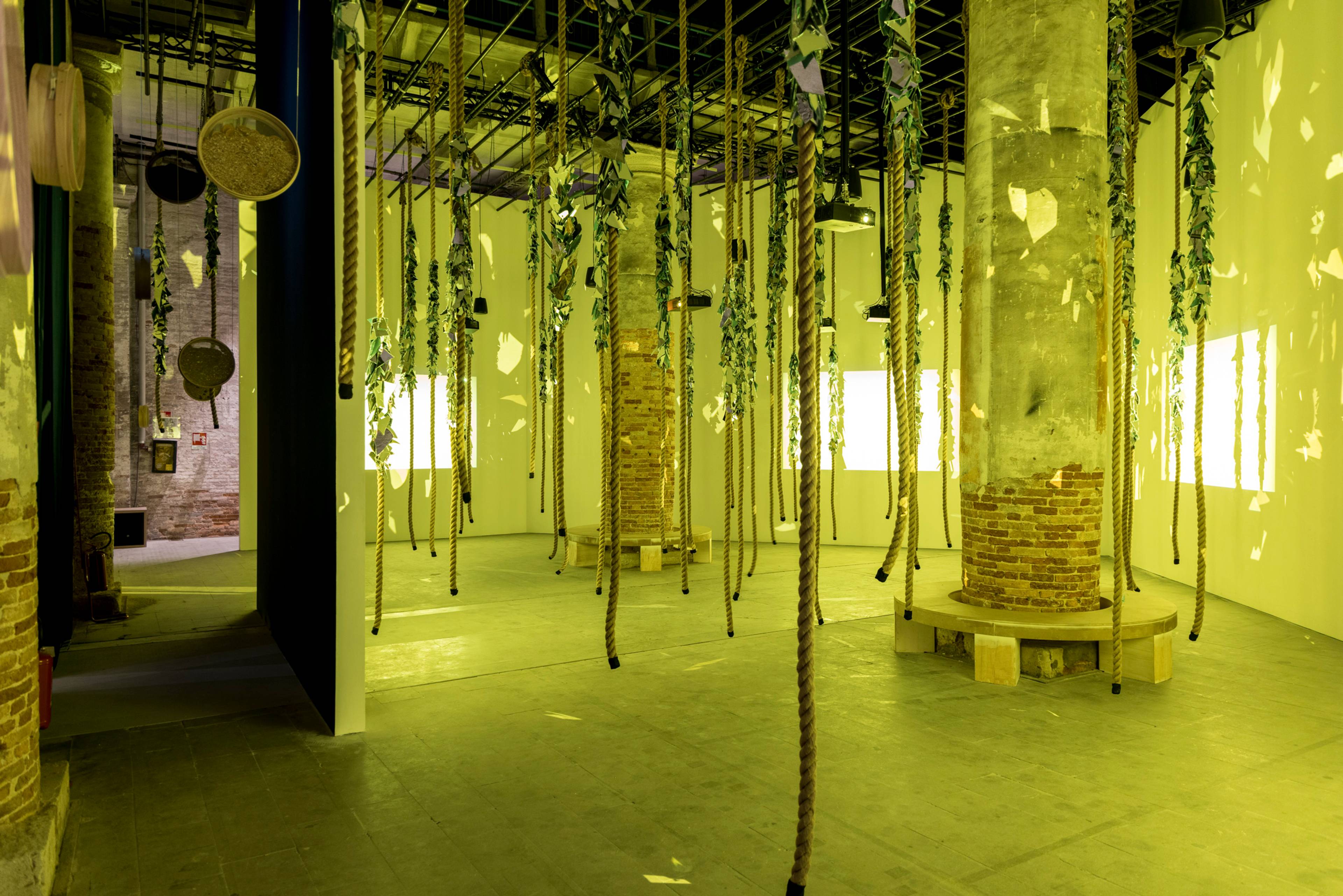
Kader Attia, Whisper of Traces, 2026. Installation: ropes, polished mirror fragments, dried flowers and herbs, sieves, paper weavings, projections, sound. Dimensions variable. Photo: Marco Zorzanello
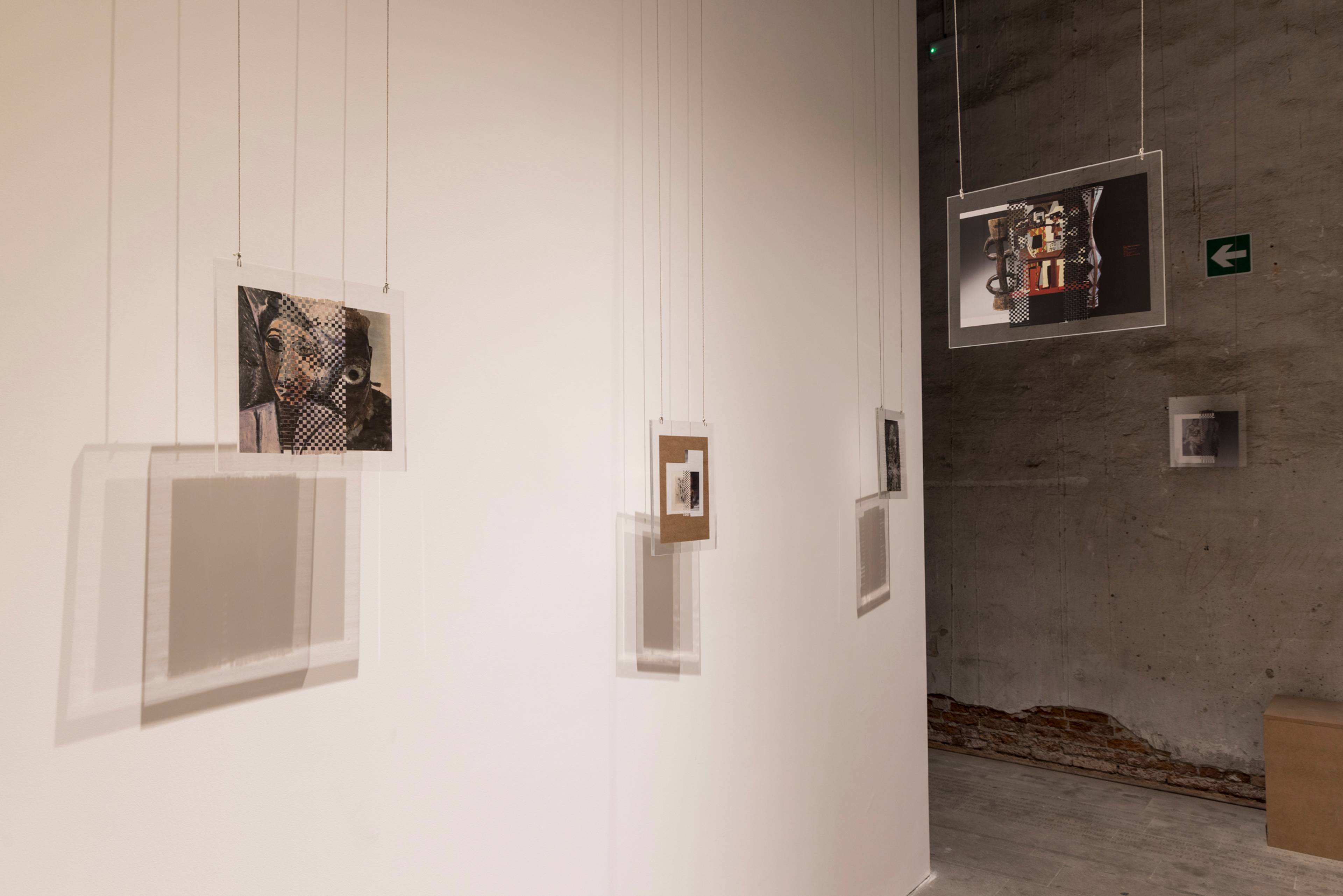
Kader Attia, Whisper of Traces, 2026. Installation: ropes, polished mirror fragments, dried flowers and herbs, sieves, paper weavings, projections, sound. Dimensions variable. Photo: Marco Zorzanello
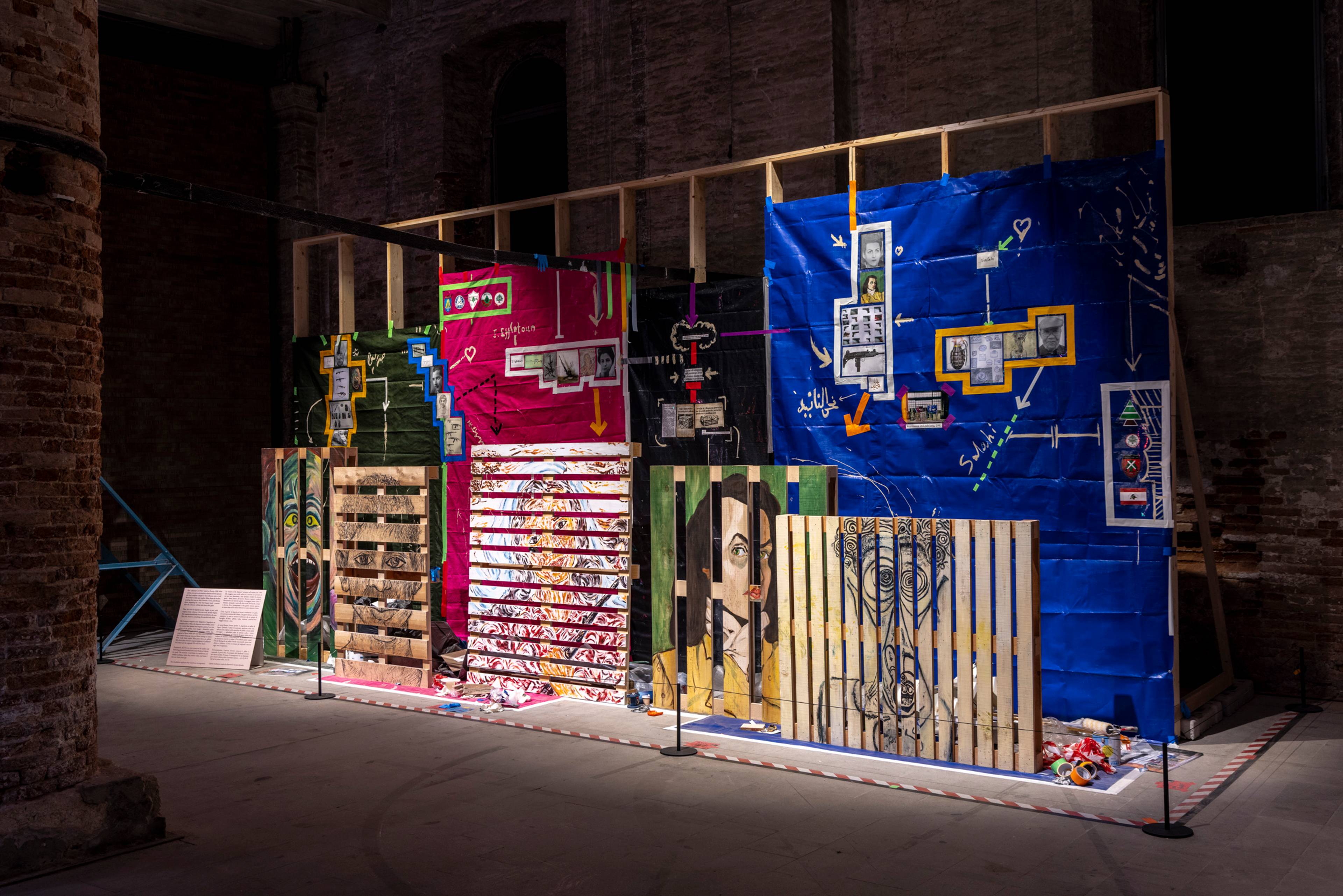
Walid Raad, Postscript to the Arabic Edition, 1938-2025, mixed-media installation, dimensions variable. Photo: Marco Zorzanello
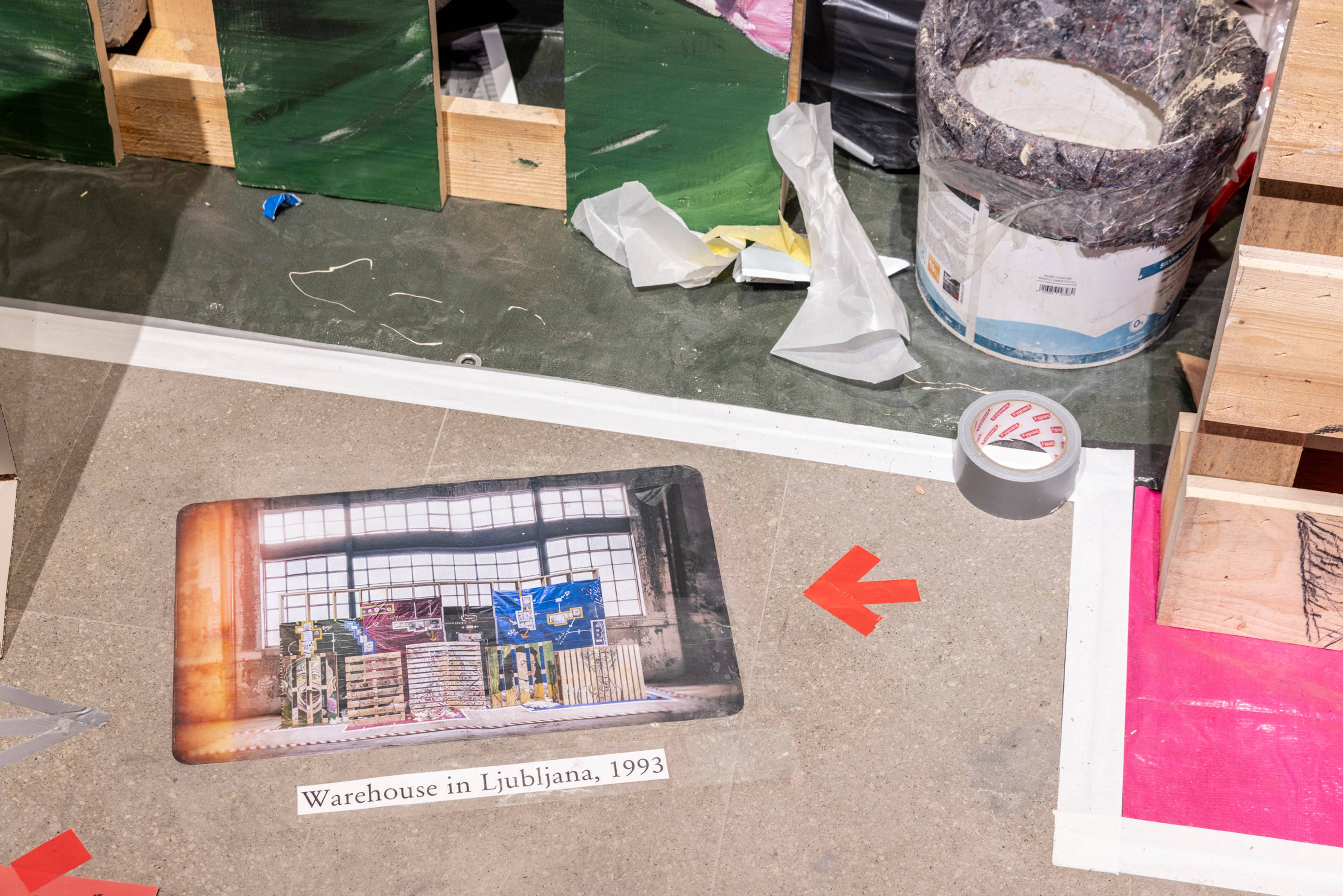
Walid Raad, Postscript to the Arabic Edition, 1938-2025 (detail), mixed-media installation, dimensions variable. Photo: Marco Zorzanello