

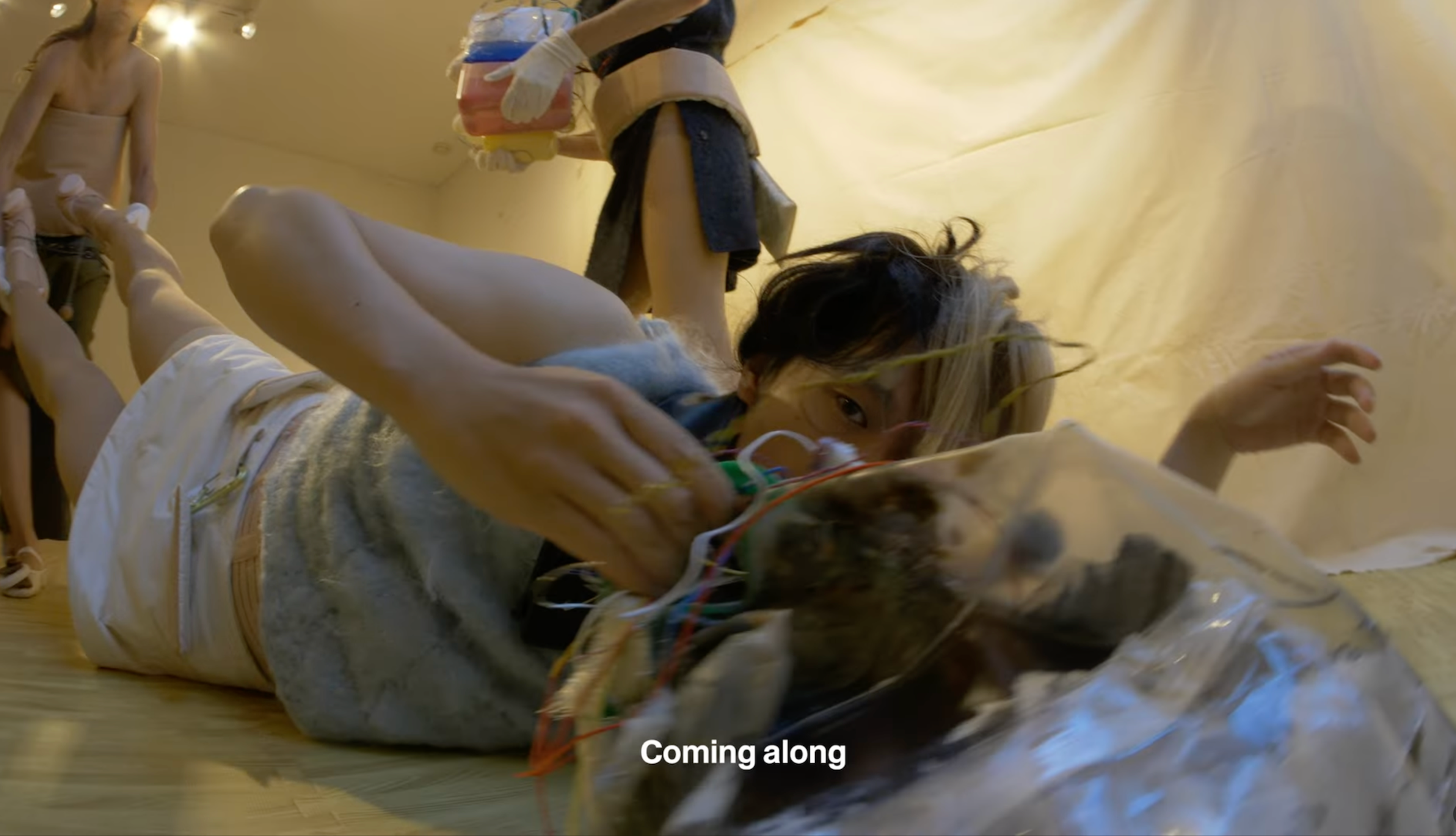
Ivan Cheng (*1991) is a maximalist. Not trading in baroquely over-saturated colors or trashy looks, his excess smacks rather of a hysterical realist novel à la Thomas Pynchon. And the comparison matters, because Cheng’s work is rooted in language.
Primarily devoted to performance – and spilling into installations, publications, and films – his live acts are dense monologues of diegetic exuberance and manic, uber-detailed digressions. Forming an incoherent chain of thoughts, he recites, sings, and dances them with absurdly precise, cheeky, reptilian gestures. Overly virtuoso, affected.
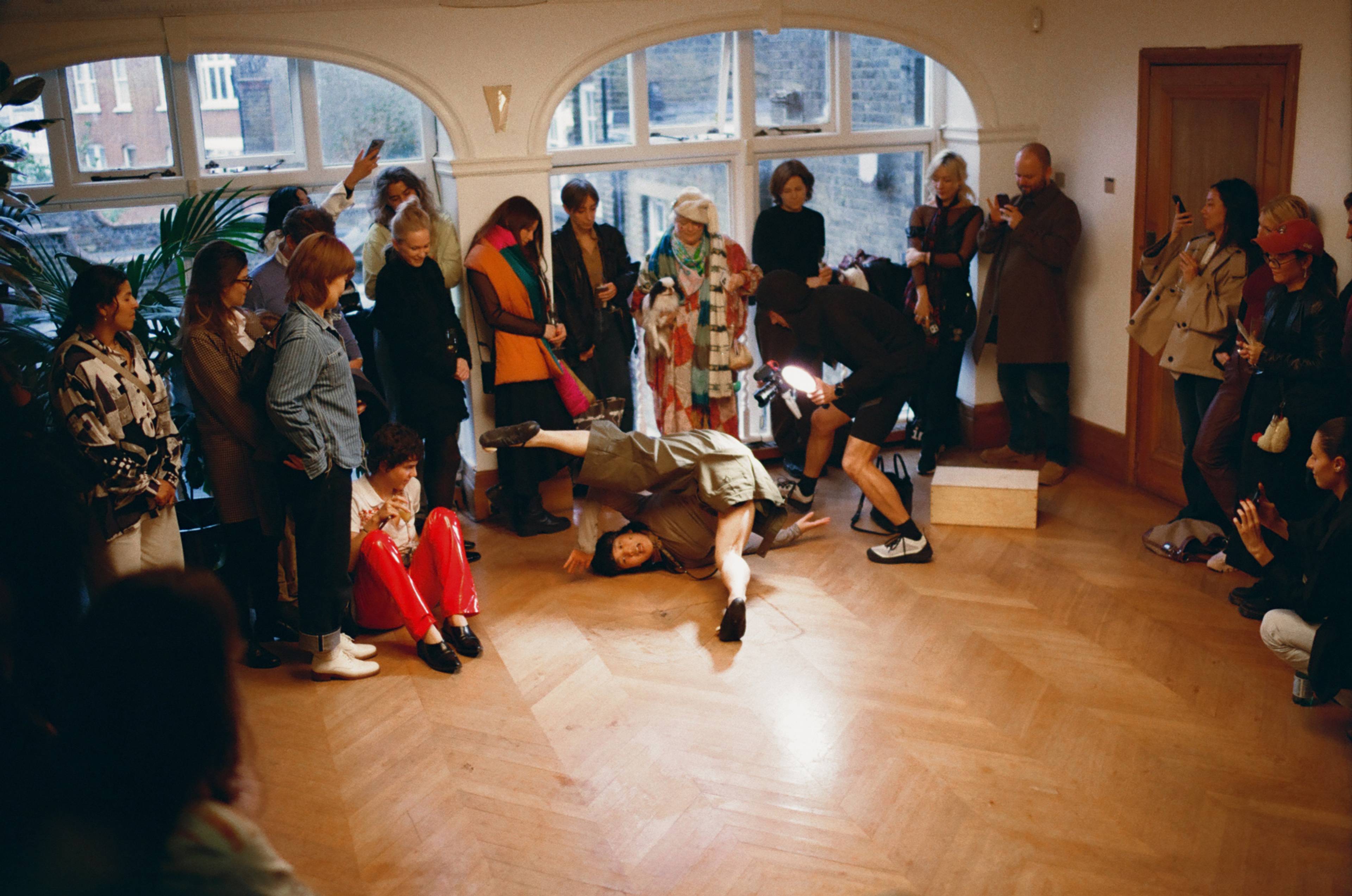
“Every secret can be staged. You journal with the sense that one day it will be read. You’d record love affairs that haven’t happened yet. Encounters only half-believed in. Pornographic dreams that felt both true and invented. Prepare, prepare for an audience,” he agitates at the Nicoletta Fiorucci Foundation in London. While slithering along the balustrade of the grand townhouse-turned-art-space, crawling up the stairs, groveling on the floor, the cameraman follows his every move, the pair almost dancing, almost homoerotic. The performance, Boffins; Valiant & Cut, like so many of Cheng’s works, is an excess hard to process for the viewer – overwhelmed by a “boffin” (Brit slang for someone with arcane technical skill), valiantly damaged, edited, cut.
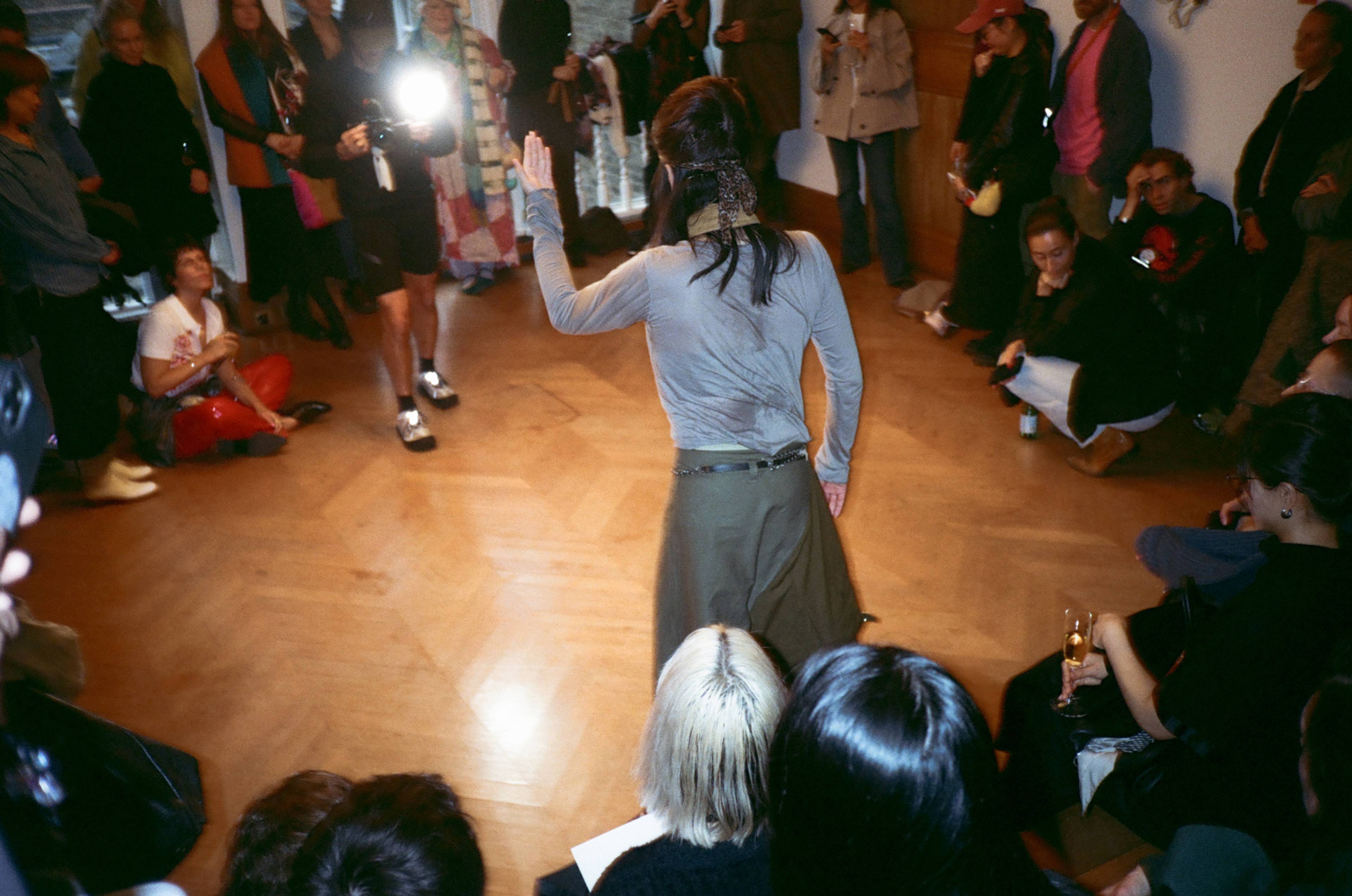
Ivan Cheng, Boffins; Valiant & Cut, 2025. Camera: Arvo Leo. Garments: Good & Bad (Marina M. Kolushova, Victor Stuhlmann, Ossi Lehtonen). Performance views, Nicoletta Fiorucci Foundation, London, 2025. All images courtesy: the artist and the Nicoletta Fiorucci Foundation. Photos: Jay Izzard
The live act unfolded on a busy Saturday during Frieze London (October 18, 2025) alongside Cheng’s exhibition in the Foundation’s library, a patrician, wood-paneled room fit out with red-marble fireplace, which the artist covered with paintings – many of them – and screens – many of those, too. Aerial views of cultivated fields, outlines of a bus against a blackboard-like background, road maps or, maybe, computer circuits, juxtaposed with formless blots: the paintings, rendered in “provisional” strokes and subdued colors, recall the daydreamy images that drift through one’s mind watching the world pass from a bus window. A small, aluminum model bus, half-buried below the painting frames, makes the metaphor literal.
Beneath the commuting reveries, Cheng installed a chain of differently sized monitors where nine past “live situations for camera,” as he calls his performances, run at the same time, competing for attention. “This man speaks to the camera as though it were a child,” booms a theatrical male voice; on another screen, Cheng writhes on a table, while on a third, he dawdles dressed as a silver jester. “A Jesuit, a virgin, an ocean” are summoned in his shrieks soon after, while another Cheng growls as a metal frontman from a scaffolding, and yet another sprawls like a lizard on some stairs, in medieval garb. The cacophony of sounds and images are, again, very much to digest. Just as one is not meant to read every book stored in a library, Cheng’s performances are not meant to be taken in all at once in his cabinet.
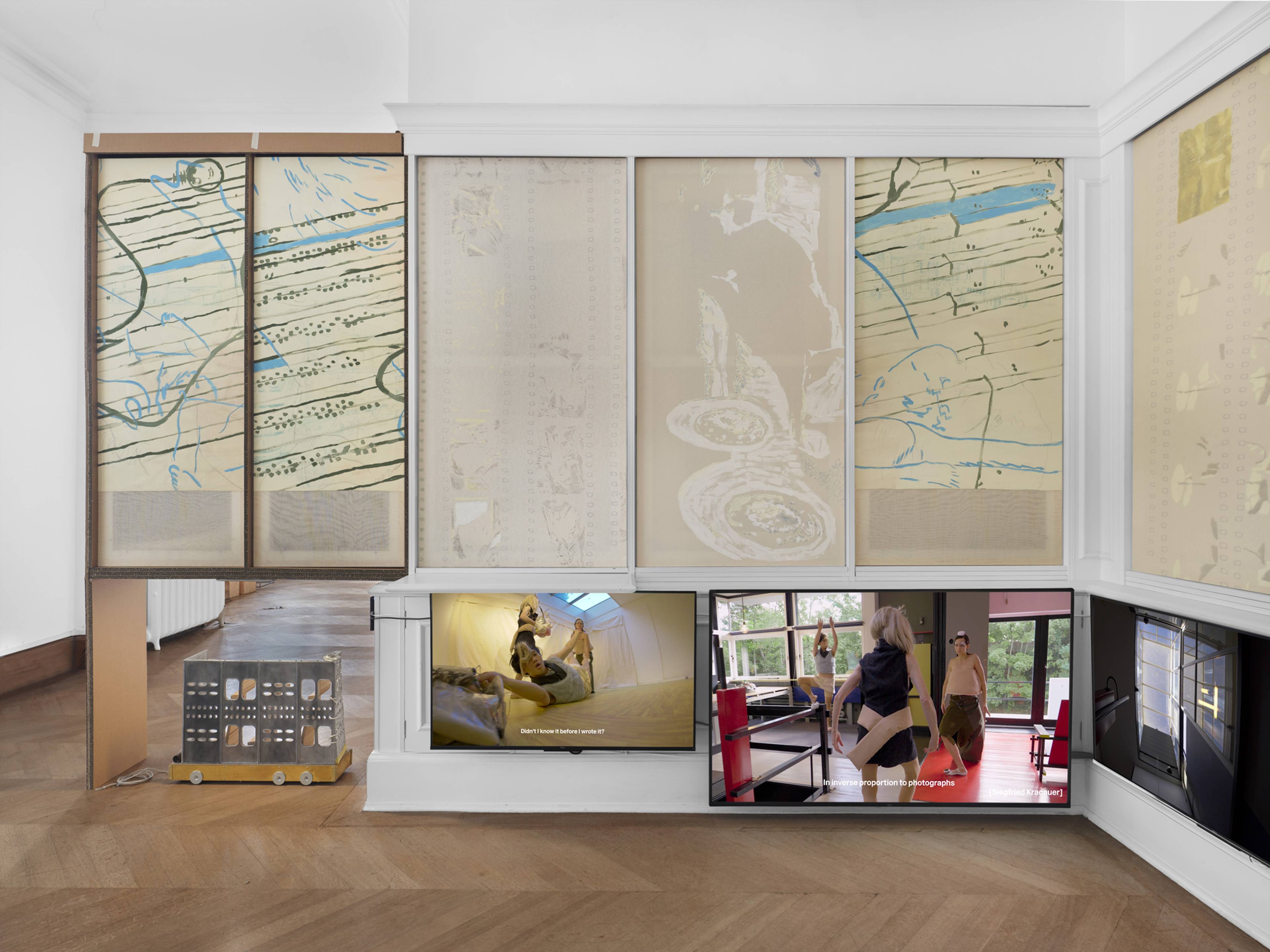
Views of Ivan Cheng, “Serial Surrogates (Absolutely USB),” Nicoletta Fiorucci Foundation, London, 2025. All images courtesy: the artist and the Nicoletta Fiorucci Foundation. Photos: Eva Herzog
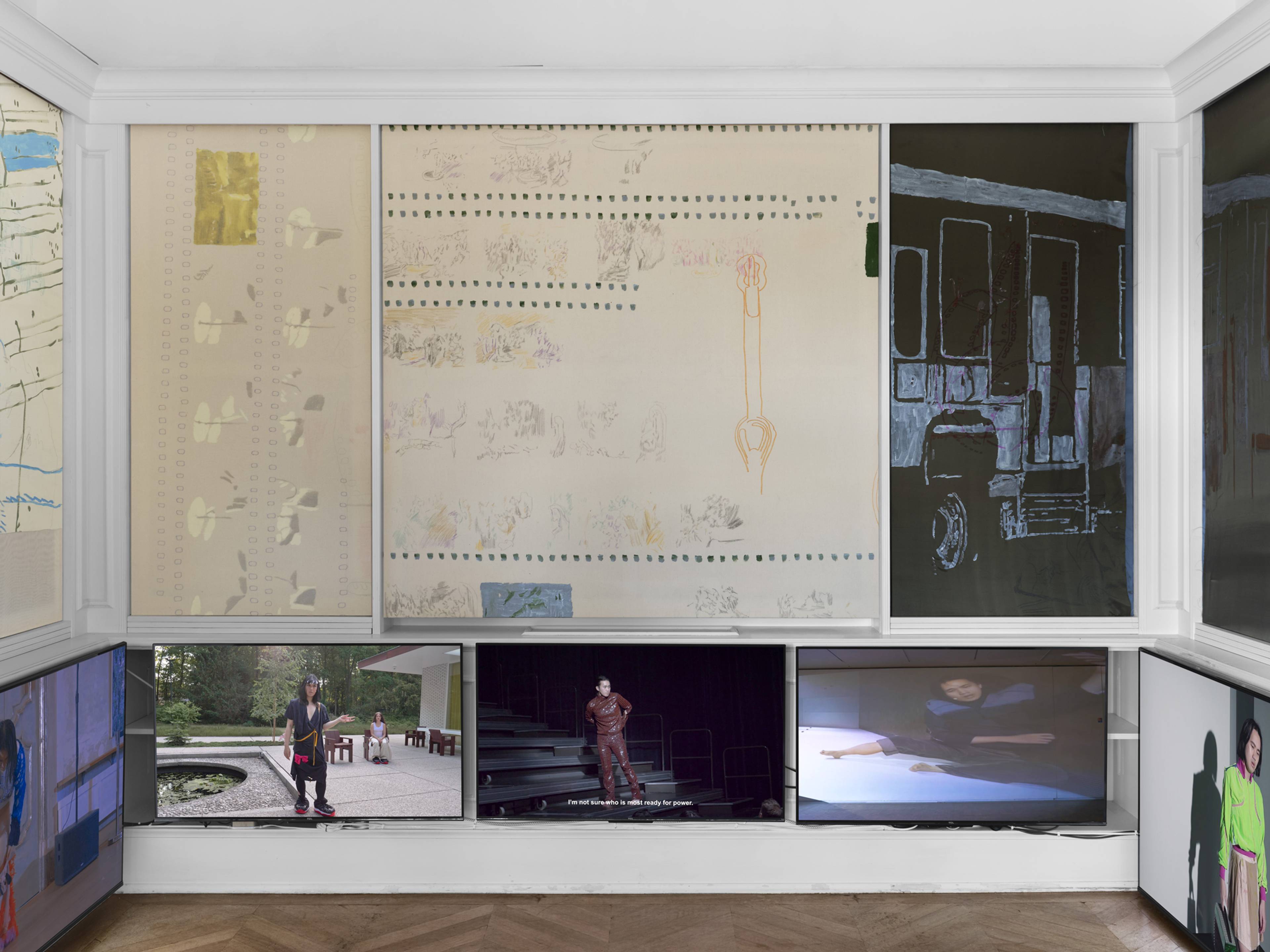
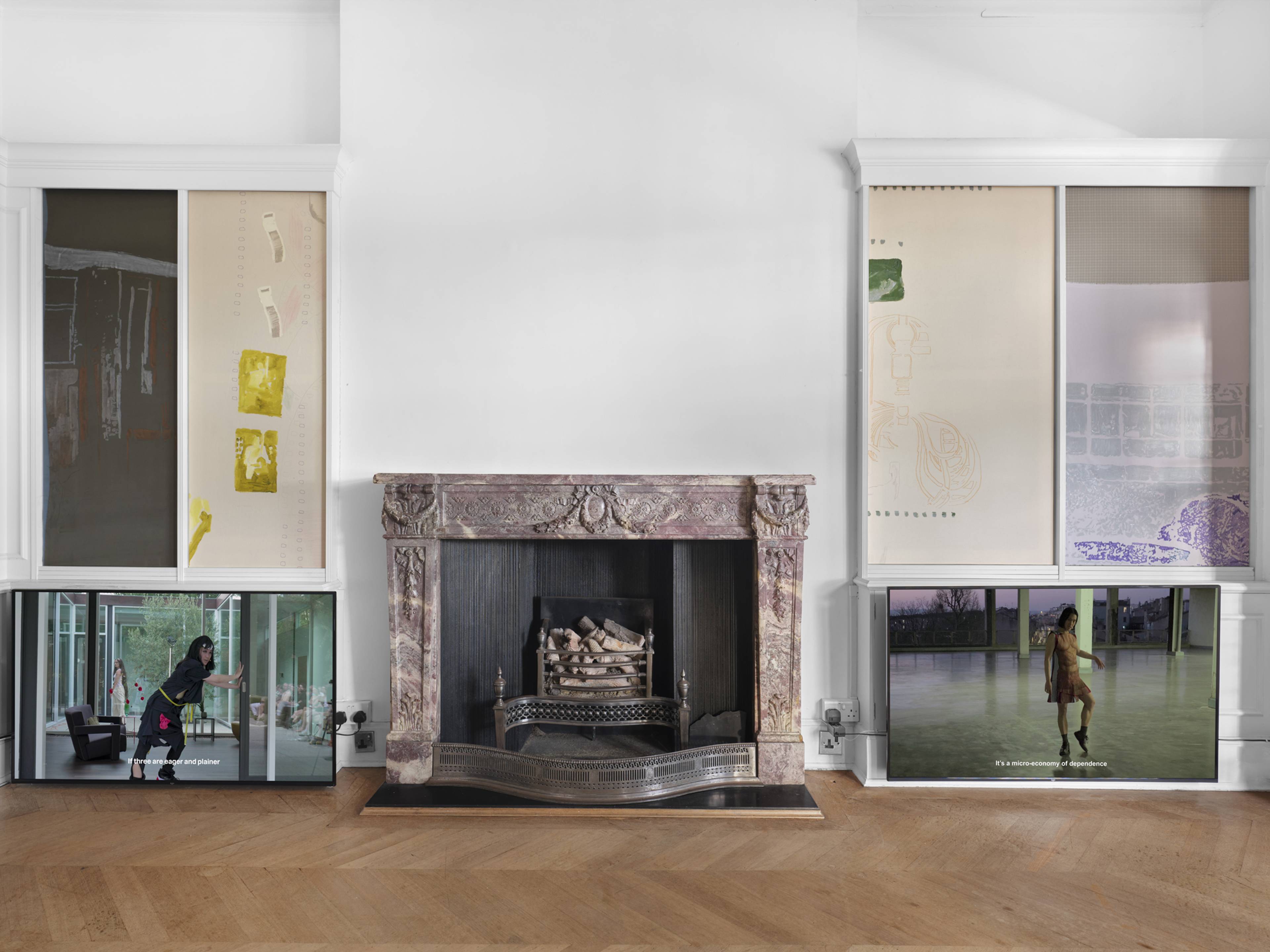
There is, however, a moment when the frenzy subsides. The screens dim, and only Autobiography, his latest video work, unfurls. “Imagine the old computer as a city of circuits,” says a mature woman dancing geometrically, abstractly. “In this city, messages must constantly travel – from memory to processor, sensors to peripheral ports.” After so much loss of individual messages, “like couriers […] tripping, getting lost, and scripts garbled,” an engineer proposed a vehicle to put all them all in sequence, so they travel together. “They arrived clear and true. This was the serial bus. Messages should be as clear as possible, like a computer.” Centered on the relationship between modernist queer heroines Gertrude Stein and Alice B. Toklas, the work takes its title from the 1933 biography Stein wrote in Toklas’s voice. How best may information travel – from one lover to another, from one circuit to another, from one artist to their audience? Is clarity the most advantageous carrier? What about a first person revealing, deceitfully, more than a biographical “I”? What about the cubism of language and an all-devouring camera revealing the mannerist performance of the self itself?
Attraction to the new blooms within exhaustion from its volume, thrust short-circuits and restarts in overspill.
Cheng’s London exhibition is called “USB Serial Surrogates (Absolutely USB),” a nod to that 1996 technique (Universal Serial Bus) that revolutionized the transfer of data and power between devices. A bus moves people, a library “moves” knowledge, a USB moves data – and each of these conduits, in Cheng’s hands, falters, leaks, overflows. His works are composed not simply of transfer systems, but of their breakdowns, disturbingly alive.
A recent social-science study from the University of Zurich found that, while information overload is common among all of us insomniac, depressive, overwhelmed netizens, information appreciation, the feeling of curiosity or inspiration in the face of abundance, is about twice as frequent. Attraction to the new blooms within exhaustion from its volume, thrust short-circuits and restarts in overspill – precisely that push-pull tension that defines Cheng’s too-muchness.
Ivan Cheng
“Serial Surrogates (Absolutely USB)”
curated by Vittoria de Franchis
Nicoletta Fiorucci Foundation, London
10 Oct – 13 Dec 2025
Ivan Cheng features in Aodhan Madden’s portrait of three artists making mayhem of identity in Spike #79 – The Pessimist Issue. Get an E-paper in our online shop!