

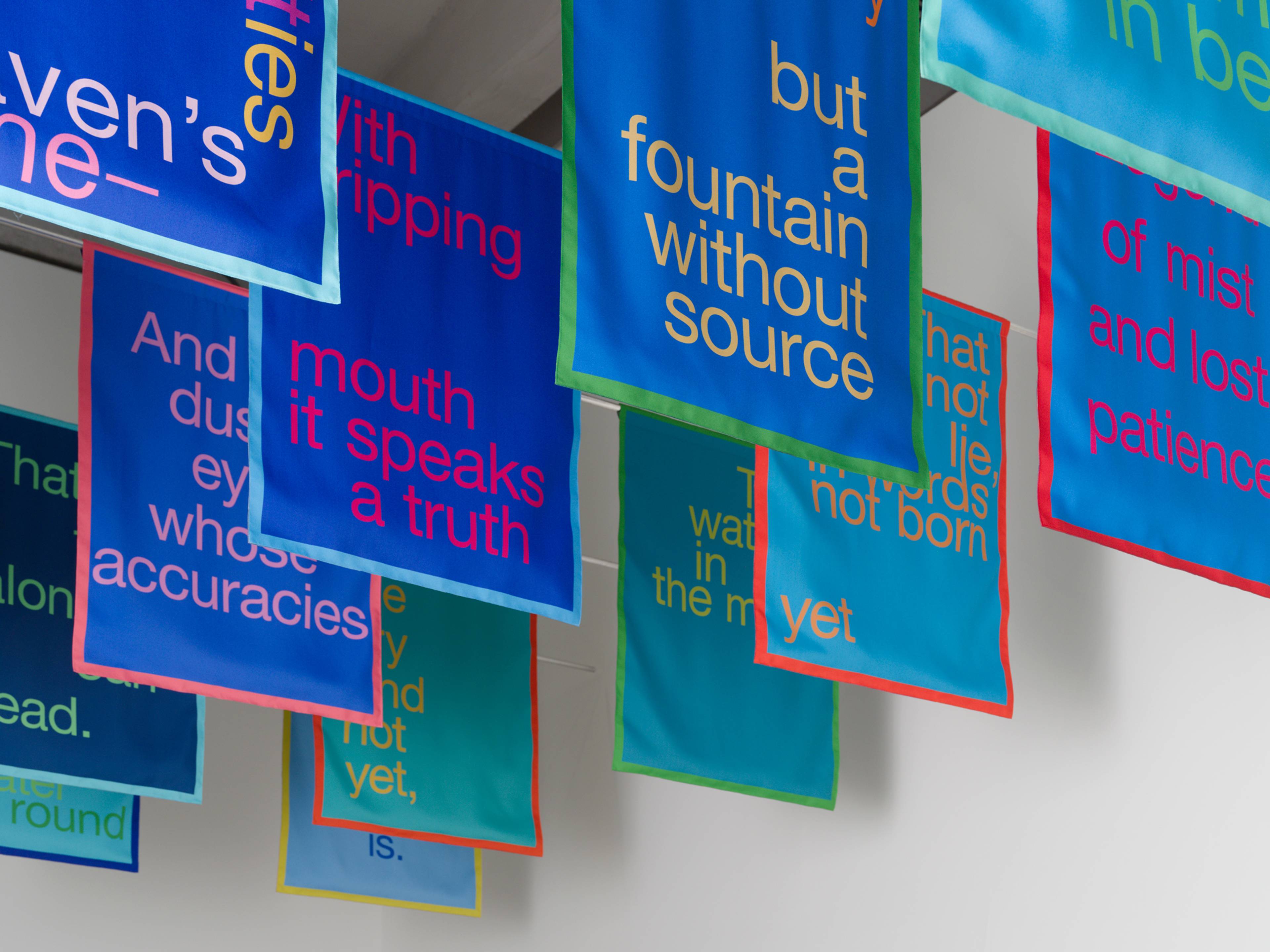
It’s a bold move to base a museum show on a misnomer like “French Theory.” We all sort of know what it means, yet the term’s historical mushiness and sugary trendiness give it the sticky logic of peanut butter and jelly – it only makes sense when chewed by an American mouth, within an American system. At the Palais de Tokyo in Paris, curator Naomi Beckwith spits the viscous term back at the French with “ECHO DELAY REVERB,” a monumental exhibition that dumps a tsunami of “critical theory” on viewers, alongside a surprising selection of works by sixty-plus American artists that, dating to the 1960s, demonstrate the rhizomatic influence of Francophone intellectuals. If you can keep your breath amid the deluge of wall text and academic references, it’s a courageous show retelling a crucial story about how much of contemporary art – and even identity itself in the West – exists in the afterglow of this transatlantic exchange.
Beckwith, chief curator at the Guggenheim Museum and of next year’s Documenta, sets out to make curatorially explicit what is often unconscious. If you came of university age in the US in the last couple decades, terms like “institutional critique,” “abjection,” or “dehumanization” are such de rigueur concepts that you lose track of their specific origins. According to Beckwith, “this process of decontextualization created a fertile tension” as younger artists, in this case American, “became less focused on being precise scholars of French Theory, but instead absorbed its ethos.” While Hans Haacke’s (*1936) “Visitors Poll” (1969–), updated here for the Palais de Tokyo set, explicitly trots out Pierre Bourdieu’s analysis of how class structures people’s relationships to art, does Pope.L’s (1955–2023) “Crawl” (1978–), in which the Black artist was filmed inching pitiably through public space, have direct referential links to Julia Kristeva’s contemporaneous theories about abjection?
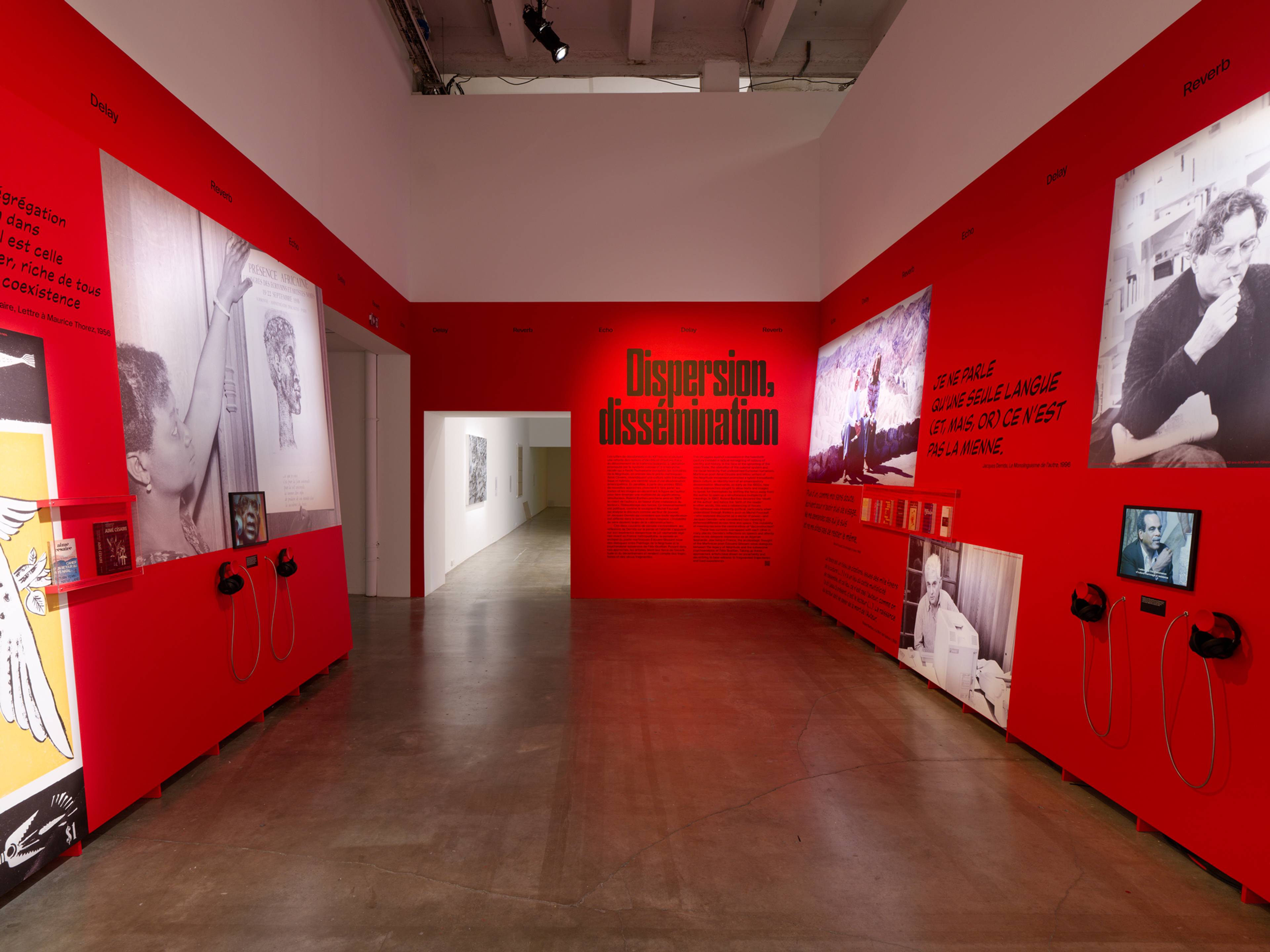
View of “ECHO DELAY REVERB: American Art, Francophone Thought,” Palais de Tokyo, Paris, 2025
“I am drawn to the disparities, the misreadings,” Beckwith states in an accompanying interview, between American artists and French intellectuals. Perhaps this flexibility extends to her own show, too, reflecting the messy, non-unidirectional relationship between theory and art. On the grand staircase down into Palais de Tokyo’s windowless lower depths, a section dedicated to Semiotext(e) credits the journal and publishing house’s influence in disseminating the likes of Gilles Deleuze and Félix Guattari, along with Michel Foucault, in the US in the 1970s. Among wall-mounted vitrines of the publisher’s hits, one splashy wall quote from founder Sylvère Lotringer points to a major chicken-and-egg conundrum underpinning the show: “Artists have always been five years ahead of the University in regard to French Theory.”
Instead of trying to pick apart a precise 20th-century intellectual history, “ECHO DELAY REVERB” revels in its monstrous complexity. In one subsection, “Desiring Machines,” Hal Fischer’s (*1950) “Gay Semiotics” photo series (1977) is spliced with Juliana Huxtable’s (*1987) Herculine’s Profecy (2017), a speculative poster about a 19th-century intersex person. Foucault is distantly understood to underpin both, albeit through lots of referential telephone. Throughout, we see such uneven exchanges of ideas causing the late 20th century to fold in on itself, and in fascinating ways: while Simone de Beauvoir’s The Second Sex (1949; English translation 1953) and its central claim that identity is not received, but constructed, was already gospel among 2nd-wave feminists and their anti-racist allies in the 1960s, Frantz Fanon’s contemporaneous writings on decoloniality were only popularized in the US around the turn of the century. Now, you can hardly scroll through a Gen-Z activist or artist’s Instagram stories about Black Lives Matter or Gaza without being hit by his influence.
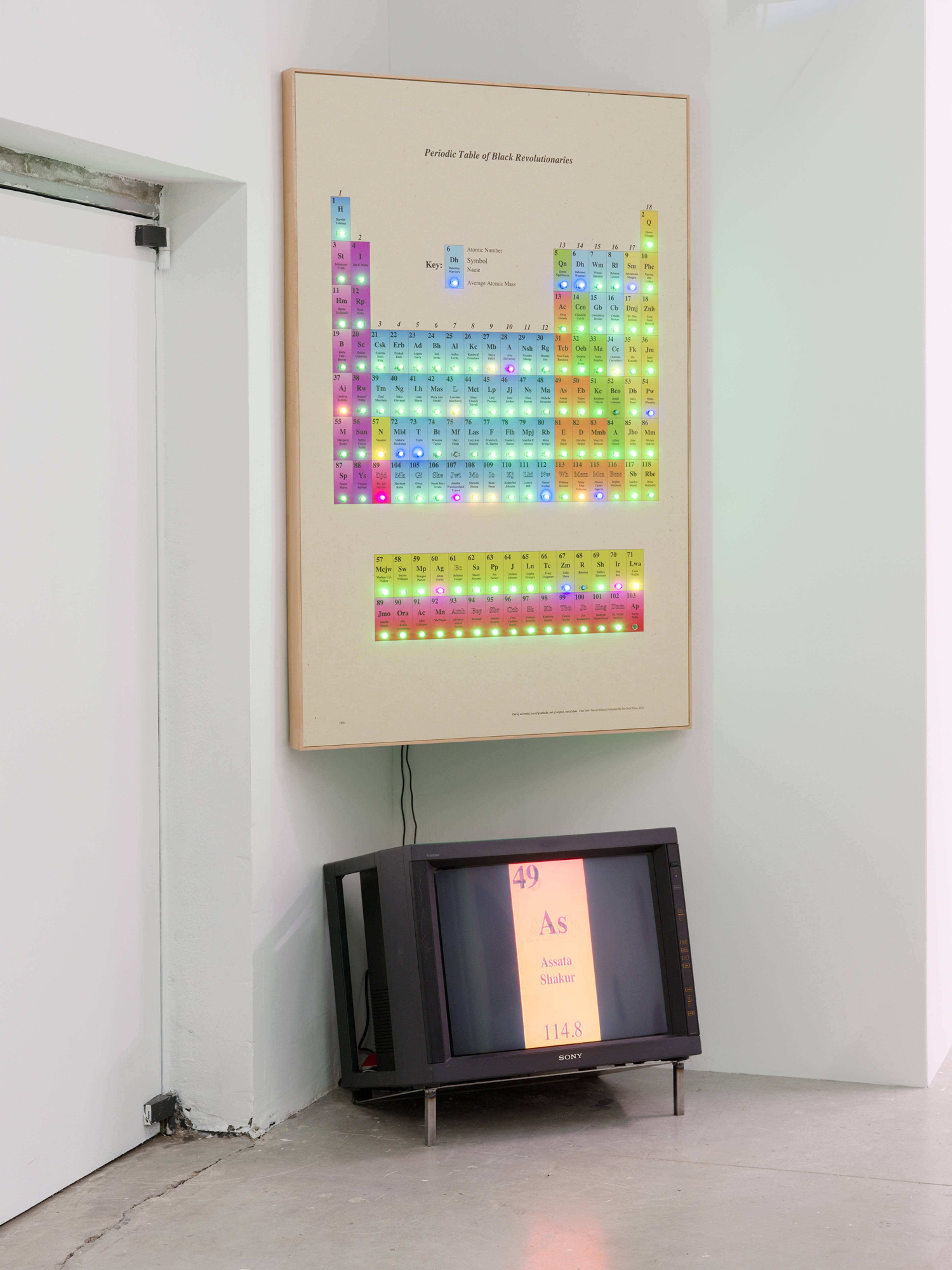
Char Jeré, Periodic Table of Black Revolutionaries METAR, 2021, LEDs, foamboard, Raspberry Pi, 152.4 × 101.6 cm. © Char Jeré
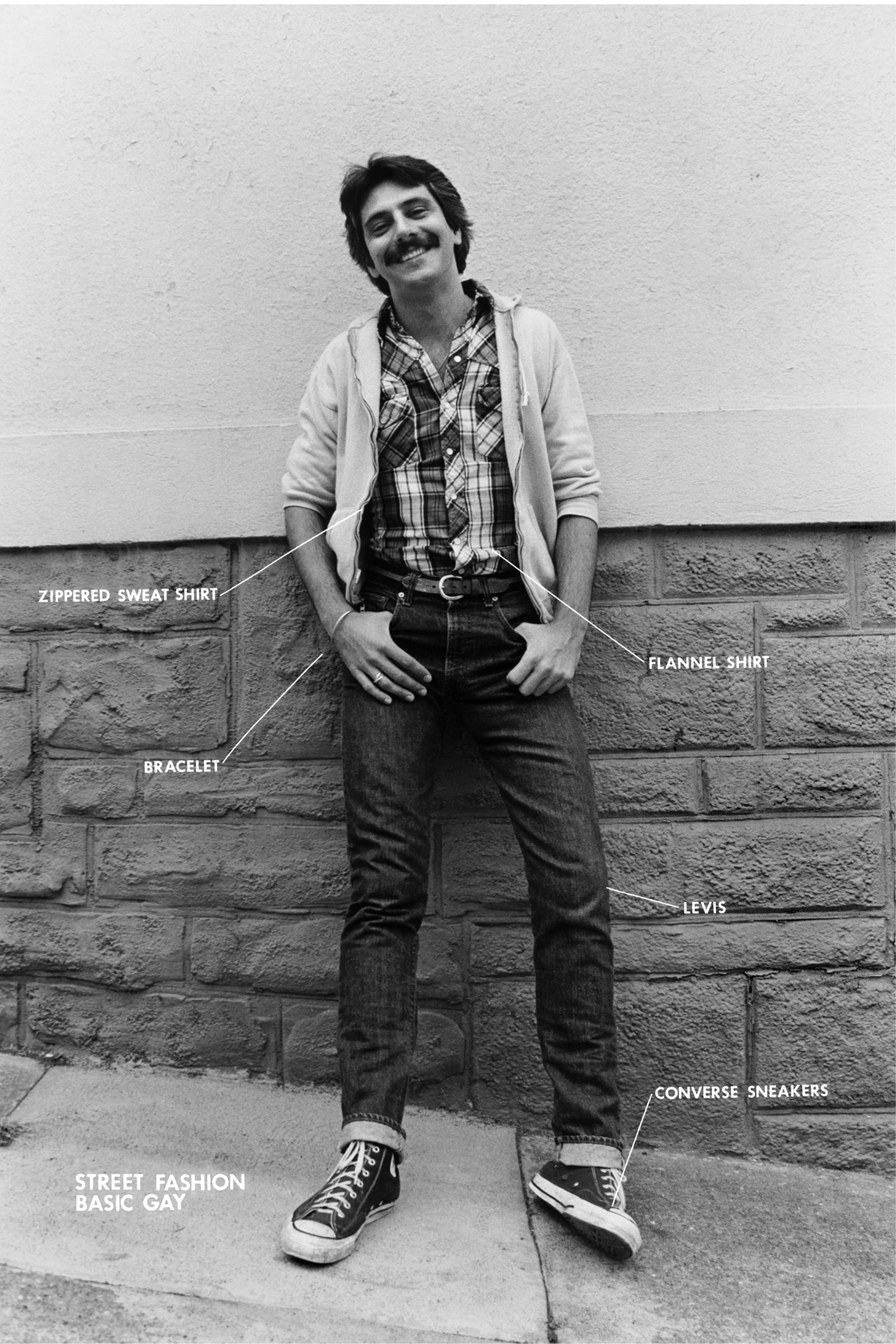
Hal Fischer, Street Fashion: Basic Gay, from the series “Gay Semiotics”, 1977, gelatin silver print, 47.0 × 31.5 cm. Courtesy: the artist and Project Native Informant, London
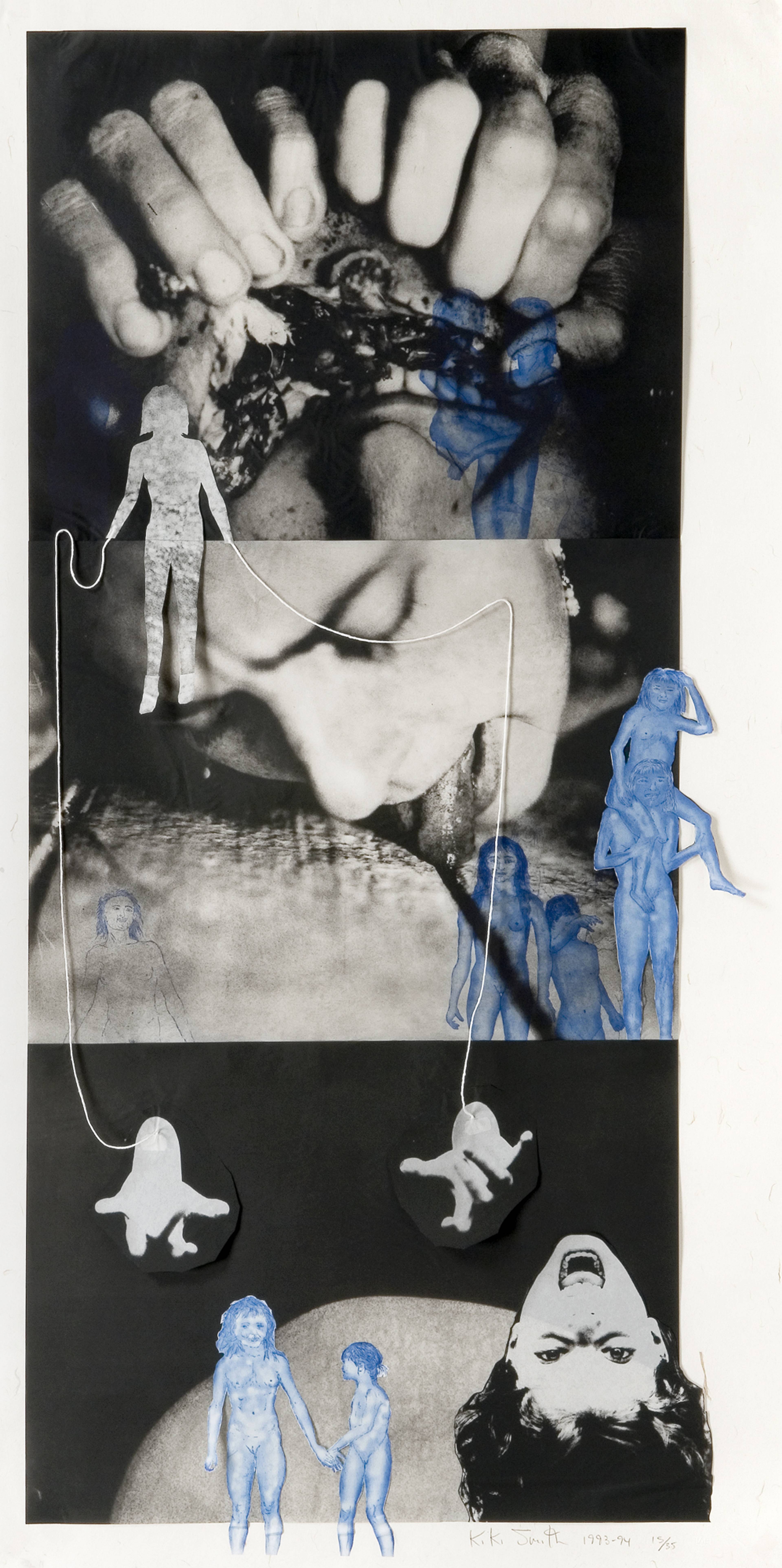
Kiki Smith, Puppet, 1993–94, photogravure, aquatint, and etching, with collage additions, 147.3 x 74.1 cm. © Kiki Smith Studio. Courtesy: Galerie Lelong, Paris
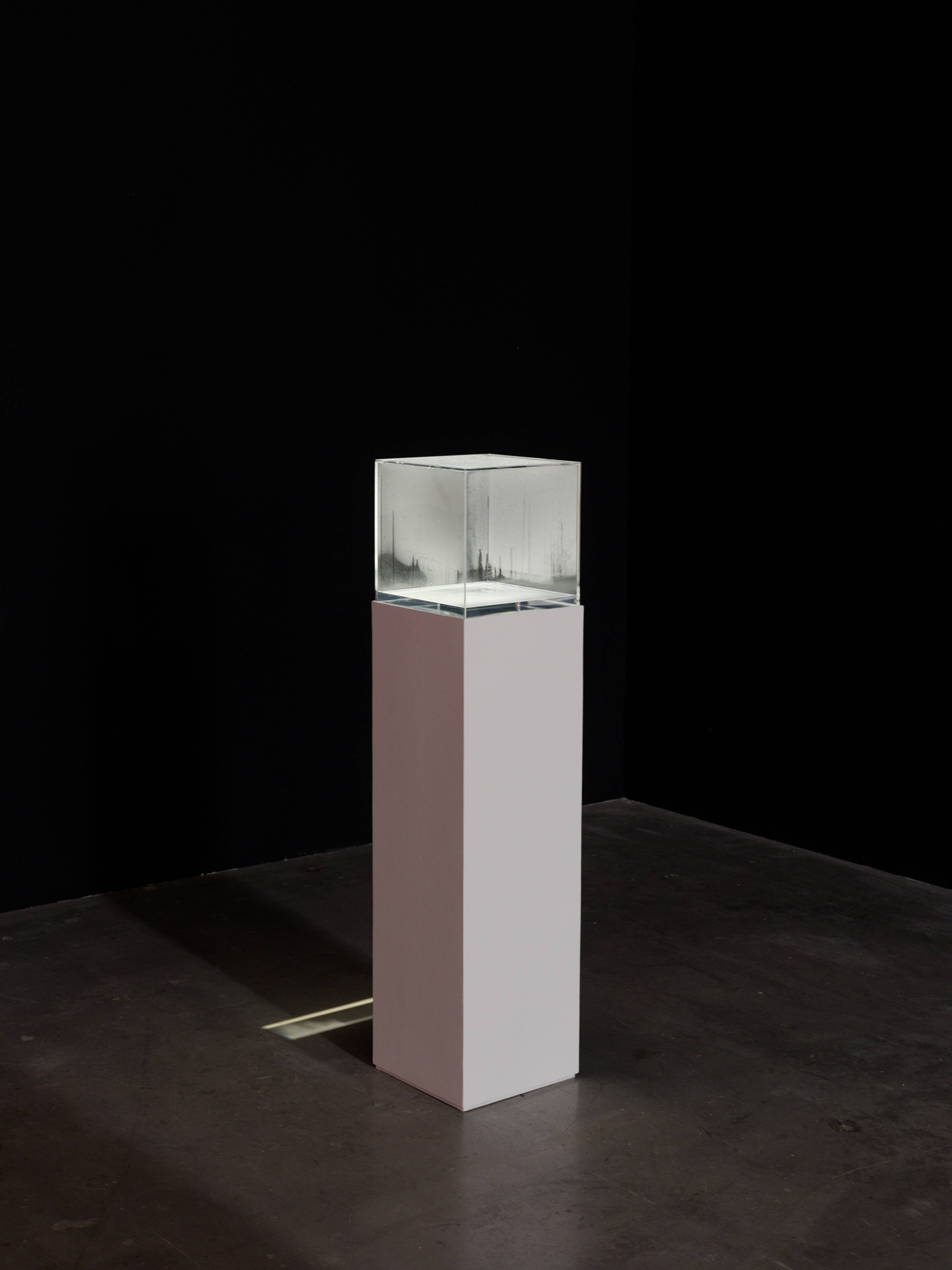
Hans Haacke, Condensation Cube, 1963–65, plexiglass, distilled water, temperature of the exhibition space, 30.5 x 30.5 x 30.5 cm. © ADAGP, Paris. Courtesy of the artist and Paula Cooper Gallery, New York
One of the most politically relevant takeaways of the exhibition is the deep debt France has to the moral role that thinkers from its Outre-Mer, namely Martinique, have had on the Métropole. Fanon, Aimé Césaire, and Édouard Glissant figure prominently across the show, all sons of a tiny island still quasi-colonized to this day. The exhibition opening brought scandal when Cameron Roland (*1988), as a site-specific-work, hung the Martiniquais flag on the museum’s exterior; under legal threat from the Ministry of Culture, Replacement (2025) was removed the day after. For a show dedicating a whole room to “institutional critique,” the episode feels like an ironic gag, the institution performing criticality but failing to stand by the politics animating the work.
If the exhibition’s quasi-nationalist framing, as an exchange between two countries that both feel themselves to be the center of the Western world – and funded by the Ford Foundation, no less – seems narrow-eyed in light of the Trump-led meltdown of the American world order, “ECHO DELAY REVERB” exposes, and quite amusingly so, how silly the histrionics that play out between the sister republics can be. Take the buzzword du moment in France, supposedly an American import: le Wokisme. As the range of art and thinkers here forcefully demonstrates, fears of the “Americanization” of French cultural and political life is ridiculous, because many of the apostles of these non-universalist, deconstructive discourses are indeed French. As Beckwith joshes in her interview: “I want to remind people in France: this is your fault.” If American art has become so doused with “French Theory” that there is no alternative, let no one pretend that France hasn’t too.
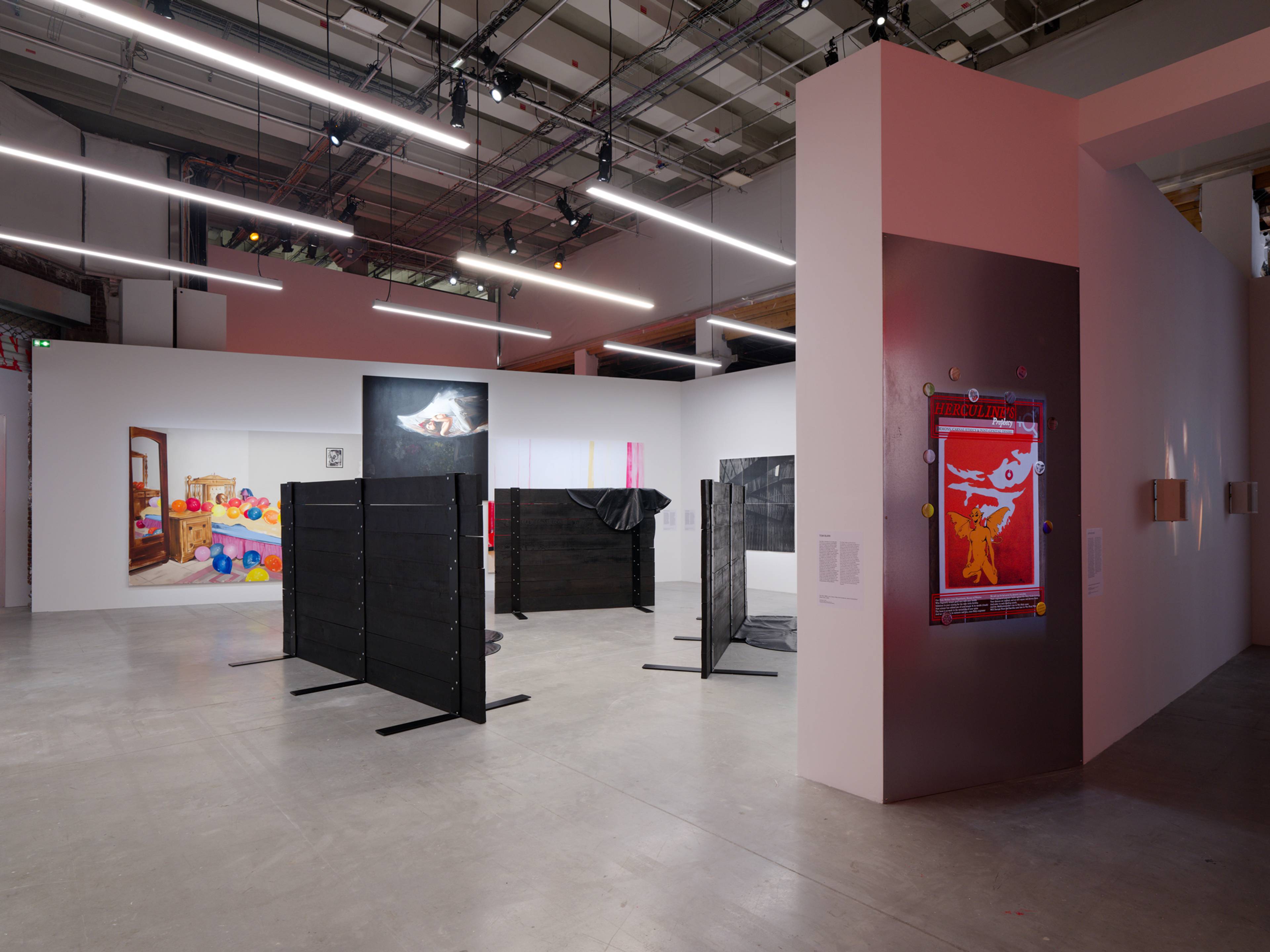
Right: Juliana Huxtable, Herculine’s Profecy, 2017. Installation view, “ECHO DELAY REVERB,” Palais de Tokyo, Paris, 2025
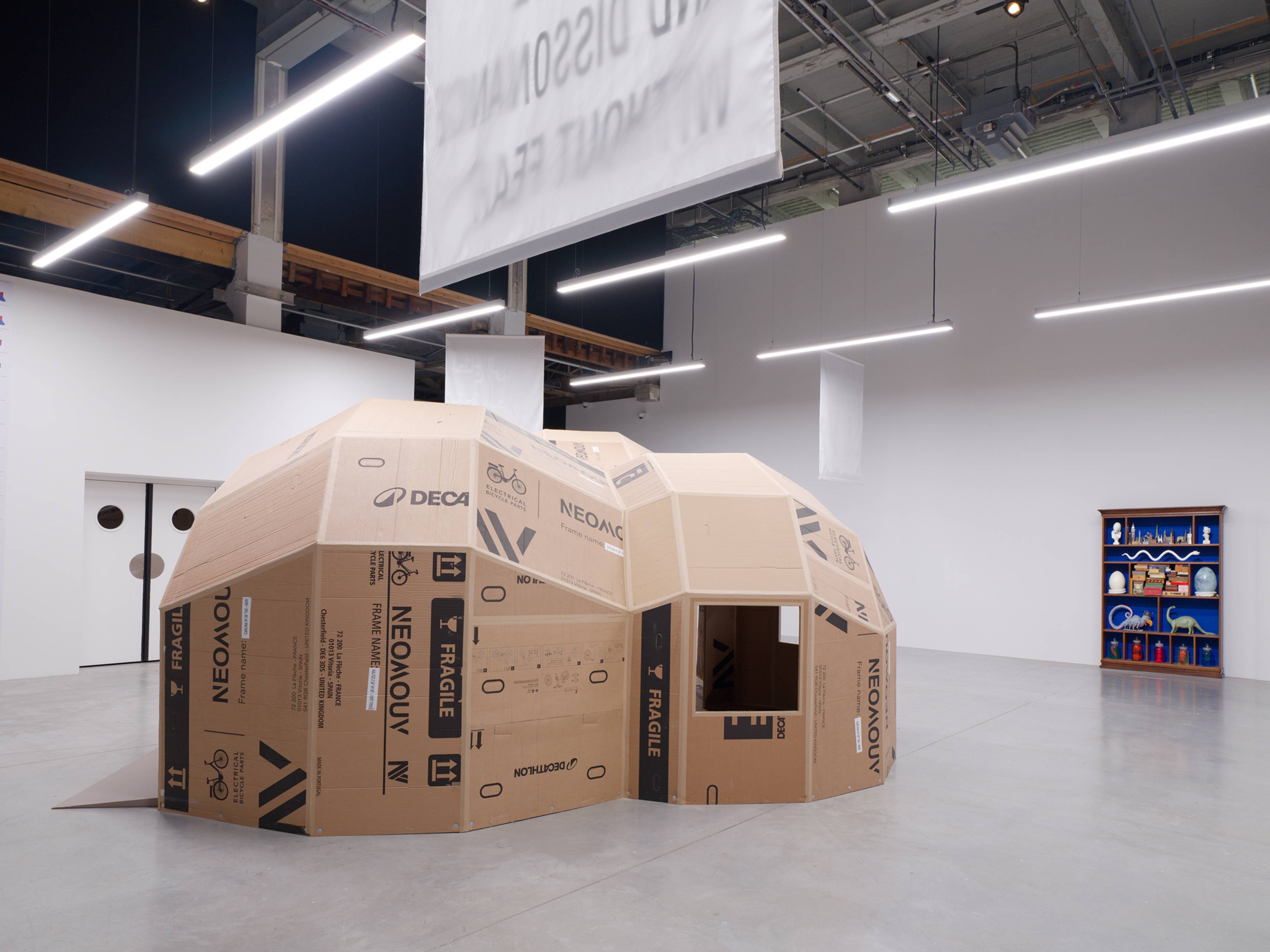
Center: Oscar Tuazon, Great Lakes Water School, 2023. Installation view, “ECHO DELAY REVERB,” Palais de Tokyo, Paris, 2025
___
“Echo Delay Reverb: American Art, Francophone Thought”
Palais de Tokyo, Paris
22 Oct 2025 – 15 Feb 2026