

Henrik Olesen
“Copies of real-life objects, tools and food”
Kunsthalle Zurich
12 Jun – 6 Sep 2026
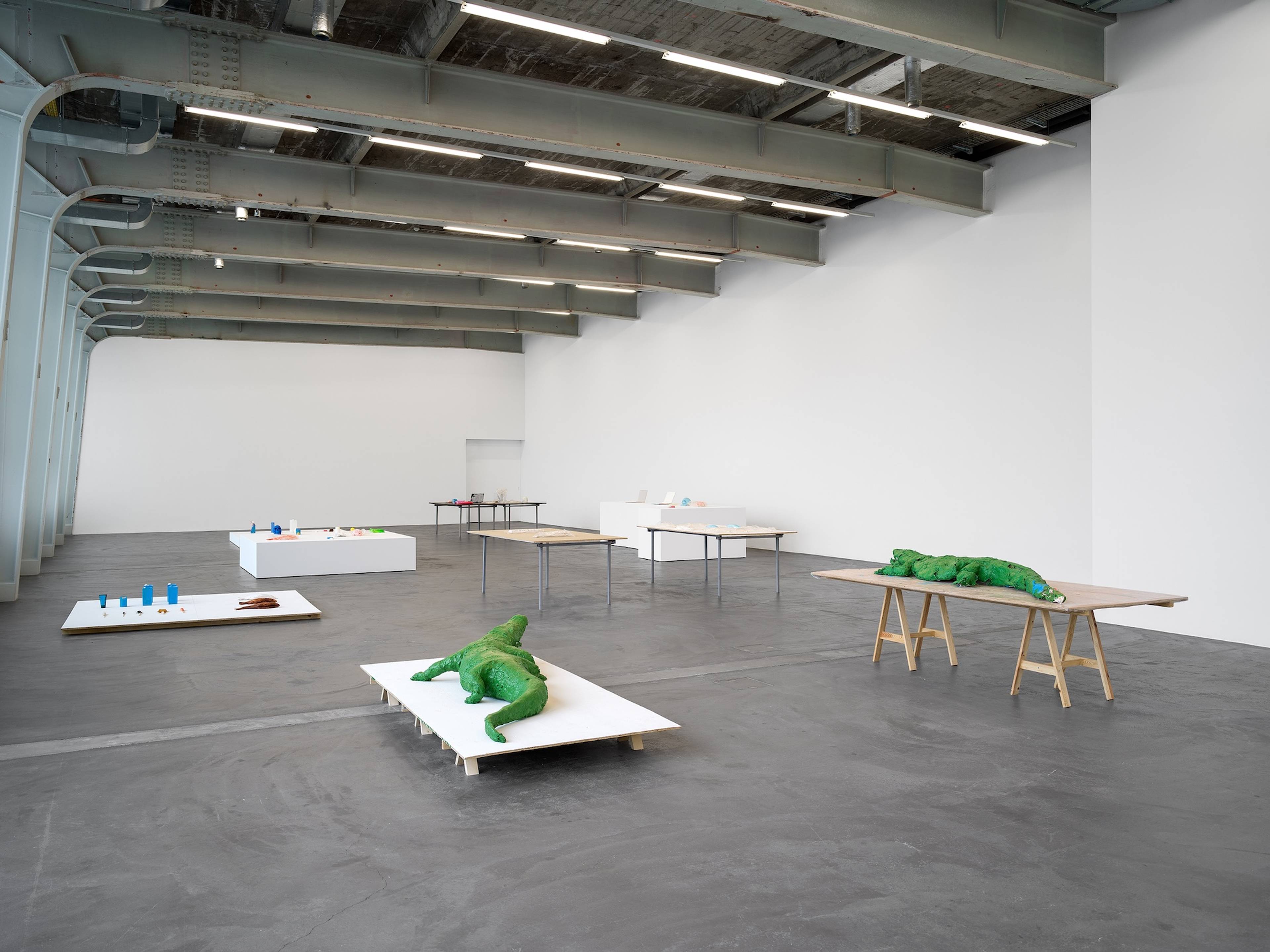
The Kunsthalle Zurich is a cavernous and clinical site that occupies two massive gallery spaces in the city’s former brewery. It is a nearly impossible task for its curator – and, inevitably, any artist – to find the balance within a solo exhibition between the two separate floors. Henrik Olesen (*1967), though, has managed to do it, and seamlessly so, by dividing them conceptually and completely. Rather than a banal take on molds, casts, or replicas, “Copies of real-life objects, tools and food” operates under a deceptively simple structure of offerings and denials. Downstairs and up, the two installations reorient the viewer within a subversive, highly contemporary critique of consumerism and interiority. The first gallery presents a bemusing assortment of colorful, seemingly sporadic things: eggs, apples, paintbrushes, a computer keyboard a crocodile, and so on, artfully arranged on white plinths or tables for the audience’s examination, somewhat haunted by their one-to-one scale to the “real-life” objects they mimic. Conversely, the second gallery withholds the idea of the object entirely, as twenty-four wall-mounted vitrines, empty but worn, create a panopticon, with glass that glares back.
Fundamentally, I was left to wonder how the aesthetics of minimalist goth meet the aesthetics of minimalist pop – until I realized that, philosophically, they are images of one another, however asymmetrical, dually existing to measure the romanticism of the nascent and the ancient.
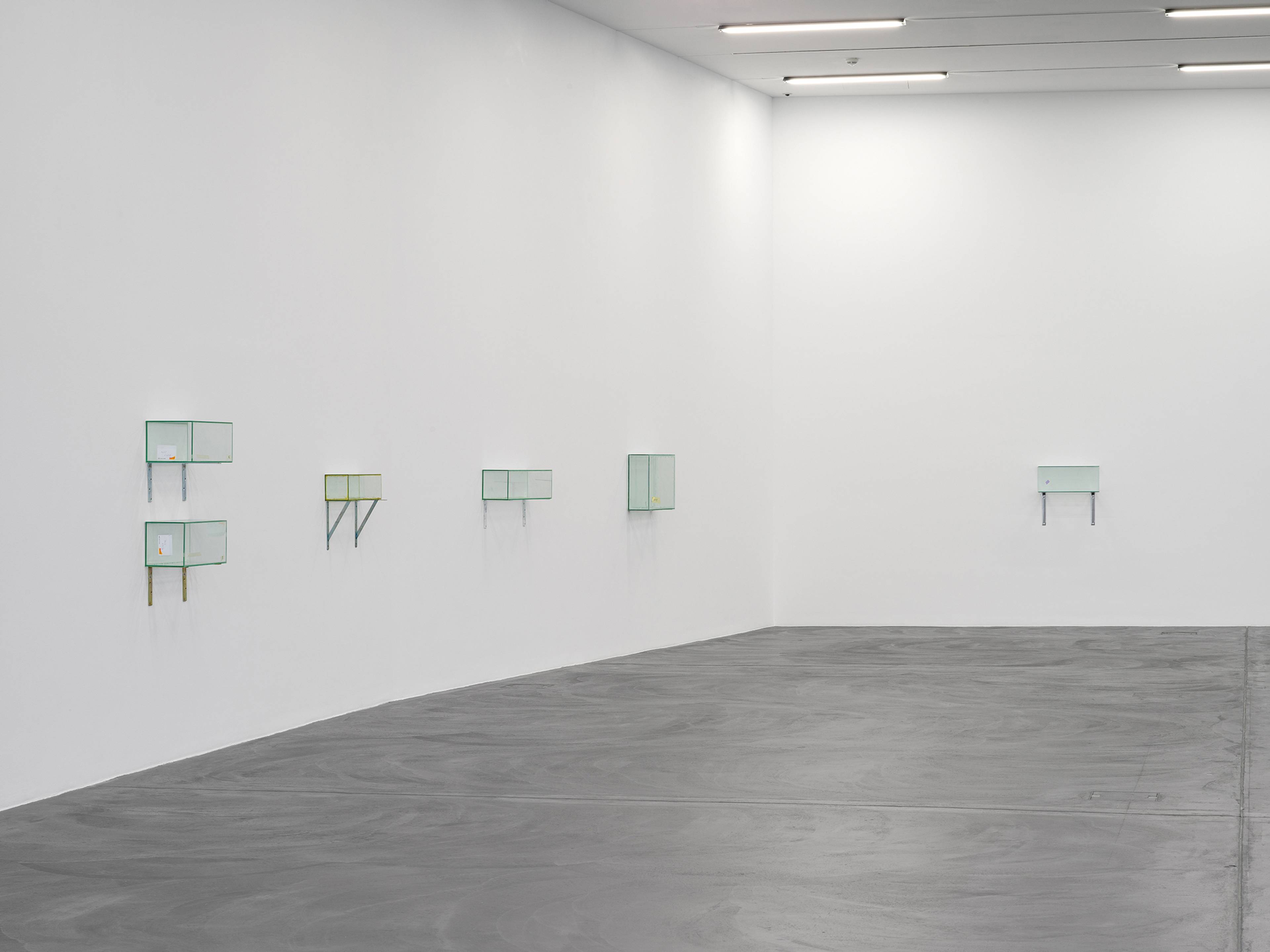
Courtesy: the artist and Kunsthalle Zürich. Photos: Cedric Mussano
Raphaela Vogel
“Zucker * Totholz * Schimmel”
Galerie Gregor Staiger
13 Jun – 25 Jul 2026
Raphaela Vogel’s (*1988) work is rife with obsessions of image production, material sourcing, and physical instability coupled with physical restraint. Her dispositions throughout “Zucker * Totholz * Schimmel” (Sugar * Dead Wood * Mold), are dense and exhaustive, envisioning a place where domesticity is doomed to slow decay. The artist looks to Charles Sanders Peirce, an American mathematician and father of philosophical pragmatism, in an examination of the threefold nature of signs: as symbol, as icon, and as index. The triangle – the recurrent, and dominant, form of Vogel’s practice – exists here as seven large-scale works, alternately wall-mounted or suspended from the ceiling, tips inverted, bearing aesthetic weight on their least stable point. Goat and moose hides are stretched onto the industrial chrome frames, their organic imperfection reinforced by the images’ adamantly libidinal female subjects, mixed with mirror-image heraldry and the fluidity of oil paint. Wetness prevails as reference, luring one’s gaze toward an erotics that lives in us all, simultaneous to the symbolic layers of origin and endurance – that, in equal measure, can create and destroy.
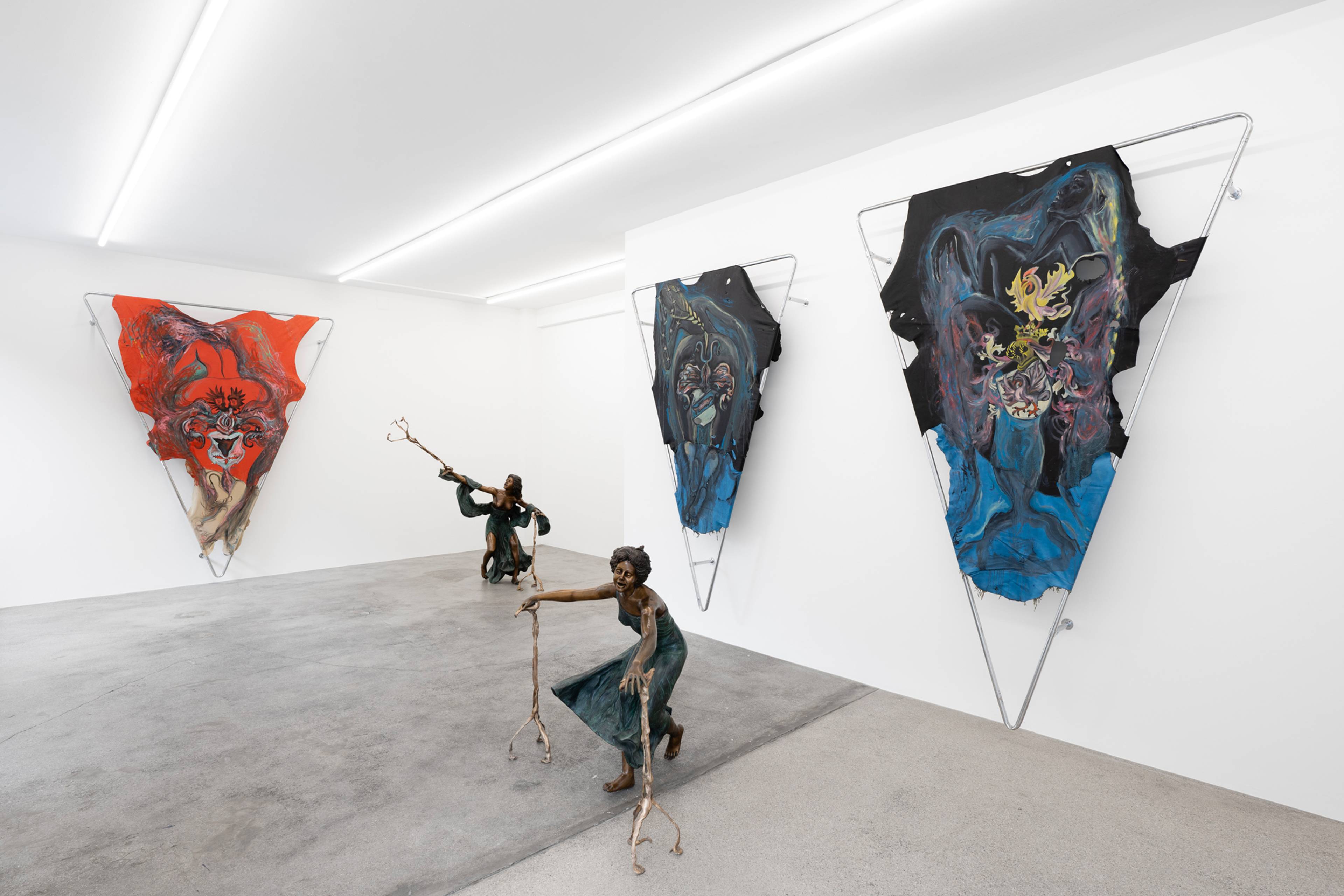
View of Raphaela Vogel, “Zucker * Totholz * Schimmel,” Galerie Gregor Staiger, Zurich, 2026. Courtesy: the artist and Galerie Gregor Staiger, Zurich/Milan
VALIE EXPORT
Karma International
13 Jun – 5 Sep 2026
VALIE EXPORT (1940–2026) passed away, aged eighty-five, in mid-May, just weeks before her latest solo exhibition at Karma International. Partly a didactic survey of performance documentation, there are subtle, uncanny nuances in the seemingly familiar repertoire of the canonical artist. A small version of Scherentanzerinnen (Scissor Dancers, 2009), for instance, looks at first like a work I’ve seen so many times at monumental scale, but here, the standing, intersected blades are entirely different in shape and seeming sharpness – minor details, all things considered, but also intimate ones, and something I might only be able to appreciate in the aftermath of her death. Elsewhere, the three unique photographic prints of Eros/ion, where the artist initially rolled in shards of glass and then onto a glass plate, are as visceral now as they were during the work’s first performance, in 1971. The exhibition thus becomes, in part, an elegy for an artist whose work was, and remains, a stark reminder of how the abject and the poetic can meet.
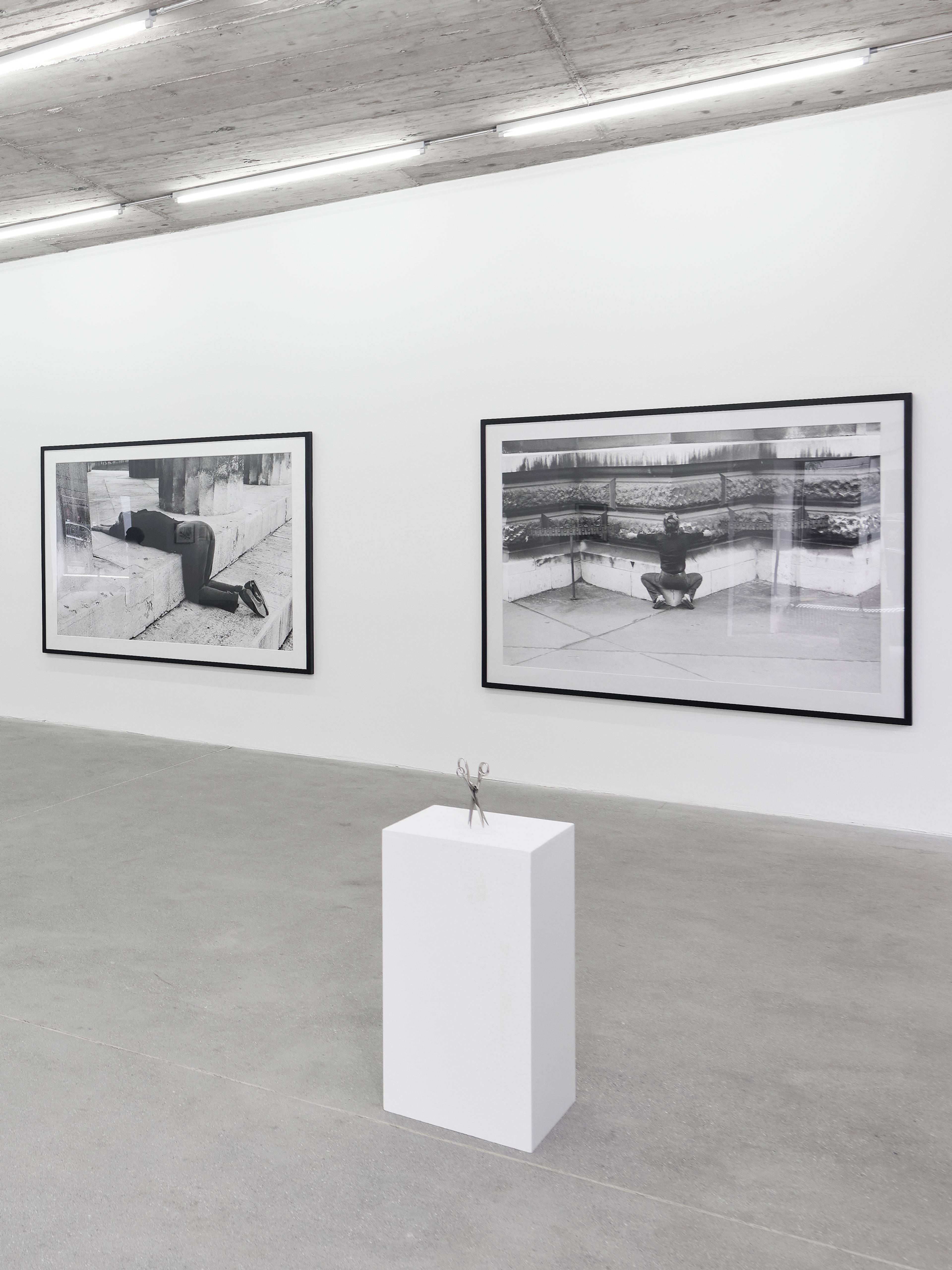
View of VALIE EXPORT, Karma International, Zurich, 2026. © VALIE EXPORT, Bildrecht Wien, 2026. Courtesy: the artist and Karma International, Zurich. Photo: Flavio Karrer
Laura Langer
“Parts Unknown”
Galerie Oskar Weiss
12 Jun – 25 Jul 2026
“Parts Unknown” continues Laura Langer’s (*1986) play with the paradox of the alienated artist who, alone in her studio, is nonetheless aware of her audience to come. Her paintings are often havens of myopic abstraction, simultaneously everywhere and bound to the symbolically liminal site. The three main works here (Passenger 1–3, all works 2026) are depictions of detachment, as they capture a traveler’s aerial perspective of an unknown city, the ephemeral moment of passing through. Her rhetorical gestures are frenetic, fraught, and inscrutable; they are recollections of witnessing light that, errant and at full speed, it is pointless to try to depict exactly. Elsewhere, and further abstracted, Discharge Painting 7 and Discharge Painting 8 accumulate residue from the “Passenger” works against black voids, the relation between the series like that of two people speaking to one another in different languages. It’s something of a guessing game to point out which color belongs where, but one that makes apparent how Langer resists, and relents to, the work.
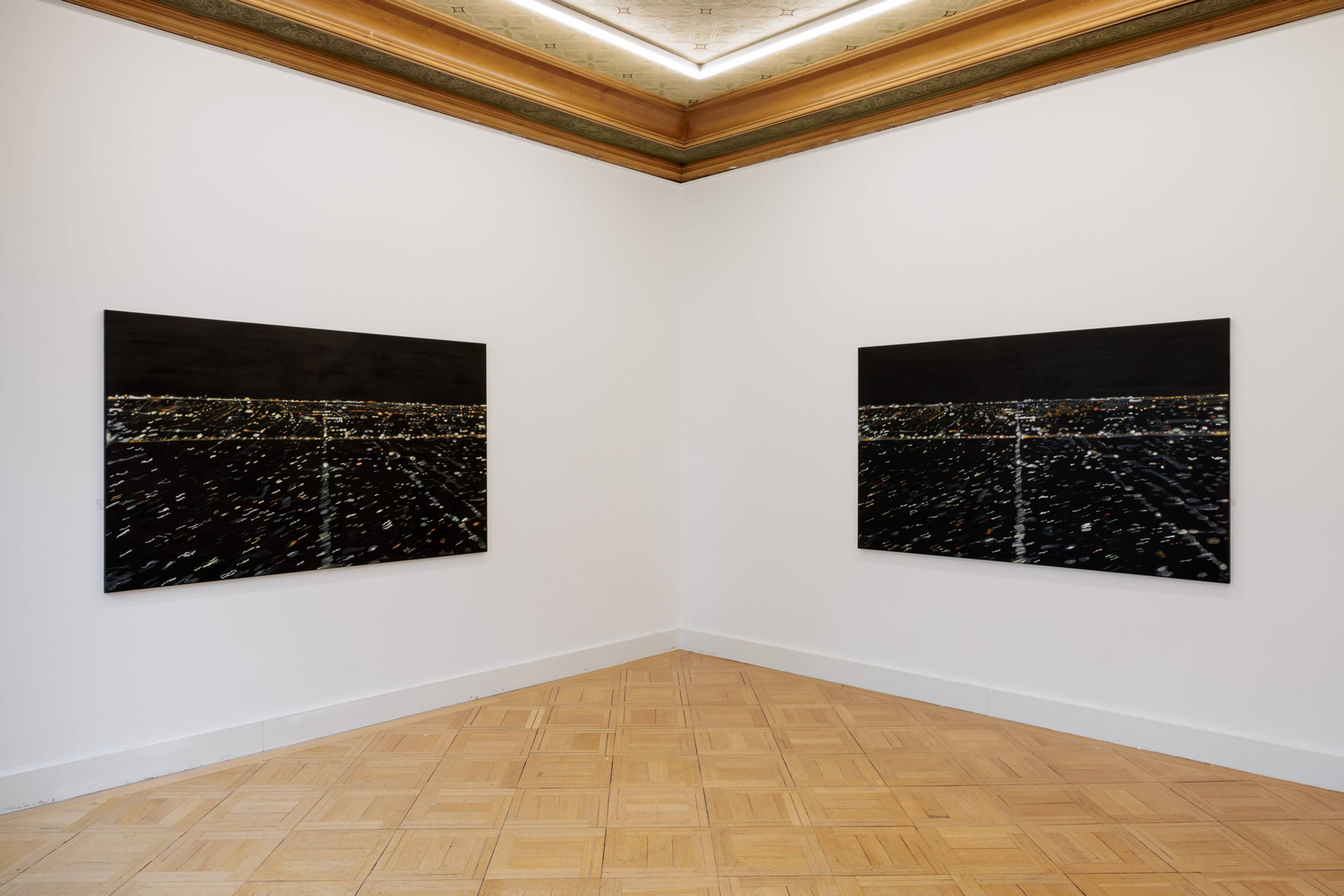
View of Laura Langer, “Parts Unknown,” Galerie Oskar Weiss, Zurich, 2026. Courtesy: the artist and Galerie Oskar Weiss, Zurich. Photo: Gina Folly
Karen Kilimnik
Galerie Eva Presenhuber
12 Jun – 24 Jul 2026
If ornate interiors and pastoral landscapes are easy to love and, consequently, often easy to overlook, the surface tension of Karen Kilimnik’s (*1955) painted fantasies always looms large. At the entryway to Galerie Eva Presenhuber, a pair of works, flower shop, Mt Olympus and the flower bouquet by the juggler magician (both 2026), convey an escapist narrative that lies at the heart of the exhibition. The pair, both imaging the same flower bouquet, seem to show the concept of a memory: one painting illustrates a totally washed-out abstraction, its bouquet like a cloud; the other, its various blooms depicted amorphously and only partially, gestures toward its former grandeur suspended in air. It is part of Kilimnik’s imagist tendency to point to the idea of the thing, one that reaffirms the romance of longing, while leaving the medium of painting and art-making at large. In the final gallery, all that beauty turns eerie and cinematic: the four walls are lined with small, intimate paintings, mostly of empty rooms, anchored by an installation of eight Fabergé eggs placed on a marble table and dusted with artificial snow (Russian Winter, 2026). For all its aristocratic and bourgeois splendor, the artist punctuates the exhibition by saying that the end of a grand empire is near.
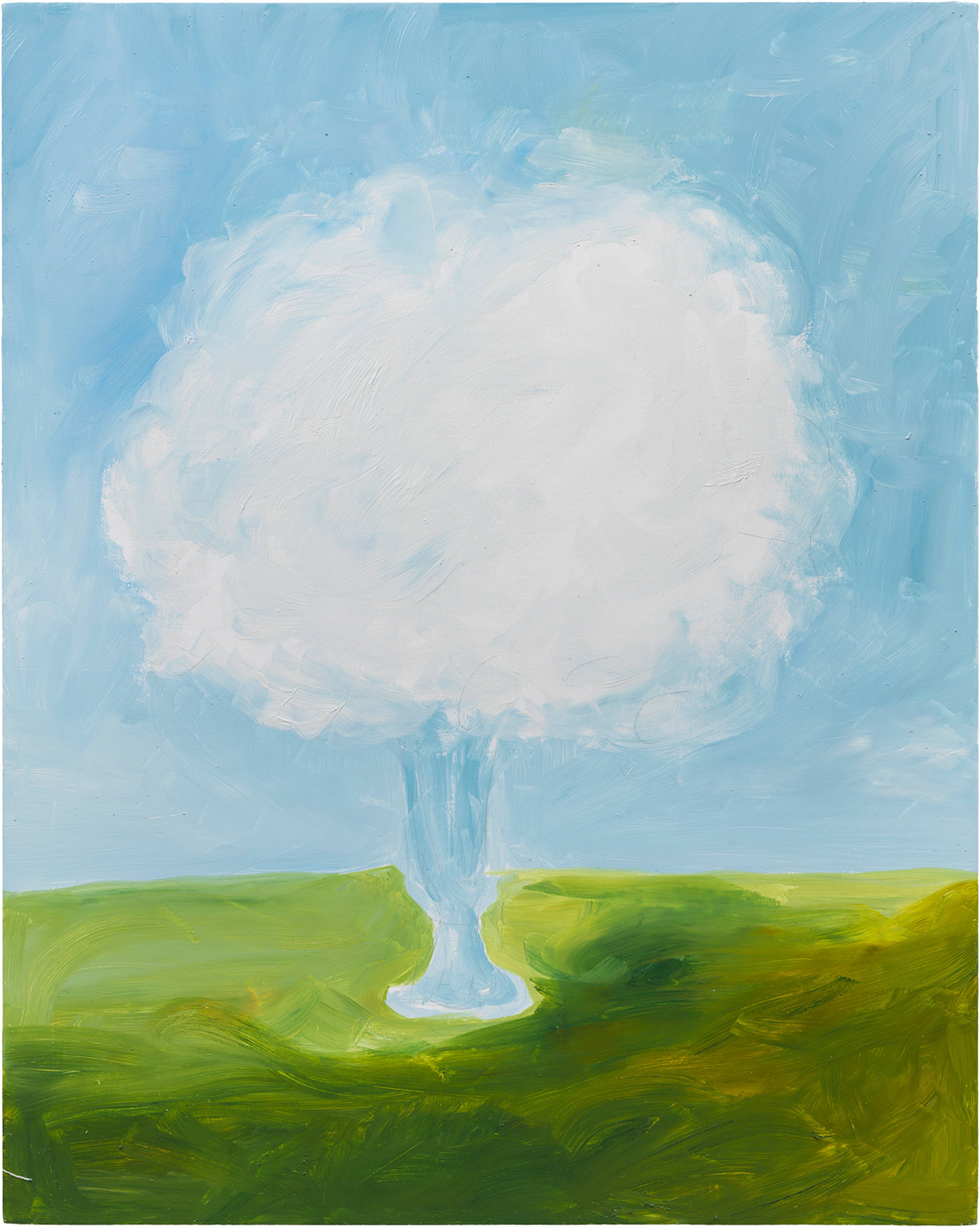
Karen Kilimnik, flower shop, Mt Olympus, 2026, water-soluble oil color on canvas, 51 x 40.5 cm
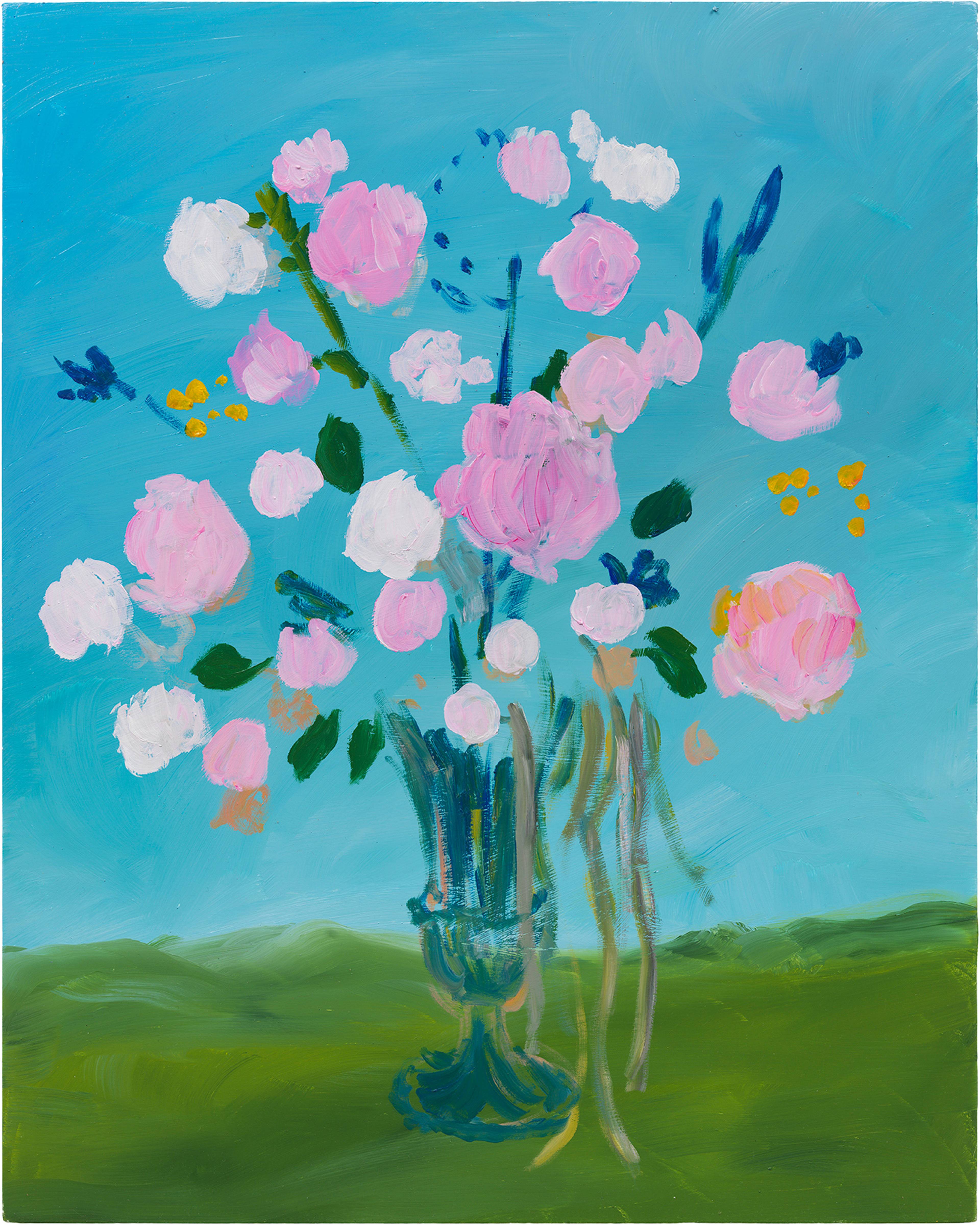
Karen Kilimnik, the flower bouquet by the juggler magician, 2026, water-soluble oil color on canvas, 51 x 40.5 cm. Both © Karen Kilimnik. Courtesy: the artist, Galerie Eva Presenhuber, and Sprüth Magers. Photos: Genevieve Hanson
Adam Cruces
“Pastels”
Blue Velvet
11 Jun – 5 Sep 2026
Adam Cruces’s (*1985) discursive approach to drawing is at the forefront of “Pastels,” where the objects depicted play into the psychoanalytic panorama of the artist’s day-to-day. Its range of subjects – Lynchian film stills, a worn designer sofa, a close up of a wristwatch’s dial, a plane in takeoff or landing, a woman, an unused scythe – are rendered in all the technical variation the medium offers, with a sketch-like quality that makes, in retrospect, for a perfect metaphor of the sensorial. All the while, they vaguely recall modernist-era advertisements, images of the kind one might see flipping through Playboy in its heyday. Cruces’s insistence on their individual objecthood, or even the potential of their fabrication, isn’t the point for me; rather, it is how they perform as poignant and ruminating concepts, as part of an artistic consciousness that speaks to popular imagery and innate loss.
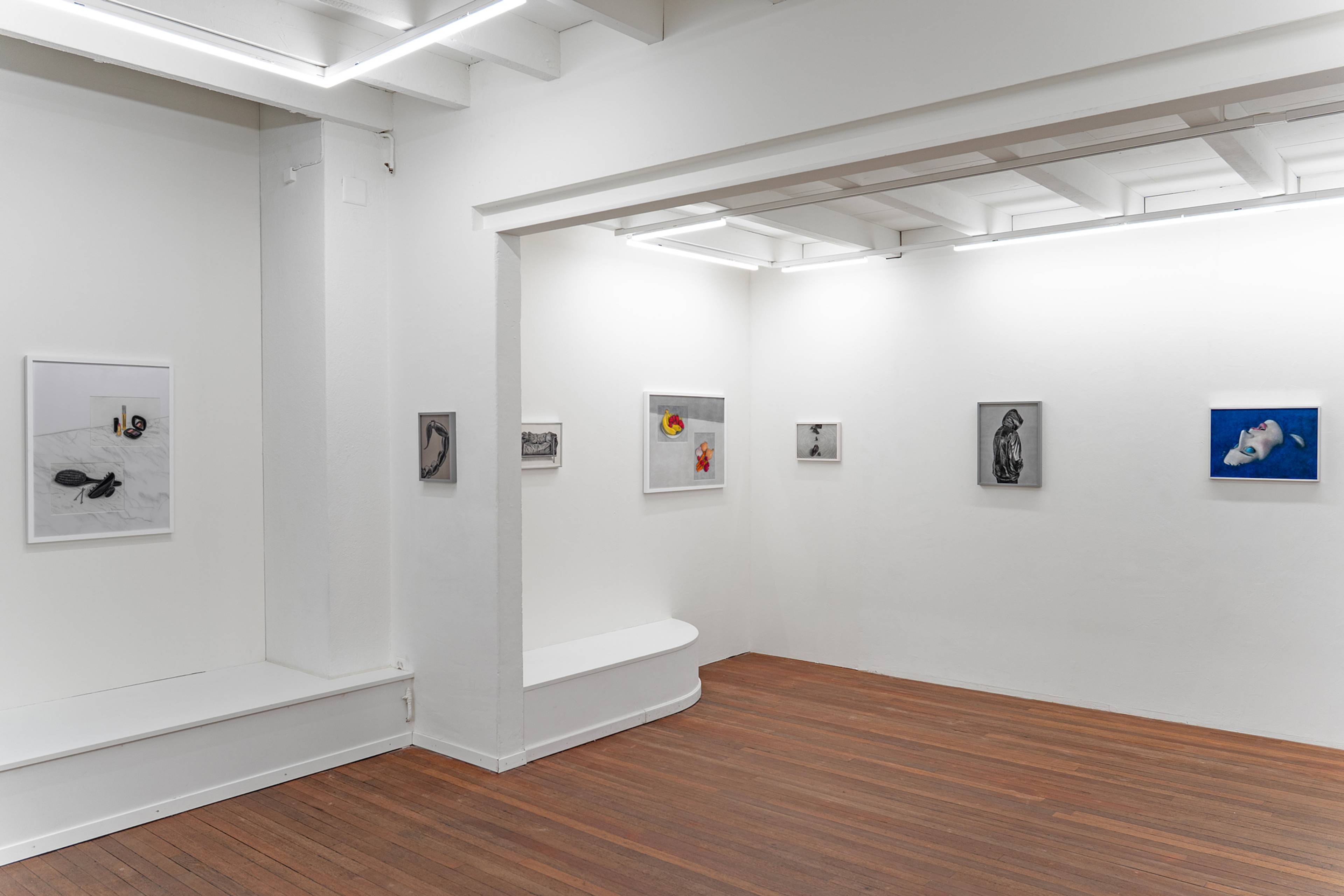
View of Adam Cruces, “Pastels,” Blue Velvet, Zurich, 2026. Courtesy: the artist and Blue Velvet, Zurich/Madrid
Marisol
Kunsthaus Zürich
17 Apr – 23 Aug 2026
Long a part of the Pop Art canon in the United States, it’s only last year that the artist Marisol (1930–2016) has been substantially introduced to European museum audiences, in a touring retrospective currently at the Kunsthaus Zurich. To the unacquainted, her iconic wooden sculptures might seem awkwardly blocky, but are alluring nonetheless. Underneath her play with cultural tropes and childlike depictions of celebrities or herself are laden with classism and the fraughtness of identity that resonate as deeply today as they did in the 1970s. The exhibition strives from its outset to suggest that the multicultural Marisol was a glamorous counterpoint to the staid Andy Warhol, emphasizing her darker, enigmatic, Latin American looks with captivating quotes. But more subtle curatorial choices become apparent in the monumental sculptures’ engagement with the quieter wall works. I must have stayed looking at Portrait of Betty (1961) for at least fifteen minutes. The drawing – diorama? – is lively, relatively simple, and overtly queer: sketched in colored pencil, two faces in profile stare at one another from the edges of the cardboard surface, while at center, an oblong hole reveals features of two more faces, these in plaster – a gaping mouth, a closed eye, a rouge-nailed finger, suggestive and strange.
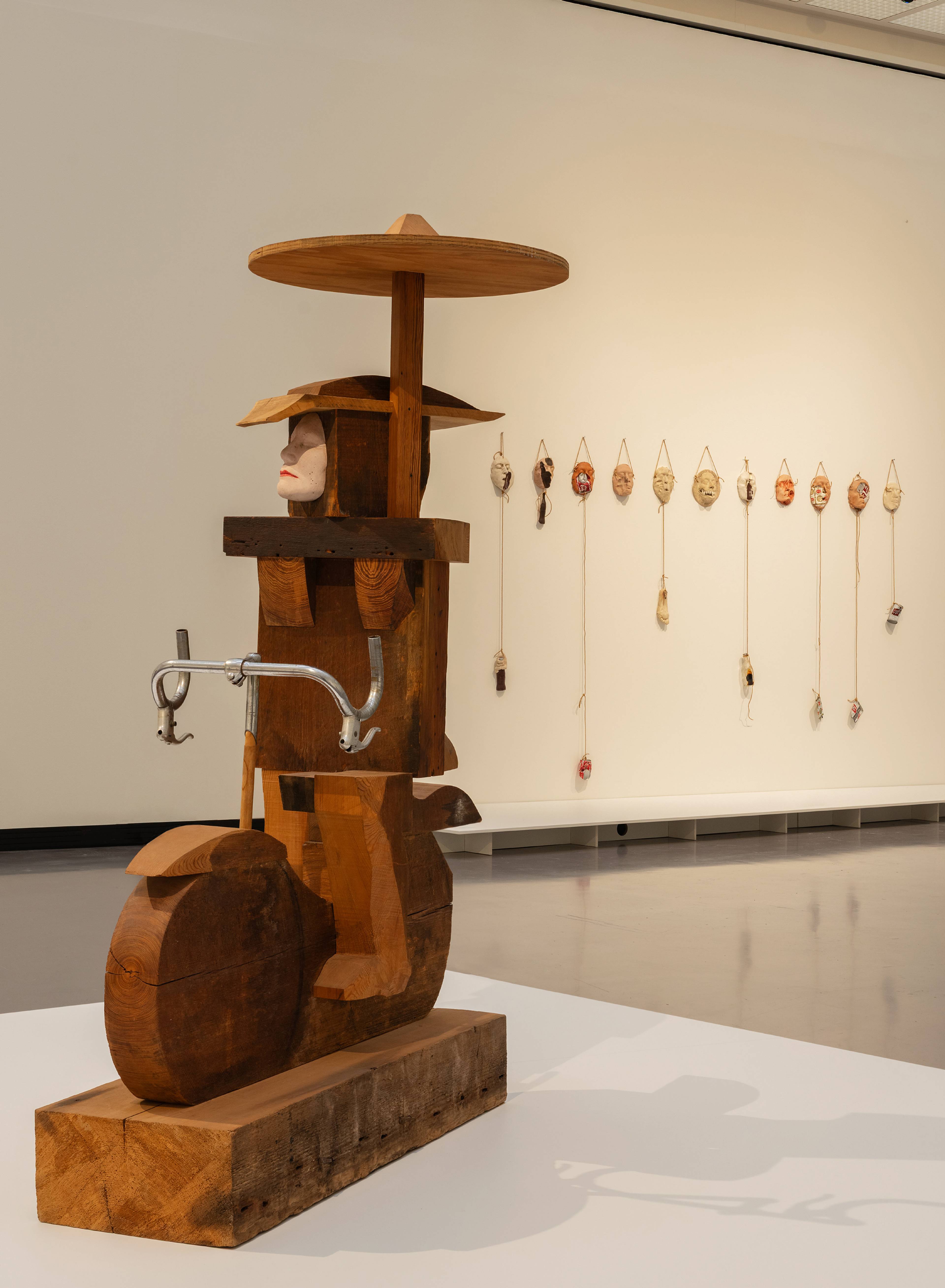
View of Marisol, Kunsthaus Zürich, 2026. © Estate of Marisol / 2026, ProLitteris, Zurich. Courtesy: Kunsthaus Zürich. Photo: Franca Candrian
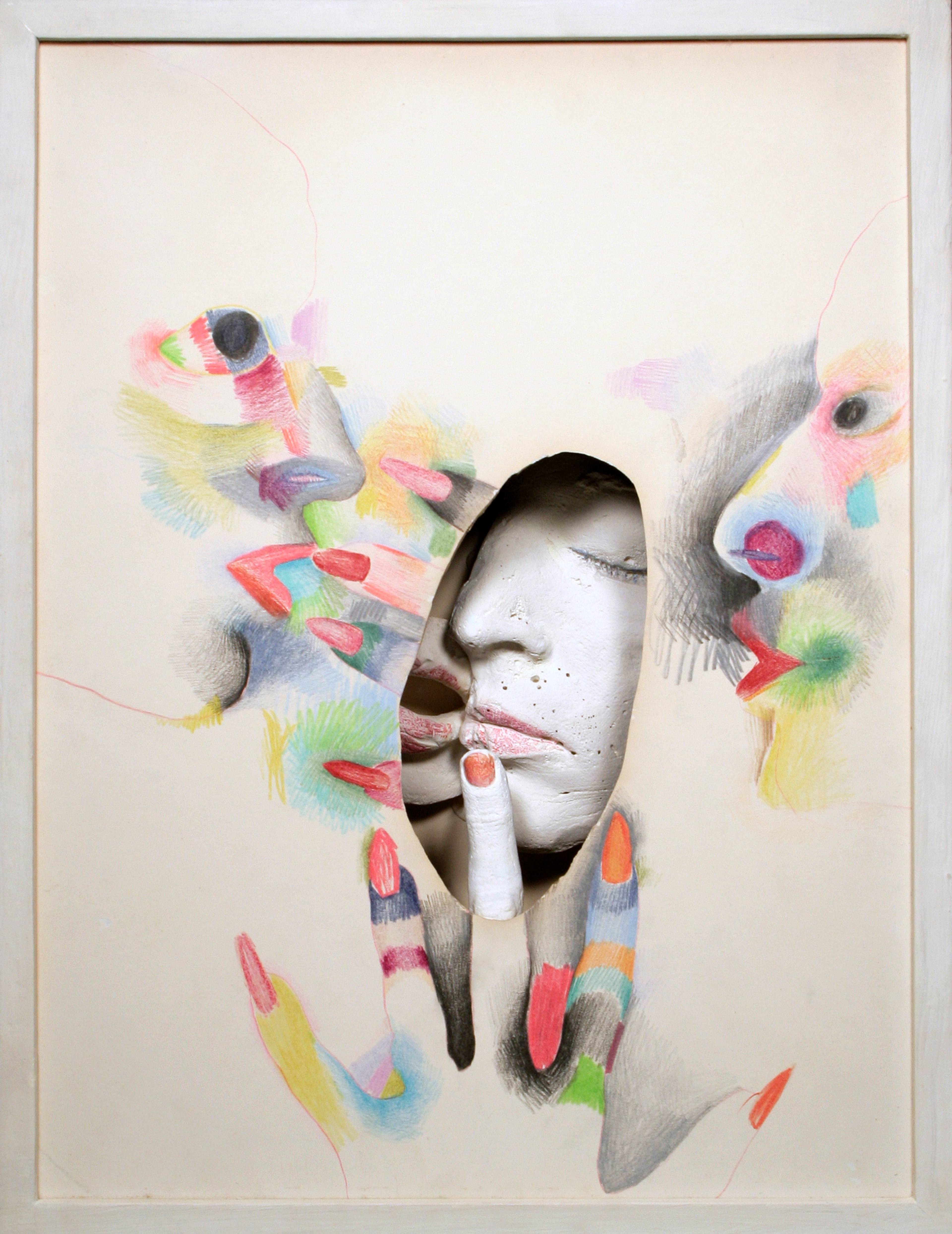
Marisol, Portrait of Betty, 1961, colored pencil on cardboard with cast plaster, 40.6 × 29.8 × 8.3 cm. © Estate of Marisol / 2026, ProLitteris, Zurich. Courtesy: The Fralin Museum of Art at the University of Virginia
Heidi Bucher – Liesl Raff
“Closer”
Kunst Museum Winterthur
13 Jun – 8 Nov 2026
Heidi Bucher (1926–93) is often regarded as a premier example of Swiss angst, the room-sized works of her “Skinning” Series hauntingly encapsulating an isolated, alienated, guilt-ridden post-war cultural psyche. Presentation and degradation are likewise an inevitable part of the characterization, as anything Bucher-related tends to be read as a total embodiment of feminine rage and slow death. So, imagine my surprise at an exhibition of exceptional levity. A plethora of the late artist’s lesser-known and undated drawings and collages lining the walls, while the sculpture is supplied by Liesl Raff (*1979), in the form of muslin curtains, PVC floor panels, and her own large-scale, liquid-latex skins. If Bucher’s psychological charge is unavoidable, Raff reverberates it through taut, deliberate, and absolutely fragile material dispositions, and to a powerful effect of structure and support. Multivalent, weighted with respect as well as radical juxtaposition, it is an absolute breath of fresh air, as well as a clever gesture by curator Lynn Kost, who, working in Bucher’s hometown, no doubt had access to her renowned works.
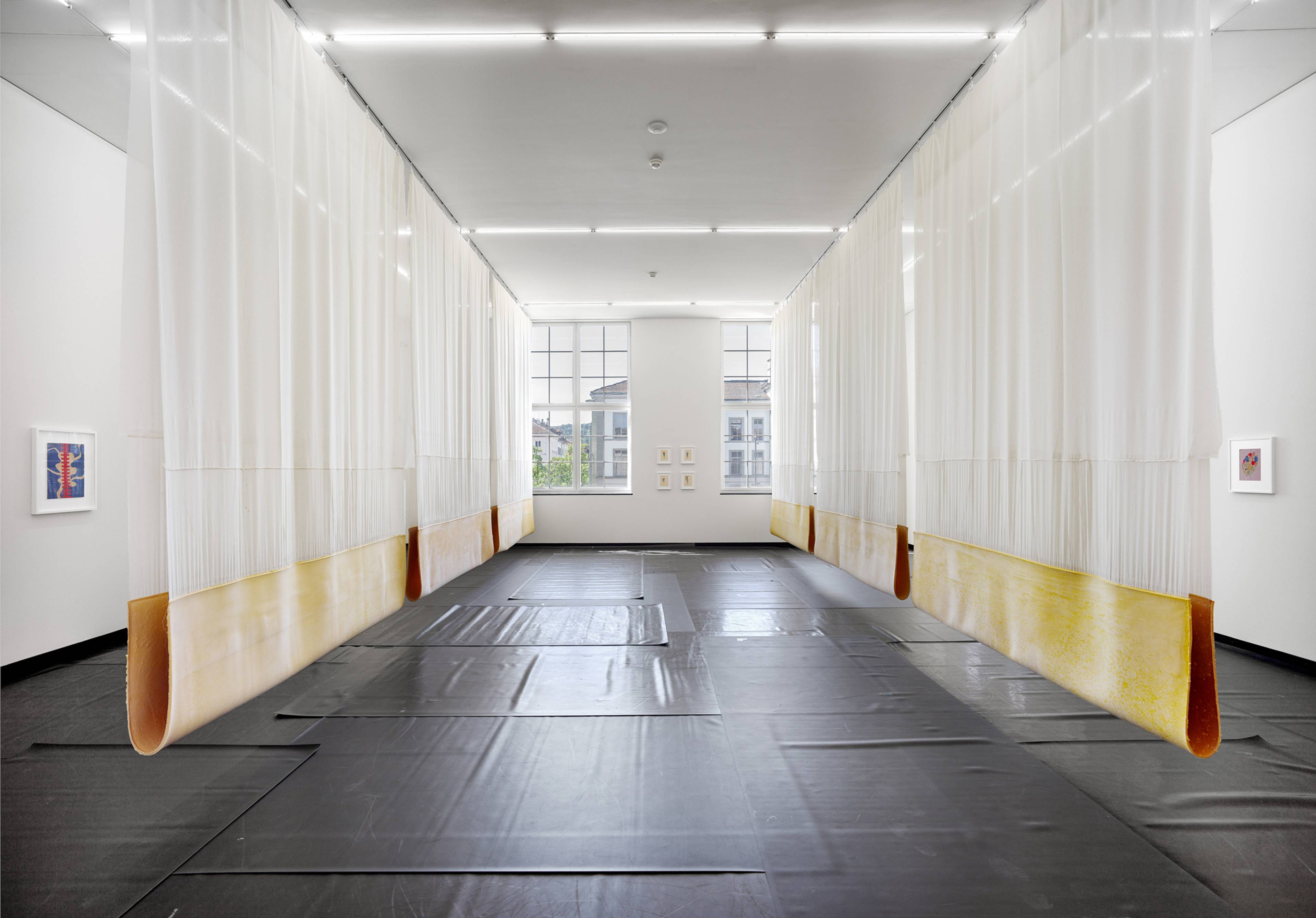
View of Heidi Bucher – Liesl Raff, “Closer,” Kunst Museum Winterthur, 2026
Zurich Art Weekend 2026
12 – 14 Jun 2026