

KAITLIN CHAN
Cartoonist and director of Empty Gallery, Hong Kong
👍 “The Darkest Hour at 3am,” Current Plans, Hong Kong
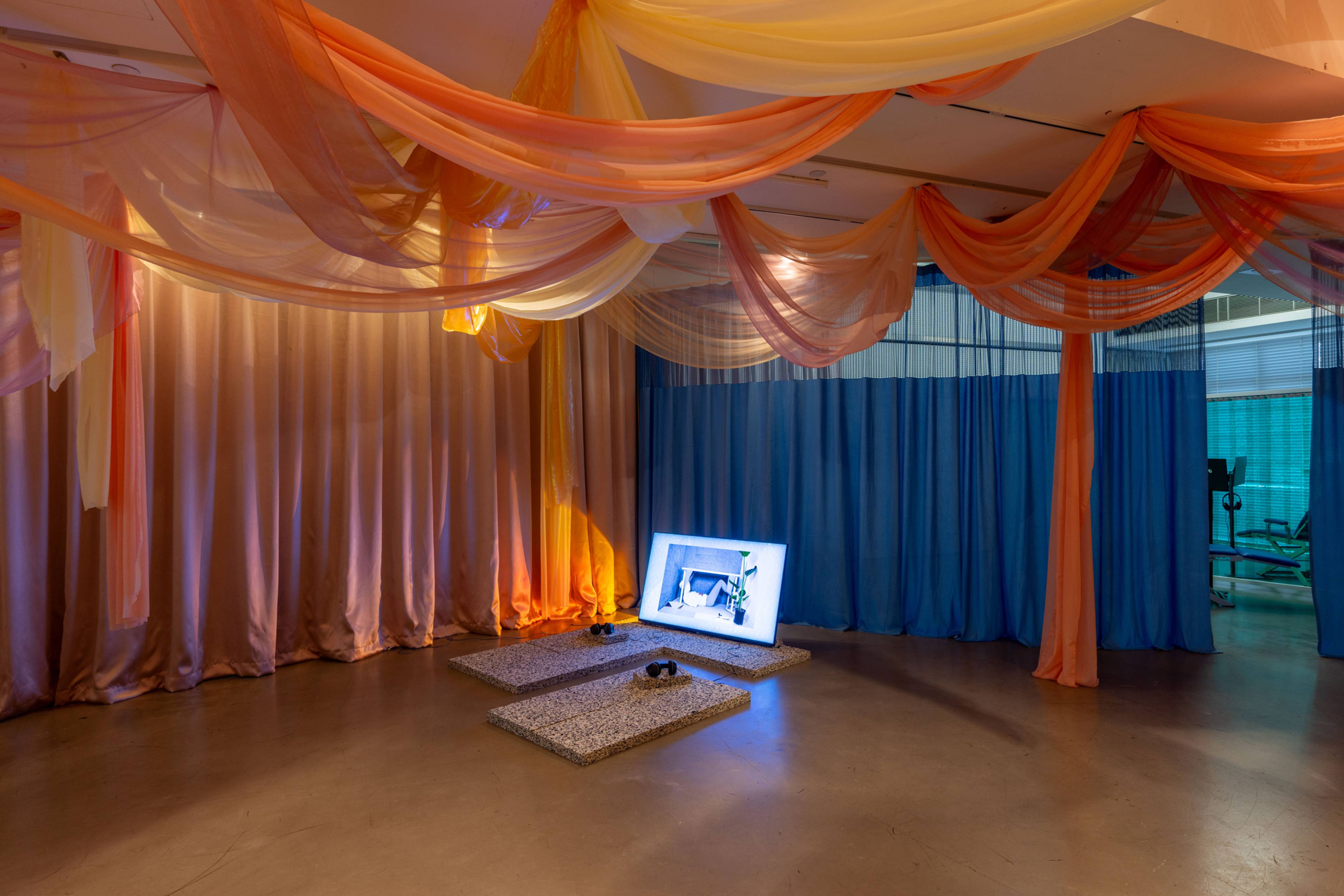
View, “The Darkest Hour at 3AM,” Current Plans, Hong Kong. Photo: Samson Wong Pak Hang
Curated by Alberta Leung, this exhibition brought together an eclectic group of international artists to ponder on insomnia. Sometimes I feel contemporary art fatigue, and the funny, salient and strange works in this exhibition —ironically— woke me up from my stupor. The show opens with Tobias Bradford’s Dog lying askew. Part-machine, part-man’s best friend, they mournfully jerk their legs like a cyborg stuck in a bad dream. Ben Grosser’s Stuck in the Scroll surveils whether he is logged into TikTok right now alongside a counter of total hours scrolled away, displayed on glowing monitor on a messy desk. A suite of haunting videos, including Yoojin Lee’s mesmerizing screencast of media pertaining to sleeplessness, is installed in a trio of reclining dental chairs, which is my new favorite way to watch video art. I visited on a day when the performer Viola Ming Heng read aloud Lee’s text Low Time with lethargic choreography, and I left with Marie Darrieussecq’s Sleepless from the reading room in hand. Afterwards, I was struck by how thoughtful the whole premise was – if we’re all sleeping poorly due to phone addiction, we might as well create something lasting and resonant from these harrowing nights.
👍 Brandon Taylor, Minor Black Figures (Riverhead Books)
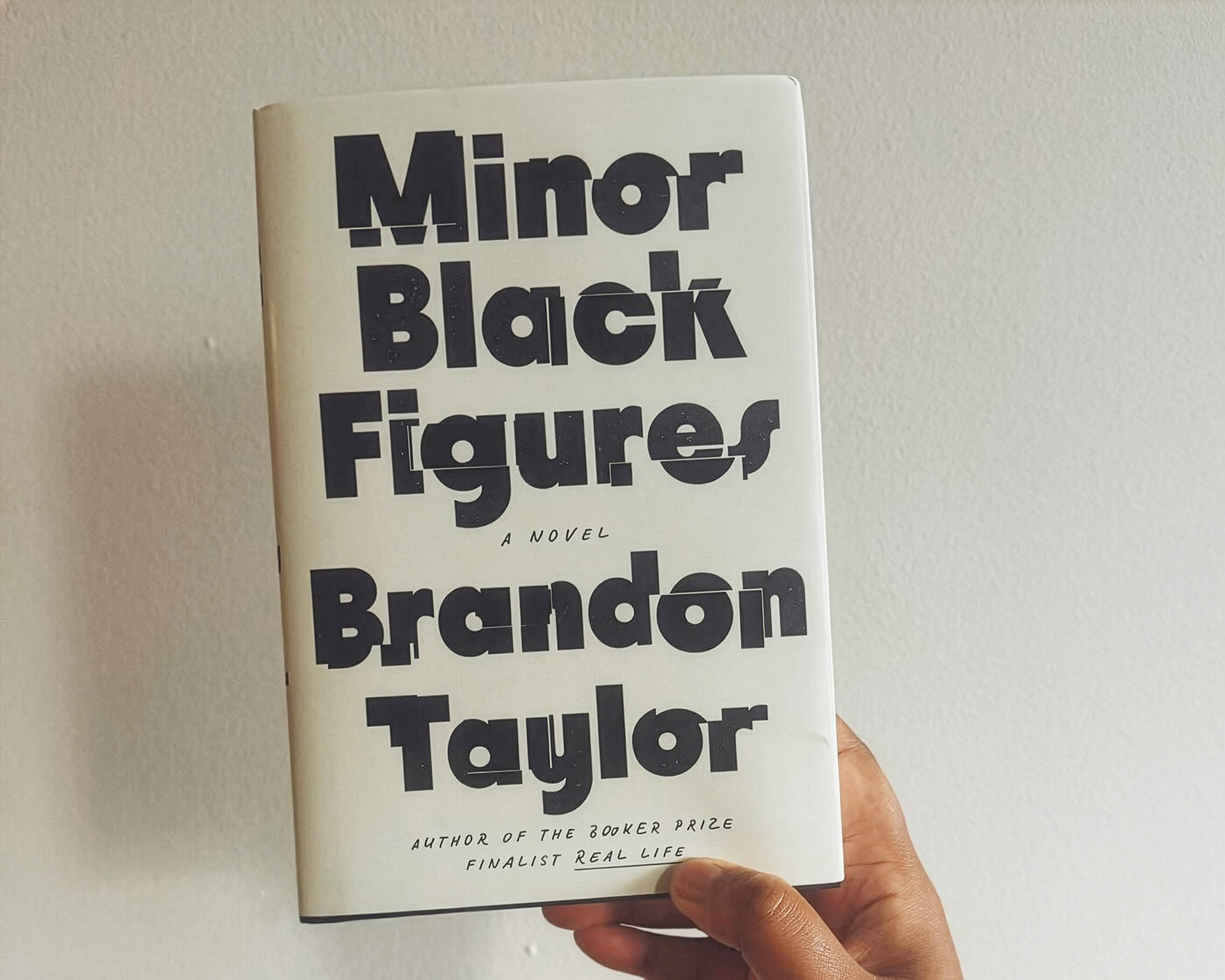
Brandon Taylor, Minor Black Figures, 2025. Courtesy: Riverhead Books
Discourse on the intersection of visual art and identity politics has felt like a crowded bar fight where people assured of their right to exist are yelling at the group of alleged “minorities” (actually the global majority) to stop whining. Just when I thought no meaningful texts would emerge from this hateful era, Brandon Taylor released his hotly anticipated third novel. Wyeth is a painter who meditates on faith, creativity and sex as he navigates life in New York. I’m obsessed with how Taylor explores interior life, he perfectly braids together sociopolitical commentary alongside the desires, indignities and observations of his characters. He’s created a book of this particular historical moment that also speaks to the perennial struggle of moving through cynicism towards contemplation and discovery. Everything is richly rendered here, from his gaggle of studio-mates whose friendships are tinged with snark, to the slow building of chemistry between Wyeth and a priest-in-training named Keating. This book about gradually finding meaning and tenderness in a cold, cruel world deeply moved me and ignited several text threads in my social circle.
👎 Materialists, dir. Celine Song (A24)
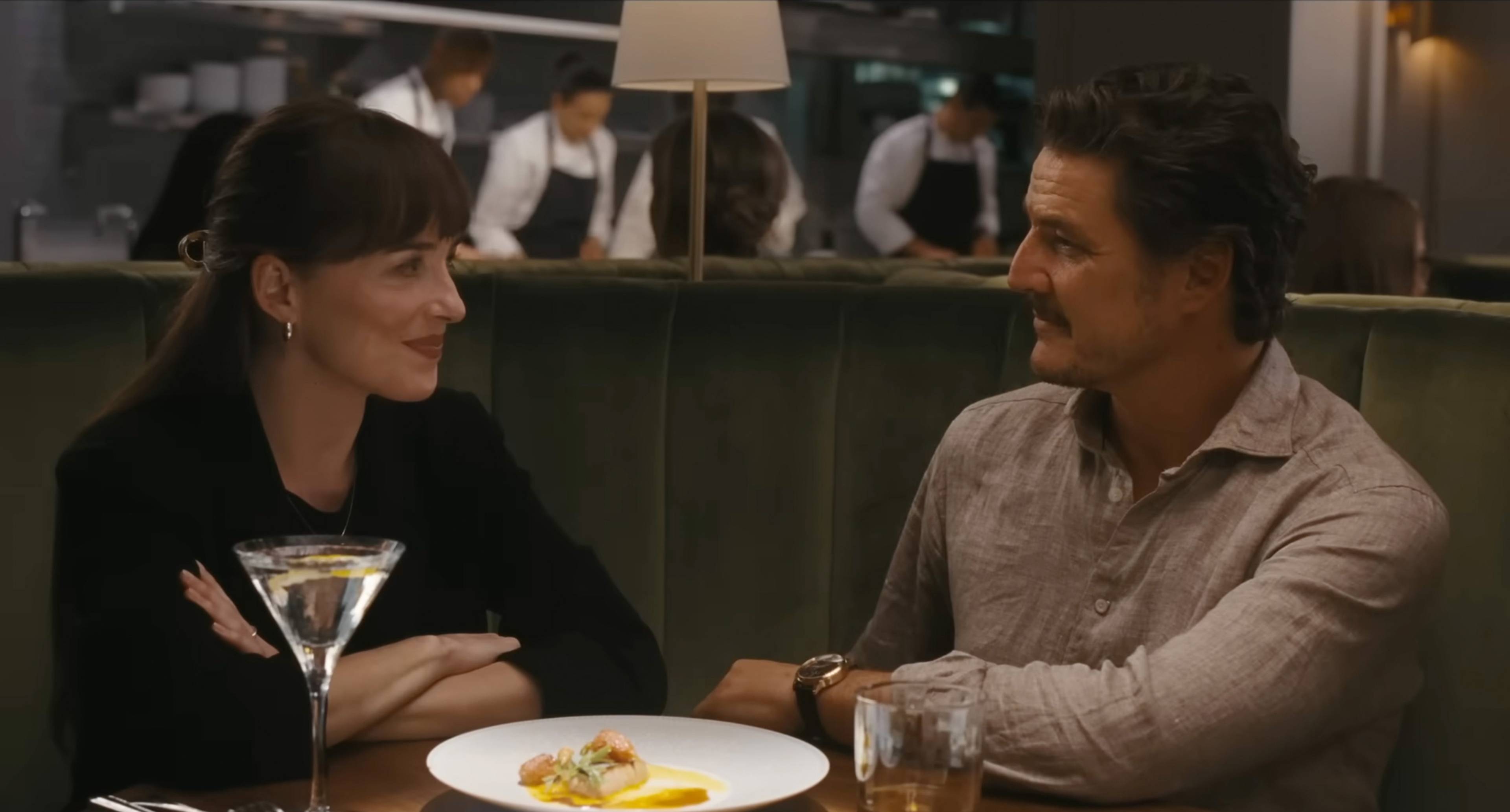
Still from Materialists, dir. Celine Song, 2025, 117 min. Courtesy: A24
I didn’t just want to watch a fun and flirty movie, I felt that without one, I would soon perish. This year has undoubtedly been a shitshow, and my friends and I thought that Celine Song was going to sweep in and save us with a movie about conventionally attractive people flirting and fucking in the Big Apple. How wrong we were! During the lazy end of summer, I convened a group of six hoping that this film would instigate some fun after-chats on sex, class dynamics in dating, or at least Pedro vs. Chris. The entire film was devoid of spark and chemistry, or even narrative pulse. There was no heart! What I hoped was going to feel like knees touching under the bar and stolen kisses in an alleyway felt more like a TED talk with superficial virtue-signaling and Girlboss-era faux feminism. While I’m not in doubt about Song’s overall talent, this film not only didn’t land with me, but left me cold.
👎 Labubu Inflation
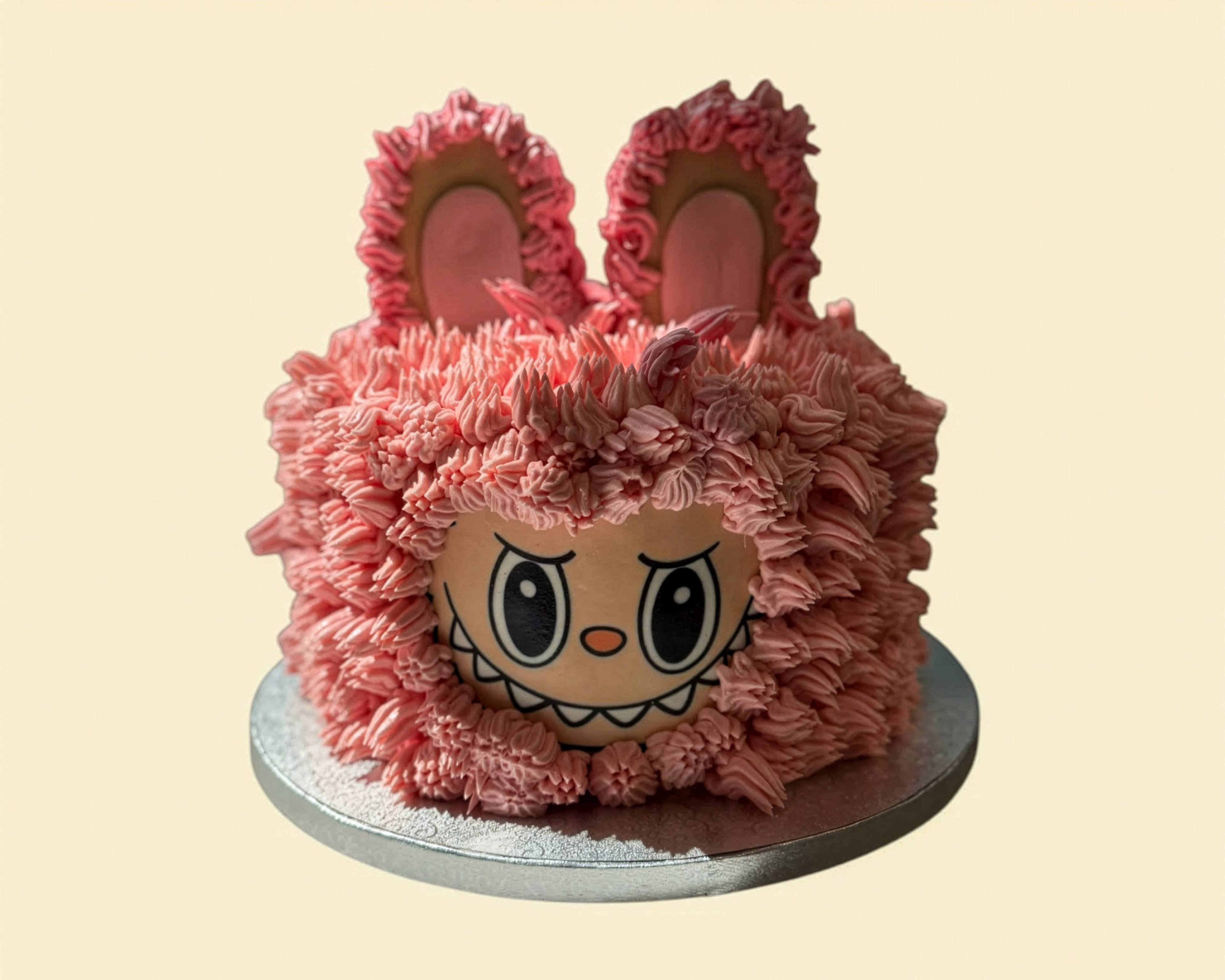
A Labubu cake
I know people have written to death about these toothy demonic dolls, but I want to specifically weigh in as someone in the city that the creator hails from (Hong Kong), and a toy aficionado myself. Since 2019, I have been amassing miniatures from capsule (Gachapon) machines in Japan and Taiwan, and I love plush bag charms of beloved cartoons, like Pingu. So, if I dig cute collectibles, what gives? My beef with Labubu has less to do with the fact that they are creepy, and more to do with the toxic deluge of consumerism they’ve unleashed. Throughout the city, shops have become inundated with not only the Labubus themselves, but also carrying cases, fashion accessories, and even Labubu birthday cakes. As we drive our one precious earth deeper into a black hole of environmental collapse, will these toys ever have been worth it? When the last few thousand survivors on our planet in the year 2100 dig through soil searching for sustenance, only to find the rotting plastic corpse of a Labubu, or worse, a counterfeit Lafufu, what will that say about us?
___
FATIMA HELLBERG
Director, mumok, Vienna
👍 “Fernheilung,” The University Gallery of the Angewandte, Vienna
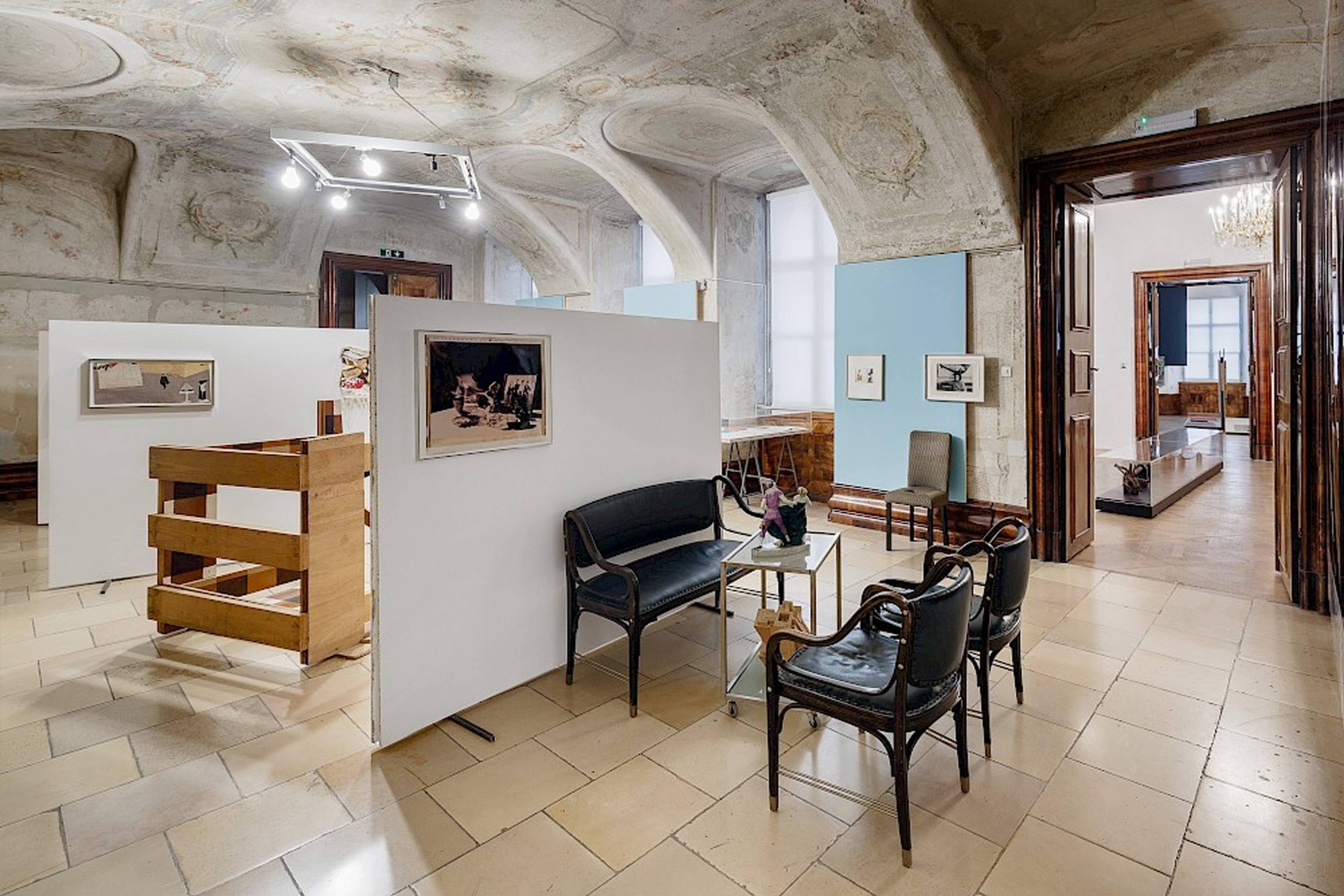
View of “Fernheilung: The 1980s and Early 1990s Through a Distorted Lens,” University of Applied Arts Vienna, Collection and Archive, 2025. Photo: Manuel Carreon Lopez, kunst-documentation.com
“Fernheilung: The 1980s and Early 1990s Through a Distorted Lens,” curated by Robert Müller and Helmut Draxler at the University of Applied Arts Vienna, is one of the most finely-attuned stagings of a collection I have encountered. The holdings are approached in their incompleteness, with attentive edits through external loans and additions. There is great work by Birgit Jürgenssen, Heimo Zobernig, Cora Pongracz, Sherrie Levine, Franz West, and Friedl Kubelka-Bondy, to mention a few, but also a certain energy of intense artistic and theoretical striving, marked by a commitment that can verge on overbearing. Rather than framing this as a question of speaking with some newfound resolve, the collection is treated as a many-sided object – something to be continuously circled and revisited from different perspectives, with distortion itself becoming part of the investigation. The titular Fernheilung, or “healing at a distance,” suggests a process familiar from other forms of recovery, something that isn’t necessarily linear or complete, but still makes a difference with time. It is also a kind of permission – an artistic and intellectual encouragement to others at the University, as well as visitors who find themselves unexpectedly addressed.
👍 Divided Publishing
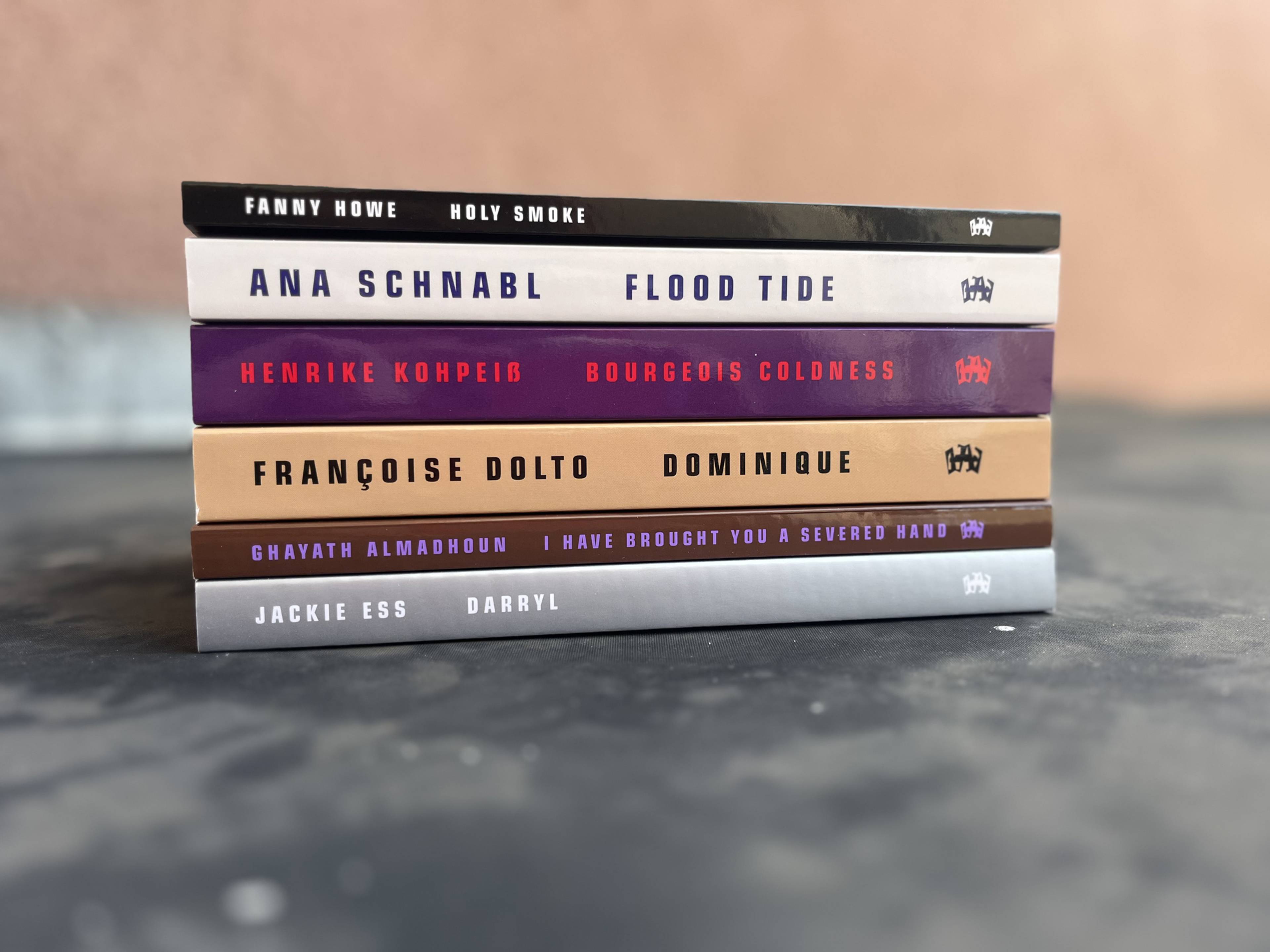
Courtesy: Divided
In a conversation with Camilla Wills, an artist and co-founder of the independent imprint Divided Publishing, she spoke of the seismic shift that happens “when you take the unconscious seriously.” The experimental form of the writing Divided publishes is driven less by abstraction than necessity. This practical and open grappling with complexity is remarkable and inspiring, especially when it is coupled with a public mission: the understanding that publishing also means creating publics, and that an uncompromising voice, subjectivity, and point of view can be deeply generous. One of the titles, republished this year for the first time since its 1979 release, is Holy Smoke, by the poet Fanny Howe, an account of the frenzy and paranoia of United States politics refracted through an individual psyche. The work moves much like life itself, traversing both the epic and mundane. Fanny Howe passed away in 2025, and I will remain forever grateful to the team at Divided for helping me connect with her and her work.
👎 The Antichrist
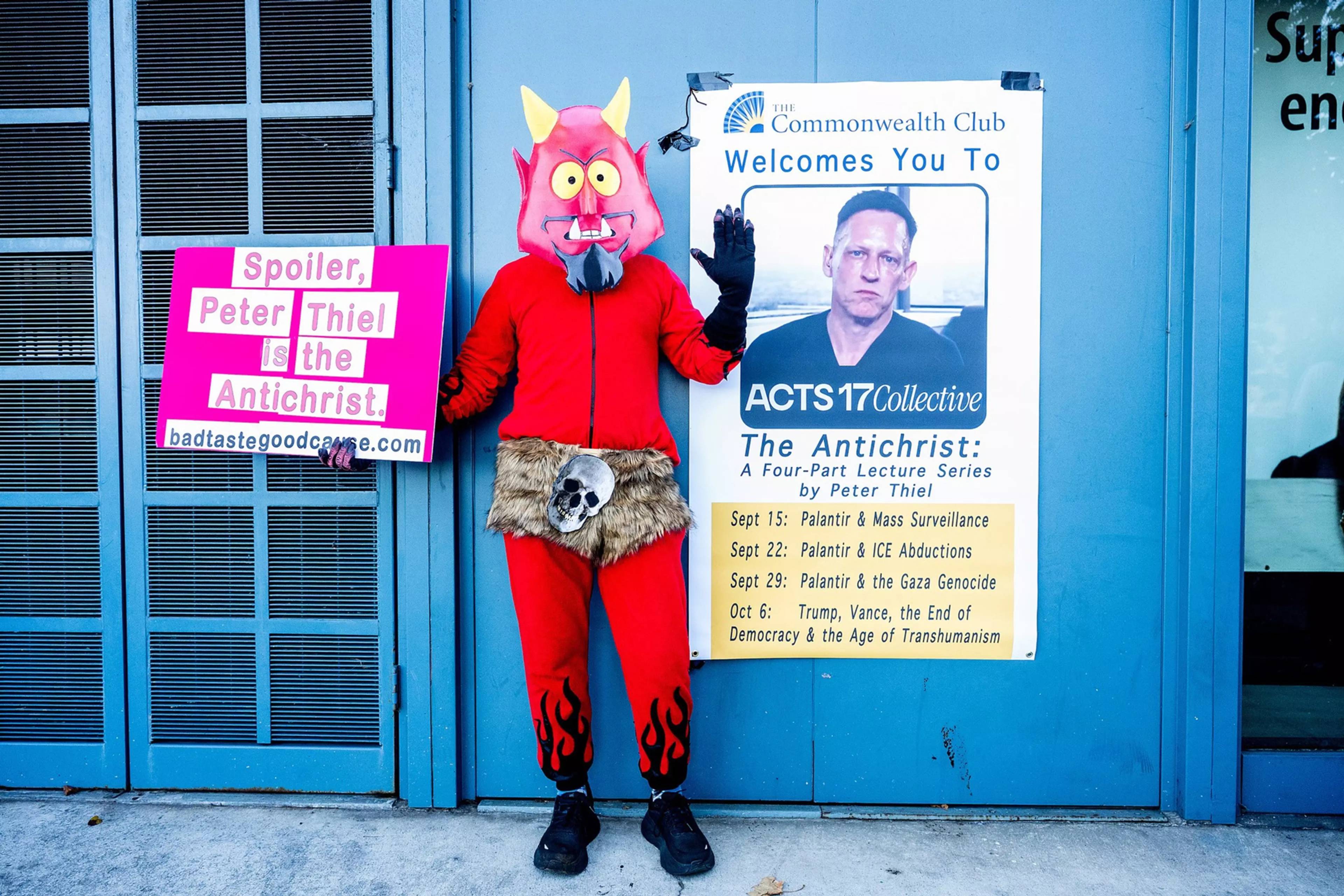
Protestor outside a lecture by tech entrepreneur Peter Thiel “addressing the topic of the biblical Antichrist” at the Commonwealth Club, San Francisco. Photo: Noah Berger
In a recent interview with the New York Times, English writer Paul Kingsnorth reflected on the German-American entrepreneur Peter Thiel as the epitome of a new manifestation of power and violence: “I think people like Peter Thiel are involved in building something which is becoming quite openly evil.” Though Thiel isn’t the only billionaire involved in weapon systems and surveillance, his use of Christian terminology is distinctive – Biblical scale, but in a terrifyingly inverted way. His notion of the antichrist as a being who captures our imagination by resembling holiness and transcendence feels darkly prophetic. Kingsnorth describes the way Silicon Valley tech billionaires have appropriated the discourse of salvation as a kind of “digital heresy” – a fusion of technology and fate that lends the naked pursuit of power an air of inevitability. Thiel doesn’t exactly say how his antichrist or armageddon will pan out, but his descriptions are fueled by the libidinal drive, a kind of longing for the end.
👎 Alienation
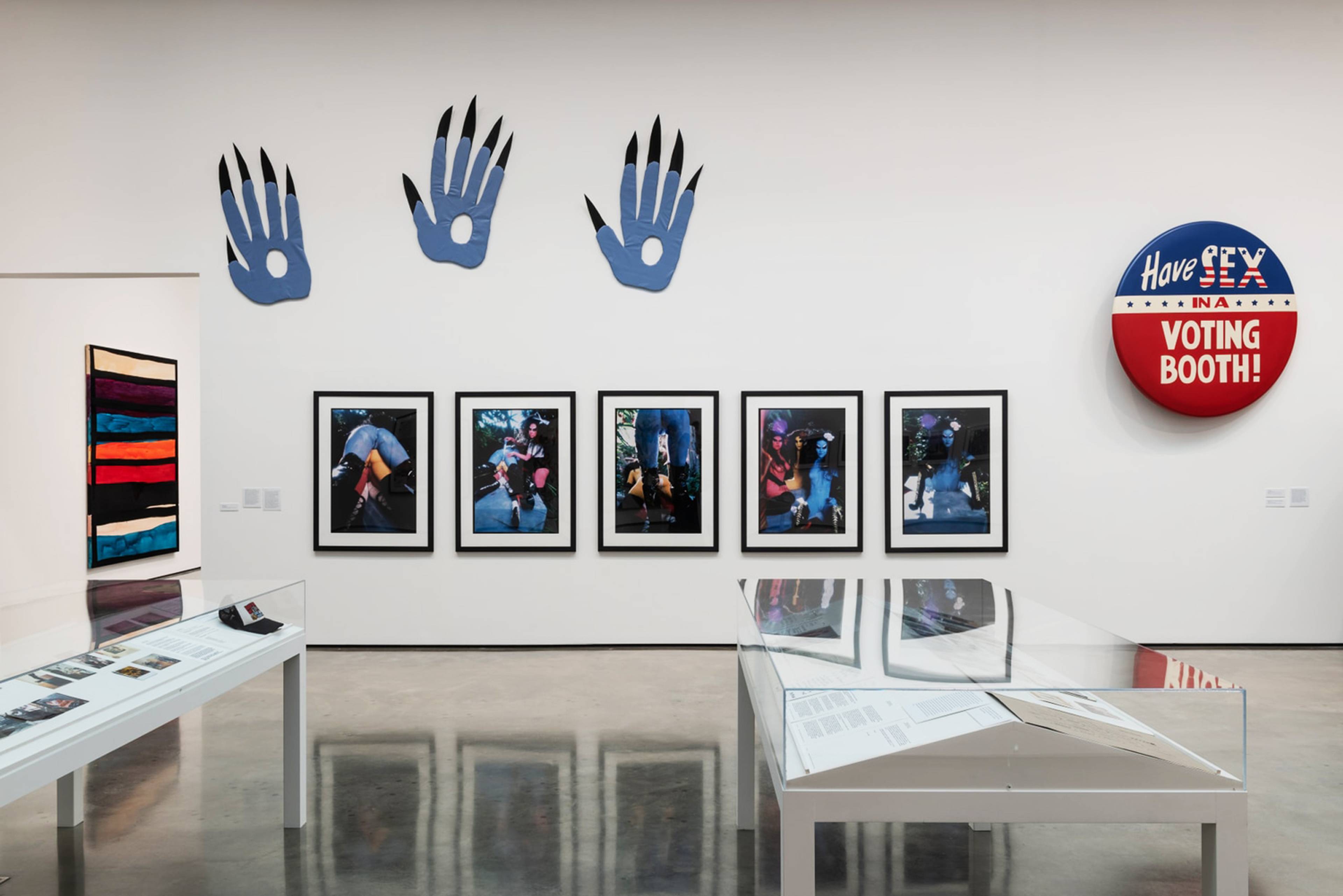
View of “The Conditions Of Being Art: Pat Hearn Gallery And American Fine Arts, Co. (1983-2004),” Hessel Museum of Art, Center for Curatorial Studies, Bard College, Annandale-on-Hudson, 2018. Photo: Chris Kendall
This is not new to 2025, but something that has kept looping back in conversations. I'm thinking of the strange situation where so many institutions dedicated to teaching, presenting, conserving, and discussing art seem to have become deeply distrustful of art itself. At a time of funding cuts and growing suspicion of contemporary practices, there has been increased pressure to deliver on values one might not really believe in, but I think giving in to that only adds to the atmosphere of alienation in the end. Here, I have to mention The Conditions of Being Art, a remarkable book dedicated to a pair of New York art galleries run, between the early 1980s and the early 2000s, by Pat Hearn and Colin de Land, that’s been a bulwark against disenchantment in my own thinking. It serves as a powerful reminder that commitment to art can still be coupled with a grappling with conditions that might make our work, our lives, and the arts’ survival difficult. The history of their exhibition-making demonstrates that criticality can be paired with curiosity, that conviction and voice do radiate, and that pleasure and humor are contagious, too – these are qualities that we also need effort and dedication to protect.
___
VALENTINAS KLIMAŠAUSKAS
Director, Contemporary Art Centre, Vilnius
👎 Our political procrastination
We procrastinated for peace while ignoring that wars – hybrid, cold, hot, class, culture, (dis)informational, genocidal, etc. – are already happening. We procrastinated for peace and received another year of steady, downgrading political inertia and delay. We procrastinated for peace, perpetually disappointing our allies, alienating and fragmenting ourselves even more.
Divided by continuous polarization on both global and cellular levels, we found ourselves unwilling to identify our goals and to take responsibility for our future. We procrastinated for peace and forgot to have a face, vision, and identity. The Trump administration did it for us. They defined us as being in “the more stark prospect of civilizational erasure.” They proposed to us the cheering of “the growing influence” of the far right, which is being presented as a solution to our problems.
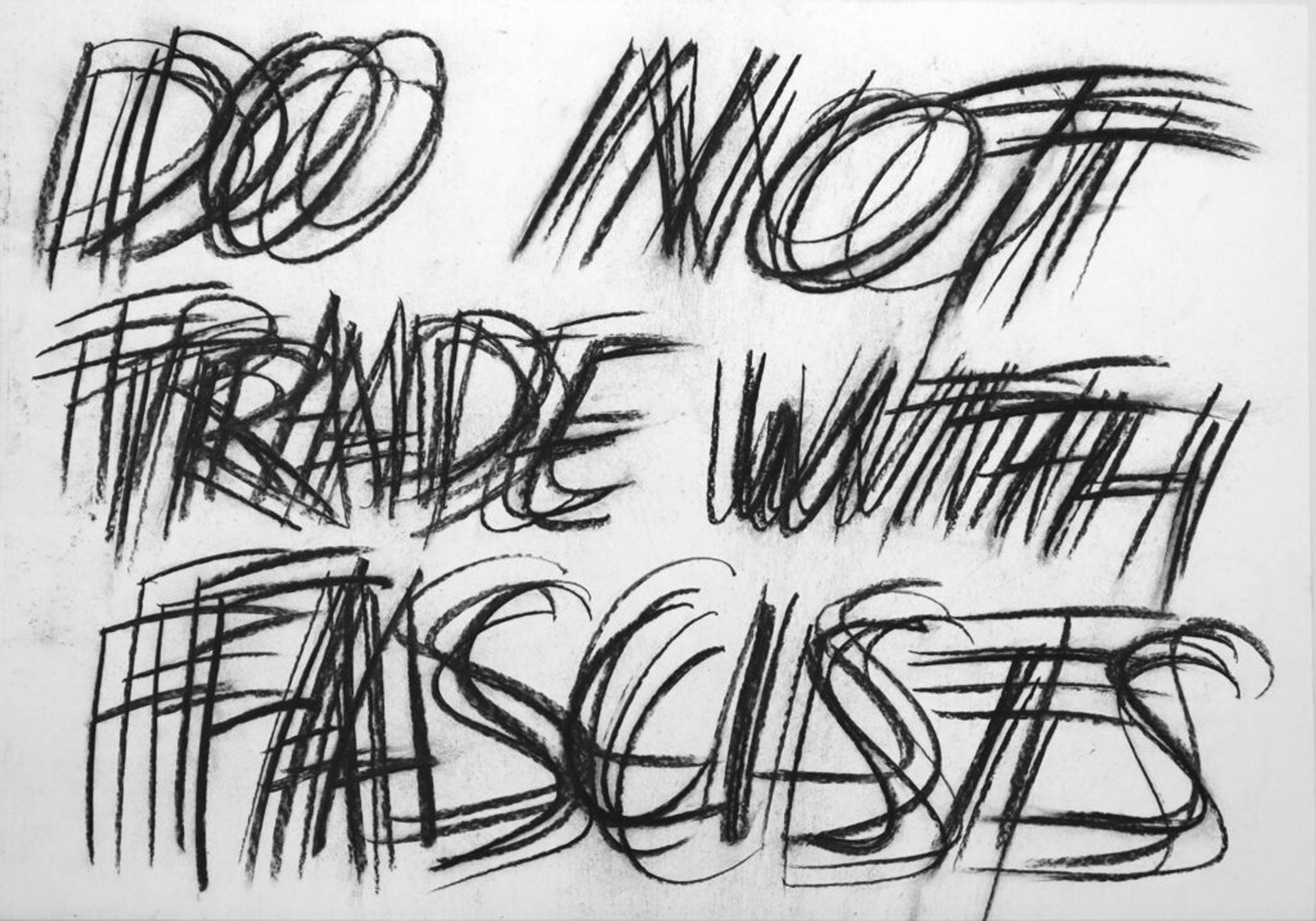
Nikita Kadan, Do Not Trade With Fascists, 2024, charcoal, 70 x 100 cm. Courtesy: the artist and Galerie Transit, Mechelen
We procrastinated for peace but received the right-wing DeepDream politics, wrapped in so-called chaos packaging, styled in post-robotic aesthetics. We procrastinated for peace while continuing to work on softening the exhibition texts and reviews, and waited for social media likes on our exhibition documentation. Selecting the annual ranking of the most influential people in art. Applying, even more now, for decreased funding. Fighting in the comments section while sipping drinks at the sponsoring events.
Looking back, it feels as if we chose comfort over autonomy. We took the path of least resistance. Well, most of us Europeans, not just as citizens, but also as cultural producers: artists, critics, curators, etc. We massively failed, and we still procrastinate in understanding the consequences on continental and global levels.
👍 Live vs art
More for worse than for good, life finally became “more interesting” than art. The current Realpolitik seems to include an unheard-of appetite for change in brutality, scale, and form, as well as for disinformation, lies, or fiction.
And this is why special attention should be given to artists coming from or representing realities and countries in war, occupation, sites of genocide, constant bombardment, or other forms of brutal assault.
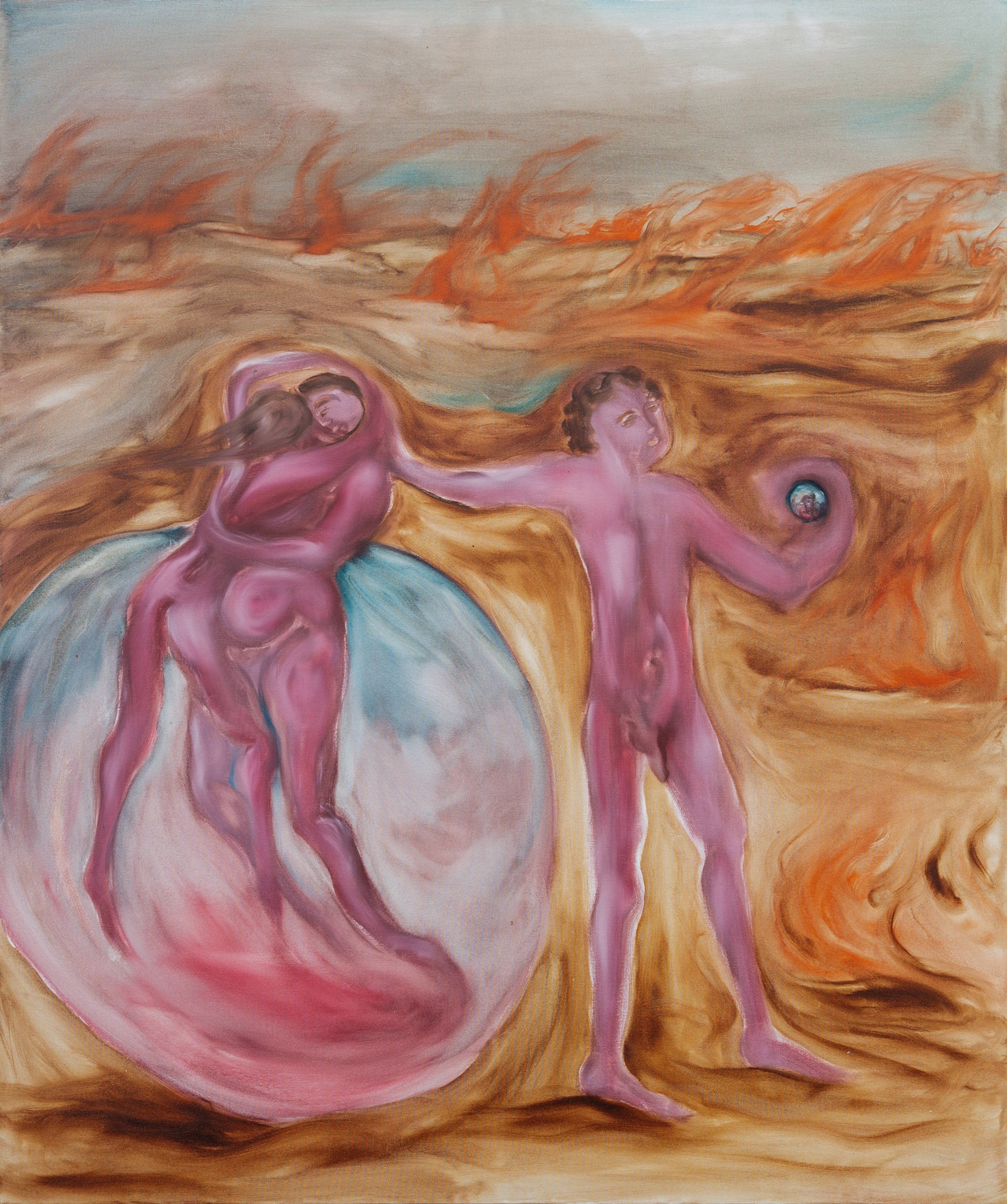
Sana Shahmuradova Tanska, On Reinforced Ambiguity of Personal and Collective Borders, 2023, oil on canvas, 160 x 134 cm. Courtesy: the artist and Gunia Nowik Gallery, Warsaw
Just to mention a few, whom I was following with sincere respect, utter fascination, sometimes with tears in my eyes, were a series of paintings that refer to intergenerational trauma by Sana Šahmuradova-Tansk (from “House of See-More”, Survival Kit 16, Riga, to “Bells and Cannons. Contemporary Art in the Face of Militarisation” at the CAC, Vilnius, to “The Rapture” at MOCAK, Kraków) or haunting images of lost Palestine by Basel Abbas and Ruanne Abou-Rahme (from Kaunas biennial in Kaunas, to Kyiv Biennial at the nearly built Museum of Modern Art in Warsaw). Besides changing cultural and other landscapes through acts of aggression, the theme of ancestrality is also present in the “Our songs were ready for all wars to come” video (2021) by Noor Abed, which has already travelled through many exhibitions. It was a hypnotising séance to rewatch it at the Amos Rex cinema in Helsinki during the Positioning curatorial symposium.
A film “Special Operation” (2025) by political filmmaker Oleksiy Radynski uses only raw footage from the CCTV cameras of Russian forces taking control of Chornobyl, the site of a nuclear catastrophe. One known scene of the 2022 invasion of Ukraine is the Russian military occupation of the heavily contaminated “Red Forest”. The army was not just kicking up radioactive dust, but also digging trenches there. The film is a stark reminder of the brave new world that we live in, entrenched by stupified MAGAs, opaque algorithms and various other hybrid and not that Special Operations.
👎The effect of art on contemporary politics
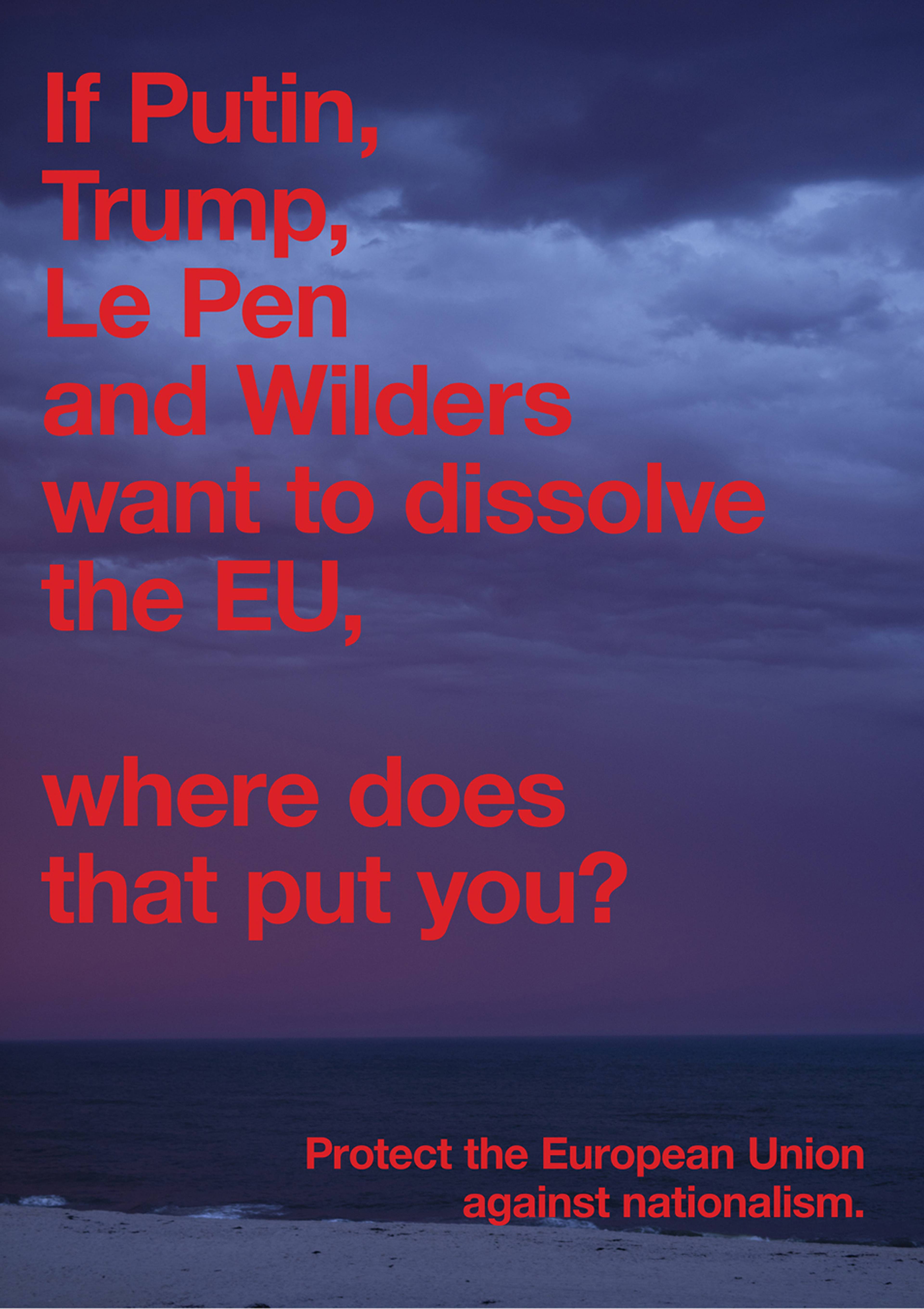
Jop van Bennekom, Gert Jonkers, and Wolfgang Tillmans, “Protect the European Union” poster, 2017
Arguably, Wolfgang Tillman’s solo exhibition at the Centre Pompidou in Paris, before it closed for renovation, was anything but beautiful. It was delightful, multi-functional, meaningful, complex, revealing a variety of technologies, machines, methodologies, and the aesthetics of image-making and display. It showed how extremely productive the artist has been, among other things.
But this post is about something else. Tillmans is also known for his political campaigns that included “European Elections 2024”, “Protect the European Union” in 2017, and a pro-EU / anti-Brexit campaign in 2016. Looking at them in the exhibition, one could consider them fascinating historical documents proving that some artists have found a meaningful way to participate in our social and political lives. However, it also raised the obvious elephant-in-the-room question. Living in the era of postBrexit and the second MAGA+, how vital is contemporary art to contemporary politics? Do we, art producers, only make objects that stay as more or less expensive souvenirs of the era lost, as mementos of some political naivete, or do we actually have some, even minimal amount of power?
👍 The Lithuanian Cultural Assembly and International Forum of Democratic Resistance: “How to Jump from the Boiling Pot?”
The self-organized Lithuanian Cultural Assembly represents various governmental and non-governmental cultural sectors and Lithuania’s cultural community. It was spontaneously established in response to the formation of a new coalition government that also included the populist political project Nemuno Aušra, with its somewhat antisemitic, pro-Russian, and anti-Ukrainian leader.
The coalition government made a few obvious faux pas that upset the cultural community and beyond. First, an incompetent minister from the somewhat brownish party was appointed to the position of minister of culture. He could not answer the question “To whom does Crimea belong?” and gave a couple of tearful performances, which made him last in his position for only a week.
Logo for a petition organized by the Kultūros Asamblėja in Lithuania
While I’m writing this text, the coalition is about to fire the director of the National television and change the general rules regarding the TV's autonomy, its board, and its programming.
These and other actions and comments of the coalition led the Lithuanian Cultural Assembly and journalists to believe that our country is seeking the so-called path of Orbanization or undermining democracy and its institutions. Accordingly, the International Forum of Democratic Resistance, “How to Jump from the Boiling Pot”, was organized with guests from Georgia, Moldova, Hungary, and Slovakia – countries where the “boiling” process is already accelerated and from whom we may all learn a lesson or two.
The Assembly and the movement are being joined by various other sectors, which, even at this not-so-bright hour, give hope that a more democratic reaction and solidarity are possible even in what looks like a deeply polarized society
___
ANDREW PASQUIER
Writer and chief editor, BUTT magazine
👍 Children of Khan
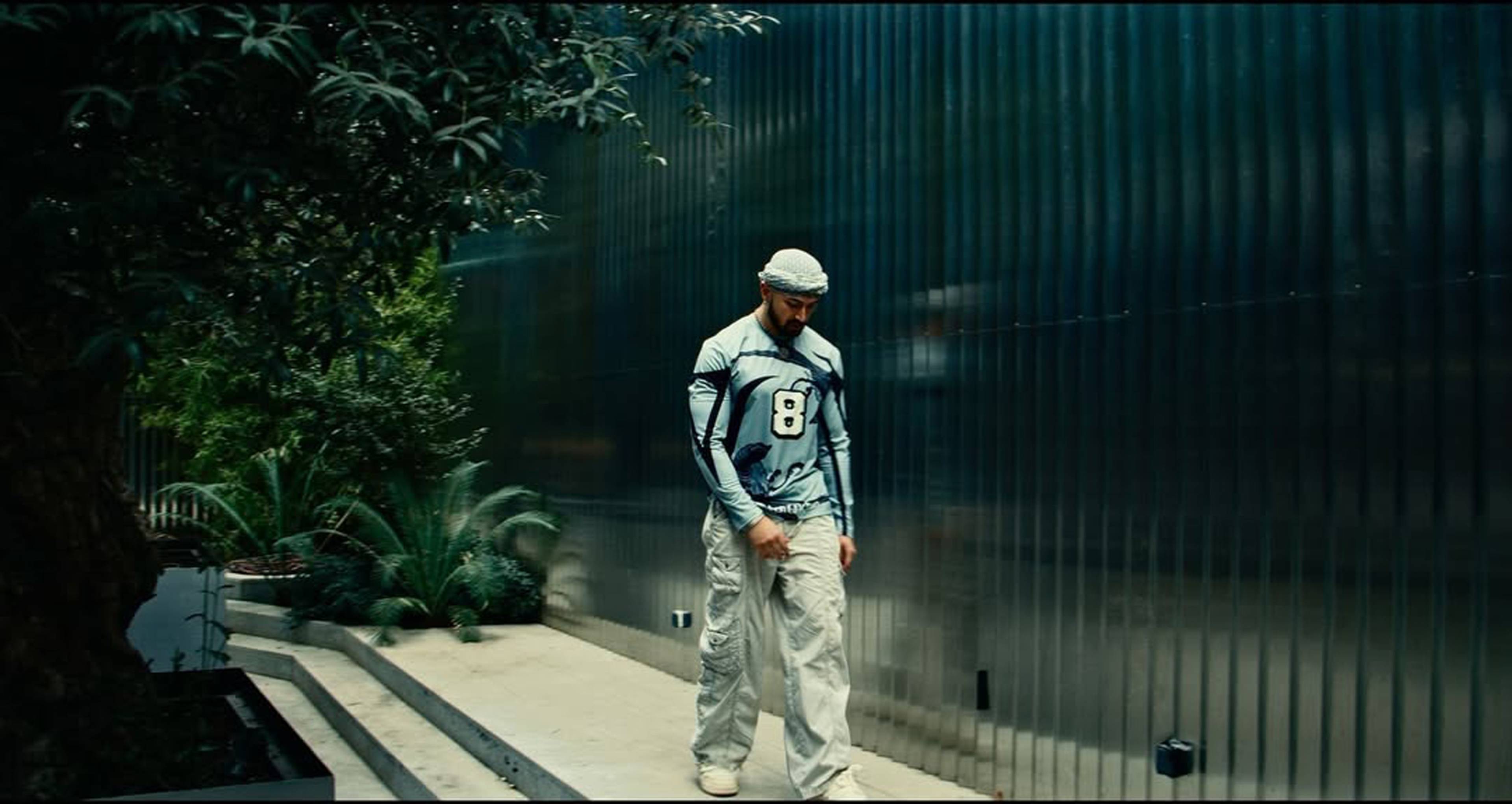
@lucamaxiim wearing the grey Infinity Jersey from Children of Khan
In the annals of AI slop, I rarely find such high-quality, twist-the-knife-of-discourse gold as Children of Khan. According to the site, it’s a “narrative-driven apparel brand that merges lore, memes, history, music and fashion.” Every video begins with a bonkers fact, such as “It’s hard being a Greek Soundcloud Rabbi in Mamdani’s New York.” This is a world where identity politics has so spun out of control that you feel like you’re living in the here and now. Woke is back, and for some reason you’re supposed to buy t-shirts from a mysterious Azerbaijani sportswear company called Children of Khan. According to their site: ‘WE’RE PLANNING SOMETHING BIG.” Naturally, there’s more than your average amount of bizarre history-play about Turkish nationalism, as well lots of other third-rail subjects that get under the skin of global nationalisms. One recent video began, “You know you’re cooked when you have to scroll back a couple reels to remember what you wanted to do.” Actually, yes. For all people who enjoy keeping a finger on the pseudo-ideological pulse, I implore you to follow @lucamaxiim
👍 “Nous autres,” LE BAL, Paris
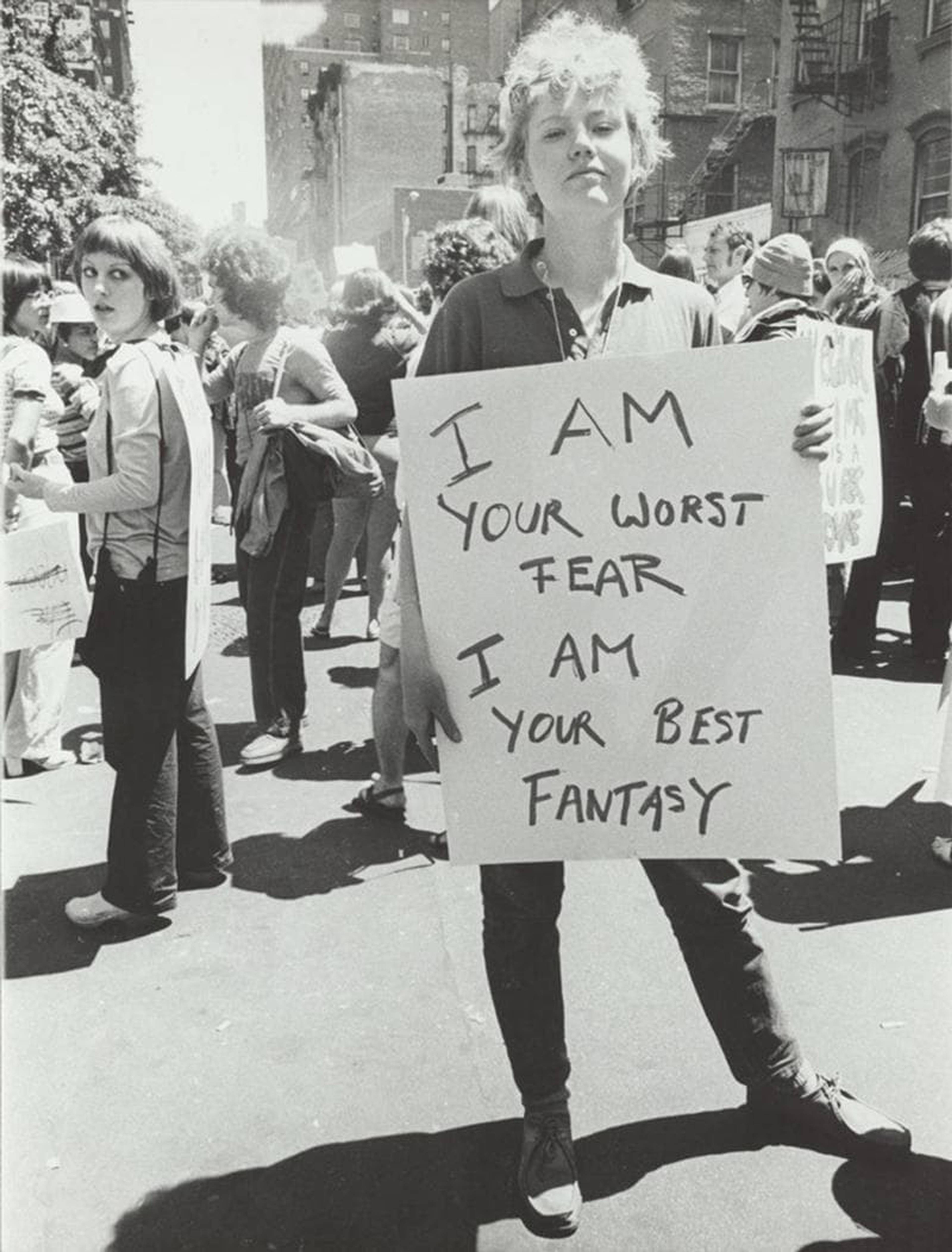
Donna Gottschalk holds a poster reading “I AM YOUR WORST FEAR I AM YOUR BEST FANTASY” at the Christopher Street Gay Liberation Day parade, 1970. Courtesy: the New York Public Library Digital Archives and Manuscripts. Photo: Diana Davies
This tender, multi-perspective photography exhibition at LE BAL in Montmartre brought me to tears. The main protagonist, Donna Gottschalk, grew up in Alphabet City as a baby dyke with a camera in the heady years after Stonewall. Her breathtaking documentary photography of her underground queer companions and lovers collected dust for decades until 2018, when a smaller selection was first show at the Leslie-Lohman Museum of Art in New York. Hélène Giannecchini, a young French curator, gained Donna’s trust and friendship, reassembling with uncommon poignancy Donna’s life story from childhood, through the AIDs crisis, the unresolved homicide of her trans sister, and into old age. In another room appeared self-portraiture by American photographer Carla Williams. For years, Carla had been inspired by a photograph of Donna taken at the first Christopher Street Gay Liberation Day parade in 1970 in which she holds, with a smirk, a placard stating “I AM YOUR WORST FEAR, I AM YOUR BEST FANTASY.” Carla had no idea that the woman in the image – which she kept pinned up at home for decades – was Donna, let alone that they would ever meet and show work together. The exhibition was exquisitely installed, with Hélène’s cascading wall texts given near equal importance to the photography. Rather than curatorially overbearing, the intergenerational dialogue between these three queer women felt essential.
👎 The New York Post’s Zohran coverage
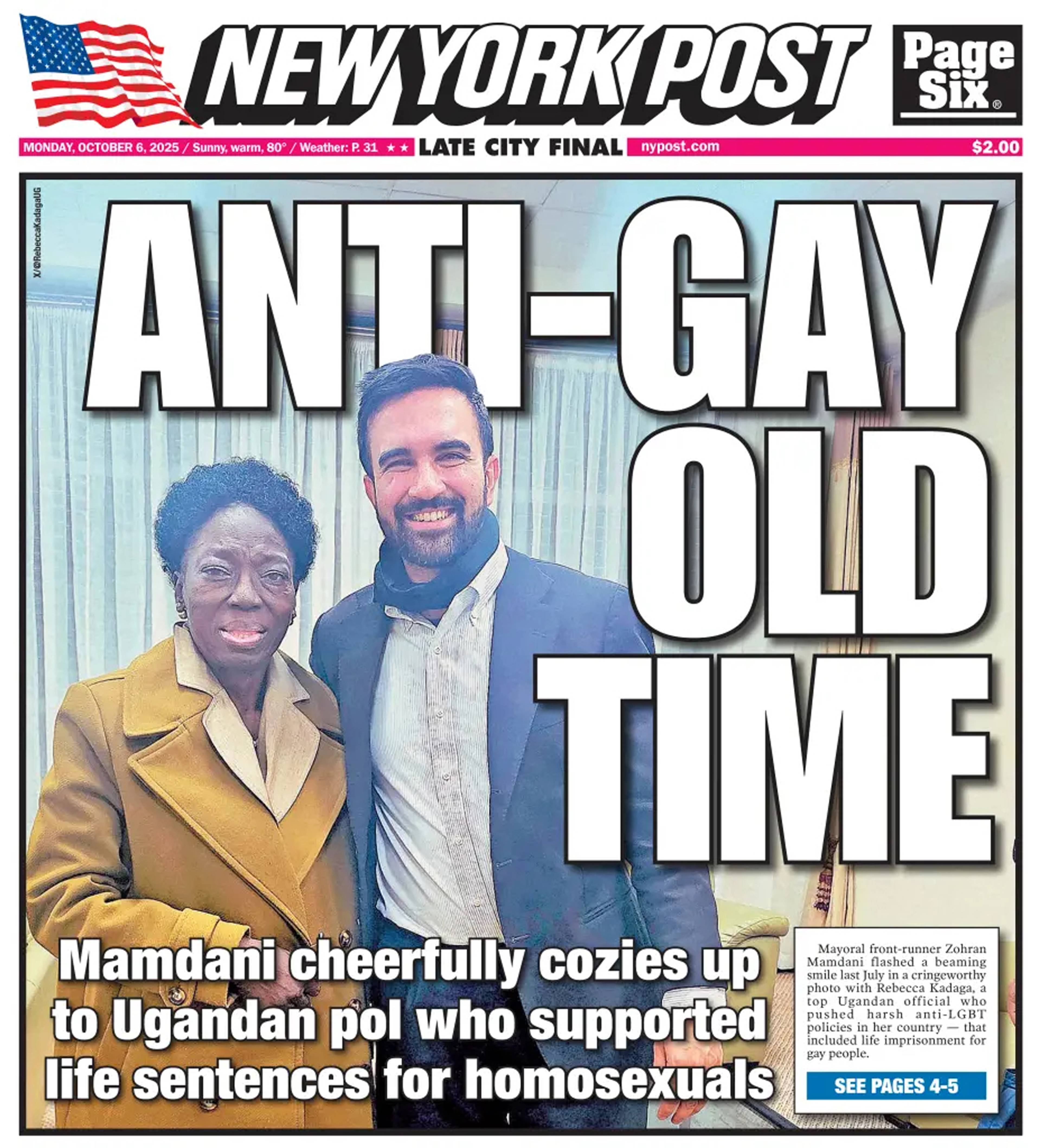
Cover of the New York Post, 6 October 2025
They tried everything. The more Zo’s star rose, the more inane and insane the Post’s coverage became until the tabloid’s own headline writers seemed, in the spirit of unhinged self-awareness, to let the bemused public in on the joke. The zenith came when Mamdani went back to Uganda in August to see family, and every statement he made during his week there was zealously back-ended in the Post with “… says Mamdani, from his compound in Uganda.” The new Mayor was amused, posting a video the same week offering headlines, “inshallah on the front page,” to the Post such as “UGANDA MISS ME” or “HE’S KAMPALA-ETELY CRAZY.” I’m just annoyed none of the five friends I asked could score me the “ЯED APPLE” front page after his victory. Now that’s art.
👎 Trump’s Big Beautiful Ballroom

An excavator clears rubble after the demolition of the East Wing of the White House in Washington, D.C., October 2025. Photo: Eric Lee/Getty Images
If you’re going to fuck up the most famous house in the world, at least warn people so they can save the date for the demolition party, or pop popcorn for the livestream. Or better yet, have five seconds to rally NIMBYs and architecture lovers. For a reality TV show trained tyrant, it was poorly dramatized and sure to be fugly.
___
JULIA SCHER
Artist
👍 Renée Greene, “The Equator Has Moved,” Dia Beacon
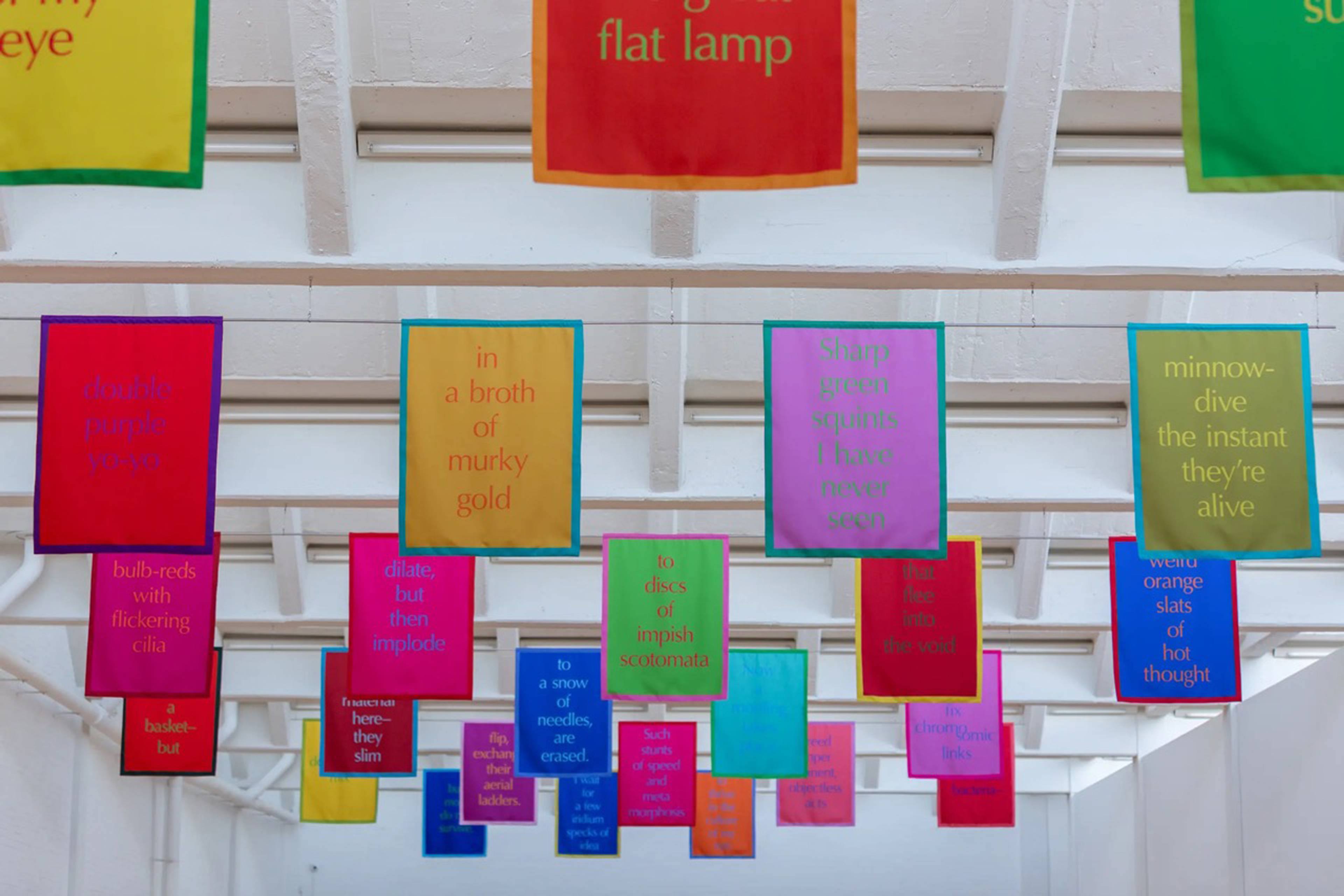
View of Renée Greene, “The Equator Has Moved,” Dia Beacon, 2025. Courtesy: the artist. Photo: Mollie McKinley, Bill Jacobson Studio
The idea of far and away, of near and far, an equator with remarkable polar vortices.
The corridor is a navagatable boom. As if sticking out of a ship of state. To critique, to analyze, to find us, to learn.
A cosmos in directional attributes using signs, symbols, architecture, and time to walk or meander or wheel thru. An extravaganza of meaning breezily floats overhead.
Mobility of the mind, over time, in the language of combinations in the feast of color and no color slots and ribbons of thought along the way.
Timeframes shoot thru your viewing perspective and then are again bisected.
A splitting, then a coming together, something vast, something beyond “exploration and annexation” itself.
Video caverns, a floor plan of indexing, the diagram as a lighted video sphere.
👍 Beeple, Regular Animals at Art Basel Miami
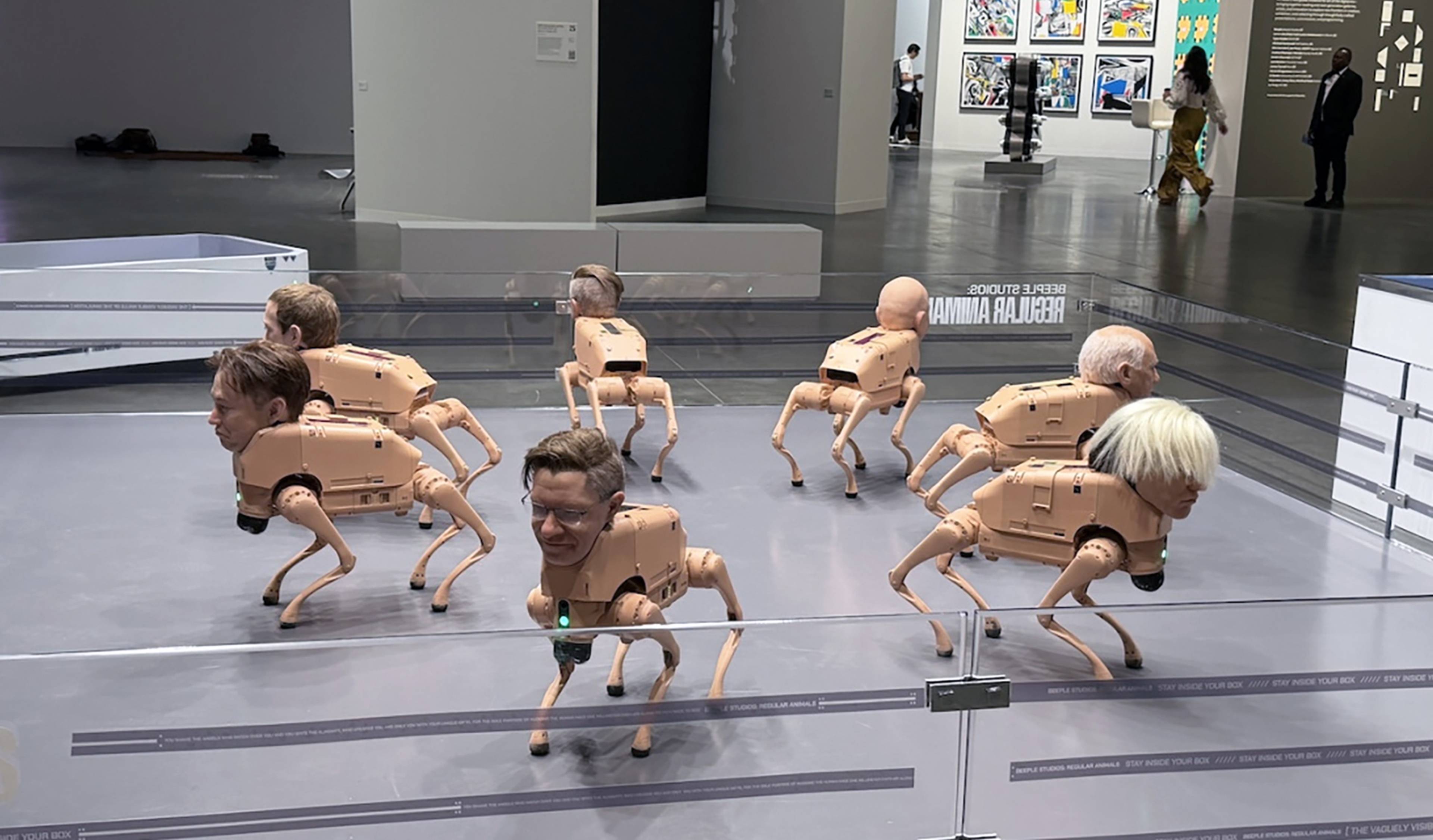
Beeple, Regular Animals, 2025. Installation view, Art Basel Miami Beach. Courtesy: the artist
The drug of robotic technology, like snow, falls into us and into our visual vocabulary.
To appear and then disappear to re-emerge again. Over and over the repetitions become a new language.
There are no ditches to fall into here, only our older languages and ways of experiencing. Finding a path thru is not necessary, you are all there in one bite.
Pin-up features of techno bros plastered across the plastic bodies of diggies.
They are programmed to turn on us, to shit out photos of us and the room they inhabit, and to blow away with our old way to recognize noses and jaws. Pieces of paper placed as mad-cap frontage of a plastic electronic toy. Mobile body facsimiles as fun, glimmering in the light of the exhibition. Cameras attached as the heart of the so called robotic vehicles. And all.
I lost my train after all this robot stuff.
Thought.
👎 The death of Bill Horrigan
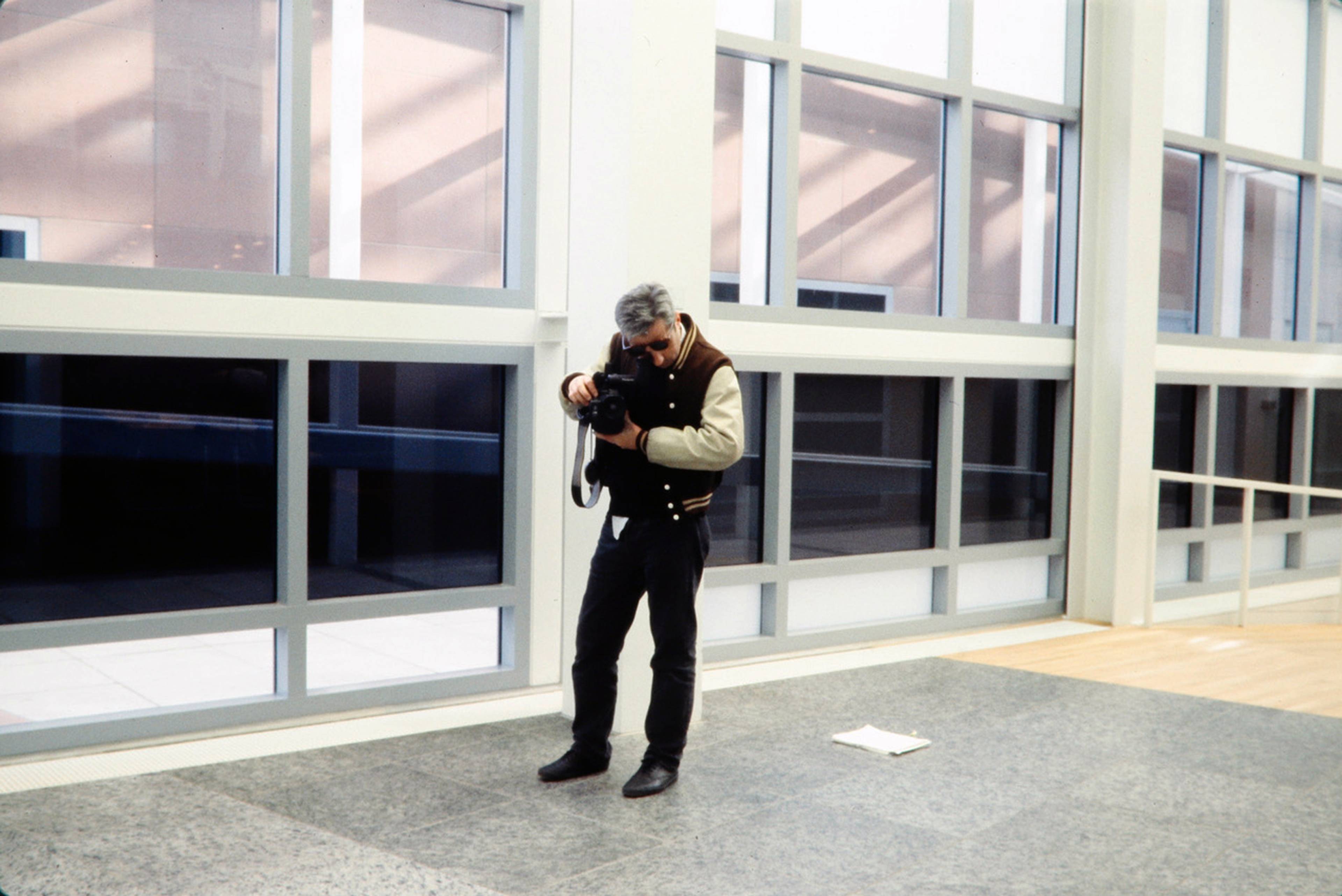
The late Bill Horrigan
A witness, a doer, a writer, a curator, a thinker, a Doctor of Film, a visionary, a creative, and a mindful human. Bill Horrigan, who co-curated the Video Against AIDS program screened at dozens of institutions during the inaugural Day With(out) Art in 1989, was a risk taker with a rights-based sense of justice.
A man of deep empathy, he forged away, throughout his life, a force so strong, one cannot forget it.
👎 My art studio was robbed
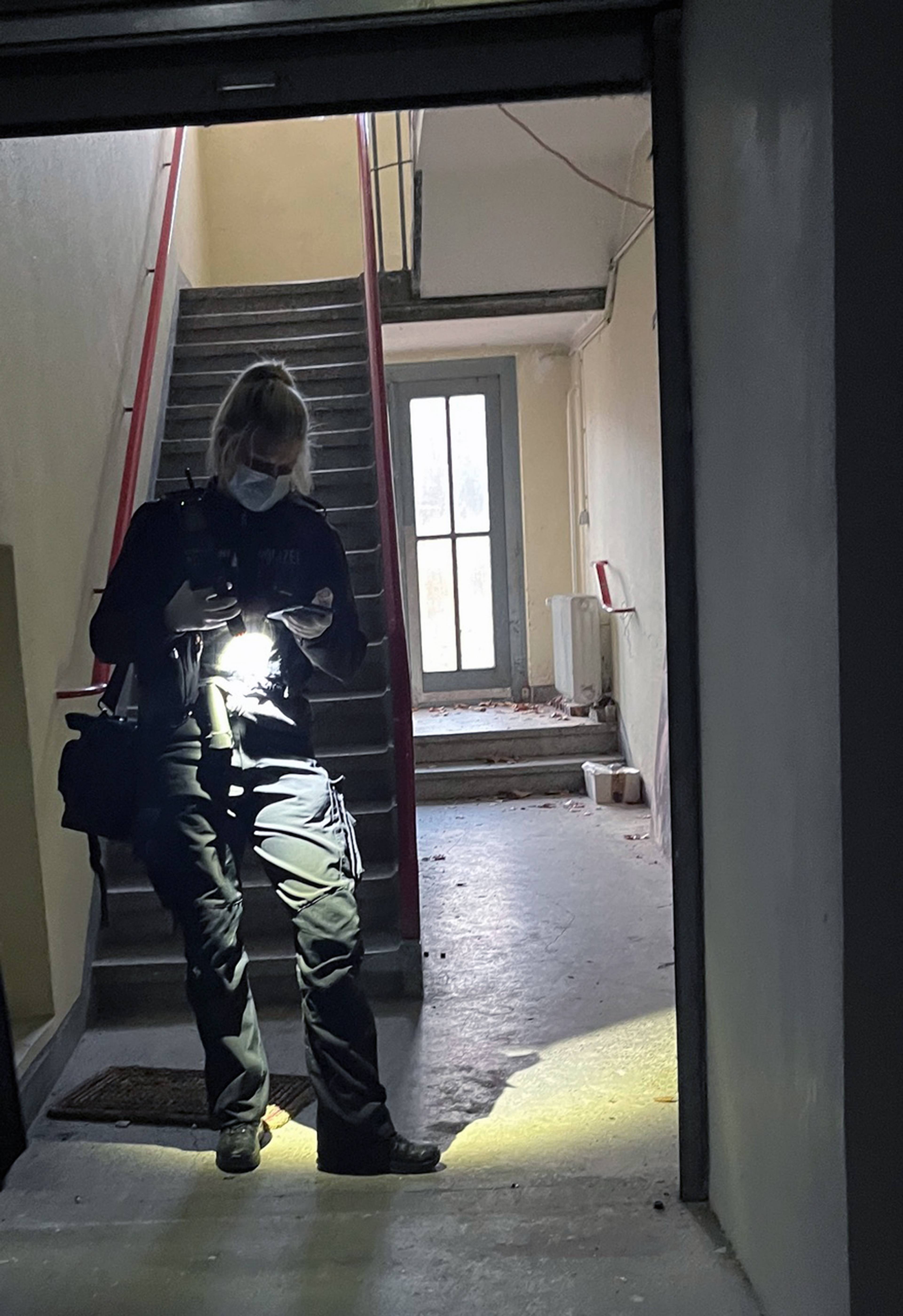
A police officer at artist Julia Scher’s studio, Cologne
Someone took all the electrical wiring, my drill, and four surveillance cameras.
___
ROBERT SCHULTE
Director, Julia Stoschek Foundation
👍 Lynn Hershman-Leeson, Private I: A Memoir (ZE Books)
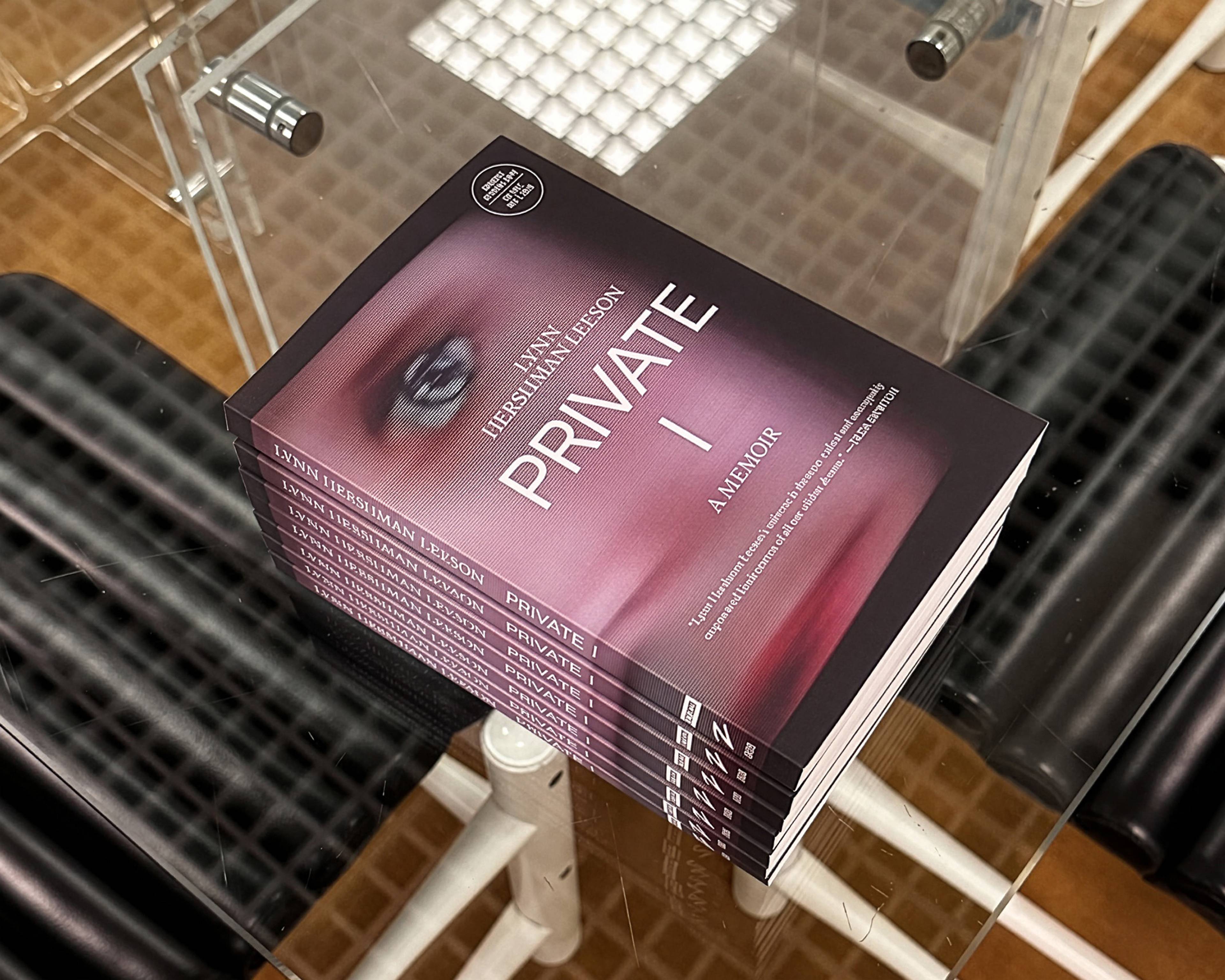
Lynn Hershman-Leeson, Private I: A Memoir, 2025. Courtesy: ZE Books
Lynn Hershman-Leeson writes about her life’s work with unruffled, matter-of-fact clarity. In plain main clauses, she almost casually straightens out the injustices that hit her as a rule, and so consistently that they look like the only institutional infrastructure she was ever given – only in negative. What she wrung from that is so improbable that this memoir reads like fiction.
👎 Joanne Robertson, Blurrr (AD 93)
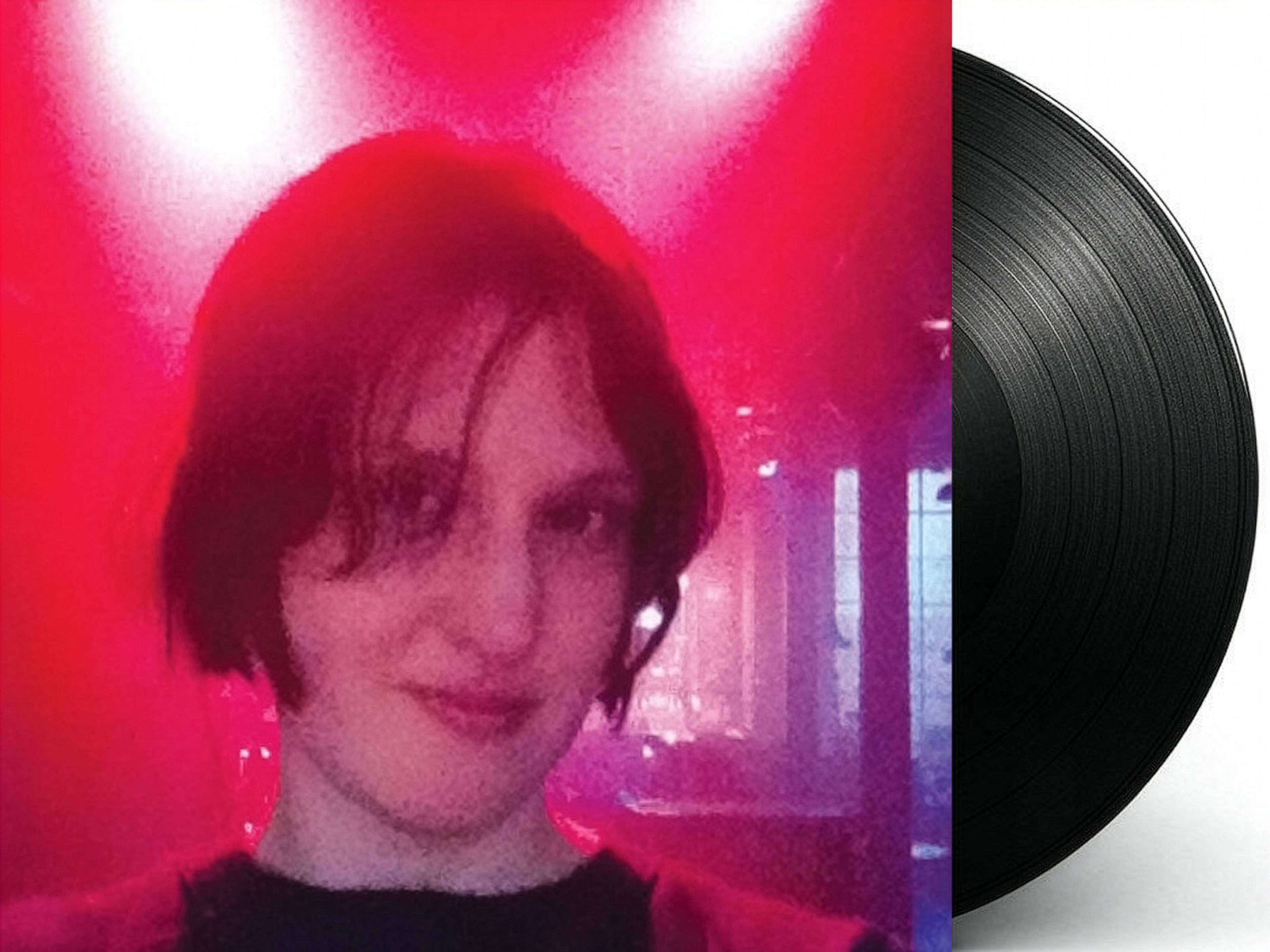
Joanne Robertson, Blurrr, 2025. Courtesy: AD 93
Placeholder for a certain Boomkat-featured album type that defined the 2025 sound in indie music: folk and jazz references felt mandatory, ideas less so. Luckily we were spared another HTRK album this year. Blurrr, given the amount of praise it's pulling, ends up representing 2025 in the most boring way. Xexa’s Kissom, for example, does the opposite for me – a genuinely 2025 record.
👍 Ones and Tooze (Foreign Policy)
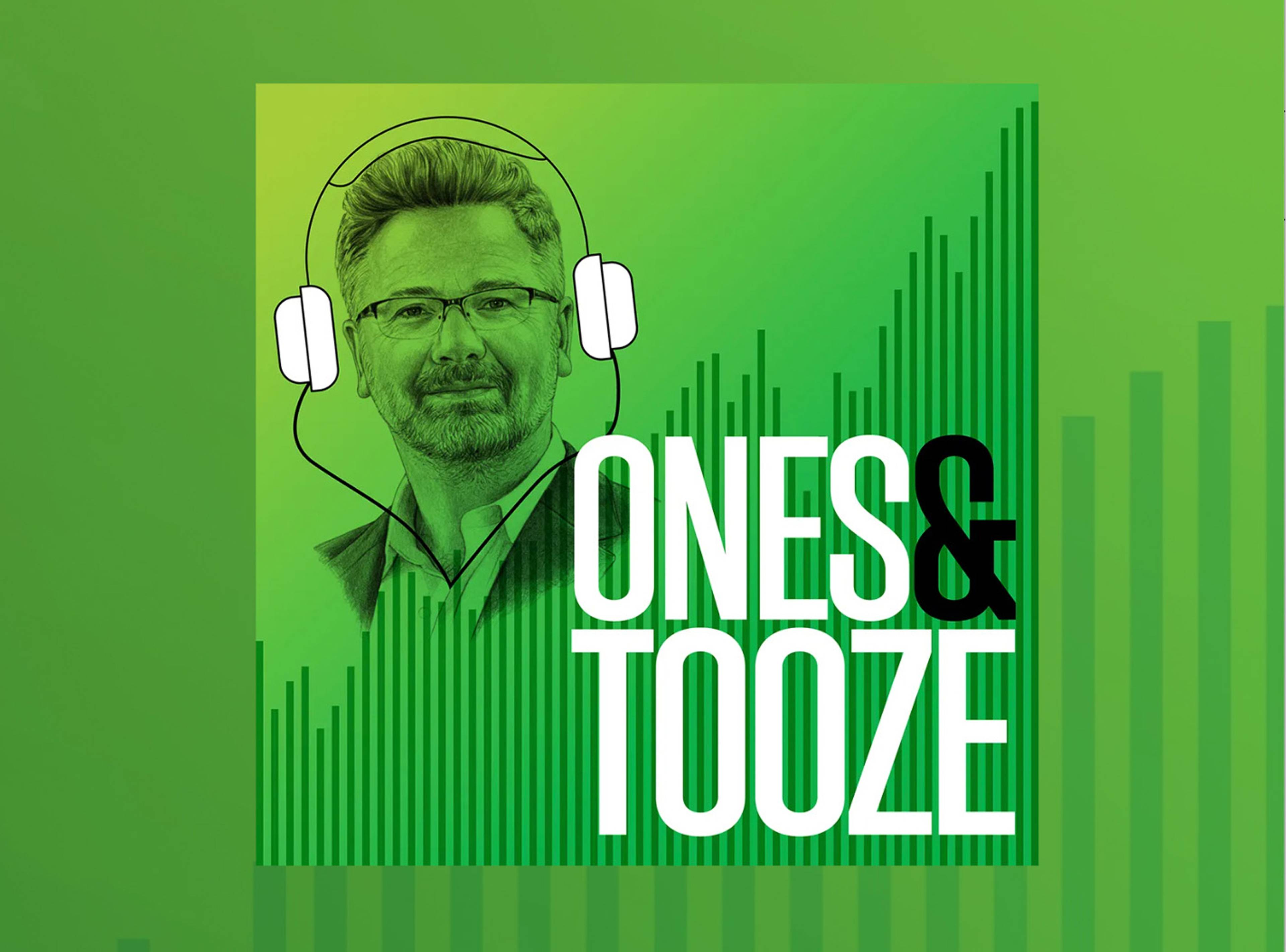
Ones and Tooze. Courtesy: Foreign Policy
Economic historian Adam Tooze pressure-maps the present through two data points a week: an interest-rate move that spills into rents and elections, a shipping disruption that turns into higher supermarket prices, a jobs report that reappears as wage fights on the ground. In 2025 that matters because it's a case of numbers being made to work for a left politics – used to surface power and fragility in the system rather than to naturalize it.
👍 Ima-Abasi Okon, “Incorporeal hereditaments like Love [can] Sets) You Free, according to Kelly, Case, Dru Hill, Kandice, LovHer, Montel and Playa with 50 - 60g of -D,Je,l,a,,e,d 1; -O,)n,s,e, t2; - ;[heart);M,Ju,s, c,1, e3;[heart);-s,Jo,r,e,n,e,s,$4,” Van Abbemuseum, Eindhoven
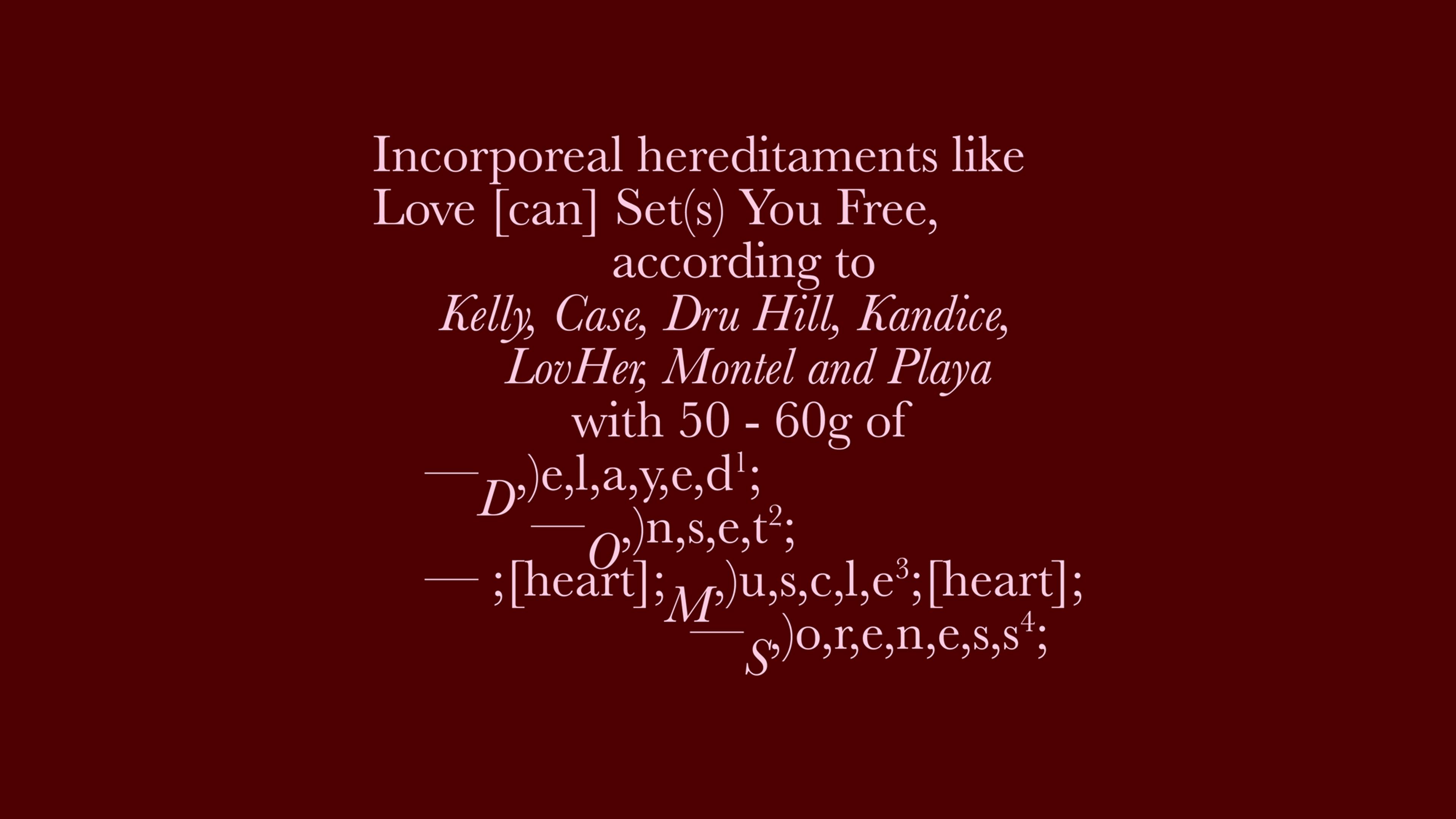
Graphic for Ima-Abasi Okon, “Incorporeal hereditaments like Love [can] Sets) You Free, according to Kelly, Case, Dru Hill, Kandice, LovHer, Montel and Playa with 50 - 60g of -D,Je,l,a,,e,d 1;-O,)n,s,e, t2; - ;[heart);M,Ju,s, c,1, e3;[heart);-s,Jo,r,e,n,e,s,$4,” Van Abbemuseum, Eindhoven, 2025
Best show I've seen this year. Halfway through you had to crouch and crawl under office- ceiling panels to reach the other side — where the show starts again in reverse, a mirrored replay of the first half, so you walk it back through as if the exhibition had folded in on itself. I particularly liked the two wooden boxes with the spinning belt, which created a beautiful sound that filled the room.
👎 Margiela mouthpieces
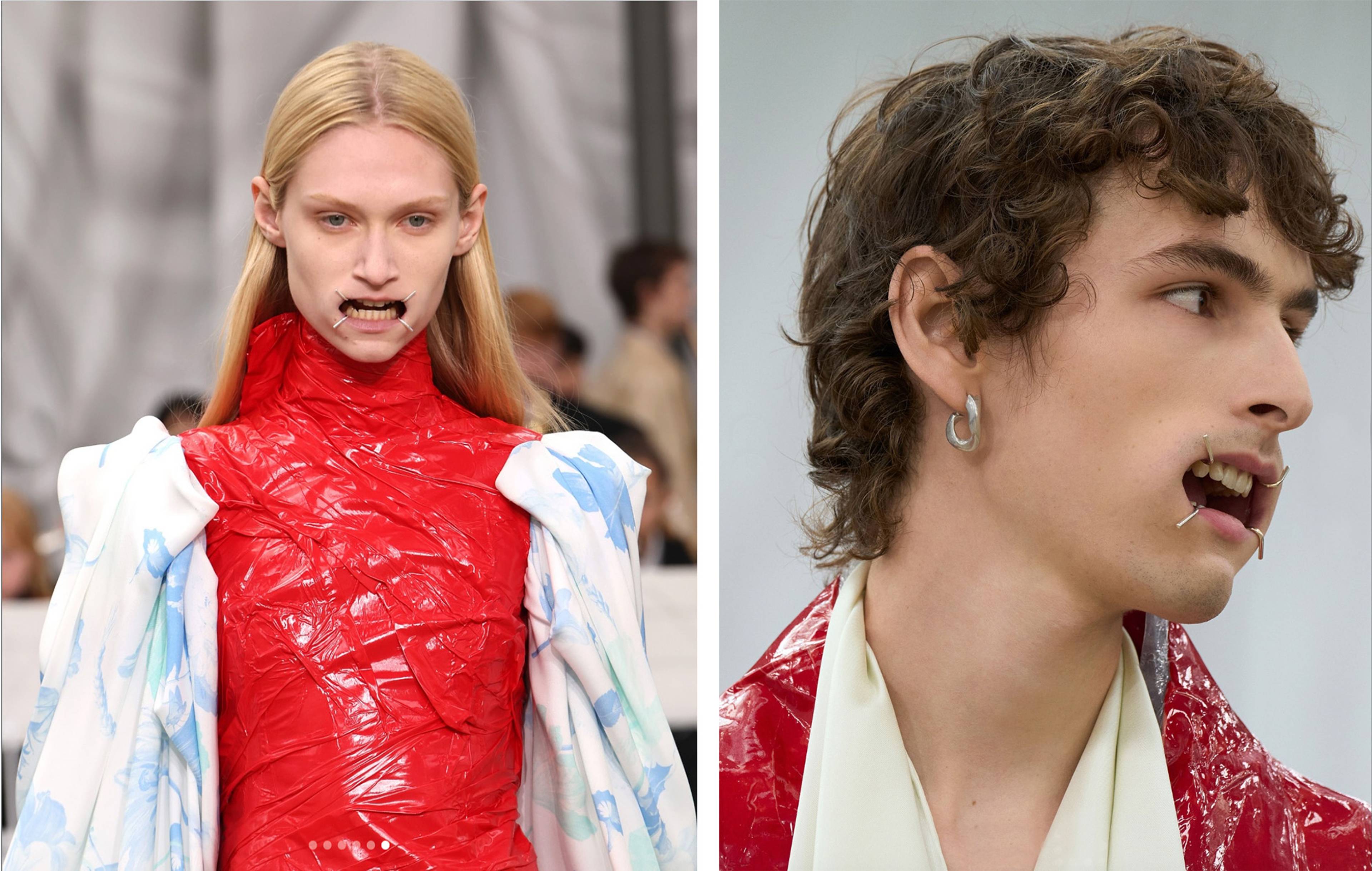
Margiela S/S 2026 by Glenn Martens, Paris Fashion Week
The laziest concession to image-making in an otherwise solid first ready-to-wear show for Glenn Martens at Margiela. Full-on tabification. Dior Men's Spring/Summer 2026 did much better without any of this, precisely by ever so slightly transcending the mundane.
👍 Jonnny Trunk
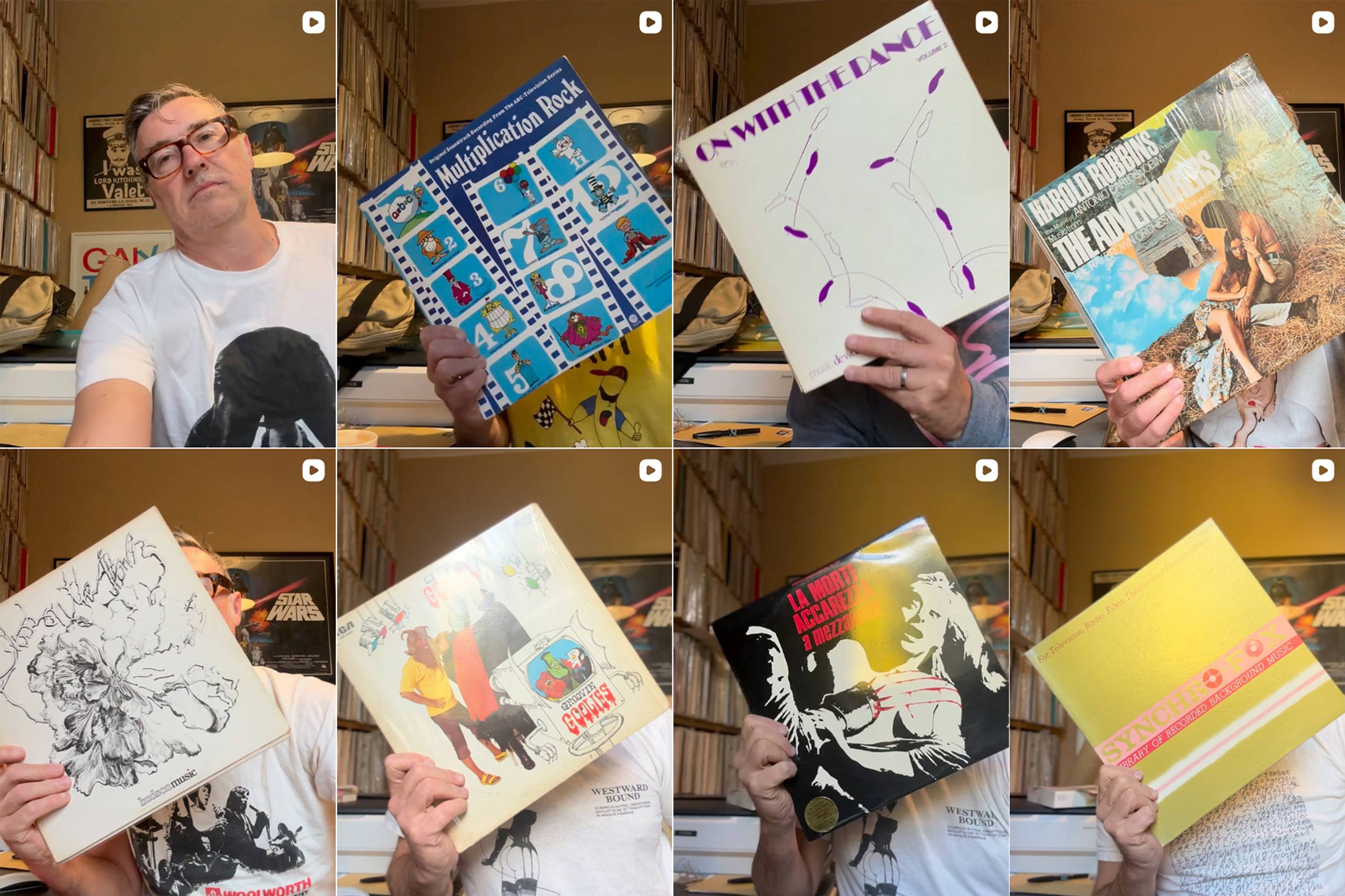
Screenshots from @jonnytrunk
There are loads of Instagram channels presenting records in some kind of reel friendly format. This one is actually good. Jonny Trunk pulls out these oddities and threads them through personal stories, bits and pieces of UK digger-community history, and actual music criticism - all delivered in a very comedic way. If you're not into any of that, it's worth watching for the sheer chaos of his facial expressions while the records play.
___
DORIS UHLICH
Choreographer and performer
👍 “Oliviero Toscani: Photography and provocation,” Museum für Gestaltung Zürich
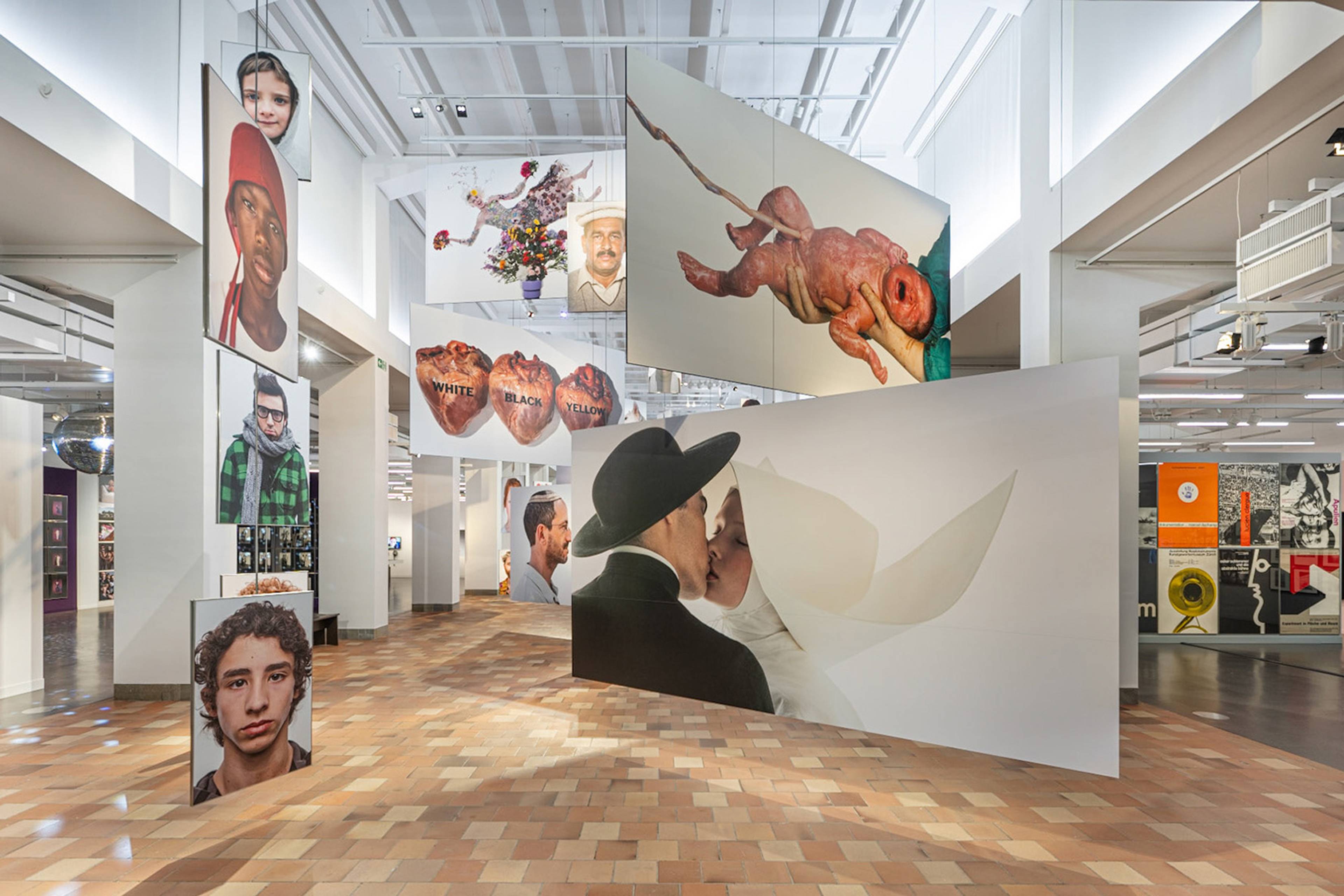
View of Oliviero Toscani, “Photography and provocation,” Museum für Gestaltung Zürich, 2025
As my eyes wandered around the rooms at “Photography and Provocation” at the Museum für Gestaltung Zürich, not having seen Oliviero Toscani’s pictures for a long time, it felt like meeting old friends again. I kept discovering new images in idiosyncratic arrangements and dynamic relationships, in a clarity of visual language I found impressive. I encountered again the blood- and mucus-smeared baby with the umbilical cord; the baby with light skin on a dark-skinned breast, the kissing nun and priest, the family at the deathbed of a US activist suffering from HIV/AIDS. Many of the motifs were previously familiar to me from advertising (Benneton), and I always viewed them with mixed feelings. But what’s so clear to me now is Toscani’s deep interest in people, as well as his preoccupation with issues that are as relevant today as they were back then and will probably still be tomorrow. It is encouraging to see that good work survives hype and fads, especially work that can sustain the tension between provocative representation and empathy for sensitive topics.
👍 Guter Stoff
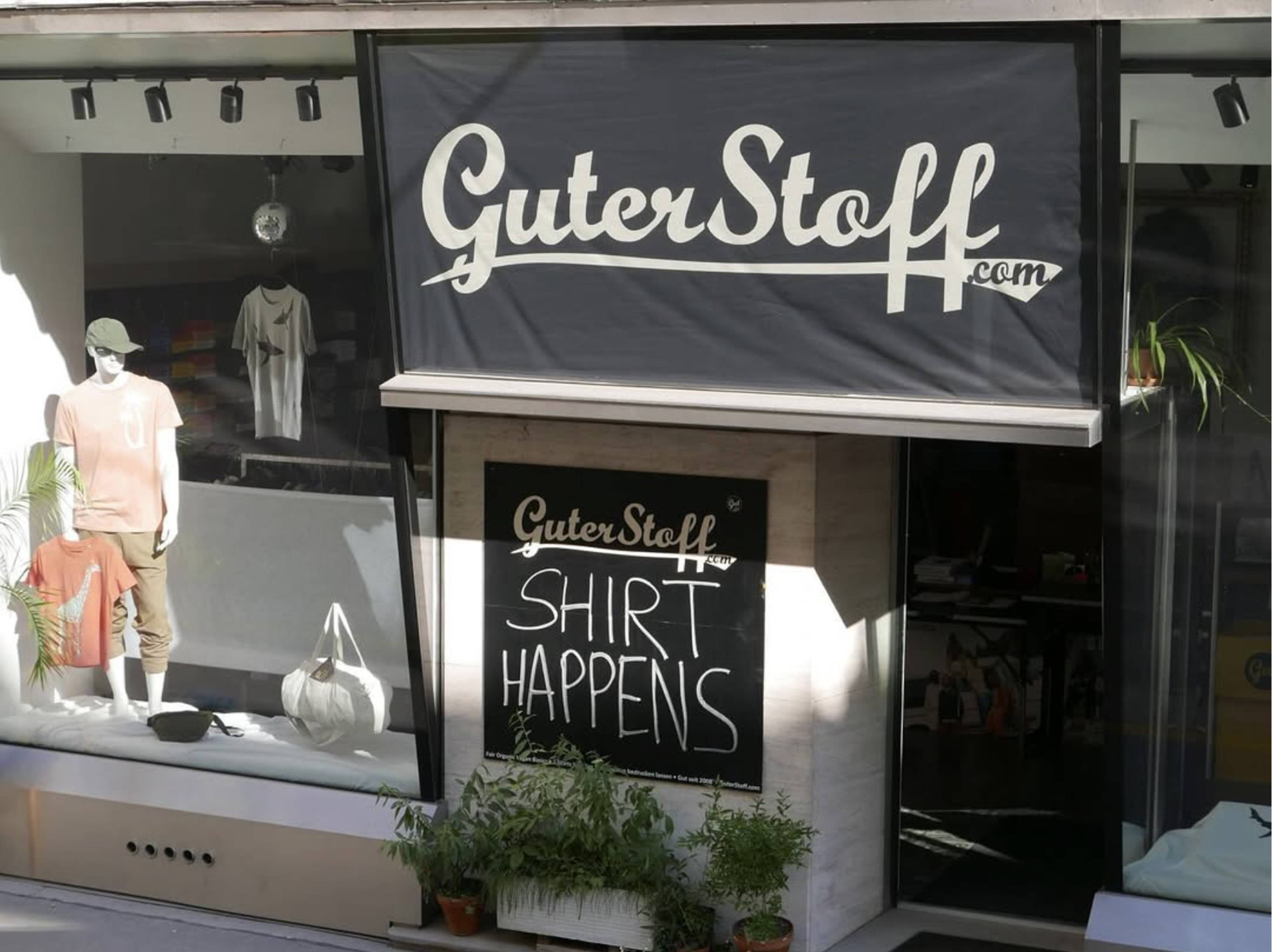
Exterior of Guter Stoff, Vienna
The clothing store Guter Stoff (or Good Fabric), in Vienna's 7th district, is one of the places that is really important to me. Here, between long-lasting metro construction, textile discounters, and fast fashion, you can find a store for sustainable clothing. Since its founding in 2008 by Tom Kaisersberger, they have been selling exclusively certified-organic, fair-trade, and vegan basics – T-shirts, hoodies, cloth bags, and the like. Their prints, which they make directly in the store, are top quality, I often have T-shirts printed for birthday presents or premiere gifts. The team is super nice, helpful, knowledgeable, all around great people, and at Halloween, they have one of the best decorations in the whole city.
👍 FKA Twigs, Eusexua (Young and Atlantic Records) & Dopplereffekt, Metasymmetry (Tresor)
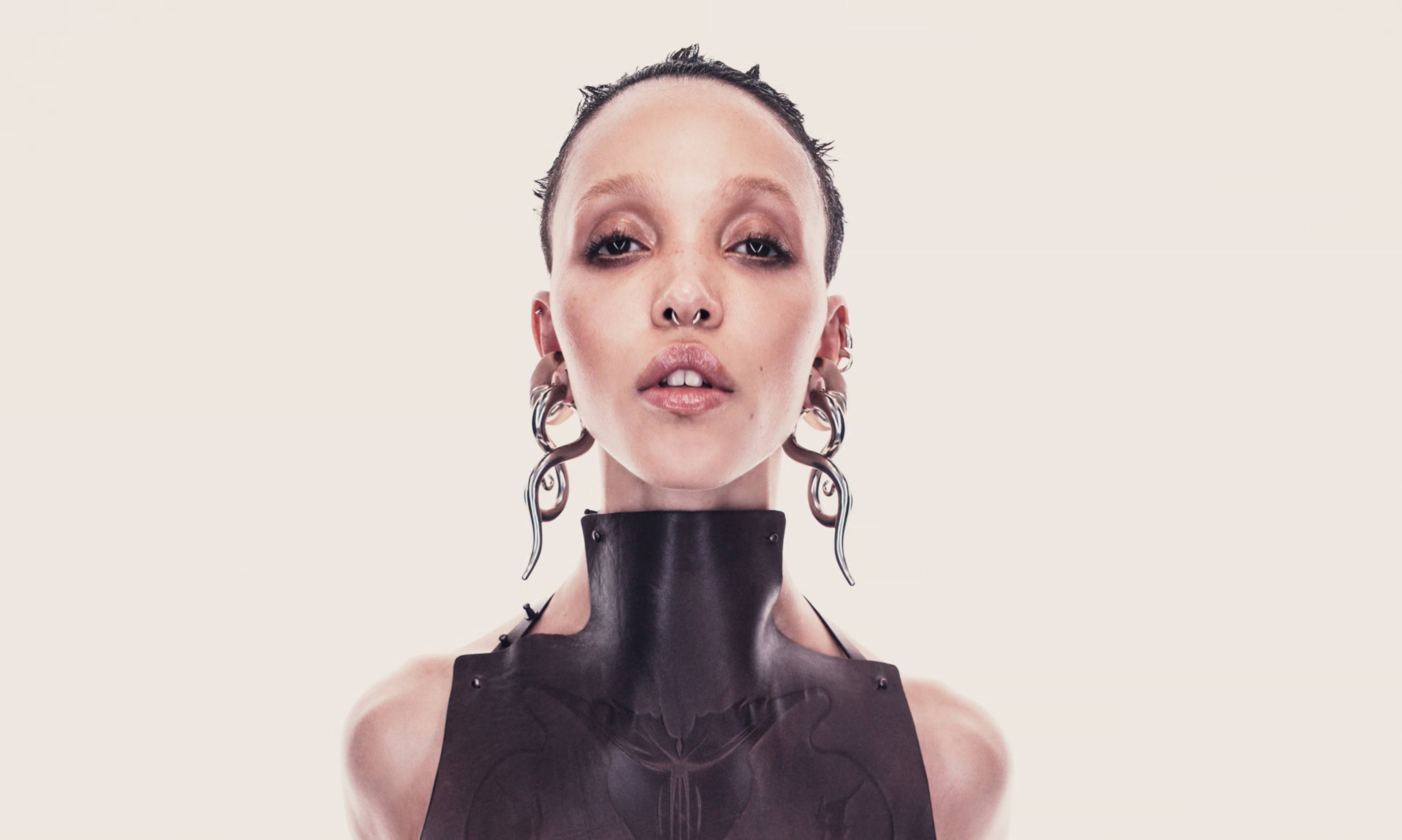
FKA Twigs. Photo: Michael Bodiam
On an album that I actually find too commercial, it’s amazing to find moments that I count among my musical highlights of the year: With Eusexua, FKA Twigs succeeds in creating a glossy pop on more experimental levels, in a way that showed a refreshing interest in new hybridization. With a completely different approach, based on years of repetition and the deepening of ideas that comes with it, Dopplereffekt gave a very strong sign of life on Metasymmetry, their debut with Tresor Records, shortly before the end of the year. The track “Collapse of Simultaneity” in particular impresses with its unexcited freshness, showing that, in electronic music, the age of the producers is irrelevant.
👎 Times New Roman in the US government

Side-by-side of Times New Roman and Calibri fonts
In the US, official government documents are to be written in Times New Roman again in the future. The switch to Calibri in 2023 was justified on the grounds of improved readability for people with disabilities. This decision is typical of right-wing governments, and not only in the US. And unfortunately, it is just ONE example of countless other flops.
👎 Many missed climate targets

First-year sea ice with glacial ice trapped near Petermann Island, Antarctica, Polar Regions. Photo: Michael Nolan
The food industry, too, is setting a new direction, and at a new pace. To give a striking example: the McPlant burger has been removed from menus in Austria and Germany. Fast food as a healthy diet is a questionable concept, and there should be good reasons for meat-free options. The availability of organic vegetables has also deteriorated in my local supermarket. How much longer can profits be made with the wrong decisions?
___
Looking for a longer view on this year’s pleasures, tribulations, curios, and obscenities? Tab over to Tops & Flops 2024 for context.