
Wednesday
In Turkish there is a word for weather like this: limonata havası, lemonade weather. Sunny enough to get sunburned, cold enough to need a jacket. The forecast for Gallery Weekend Berlin is more or less the same. I meet Kate Brown and Zaida Violan outside Trautwein Herleth and we begin our tour.
Stella Zhong has built a large oval structure in the main room, with two small openings cut into the shell. The work is inside; the only way to see it is to peek through the holes. I peek, and see nothing, while a gallery director keeps talking about the work. I look again, and still don’t understand it. Later, on the gallery iPad, artwork images are actually pretty impressive. These minimalist, miniature sculptures carry a new formalism that you’re not bothered by how alien they are. I would have liked to have seen those in person.
Next door at Kraupa-Tuskany Zeidler, Brook Hsu has cut windows into the gallery’s plaster walls, reconnecting formerly divided rooms. Inside the conjured space sits Georg Kolbe’s Nacht (1930), a bronze nude originally commissioned by the Prussian Minister of Culture as an allegory for the radio waves rising from the new Berlin broadcasting house. We discuss how rare it is to see a historical work in a contemporary exhibition and how difficult it must have been to arrange. Whatever the fee, it must have taken tens of letters to get this loan. The German bureaucracy is its own art form.
We cycle to Schöneberger Ufer. At Galerie Isabella Bortolozzi, Adam Gordon’s “Months Turn to Years” opens with paintings I might have briefly mistaken for Gerhard Richter, which is probably not the point. The first rooms are eerily serious and intriguing. The final one is something else. I know this sounds like clickbait, but take my word for it – don’t go in there.
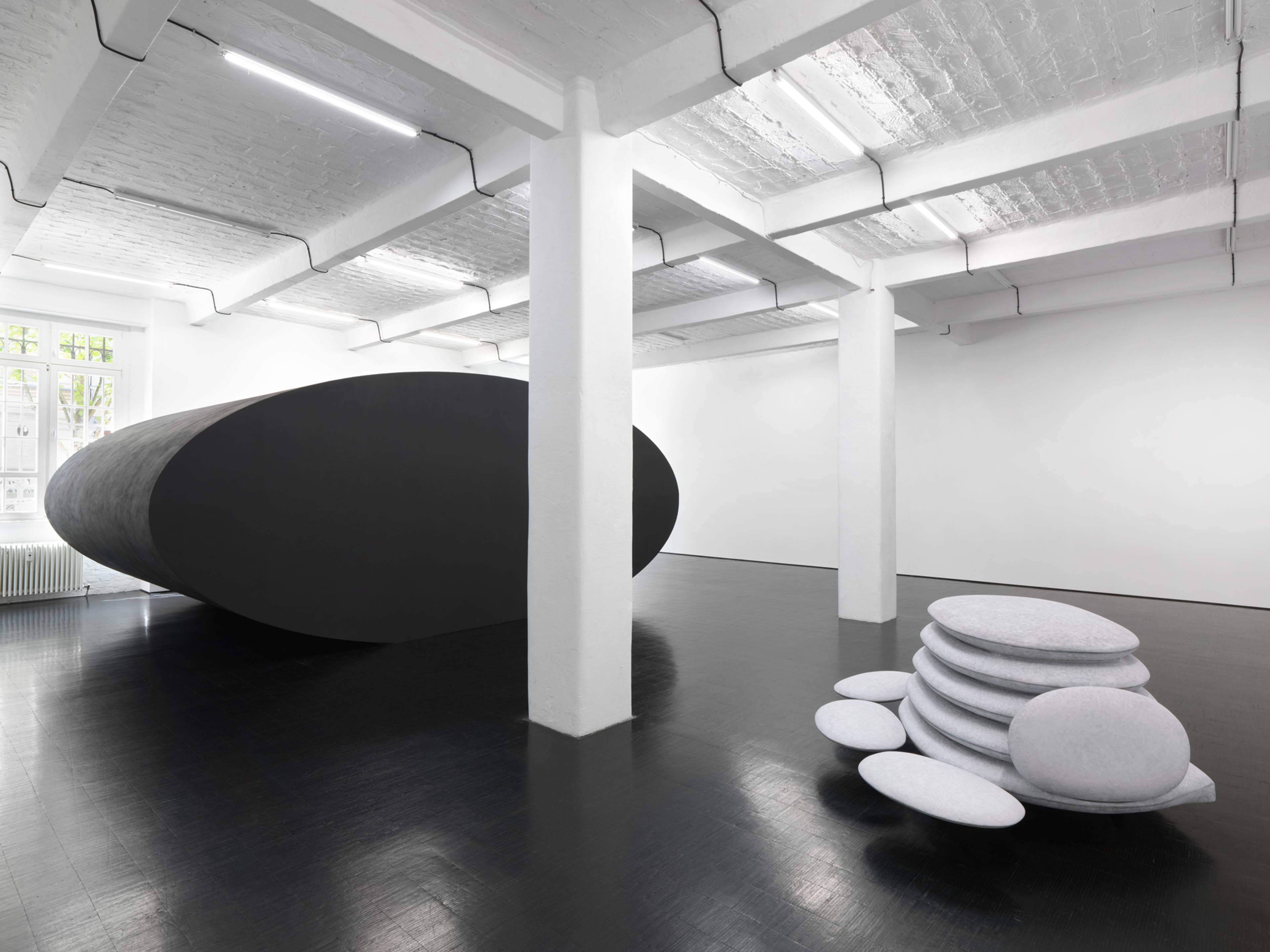
View of Stella Zhong, Trautwein Herleth, Berlin, 2026. Courtesy: the artist and Trautwein Herleth, Berlin. Photo: Jens Ziehe
At PSM, we are told press hours ended at 3pm. It’s 3:12. The three of us spend a few minutes discussing why press hours would end at 3pm before someone lets us in anyway.
At Esther Schipper, Tauba Auerbach’s pointillist paintings of microscopic soap foams don’t quite land with me from a distance, but up close, they are something else, definitely worth seeing. What stayed with me from their 2023 show at the Fridericianum, Kassel, was less the work than the gossip that Auerbach’s pieces are so fragile that the only art handler who knows how to install them travels with the pieces. If anything, I find the story mildly disturbing.
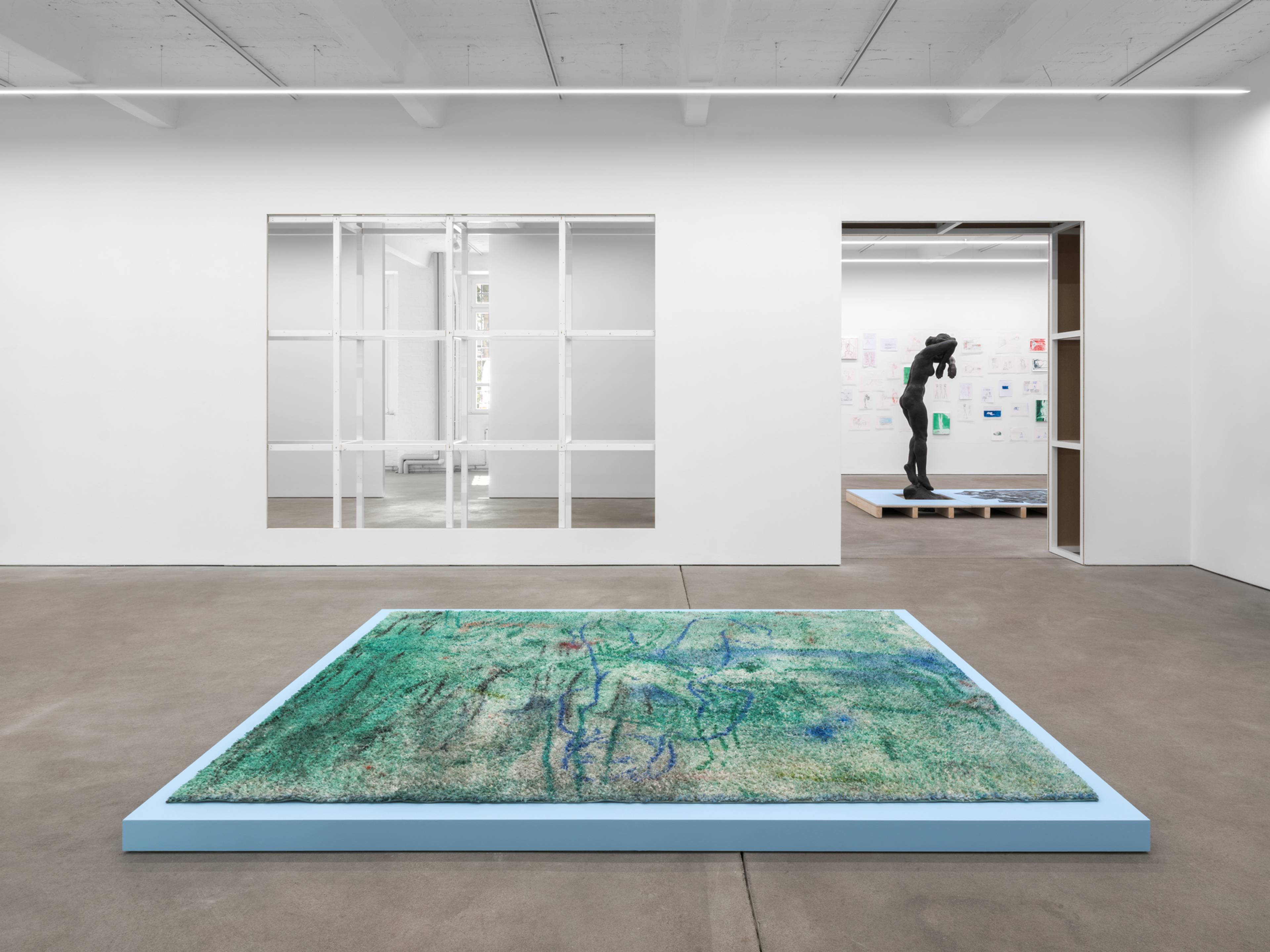
View of Brook Hsu, “The Barcelona Pavilion,” including work by Georg Kolbe, Kraupa-Tuskany Zeidler, Berlin, 2026. Courtesy: the artist and Kraupa-Tuskany Zeidler. Photo: Julian Blum
My phone pings. Brent crude oil jumps 7%, to almost $120 (€102) per barrel, as Trump adds to fears of an extended standoff in the Strait of Hormuz.
We end up around the corner at a Vietnamese restaurant. Over peanut curry and summer rolls, the three of us talk about the slow demise of online media, how AI is going to take over our jobs, and then, the Late Bronze Age collapse around the Mediterranean Sea. The theory goes that, beginning in the late 13the century BCE, the Hittites, the Mycenaeans, Levantine cities, and the Egyptian Kingdom all unraveled within a hundred years, amid drought, an earthquake, and foreign invaders – a polycrisis. The states were so tightly dependent on each other that they all collapsed together. It has an odd resonance with the rise of AI and climate breakdown.
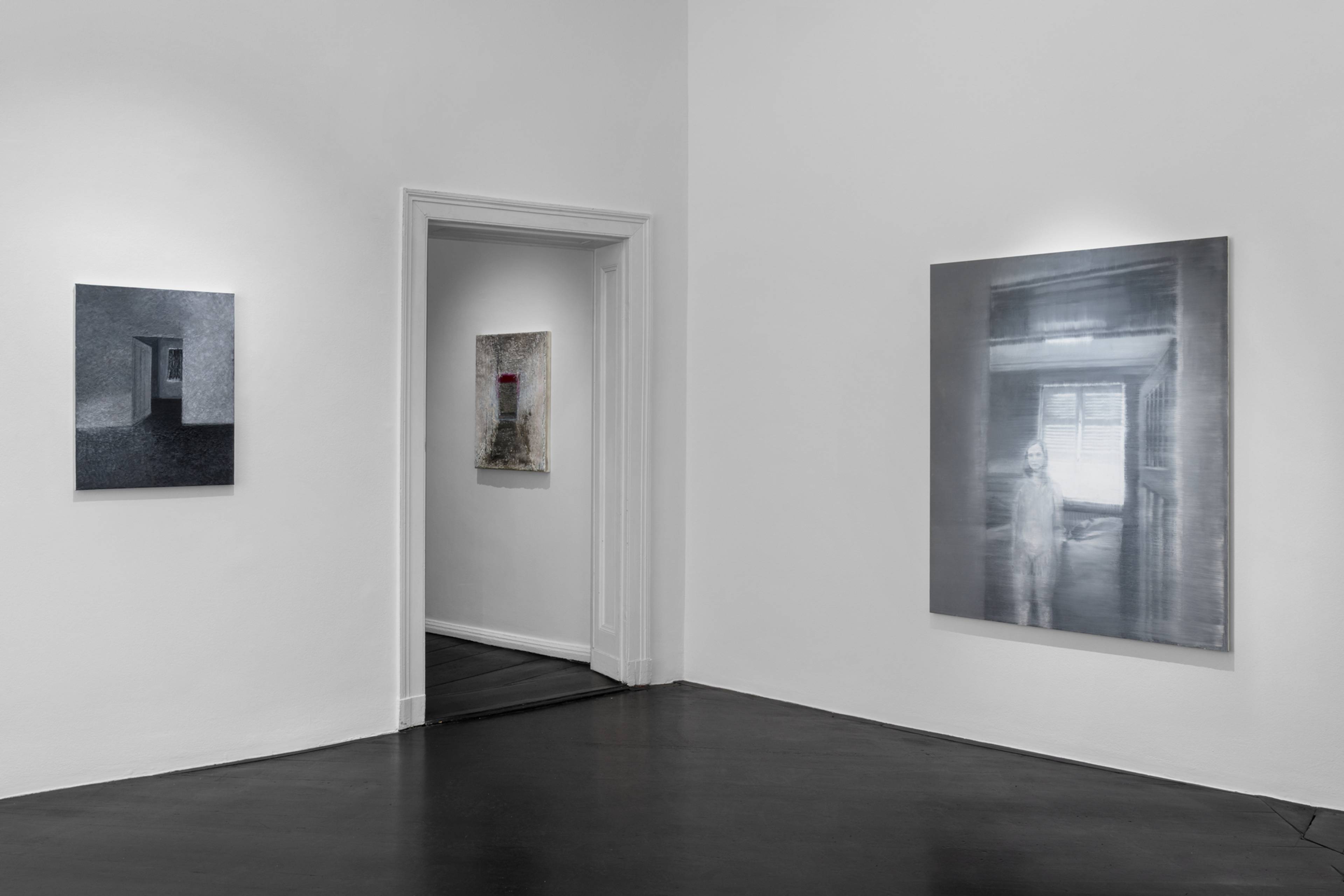
View of Adam Gordon, “Months Turn to Years,” Galerie Isabella Bortolozzi, 2026. Courtesy the artist and Galerie Isabella Bortolozzi, Berlin. Photo: Graysc
Thursday
Yoga in the morning. The instructor closes with Namaste, einen schönen Donnerstag. I think that’s what she said. My German is not good enough to follow yoga instructions, neither the physical ones nor the spiritual ones. There is a peculiar bliss in not quite understanding. (Just like Germany’s relationship to global affairs?)
At Sprüth Magers, in the street-facing space, Martine Syms has set up a temporary boutique called Dominica Publishing. You can buy caps printed with AVOIDANT or ANXIOUS AVOIDANT – the best artworks I’ve seen so far this week. The ground floor gallery is hung with works by Thomas Demand, who photographs of papier-mâché models he builds and then shoots. From a distance, the photographs look AI-textured in some uncanny way, until you notice the details. I spot actor Christoph Waltz at the entrance as I walk into the garden. (Who knew Sprüth Magers has such a nice garden?)
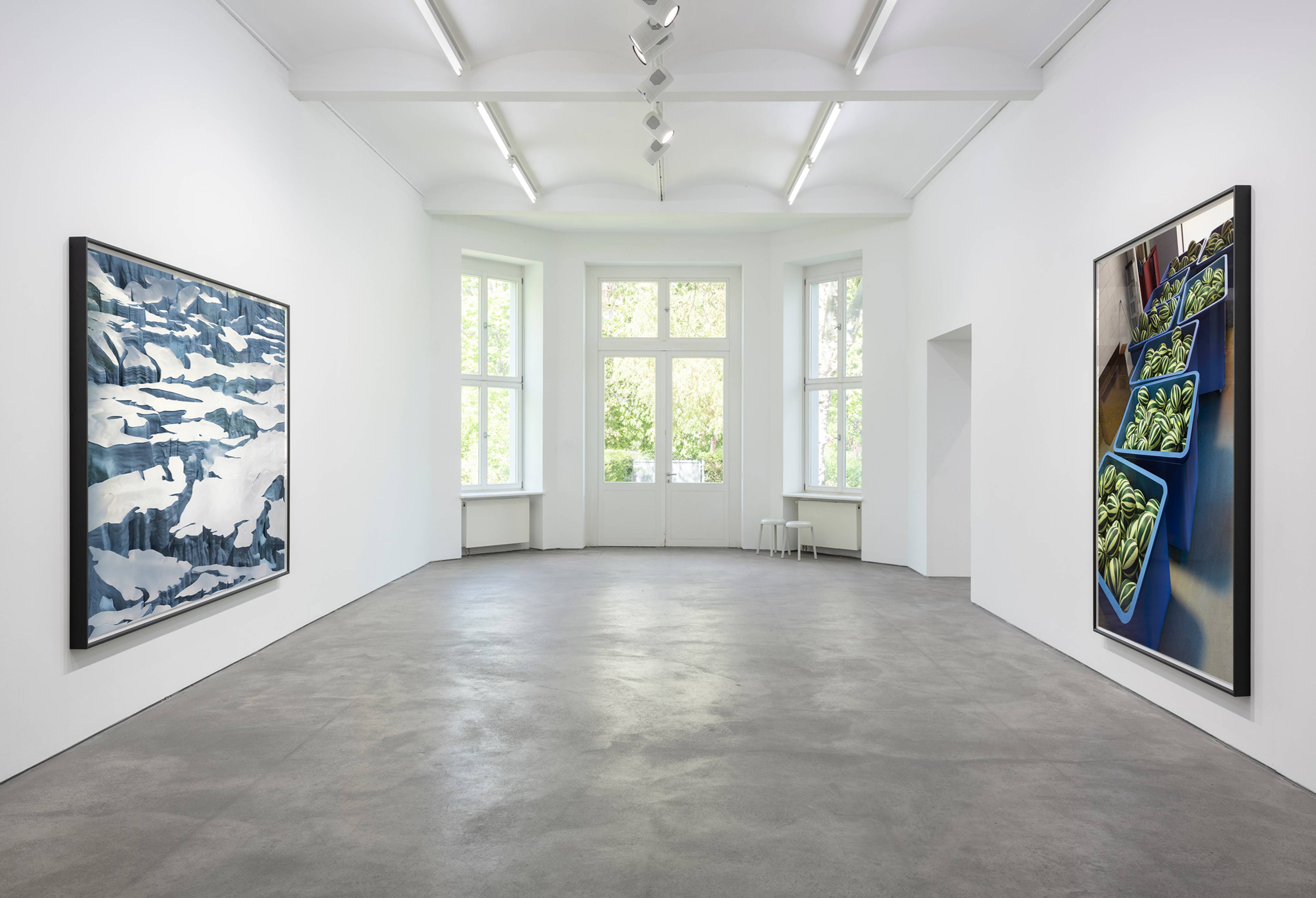
View of Thomas Demand, Sprüth Magers, Berlin, 2026. ©Thomas Demand. Courtesy: Sprüth Magers. Photo: Timo Ohler
I end up leaving in a Miles car with two new friends whose names I won’t share. They are explaining how they have a shell company posing as a film production company so they can get accreditation for the Cannes Film Festival.
We are on our way to Société. Artist and Prime Minister of Albania, Edi Rama, has filled the gallery with bronze sculptures translated using AI from his own doodles, made on paper during meetings. Albanian bureaucracy is also its own form of art. We discuss which document was under which doodle. A renewable energy contract, an education reform draft, minutes from a meeting with a Chinese ambassador.
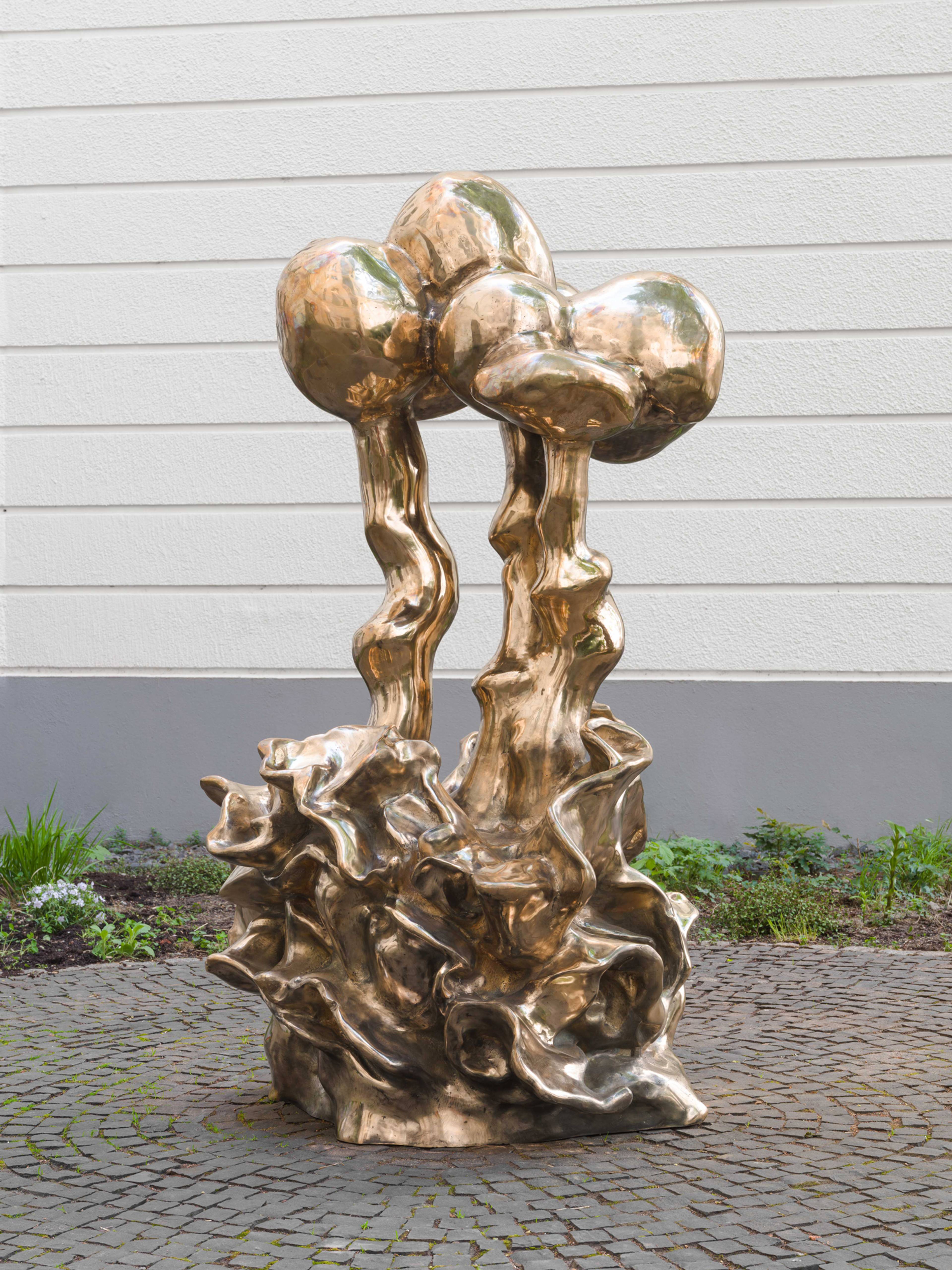
Edi Rama, Untitled, 2026, bronze, 250 x 119 x 123 cm. Installation view, Société, Berlin, 2026. Courtesy the artist and Société, Berlin. Photo: Trevor Good.
A phone notification later in the evening. The international jury of the Venice Biennale has resigned en masse. Should they have stayed on? Was their resignation only a matter of time since their prior announcement to exclude those countries whose leaders are currently charged with crimes against humanity by the International Criminal Court? What’s going to happen now? The discussion unravels across the evening in every conversation I overhear.
Imren Grill for dinner, the best meatballs in Kreuzberg.
Friday
Artist breakfast at the Neue Nationalgalerie. I’m on the list for once, but the garden door is cracked open and there is no one to check, so I just walk in. As I’m reaching for the coffee, Klaus Biesenbach is closing his speech: “Please have a croissant before [Fujiko Nakaya’s] fog [sculpture] gets them all wet.”
Through to the lower foyer. The (former?) NFT artist Beeple has installed Regular Animals. A pack of robot dogs walks slowly around in a set-off area, each topped with a hyper-realistic silicone human head: of Elon Musk, Mark Zuckerberg, Jeff Bezos, Kim Jong Un, Andy Warhol, Pablo Picasso, and Beeple himself. The faces are more impressive in-person than in the viral videos from Art Basel Miami last year, but the movement of the dogs translates worse than Sun Yuan and Peng Yu’s old men in motorized wheelchairs. Their Old People’s Home (2007), which predates Beeple’s Regular Animals by nearly two decades) went equally viral, but it also felt more visceral in person. Their 1:1 human-sized figures – contra the dog-size robots with human-sized heads – the wide room, and the space given to them in the collection of M+, Hong Kong, had the impression of a choreographed performance rather than a miniature stunt.
I first met Beeple at 3am at the Brandt residence in Venice, in 2022, I think, where he was telling me he had just discovered Marina Abramović. I’m not actively allergic to him, to be honest (unlike Refik Anadol, who blocked me on Instagram after a meme I made) Beeple is a representative of his zeitgeist in the way that Jeff Koons is. The dogs are exactly as vulgar and depictive of 2025 as that moment deserves. I don’t like them. I didn’t like 2025 either. Behind me, a guy says weird loudly. Just behind him on the bench, architect Rem Koolhaas is on his phone.
If art wants real political effect, it has to make real policy. It can’t risk becoming room decoration while the decisions are made next door.
Upstairs is a panel on live art in museums. I catch two minutes. One panelist says “hard-earned Bavarian cash going down to Berlin.”
Five Elephants Cafe (still inside Neue Nationalgalerie) for a flat white with Maria Inés Plaza Lazo and Kolja Reichert. Kolja recalls conversations from the Spike office ten years ago, about an existential turn, how works turn into souvenirs of lived lives of individual and groups, and marvels at how much it turned true.
Leaving the Neue Nationalgalerie, a robotic Berlin city trash can roams the sidewalk. I hope this is not a collaboration between Beeple and Klara Lidén, who’s exhibiting a few of the city’s rubbish bins, alongside documentation of her urban performances, at the KW.
Nextbike to Molitor and KOW. Updated garden rankings: Sprüth, Molitor/KOW, Société, Neue Nationalgalerie.
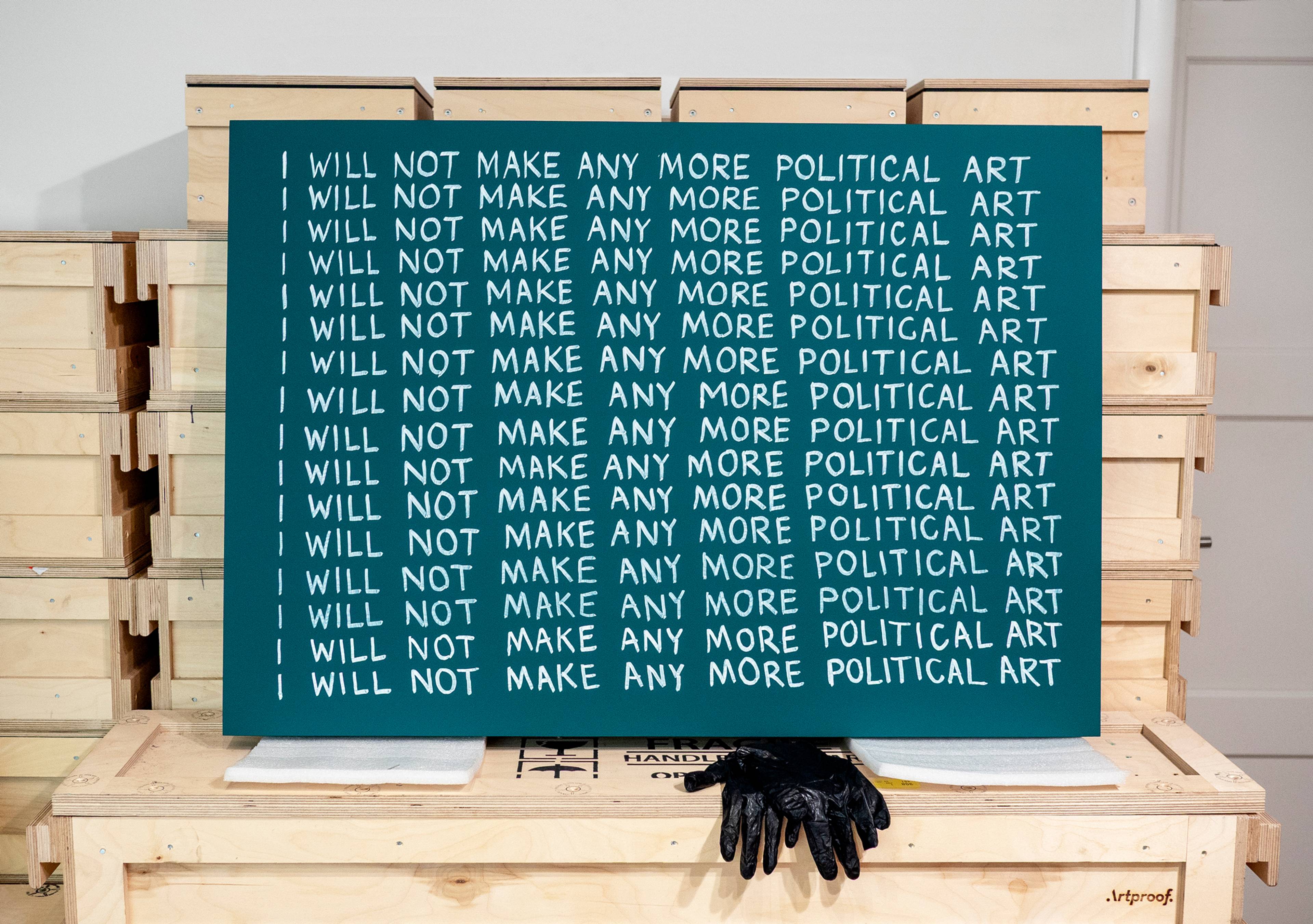
Candice Breitz, I will not make any more political art, 2026, from the series “Codes of Conduct.” Courtesy: the artist and KOW, Berlin.
As I’m looking at Candice Breitz’s work, I’m actually thinking about Edi Rama. He was an art professor before becoming a politician, and he has been the prime minister of Albania for fourteen years. Why are there not more of these? I do believe in art, but why don’t more artists want to run for office instead of (or in addition to) making political art? If art wants real political effect, it has to make real policy. It can’t risk becoming room decoration while the decisions are made next door.
I cycle to Kotti for a house party. The conversation finds its way to the iron-ore train that runs across the Mauritanian Sahara, one of the longest trains in the world. We talk about how the desert sand absorbs sound, leaving only silence in this vast space. Everything reminds me of German politics.
The opening for Petrit Halilaj at ChertLüdde. So many familiar faces in the crowd. This was the place to be on Friday night. Fellow meme-maker Hana Ćurak, who wrote the exhibition text, explains how props for Halilaj’s opera Syrigana (2025) were set ablaze by unknown perpetrators in Runik, Kosovo. The burnt containers where they were stored became his Berlin installation. Over a glass of rakia, we discuss what it means to have a real job and not an art job. I like doing my own plumbing, so I always thought of becoming a plumber. Adding “Plumber” to “Artist” on my business card would be epic. Plumbing is not for her. “I would need to get a permit,” she adds. We keep pondering.
We end up at OHM for Against Interpretation Club, a recurring music and performance night curated by the DJ Courtesy, this time with Bonny Poon’s Conditions, also a video program including Sam Lipp, Dean Sameshima, Mara McKevitt and Bruce LaBruce. We dance for a while and get home before it’s too late.
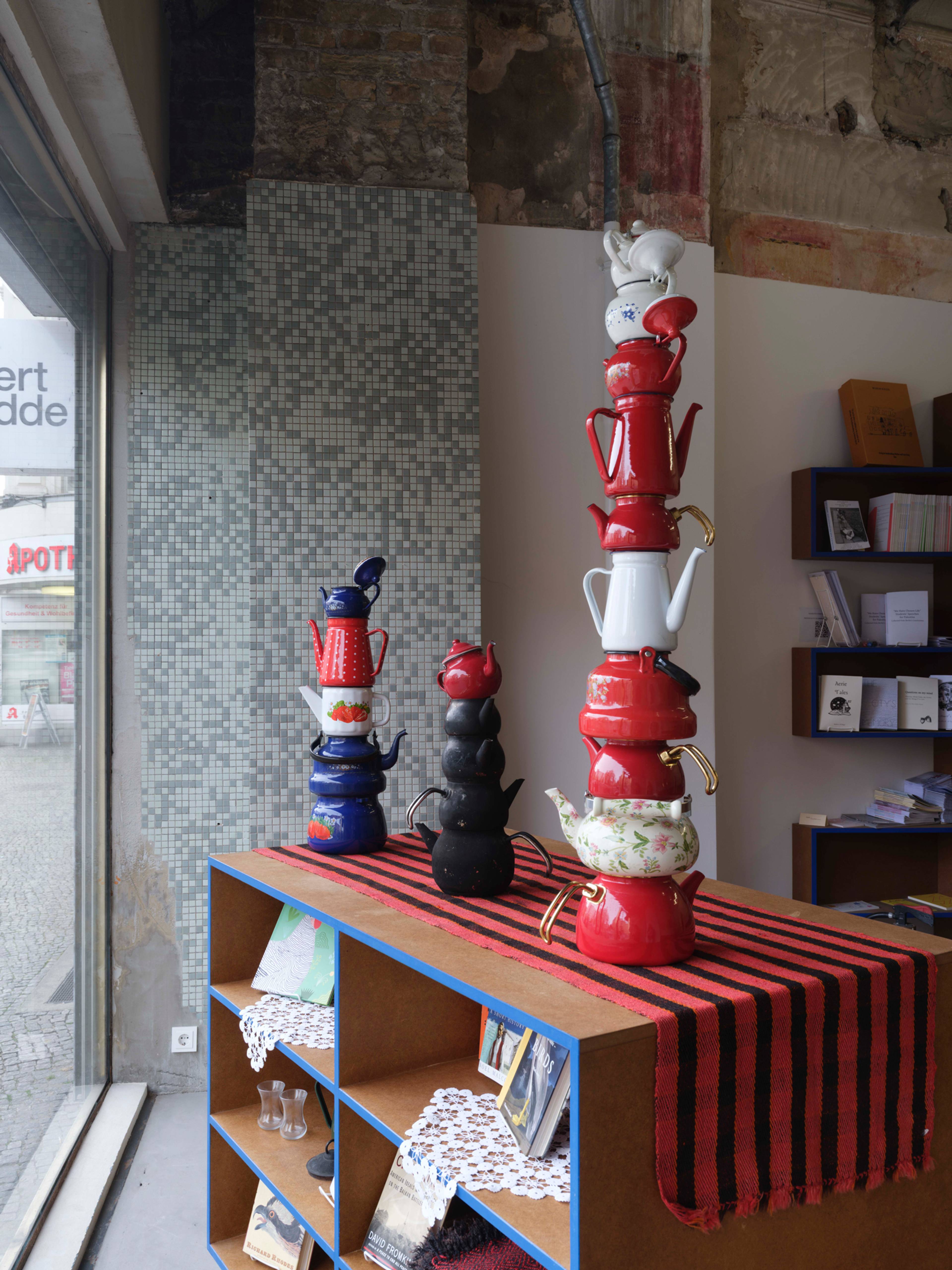
View of Petrit Halilaj “Who does the earth belong to while painting the wind?!” ChertLüdde, Berlin, 2026
Saturday
I open my eyes at the entrance of the Boros Collection. There is no tour. There is no coffee. Their new display is essentially a survey of what the German art scene has had to offer for the last ten years, a lot of it conceptual work that treats materiality as given and craft as something to get above. We live in a world where material goods and manufacturing is a given. The closure of the Strait of Hormuz made me realize that we in fact live in a fragile world where this reality might change overnight. Who can imagine how these works will be perceived after another decade, another two, another five?
After swiping through Adam Lupton’s exhibition at Galerie Judin at Die Tankstelle, I cycle through Tiergarten to the reception for Manifesta 16 Ruhr, which opens next month in the Ruhr area.
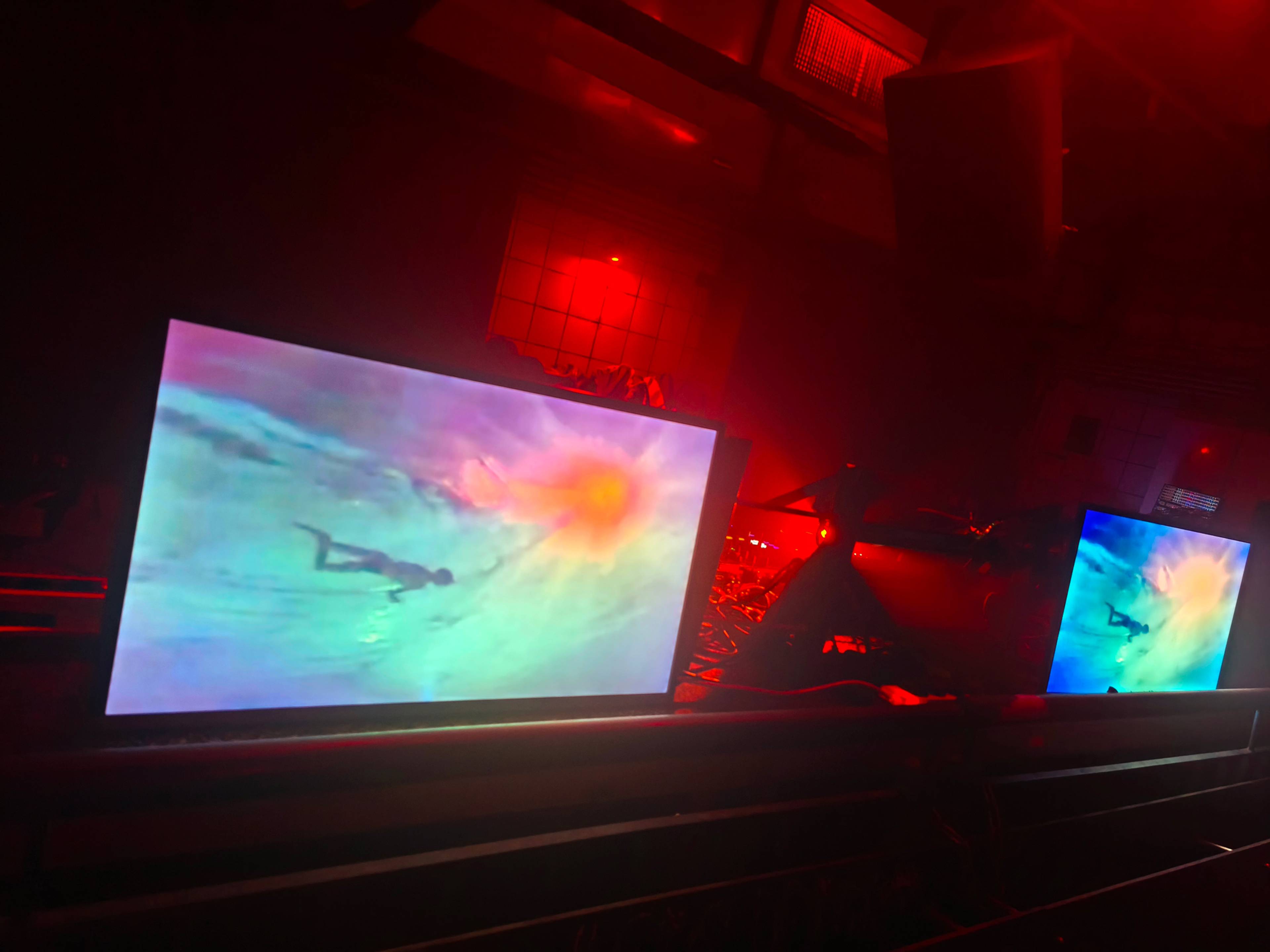
Ruth Angel Edwards, DJ/performance, “Against Interpretation Club,” OHM, Berlin, 2026
Sun scorching. While I wait for friends to arrive, I’m googling whether it’s a thing about upper-class Europeans wearing this very dark navy that isn’t quite black. It has been the dominant color of every private event this week. ChatGPT explains: “midnight blue, Marineblau, schwarzblau. Prussian and German naval officer uniforms; the traditional formal alternative to black tie; the color bespoke tailoring favors for sober, well-made versatility.”
I lift my head from my phone to find myself listening to founding – and recently resigned – Manifesta director Hedwig Fijen. She invites the audience to applaude René Block for coining the name Manifesta in the early 1990s as well as his contributions to it.
I’ve seen enough art for this week. Gallery Weekend ends on my terrace with some friends, the sun setting. Next is Venice.
Final garden rankings: Sprüth Magers, ChertLüdde, Molitor/KOW, Société, Pace Gallery/Galerie Judin, Neue Nationalgalerie.