


In the early 1990s, the internet was only for the real heads. Getting online meant having institutional access, often through a university (or government agency, or tech company), as well as a basic understanding of the operating system Unix. It came with its own set of social expectations – “netiquette” – and a delicate ecosystem of dweebs thrived across chatrooms and forums. But each September, a new crop of college freshmen would arrive on campuses and gain access, logging on and annoying the regulars with their naïveté. In September 1993, AOL opened the floodgates, offering Usenet access to ordinary subscribers. Thus began the internet’s new life as a commercial product, a season the trampled geeks described as “Eternal September”: a constant influx of clueless normies newly discovering the online world.
September is a beautiful month in California, just like all the other months. Seasonal changes are subtle here, but the equinox brings shorter days and crisper air at dinnertime. My first brush with soup weather came at a closet-sized Japanese restaurant in San Francisco’s Mission. It’s rumored that when this much-beloved ramen spot came under financial strain during the pandemic, Ivan Zhao, the founder and CEO of the notetaking app Notion, walked in one day and wrote a check for $1 million. The doors stayed open, and Notion’s employees enjoyed bottomless mentaiko spaghetti. I have my suspicions about this story – not because the sum of money is so outrageous (who’d let you cash a check for a million bucks?), but because I find it unbelievable that anyone in San Francisco, let alone the founder of a productivity app, keeps a paper checkbook. Apocryphal or not, such a thing would never happen today, in a city full of billboards bearing slogans like “Stop Hiring Humans.” (Your agent swarm does not require niceties like a lunch break.)
A myopic sense of AI doomerism has engulfed the Bay Area, making me woefully nostalgic – and I never thought I’d say this – for the relative innocuousness of Silicon Valley’s software-as-a-service peak. Visual culture, increasingly filtered through machine-learning ranking systems, has attained a kind of curated emptiness, an uncannily contextless conception of what’s nice. The trend forecaster Emily Segal (one of the brains behind such coinages as “normcore”) named this phenomenon “tasteslop.” There are two subgenres: slop made out of things considered to be tasteful – think AI-generated moodboards saturated with blandly Dieter Rams-esque designs – and genuinely tasteful things invoked to sex up the otherwise soulless and corporate, like Anthropic’s influencer “supper club” at a restaurant owned by the film distributor A24.
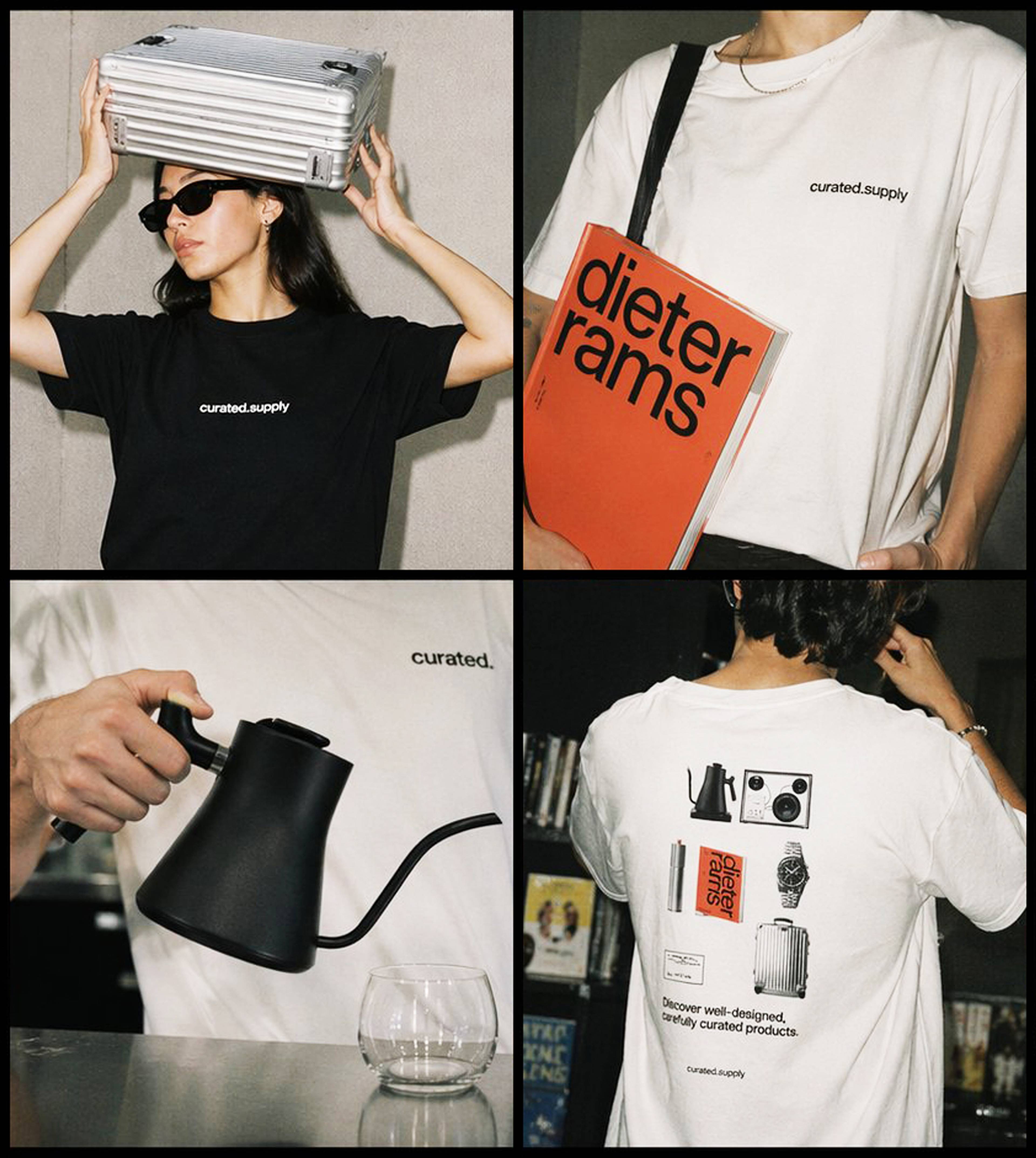
Tasteslop moodboard by Justin Farrugia / @justinmfarrugia
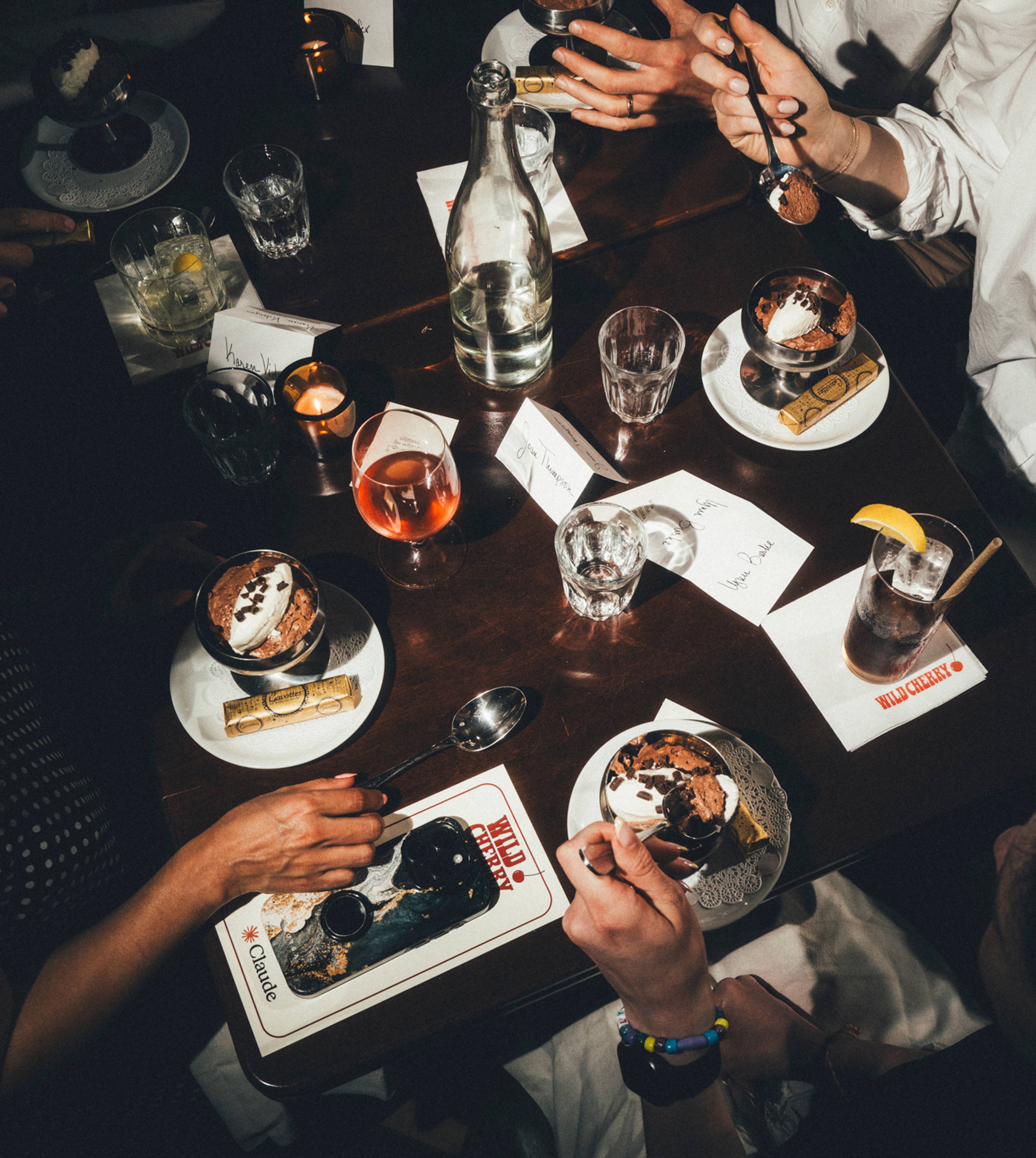
Claude Supper Club 2 by Lexie Barnhorn / @lexxbarn
Taste has been the word of the year in Silicon Valley, the successor cliché to startup culture’s “disruption.” As the nuts-and-bolts work of writing code and drafting emails gets offloaded to AI, some argue that taste – the subjective act of discernment and selection – is the last frontier of human-added value. Per OpenAI President Greg Brockman: “Taste is a new core skill.” The companies currently manufacturing consent for mass deskilling are suddenly stricken with anxiety about why humans are worth keeping around at all, and apparently, the best solution they could come up with was: at least we have aesthetic perception?
The idea that AI can’t do taste is a bit rich coming from a ruling class whose conception of style is limited to objects purchasable at the Danish Design Museum gift shop – which is to say: not bad, in fact undeniably good, just monotonous in the way that algorithm-driven recommendations tend to be. “Taste is not really a property of various objects,” Segal writes. “It is a socially validated relation between objects, people, histories, scenes, and timing.” Like most attempts by financial capital to capture cultural capital, it feels thin because it is abstracted away from this kernel of the social in attempts to make it scale. Tasteslop is uncanny the same way LLM-generated text is uncanny: smooth on the surface but absented from embodied experience. But before this pot gets accused of calling the gooseneck kettle black, I’ll note that Segal identifies the art world – specifically, our local dialect, International Art English – as a progenitor to tasteslop. To this, I would also add Art Basel Miami Beach and paintings in the style of zombie formalism.
Visual culture, increasingly filtered through machine-learning ranking systems, has attained a kind of curated emptiness, an uncannily contextless conception of what’s nice.
Maybe Silicon Valley and the fine-art world are simpatico, after all. On 3 October, mega-gallery Hauser & Wirth opened its newest outpost, sited not in San Francisco but Palo Alto. This isn’t the first time a blue-chip outfit has moved into tech town: Pace opened a showroom on the same block in 2016, only to move to Los Angeles in 2022 – allegedly after Laurene Powell Jobs, Steve Jobs’s widow and a major Pace client, switched her allegiance to Hauser. Despite the surfeit of wealth in the Bay Area (which has fewer millionaires, but more billionaires, than New York City), no major dealer has had a footprint in Northern California since.
Whether the newfound appetite for taste among the tech set can sustain such a venture remains to be seen. Hauser’s inaugural show, “Calder | O’Keeffe,” is lovely, if a bit safe – a well-researched exhibition detailing the friendship between the two legendary modernists. I’m happy to have another serious arts space around, and I hope that, as they settle in, their program might take more risks, starting with showing some living artists (Avery Singer, a young painter and breakout star on the gallery’s roster whose recent paintings have deliberately courted an “AI slop aesthetic,” would surely find an enthusiastic audience here). Still, the opening was a welcome addition to the local social calendar. An entry line snaked down the block in the baking sun, with free ice cream (small batch; local; “farm-to-cone”) and a merch tent giving away custom-embroidered Hauser & Wirth baseball caps. Tasteful enjoyments as far as the eye could see.
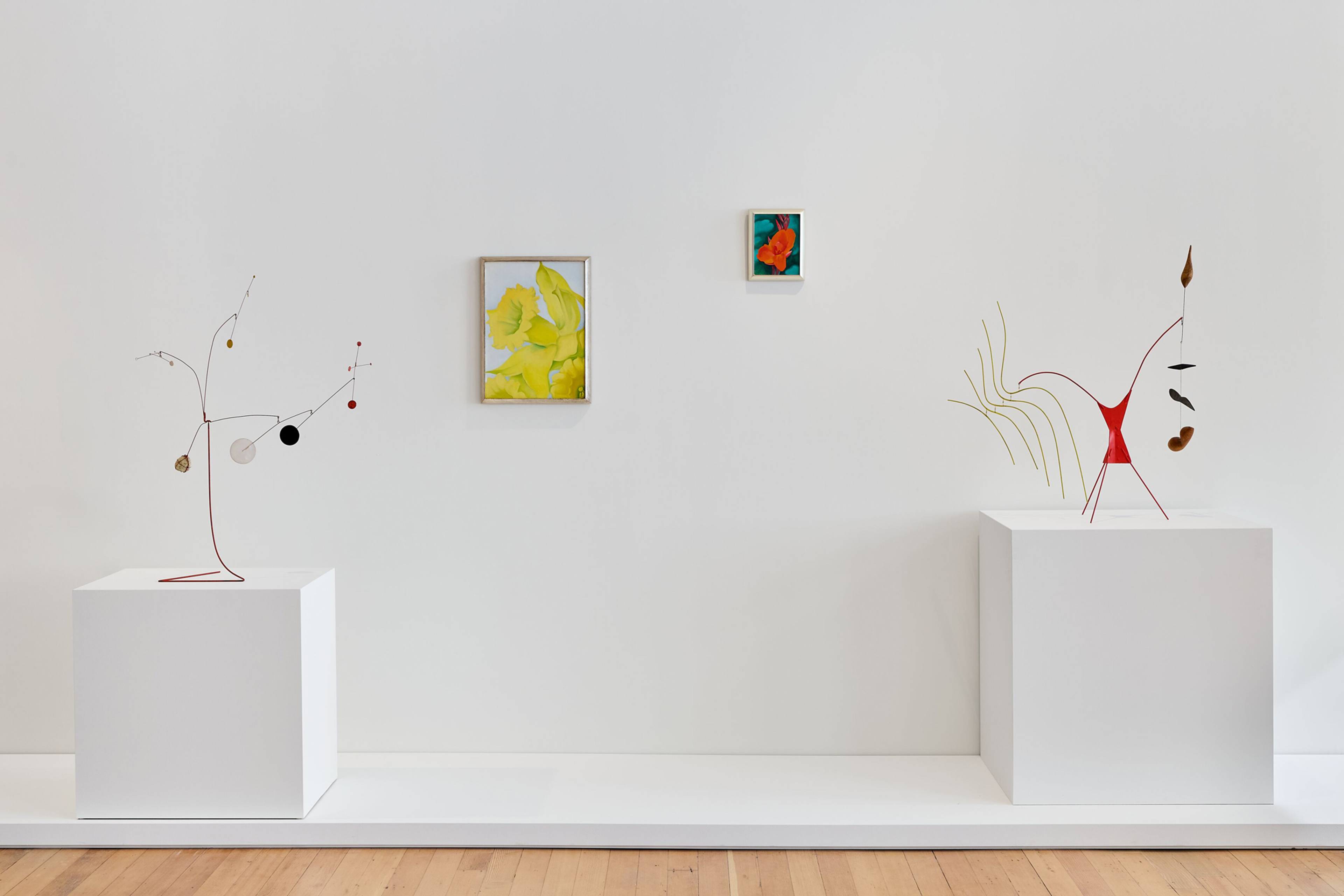
View of “Calder I O’Keeffe,” Hauser & Wirth Palo Alto, 2026. © 2026 Calder Foundation, New York / Artists Rights Society (ARS), New York. © 2026 Georgia O'Keeffe Museum / Artists Rights Society (ARS), New York. Photo: Glen Cheriton
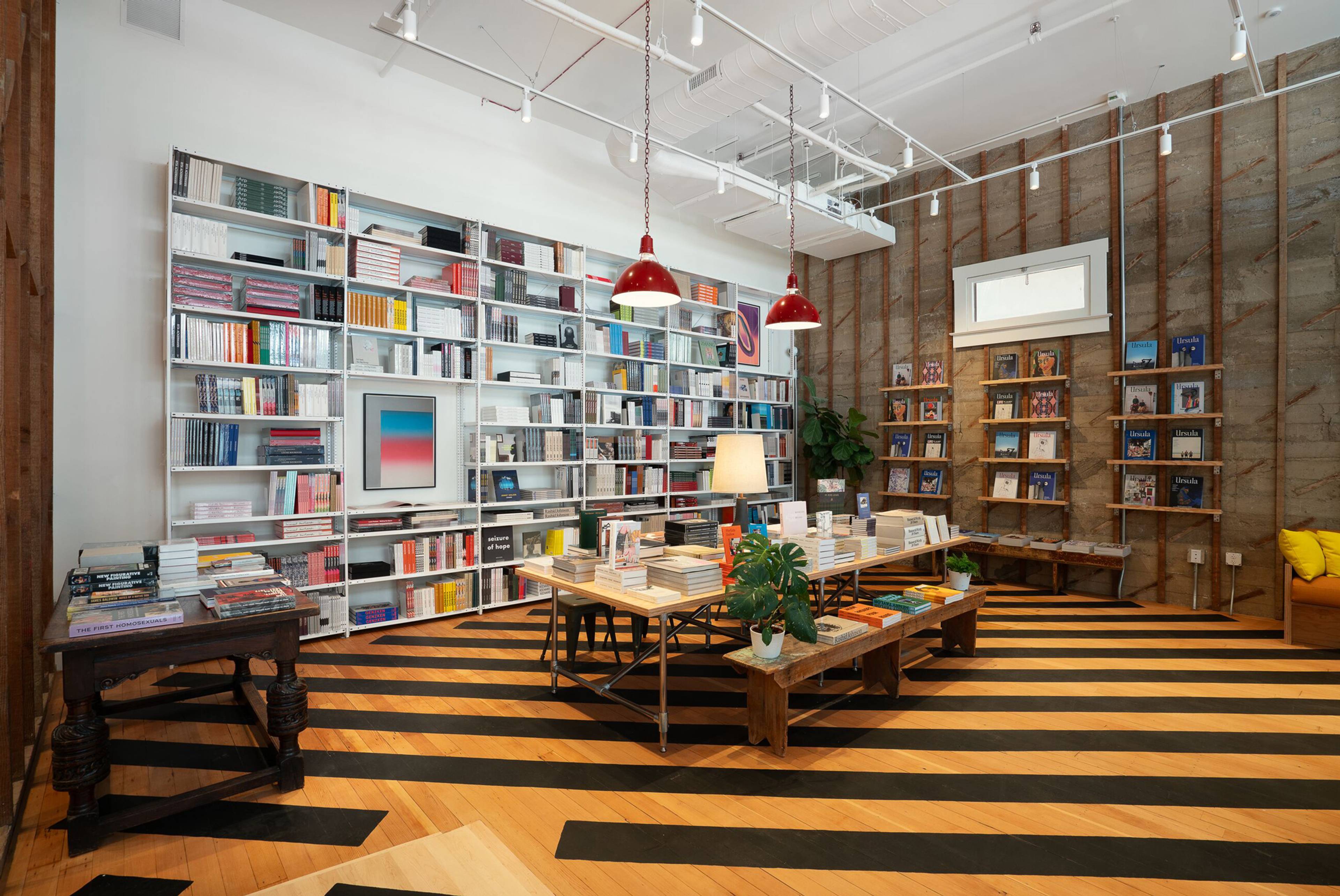
Hauser & Wirth Palo Alto bookshop, 2026. Photo: Roger Edwards Jr.
Down the street, the former offices of Palantir sit empty, in a foreboding building befitting the defense-tech juggernaut, whose upper management got fed up with Silicon Valley’s wokeness (and, probably, its tax rates) and relocated to comparatively libertarian Colorado. In parallel, Palantir – which to this point has not sold consumer products – has started side-hustling as a clothing brand. Early drops, like hoodies bearing the word “ONTOLOGY” in the shape of their chevron logo (a nod to their flagship data-integration tool and their CEO’s graduate study of German Idealism), attracted little attention outside the surveillance contractor’s innermost circle of supporters. But in April, their merch made headlines with the launch of a chore coat. Hyperlink blue and made in the USA with 100% homegrown cotton, it retailed for $239 and sold out in a day.
The coat was divisive, much more so than any garment this boring has the right to be. It was presented as sincere – it’s a good coat, reportedly comfortable and almost oppressively well-made – but received as ragebait, not least because it launched in a limited run of 420. Beyond the obvious qualms one might have about being a walking billboard for a tech company that services ICE and the IDF, its aspirationally America First aspects are undercut by the fact that the particular color and silhouette call back to French, not American, workwear; it’s a three-pocket style descended from the iconic Le Laboureur, not a four-pocket chore coat of the Sears or Carhartt extraction. Online critics were quick to point this out, to which Palantir’s chief of “vibes” responded that the company champions US allies, too. The garment’s incoherence is tasteslop incarnate: undeniably nice, weirdly inoffensive for a product manufactured by one of the most controversial tech firms on the planet, and emphatically disinterested in its own genealogy. At least Miuccia Prada’s riff on fascism, with its knowing nods to Mussolini-era military dress, boasted actual aesthetic precision.

Palantir chore coat, 2026
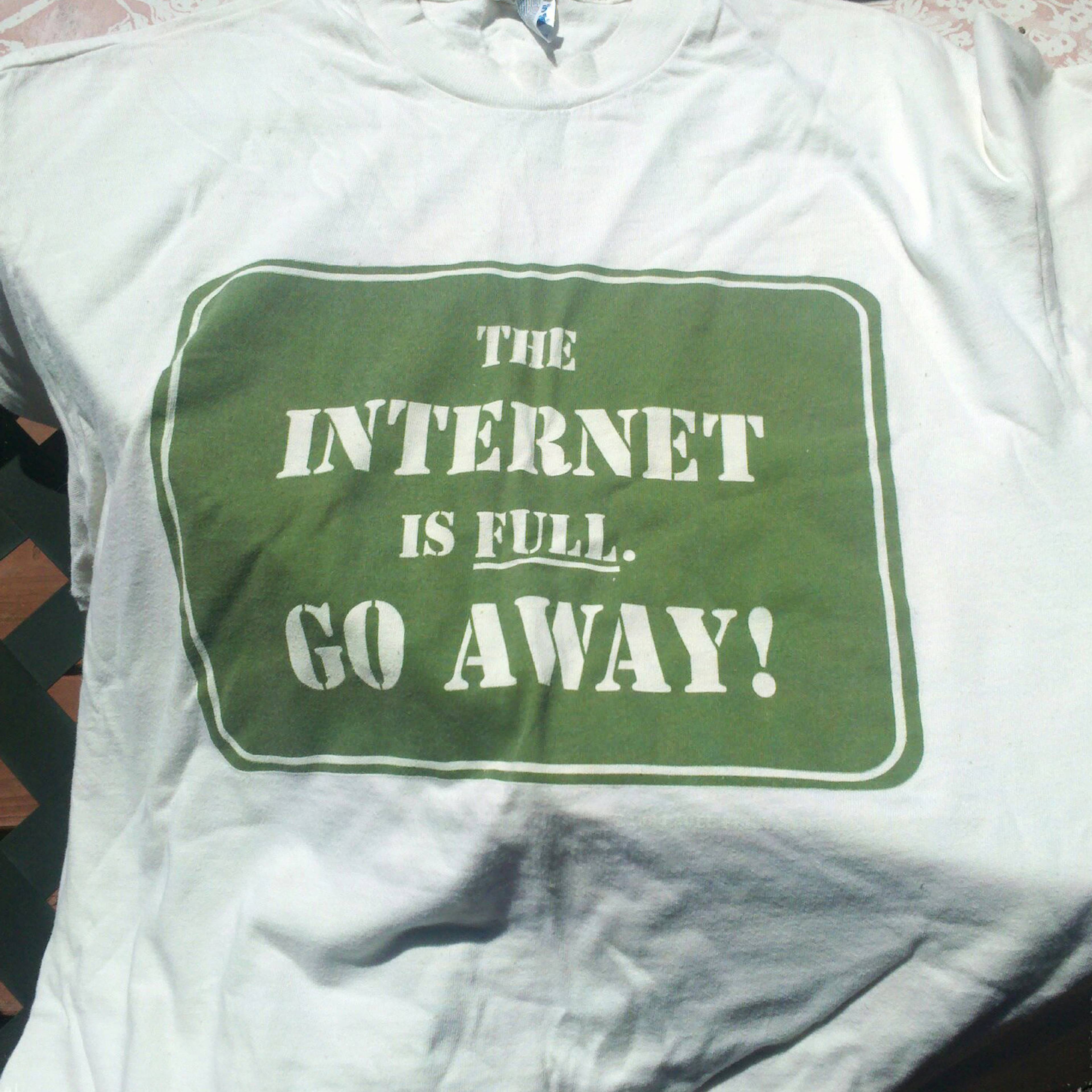
The internet is full go. Go away!, 1994, designed by Jay Furr
Palantir may have left Silicon Valley, but this kind of historical amnesia – or maybe it’s the absence of engagement with history in the first place – does strike me as distinctly Californian. In her 2003 memoir Where I Was From, Joan Didion writes of the land of gold rushes, and later of silver screens, as a site for perpetual self-reinvention, amenable to speculation in every meaning of the word. Didion says that people come here to leave something behind, cleaving off from the past to take their chances on a fabled future.
The tech world’s fixation on taste (and disregard for the extant history of writing on the subject, whether Kant, Bordieu, or Veblen) is a kind of Eternal September in reverse. As the industry trends towards obsolescing the humans who made it, those for whom software has eaten the world are attempting to discover offline life from first principles. So much ink has been spilled over taste these last months, with no end in sight, because how could you schematize je ne sais quoi but by stumbling from your blue-light-shrouded enclosure and into the world?
On the way home from Hauser, I stop at a coffee shop called YUMMY FUTURE, where the drinks are made by robots. I think about something that the art historian Alexander Nemerov said at the opening: Calder and O’Keeffe share an ethos that “art exists to deliver us into the presence of life” – to return us to the banality of the world with a newfound sense of wonder at its many mysteries. In the end, if the tech world’s fixation on taste inspires the embrace of values that can’t be quantified on a cap table or tracked by an Apple Watch, that is a positive thing. Innovation may well lead to beauty, like latté art by a robo-barista. But as long as taste is treated with the same perverse anti-humanism with which the venture capitalist seeks his next unicorn, art it will never be.
___
“Calder | O’Keeffe”
Hauser & Wirth Palo Alto
3 Oct 2026 – 24 Jan 2027