


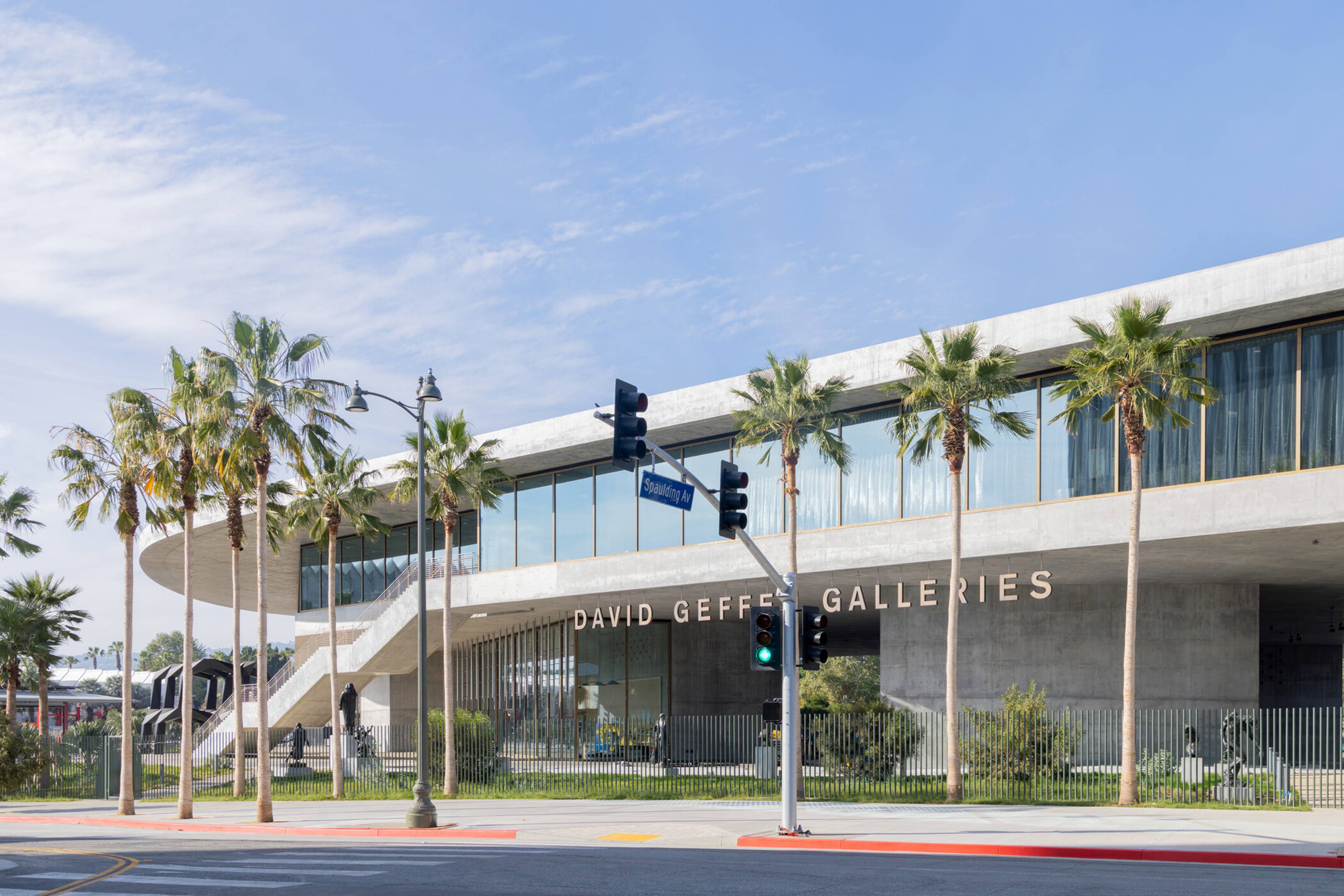
Over the last decade, the globalization of Los Angeles has rapidly accelerated. Targeted investment ahead of the 2028 Olympic Games and new metro lines with urbane, multifamily housing have densified the city and challenged an identity predicated on 20th-century single-family suburban homes. In a sign of the times, Swiss architect and Pritzker Prize Laureate Peter Zumthor was brought in to design a new building for the David Geffen Galleries at the Los Angeles County Museum of Art (LACMA). Its central site, on the “Miracle Mile” cultural district along Wilshire Boulevard, has already been made cosmopolitan by three buildings from Renzo Piano: the Academy Museum of Motion Pictures and, on the LACMA campus, the Resnick Pavilion and the Broad Contemporary Art Museum.
But Zumthor succeeds where many thought he would fail. LACMA has avoided the trap of becoming yet another globalized, donor-class blight, instead delivering a building that reflects its weird LA context. The nine-hundred-foot-long concrete-and-bronze building captures both the bombast and natural beauty of Los Angeles. Most importantly, the David Geffen Galleries evolve the uniquely LA “dingbat” apartment type into a civic monument. Raised above carports, these ubiquitous stucco apartment buildings have dominated the LA landscape since the postwar housing boom of the 1950s. They, like LACMA, have a raised, horizontal single story that reads as a lifted façade. And like the residents of a dingbat, the art lives on LACMA’s upper floor, accessed by way of a prominent staircase. Dingbats connect to the city via carports on the ground floor; LACMA’s Geffen Galleries have their own connections to the civic sphere: a plaza, a museum store, and an Erewhon café.
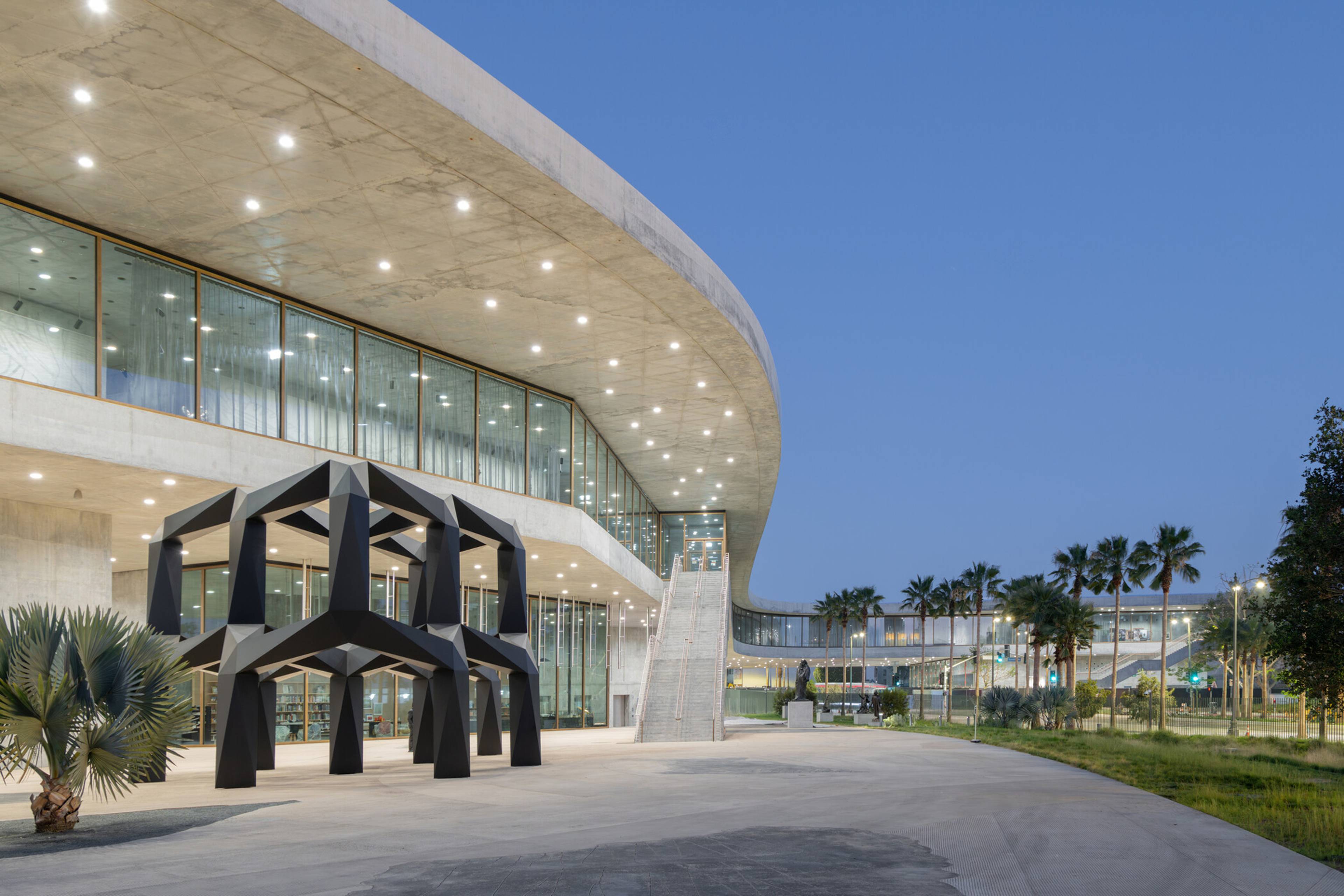
Exterior view northeast from Wilshire Boulevard with Tony Smith, Smoke, 1967 (left), David Geffen Galleries at LACMA. Artwork: © Tony Smith Estate/Artists Rights Society (ARS), New York. Photo: Iwan Baan
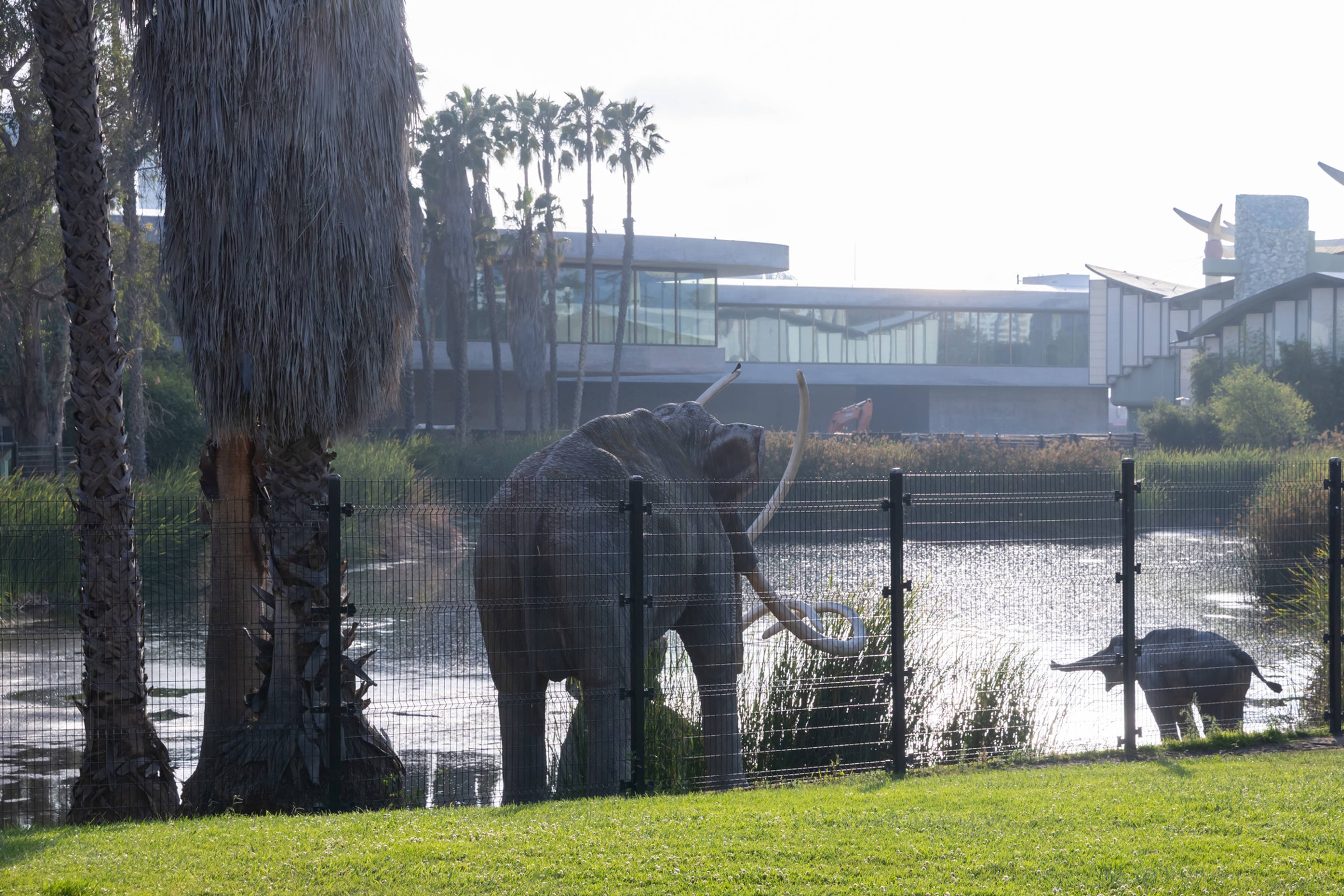
David Geffen Galleries at LACMA, view from the east including LACMA’s Pavilion for Japanese Art with La Brea Tar Pits’ Lake Pit and mammoth sculptures in foreground. Photo: Iwan Baan
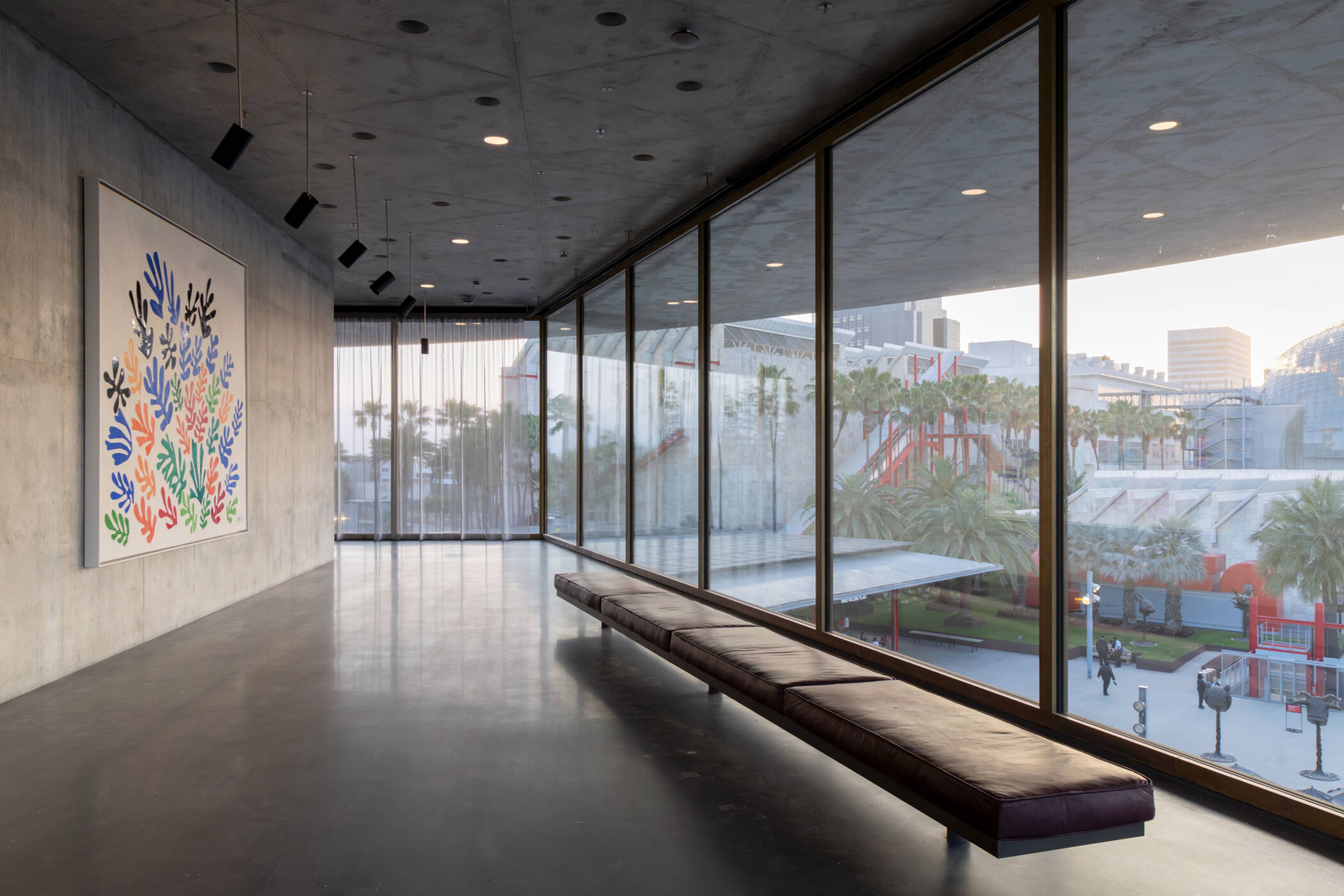
View southwest from exhibition level toward Resnick Pavilion and BCAM with Henri Matisse, La Gerbe, 1953 at left, David Geffen Galleries at LACMA. © 2012 Succession H. Matisse/Artists Rights Society (ARS), New York, NY. Photo: Iwan Baan
The vernacular connections don’t end there. Zumthor’s museum is also a modern take on the midcentury commercial style known as “Googie” (the boomerang plan, dramatic cantilever, and desire to be read from the highway); a central LA strip mall (raised second floor); and – if we do a bit of mental gymnastics – the “programmatic architecture” known as California Crazy. The plan is a literal formal reference to the La Brea Tar Pits, the ancient asphalt pools bubbling up in adjacent Hancock Park. It also mirrors the neighboring buildings by taking material cues – LACMA’s concrete and bronze could pass for the tan stone and twenty-four-karat gold from the Academy Museum’s Saban Building next door. If you squint, an adjacent strip mall and apartment complex could be confused with one of LACMA’s tentacles.
It also succeeds in capturing the urban experience of Los Angeles, however slippery that might seem; to wit, the LACMA galleries jump over Wilshire Boulevard like a highway overpass. Lined almost entirely in floor-to-ceiling windows, with special sheer curtains designed by Japanese textile artist Reiko Sudō, it recasts the city as a hazy, dreamlike landscape filtered through, or onto, a metallic screen. The amoeba-like building manages to tie together stunning views of the entire LACMA campus.
This is a Cosmopolitan Disneyland: a collection of thematic buildings in a walkable area whose prestige has been imported via starchitects like Piano and Zumthor. The new LACMA will be joined by a new Tar Pits welcome center designed by New York’s Weiss/Manfredi, rising stars who combine Piano’s techno-functional light touch with a tinge of Zumthor’s unhinged material contextualism. Each of these branded zones, along with the Petersen Automotive Museum down the street, contributes to a theme-park-like experience: passing by Chris Burden’s highly Instagrammable sculpture Urban Light (2008), visitors arrive at a plaza with art for you, fossils for me, and taco trucks for everyone.
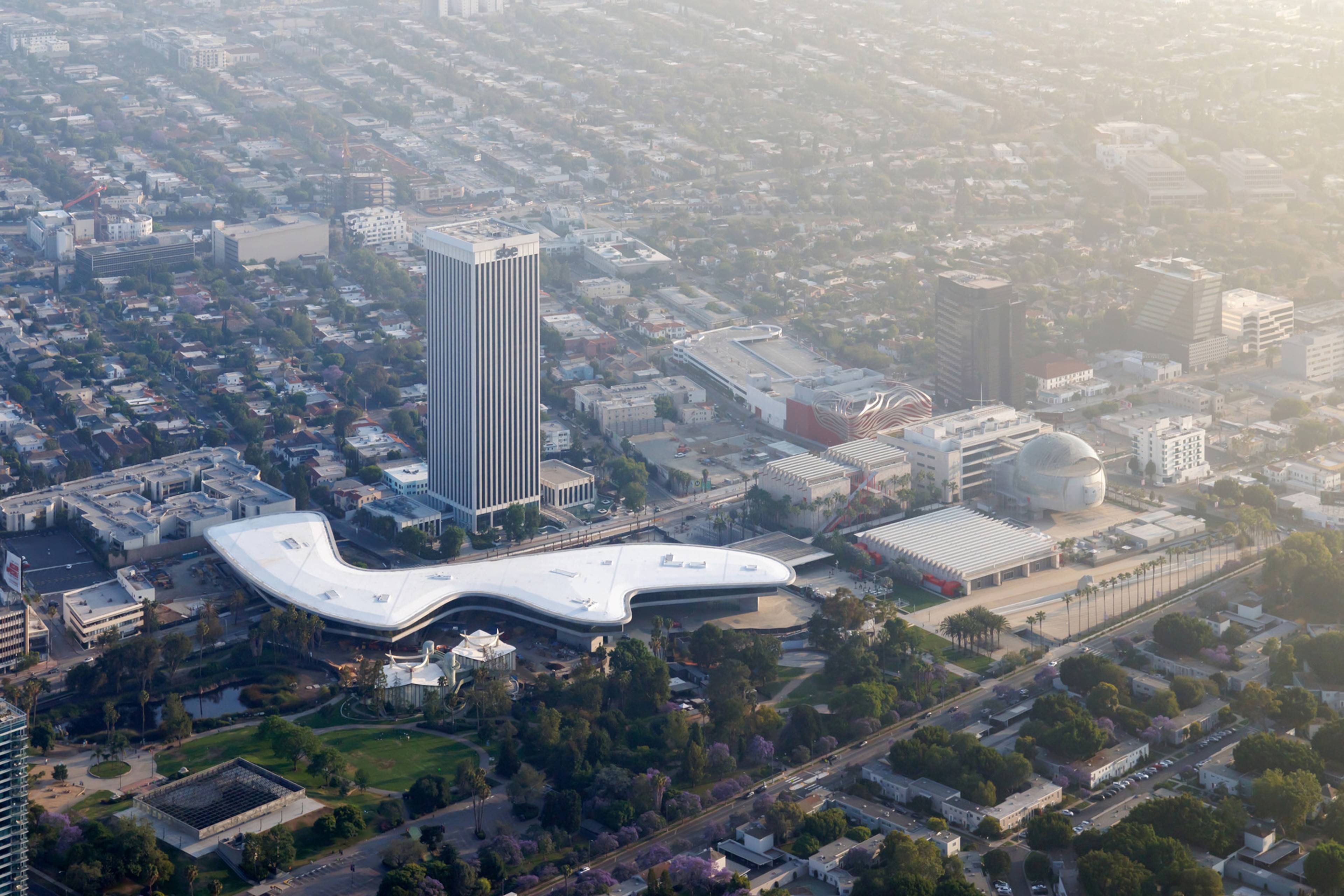
Aerial view of LACMA buildings, including David Geffen Galleries in context of Miracle Mile. Photo: Iwan Baan
Entering the Zumthor building from this main outdoor plaza via a single long outdoor stair, one encounters a very clear and distinct entry sequence to LACMA – rare for museums today. Inside, it is spread out, in a loose, meandering space where you can get lost and not even realize you’ve missed half the show. In New York, at the Met, MoMA, and now the New Museum, you are constantly reminded that you cannot know the entire place in one visit. LACMA conceals this fact by breaking what its director, Michael Govan, describes as the “Cartesian, God’s-eye-view time-space grid” of its galleries. It is not unlike the roads of Los Angeles’s sprawling car-centric landscape.
Where the building succeeds in abolishing hierarchy and prescribed paths, the architecture is unfortunately undermined by the reconceived art presentation. The curators have rehung the museum’s permanent collection in four sections, each organized geographically around one of Earth’s oceans: the Pacific, Atlantic, and Indian Oceans, plus the Mediterranean Sea, recasting art history as a story of “migration.” Fair enough. But this heavy-handed and somewhat arbitrary thesis contradicts the design strategy.
Replacing the encyclopedic museum’s Enlightenment categorizations and old colonial frameworks is a worthy cause. But at LACMA, like most donor-class institutions today, one set of bad ideas has merely been replaced with another set of bad ideas.
Much ink has been spilled lamenting this new curatorial framework, which to amounts to a half measure that leaves the building’s most ambitious gesture unfulfilled; it is like hitting the open road and getting stuck in traffic. The building’s open plan could be the start of a truly unstructured, meandering curatorial agenda, one in which art is displayed without interpretation or context. Replacing the encyclopedic museum’s Enlightenment categorizations and old colonial frameworks is a worthy cause. But at LACMA, like most donor-class institutions today, one set of bad ideas has merely been replaced with another set of bad ideas. A new heavy-handed narrative is applied, as if to say, “this time we will get it right, we promise!”
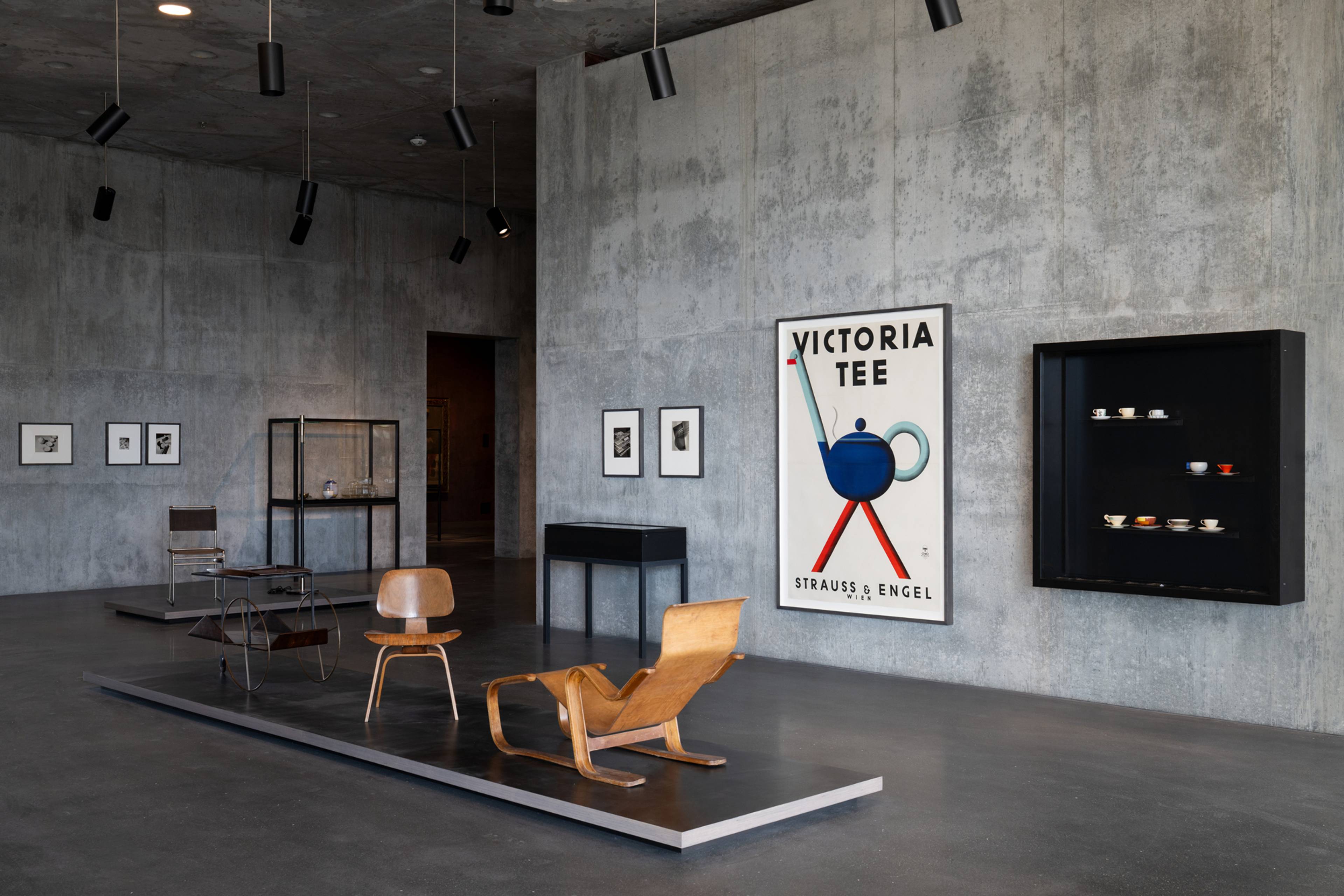
For example, a presentation on blue-and-white ceramics provocatively shows brilliant, unexpected early examples from China and Syria, but its only example from Delft – arguably the most important node in the transmission of the tradition from East to West – is a contemporary piece, Gésine Hackenberg’s ‘Delft Blue “Plooischotel” Necklace’ (2012). These narratives run counter to Zumthor and Govan’s building. Architecture cannot reorganize art if the art refuses to be reorganized. Perhaps escaping history is harder than it seems.
What might a truly nonhierarchical curation look like in a building that sets it up? There may be lessons in another horizontal, open-plan concrete structure: abandoned factories such as the former Packard Plant in Detroit. In the 1990s, techno artists took over such decrepit structures and reinvented what music could be specific to those spaces: “hard music from a hard city.” They didn’t play rock concerts on stages or classical music in the round. Why did LACMA’s curators simply rearrange the collection, rather than invent a display logic native to a single-floor, pathless, nine-hundred-foot concrete plane? Luckily, art can be rethought and rehung much more easily than a $724 million museum building.
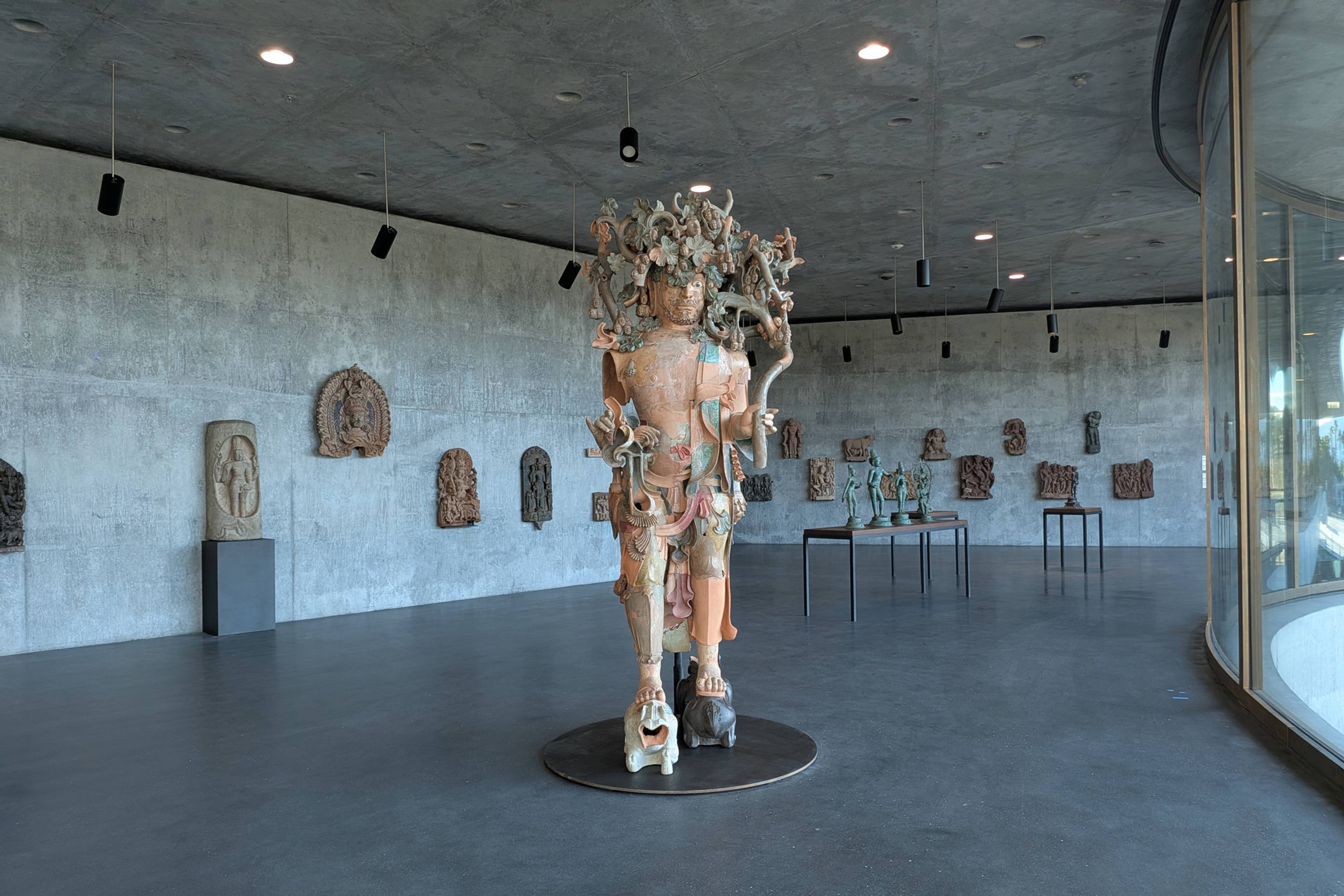
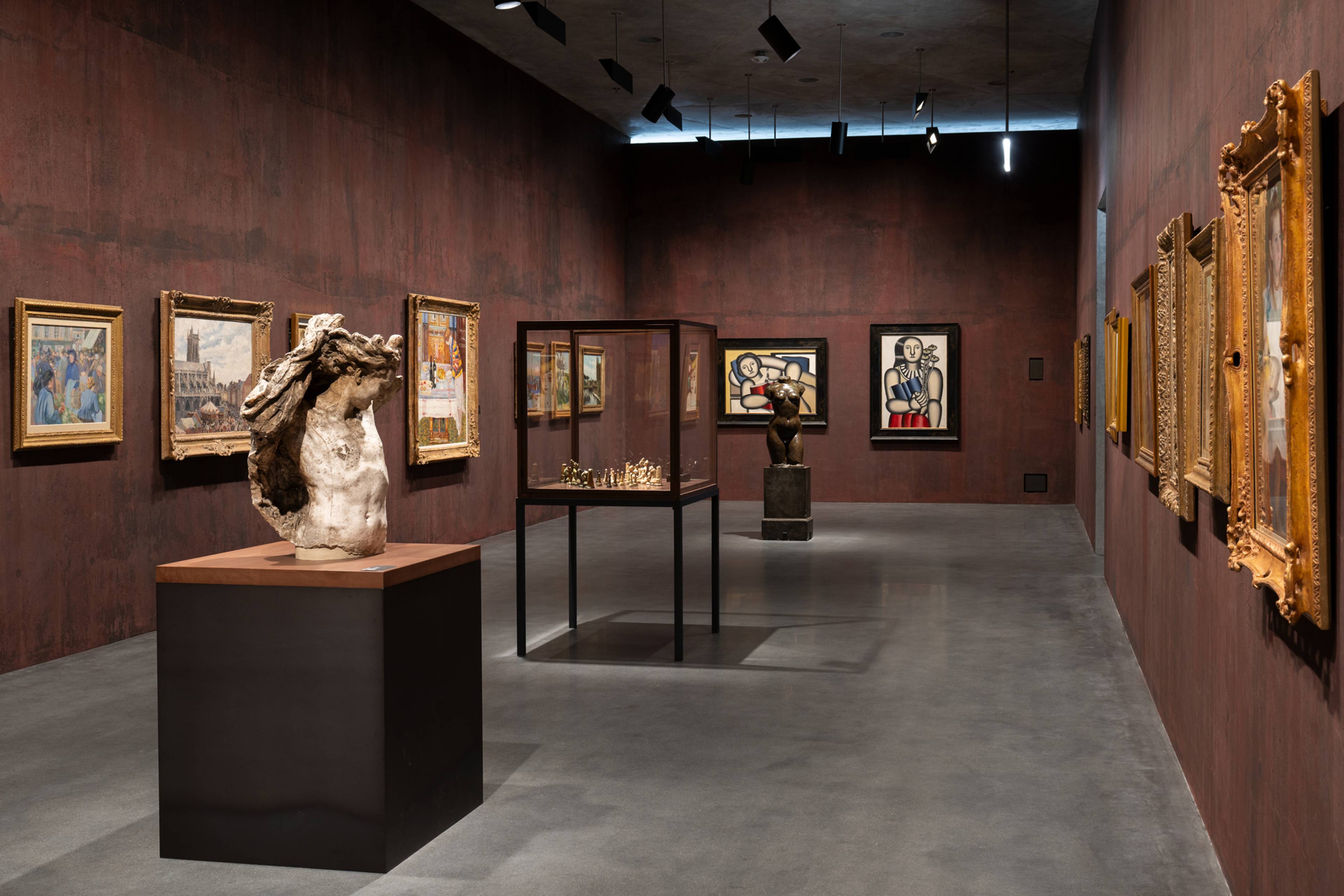
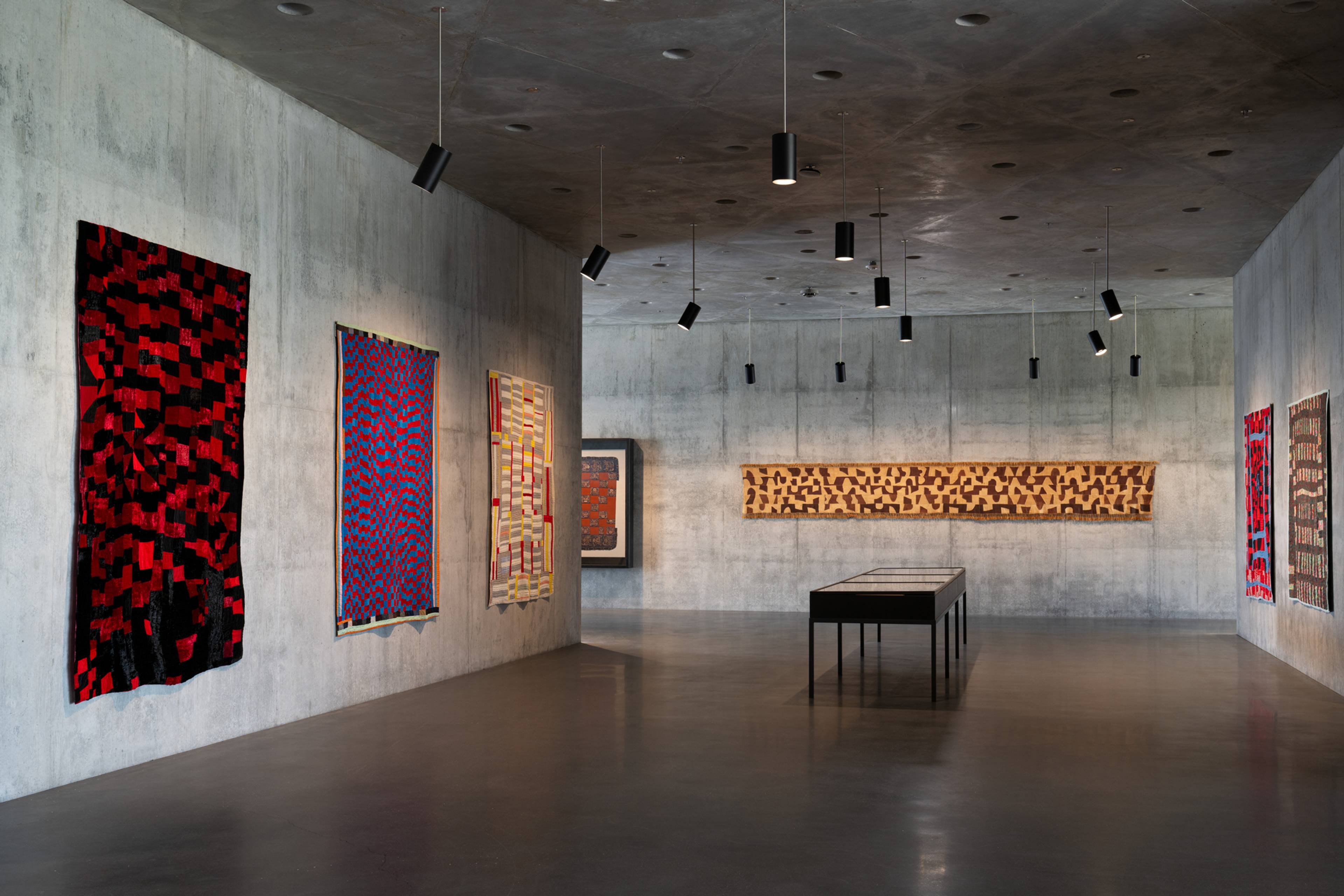
Installation views, inaugural presentation in the David Geffen Galleries, LACMA, 2026
Photos: Museum Associates/LACMA